6 January 2026 – Hiroshima
Quite a few of us were very keen to see Hiroshima during our Japan trip, so we planned a day trip there to take place during our Osaka stay. It’s only 1.5 hours from Osaka to Hiroshima on a shinkansen (plus a bit of time from where we were staying), so it’s doable as a long day. The shinkansen are phenomenally expensive but the JR West passes we purchased basically covered this return trip and everything else we did using the travel passes was a bonus.
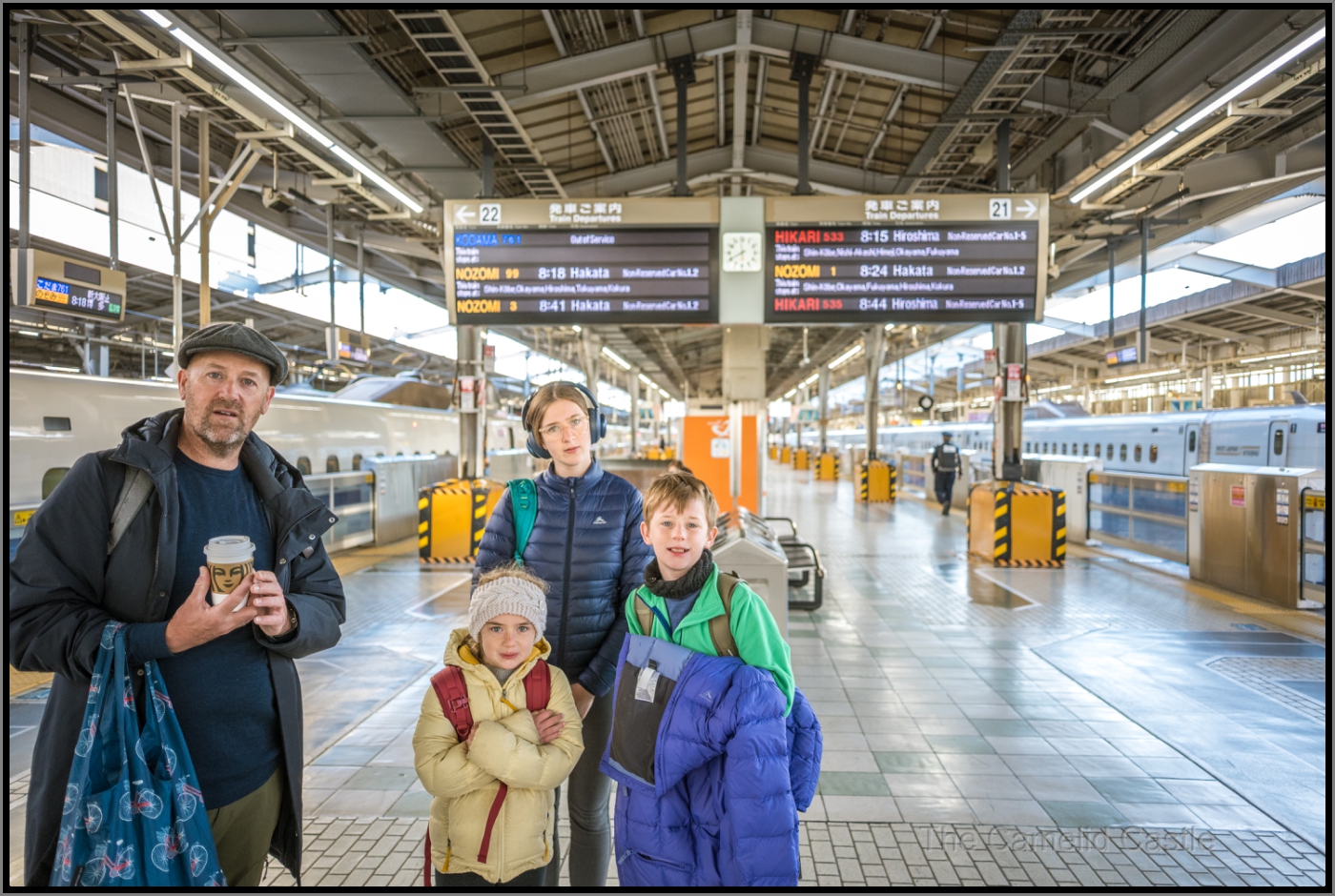
An early morning trip to the station….
We set a 6.15am alarm and had our day packs on for a dark and cool walk to Tennoji station. It was only around 6 degrees, so not too bad for the time of year. The streets were very quiet out this early.
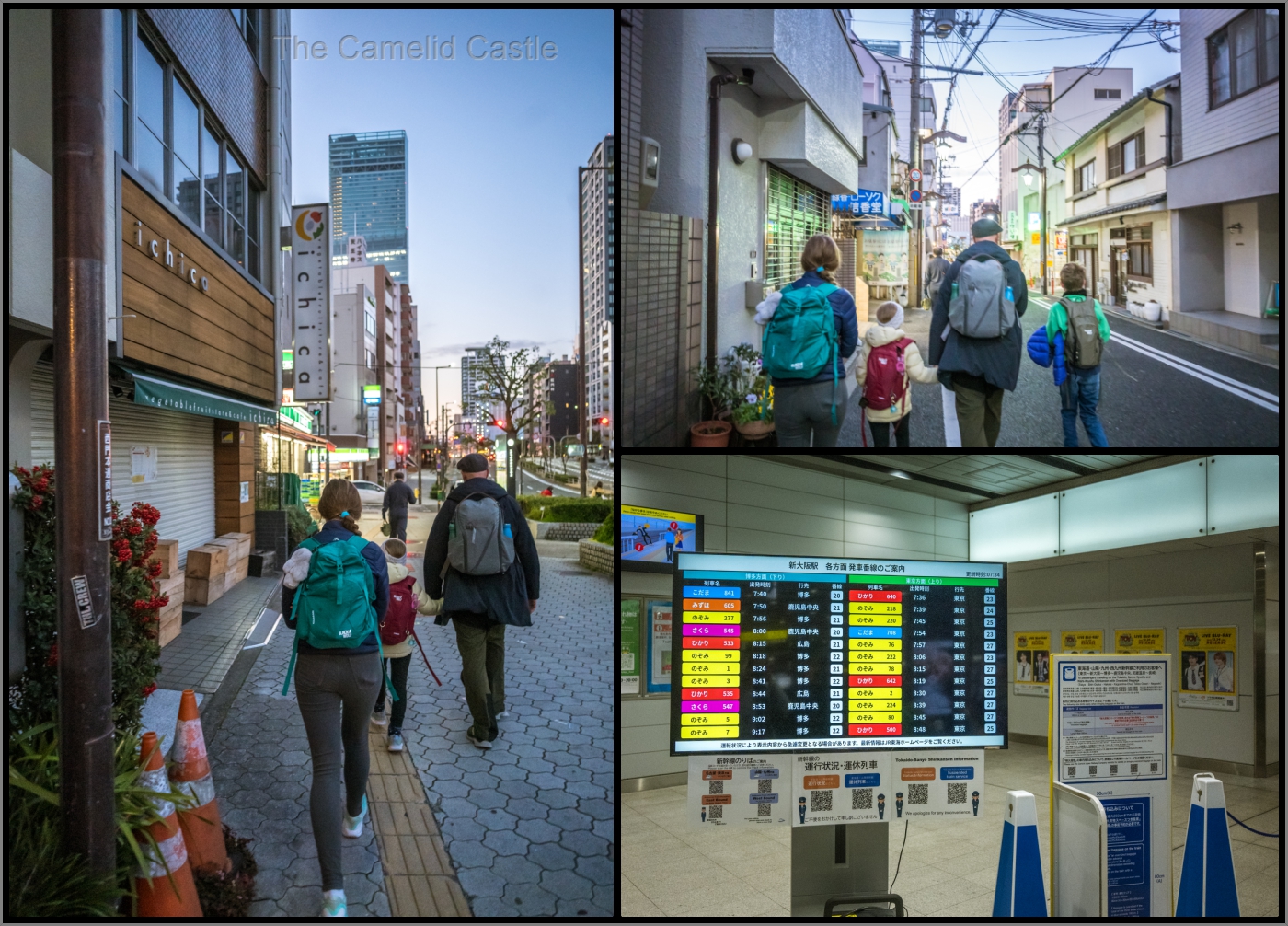
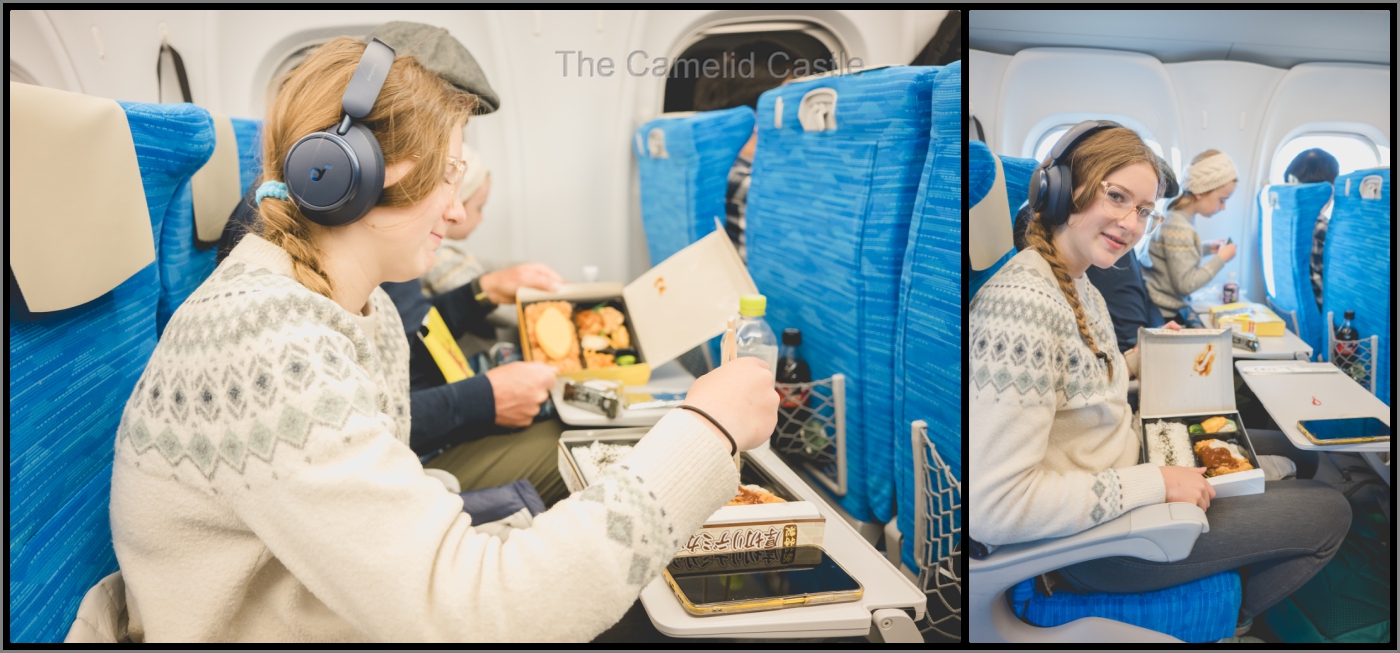
Once we got to our local Tennoji station it was then a metro through to Shin Osaka station (about 20 minutes) where we finally purchased food and coffees for the trip. Train breakfast was Eki-bento for Astrid and Anto, and today’s form of sugary buns for the rest of us.
Japanese train snacks….
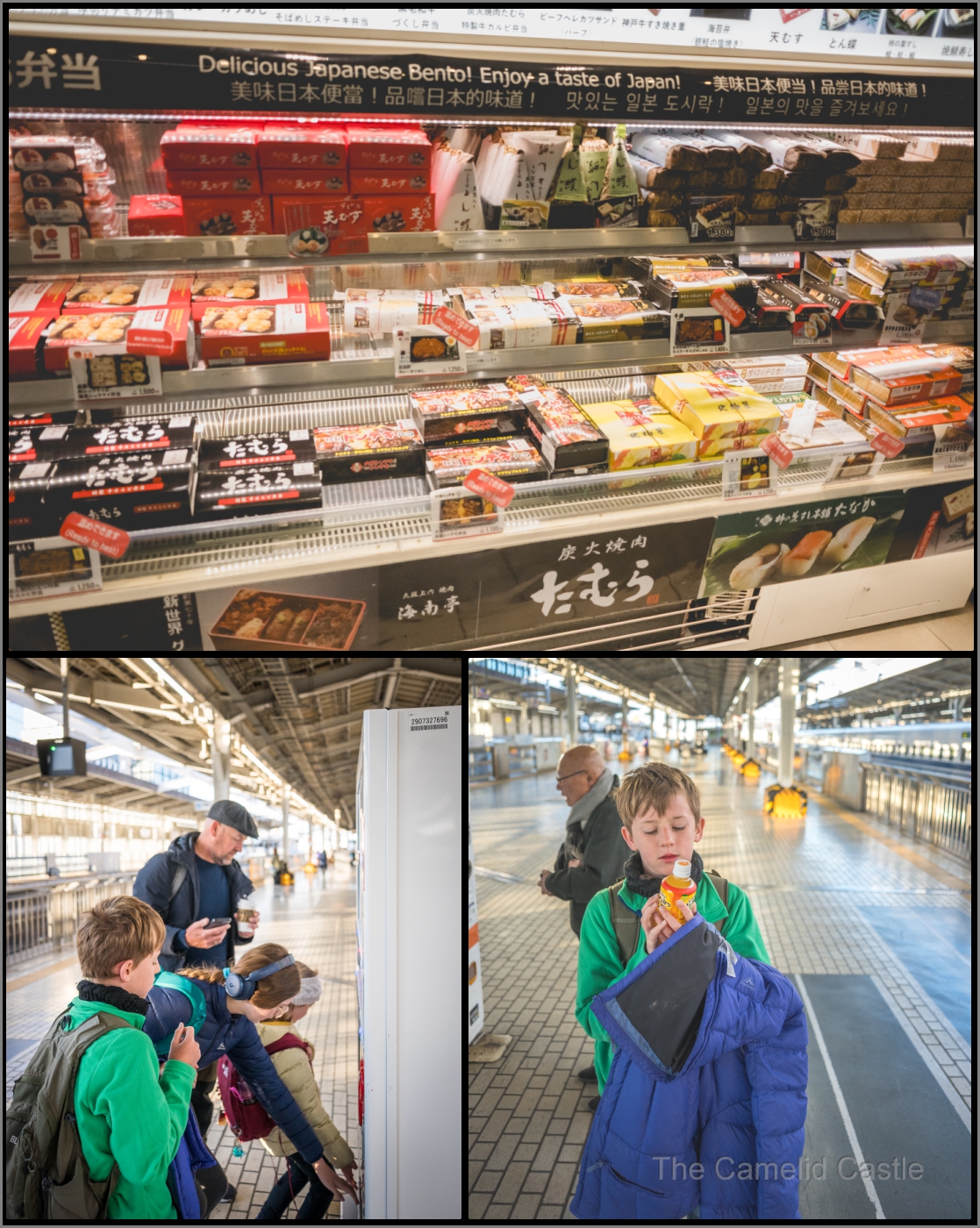
Like in Europe, we love a good train meal and it’s always fun shopping for food at the train stations. The convenience store coffees in Japan aren’t too awful but today there weren’t any at the konbini in the train stations, so we sadly had to brave Starbucks. Soren still wasn’t feeling well and was keen on the hot yuzu teas from the vending machines. A novelty in Japan is getting a hot drink from a vending machine, and they are very reasonably priced and available everywhere.
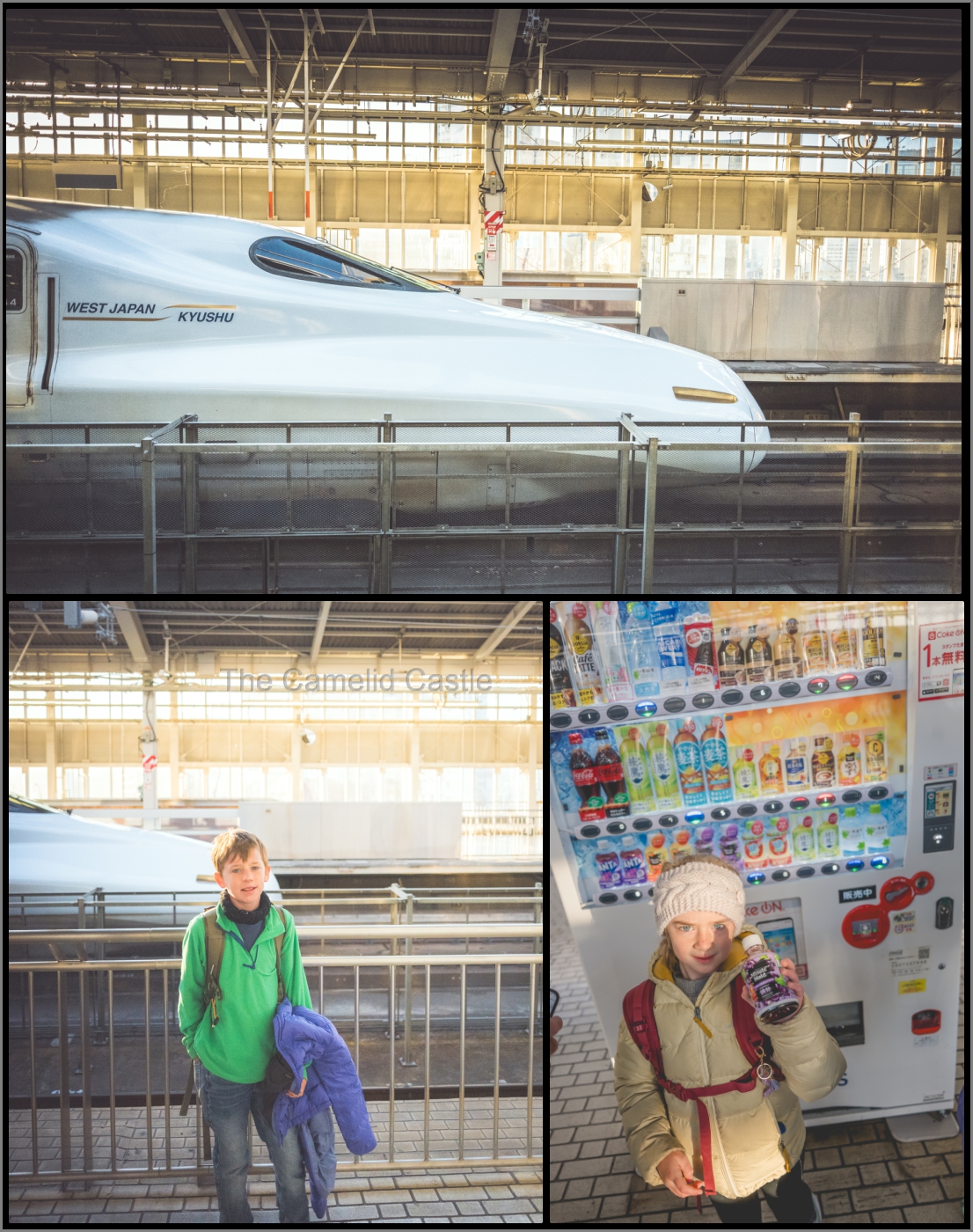
Soren loves the shinkansen so was more than happy to pose with his favourite train! Zinnia was just keen on her own vending machine drink 🙂
The shinkansen was warm and we zipped along at 300km/h an hour, eating, catching up on Duolingo or napping. We were into Hiroshima station about 9.40am and it was a lovely sunny day and still about 6 degrees.
A slight earthquake situation….
We planned to go out to Miyajima island first as the tide was due to be in around midday, which meant we could see the famous floating torii gates best. The JR train through to Miyajima station should have taken about 15 minutes but after 10 minutes the train stopped and there was quite a bit of shaking, as the train jumped up and down off the platform by 10-15cm. Yep it was an earthquake!
We were sitting there stopped for a full 8 minutes with continuing large amounts of shaking. Everyone on the train was calm and googling how strong the quake was. It turns out 6.2 at the epicentre although we were a couple of hundred km away. But, it was by far the strongest quake any of us had ever been in. The quake was felt in all of western Japan and took out the power to the shinkansen for 2.5hours. It was really lucky we were off ours or we would have had our day’s activities would have been seriously curtailed.
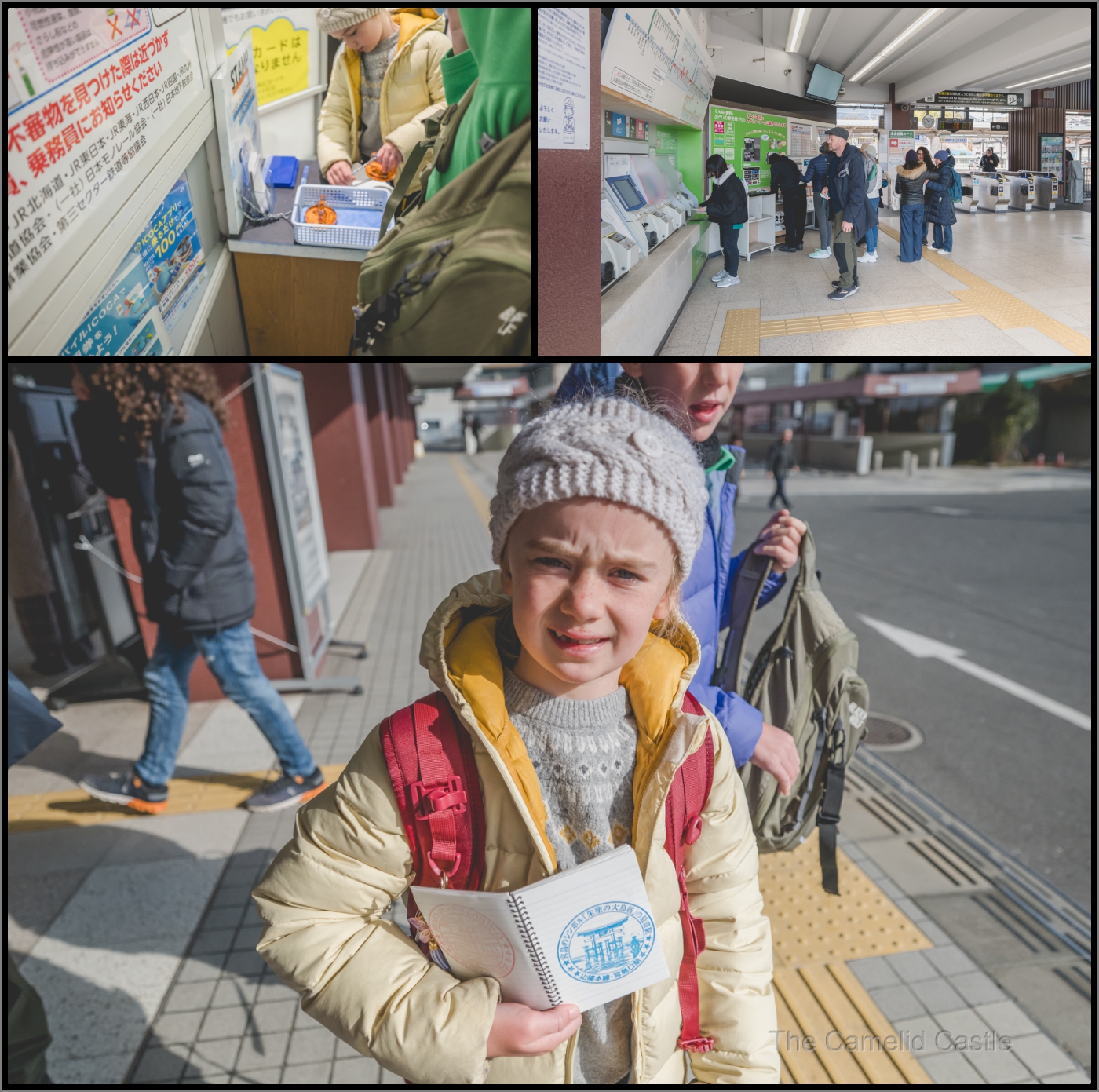
Finally at Miyajimaguchi station and a it was a short walk to the ferry. Of course we had to go past a 7-11 for more snacks and the station master to collect more train stamps for the kids.
Off to Miyajima….
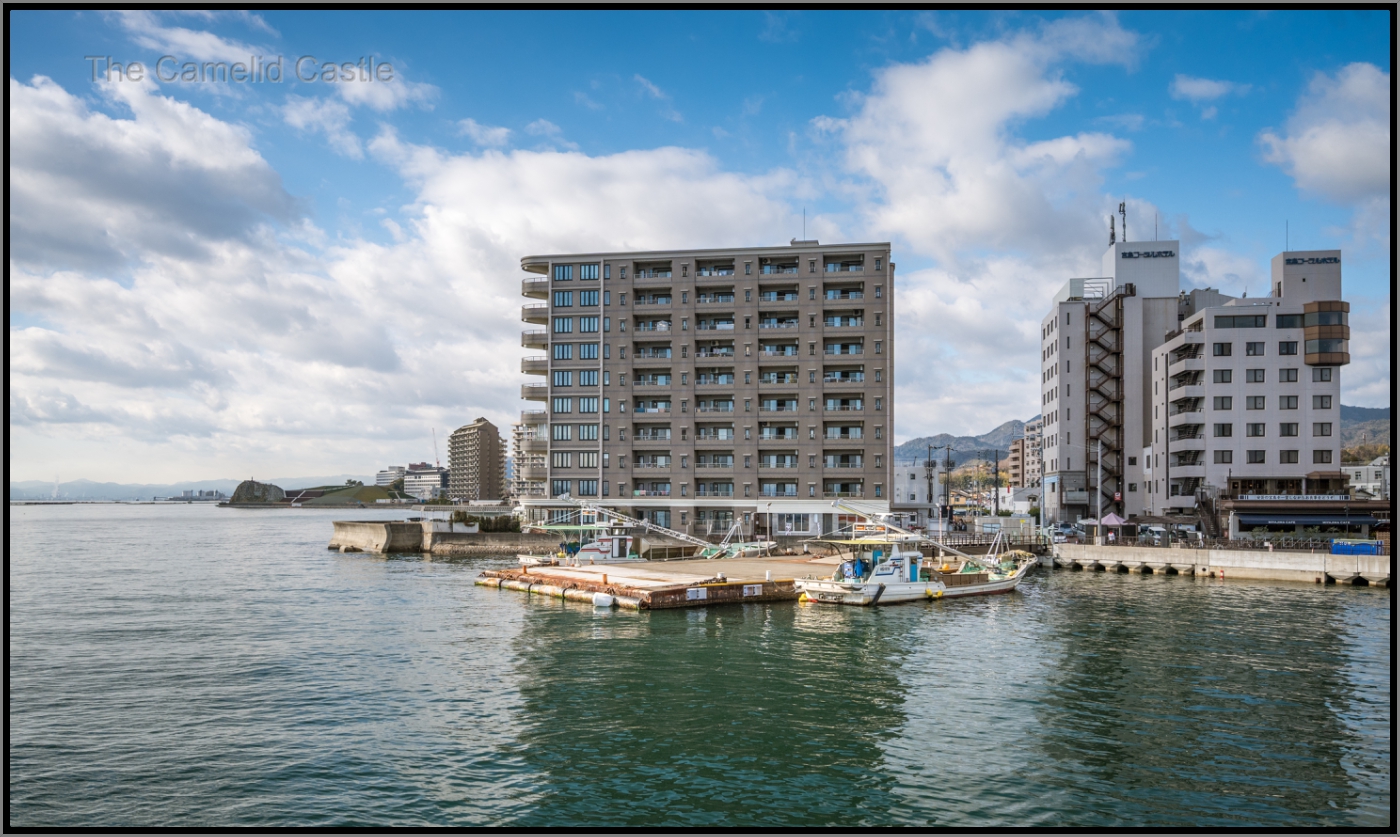
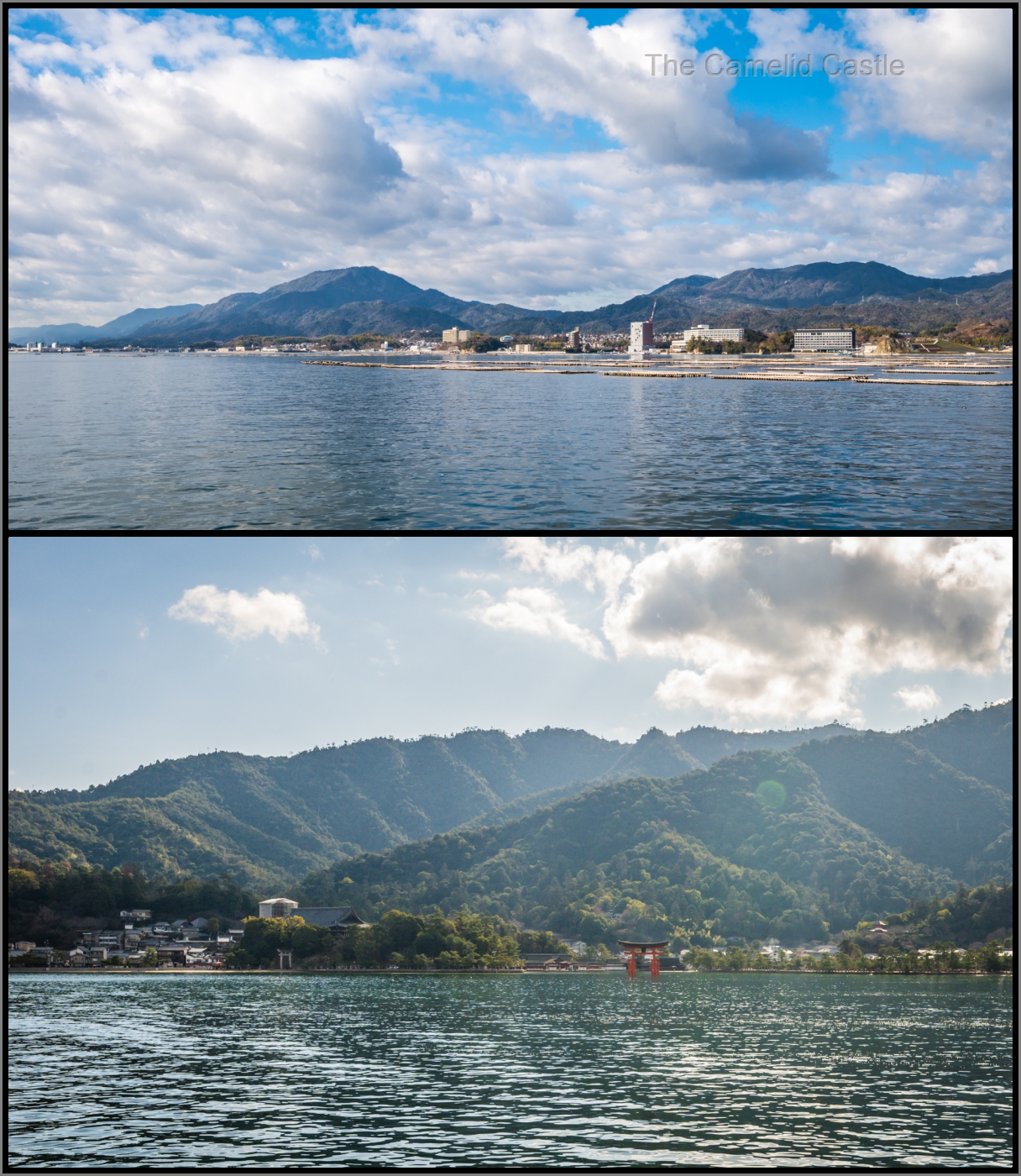
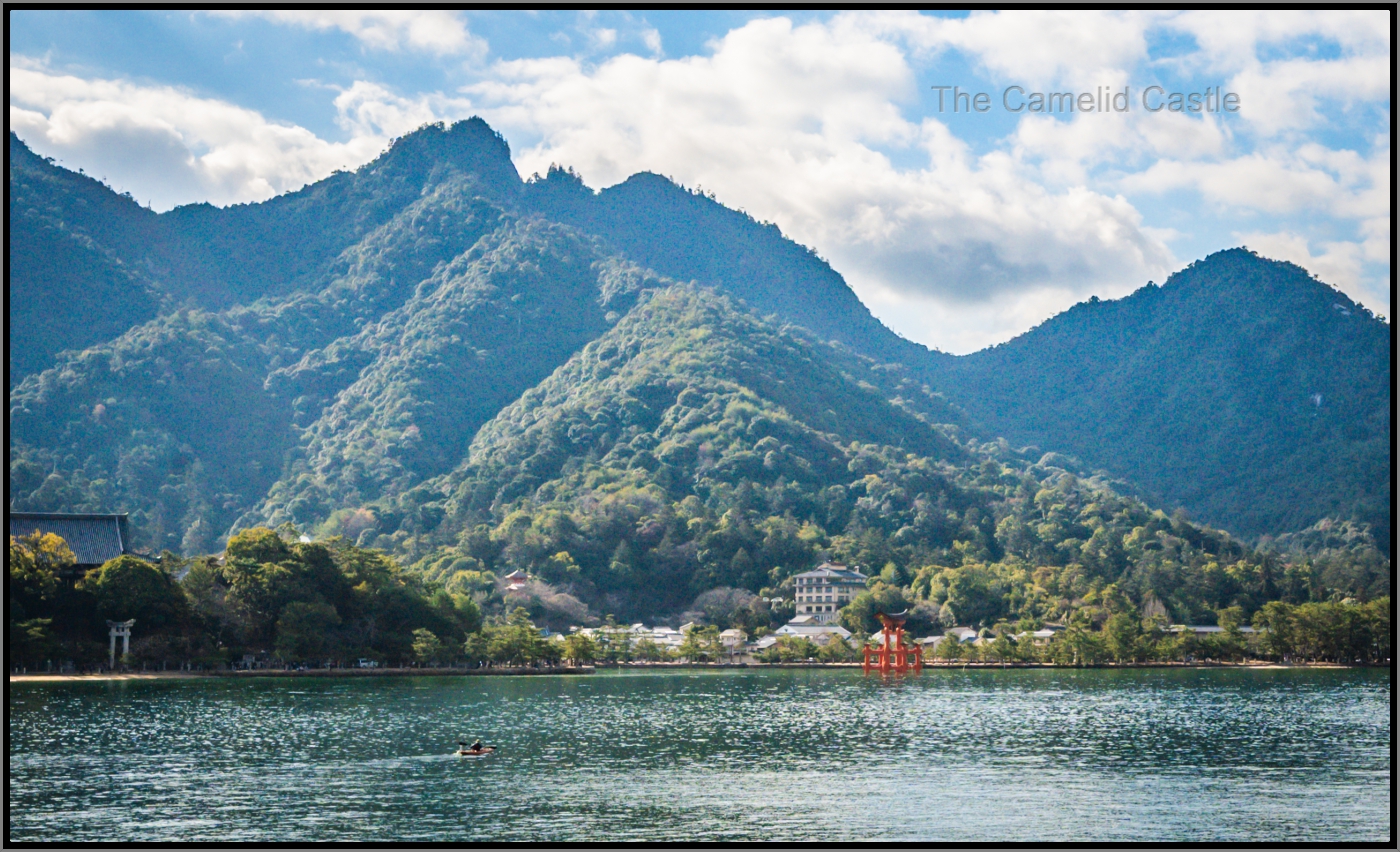
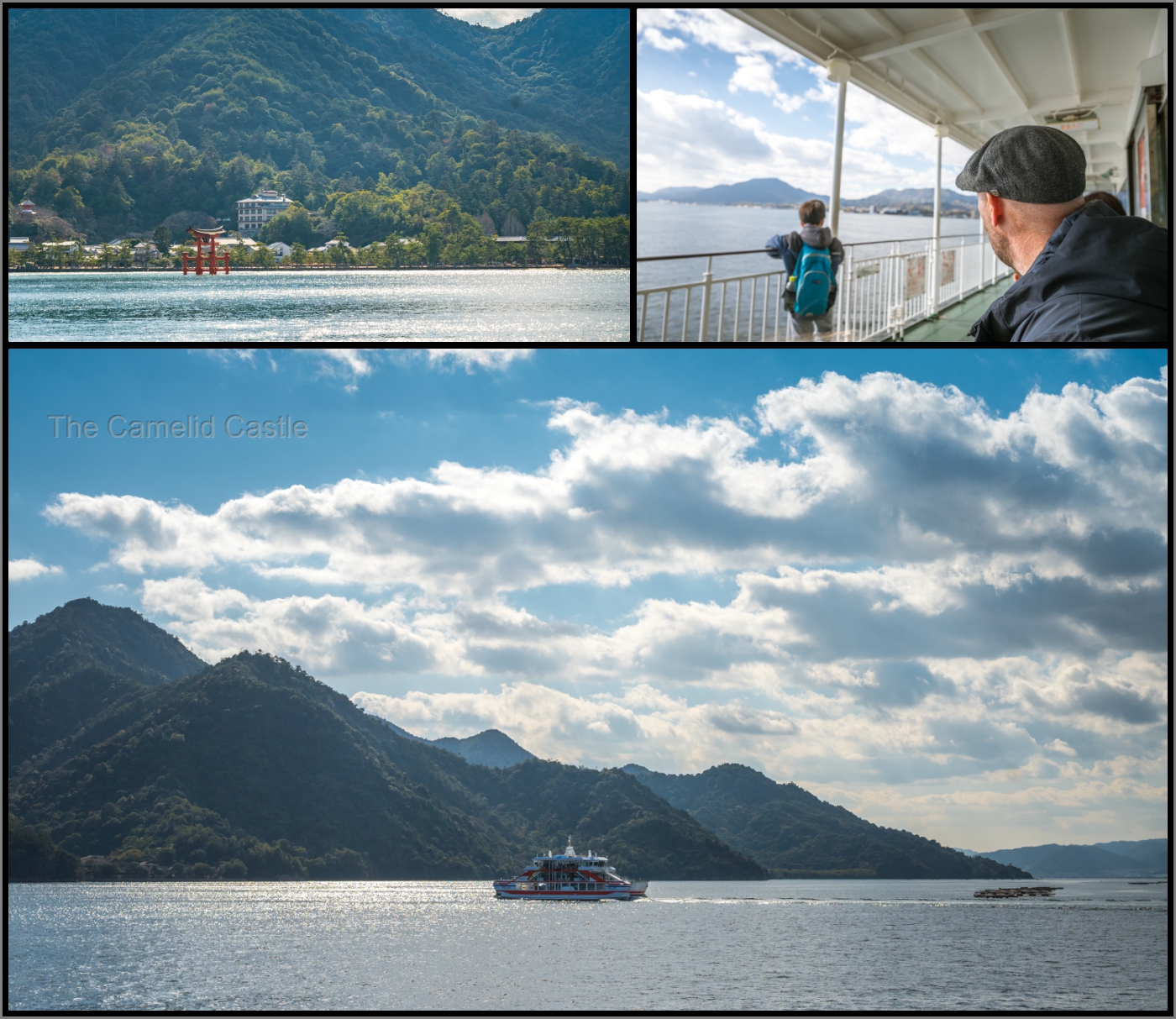
Mijayjima (Itsukushima) is a scenic island in Hiroshima Bay. It’s most famous for the UNESCO World-Heritage listed Itsukushima Shrine and the ‘floating torii gates’. The 10 minute JR West ferry ride across to Miyajima island was very scenic. You can see the large mountains on Miyajima from a distance and they are very pretty as you zip across the bay.
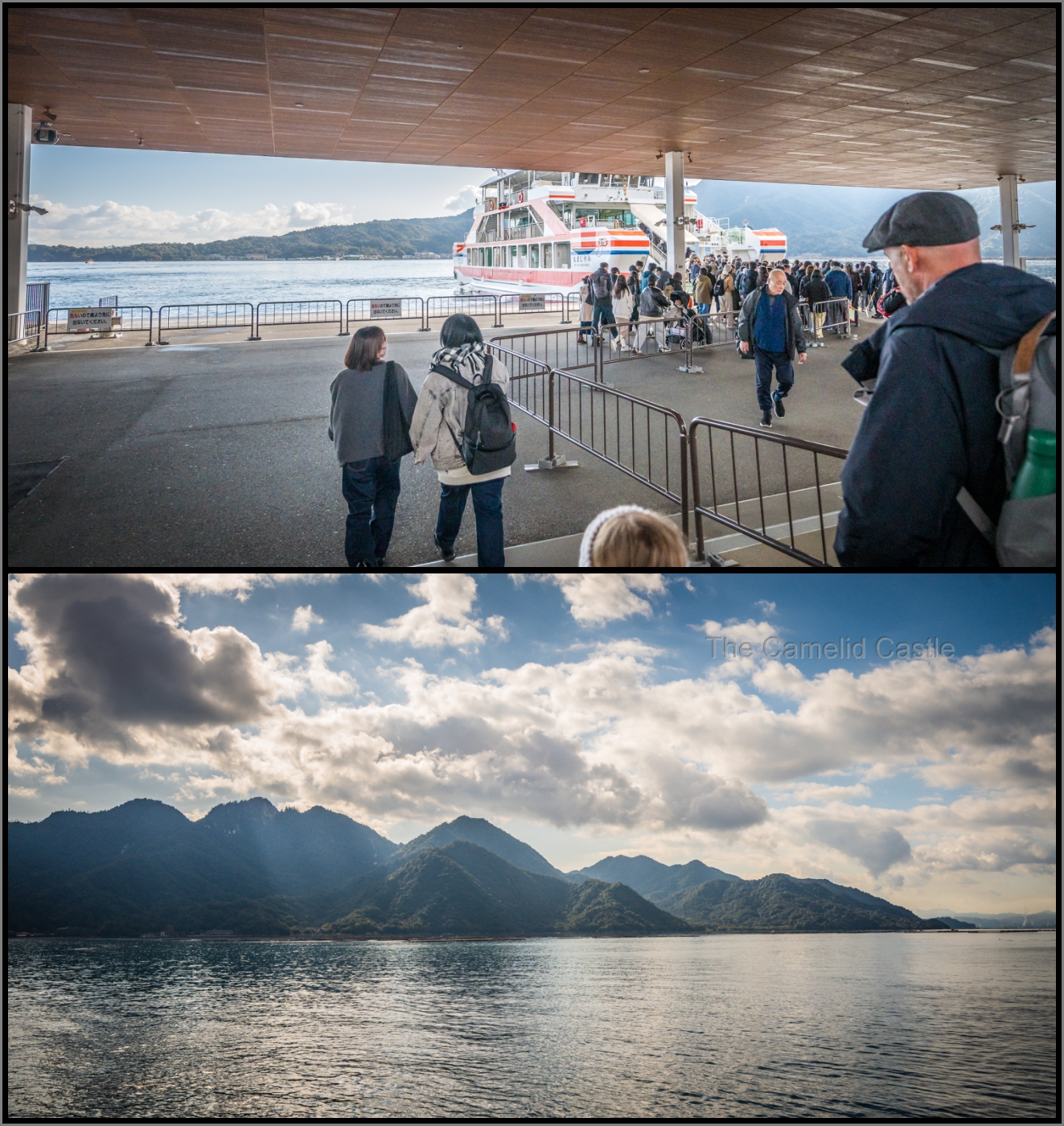
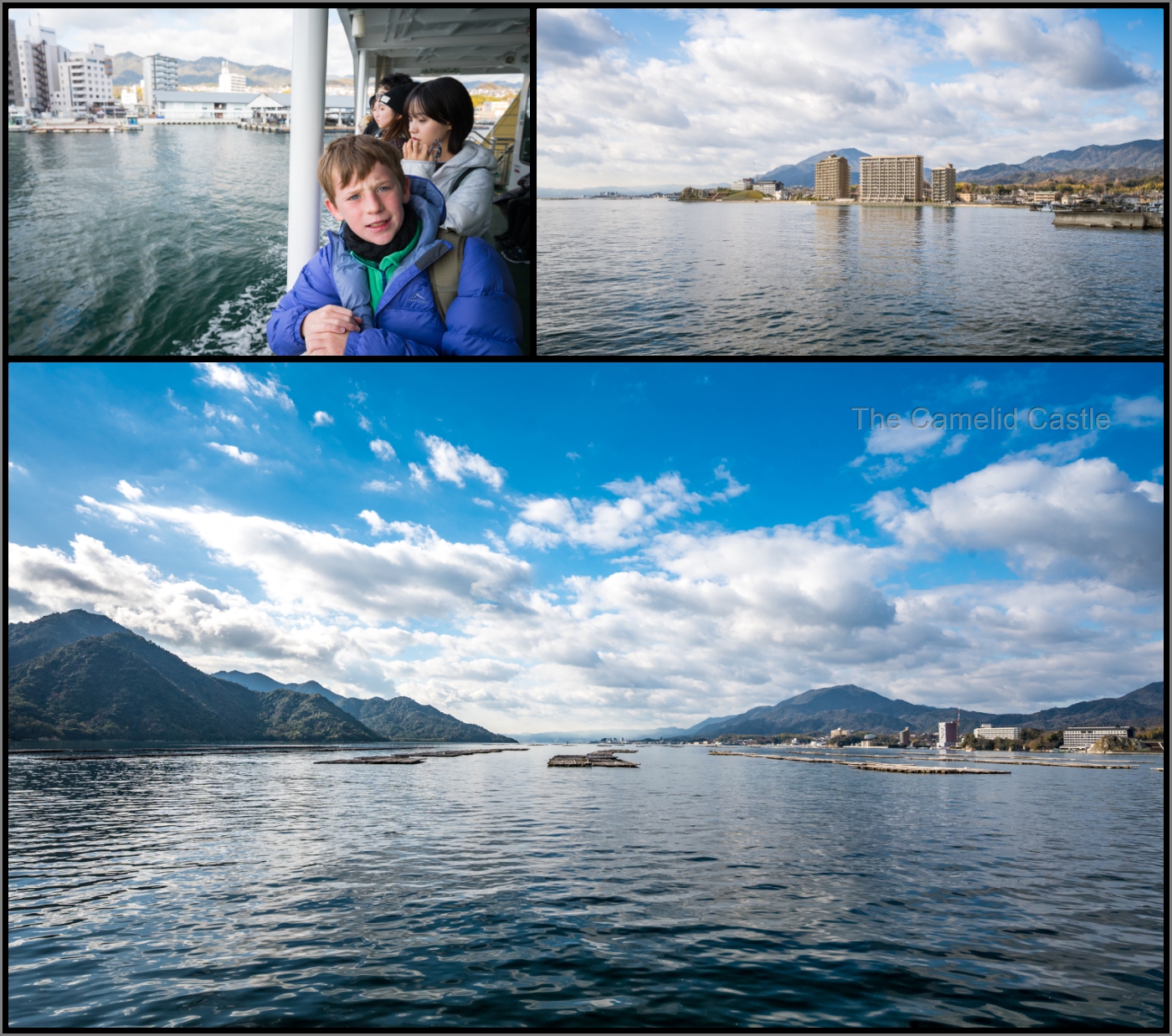
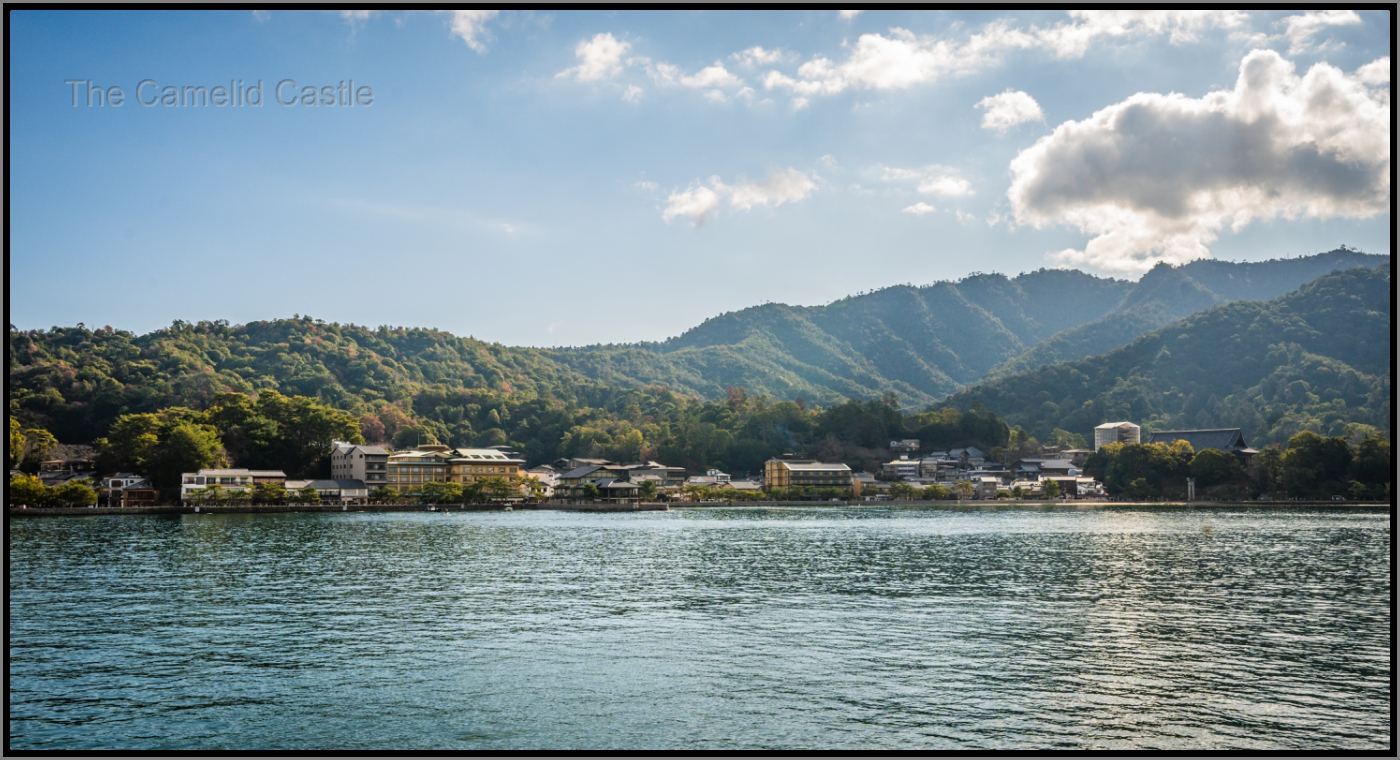
You can see the floating shrine and Torii gates as you approach Miyajima. As it was only a short ferry and there was plenty to look at we were happy hanging out on deck checking out the views.
Deer, oh dear…
Soon we were off the ferry and onto the island. Miyajima also has free roaming ‘wild’ deer. The deer are protected and roam the island but tend to congregate near the ferry terminal and down towards the shrine.
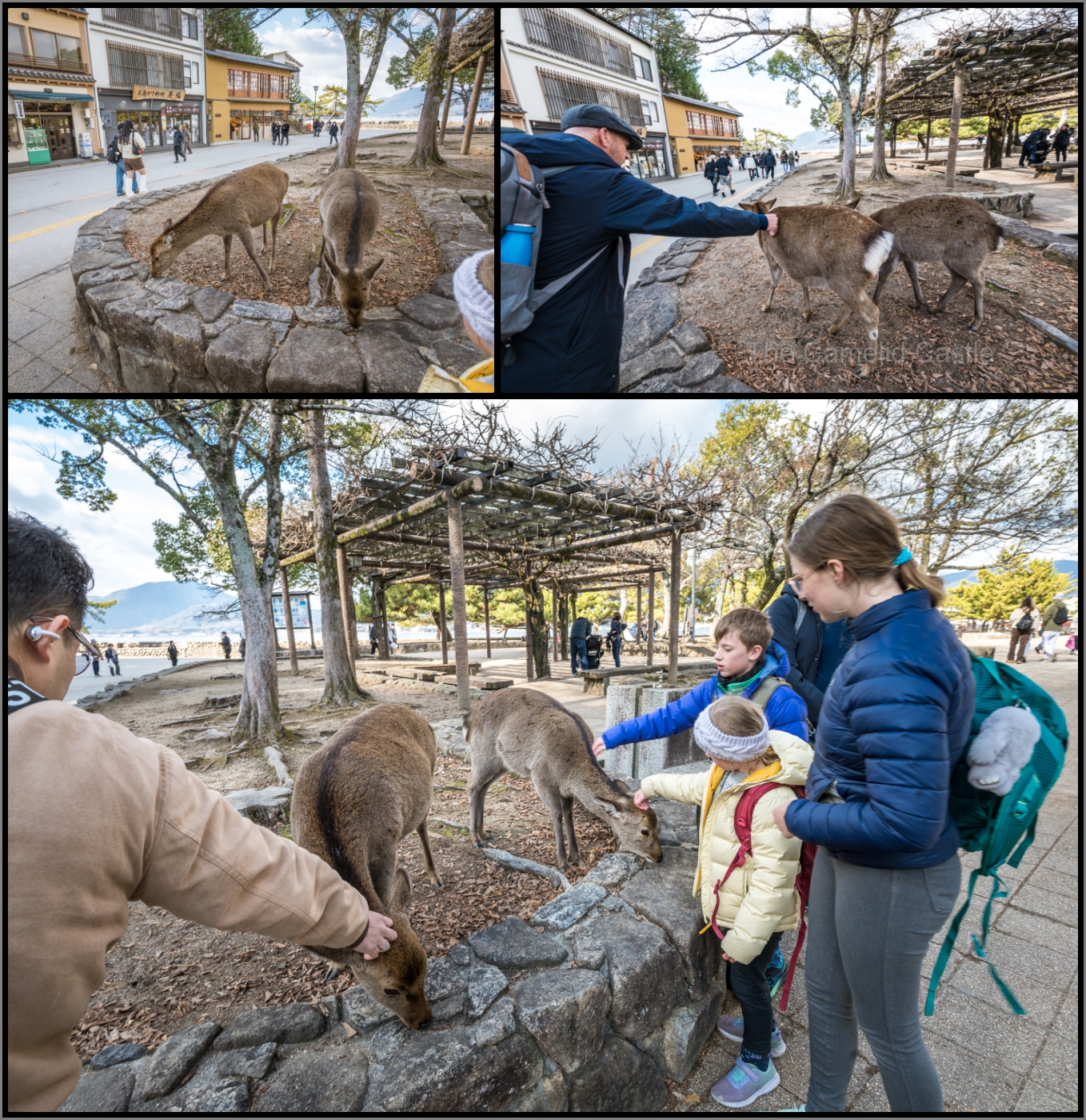
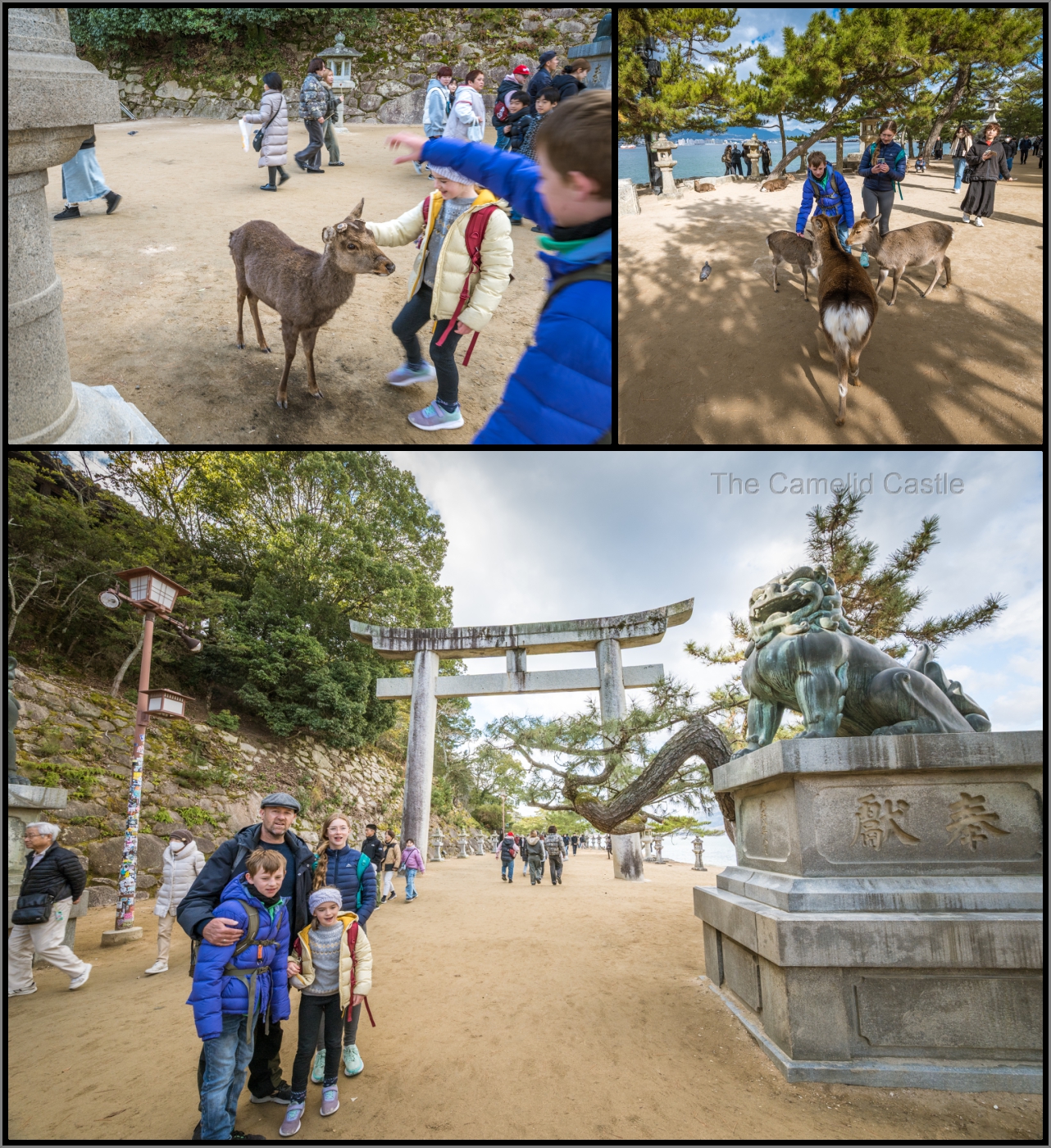
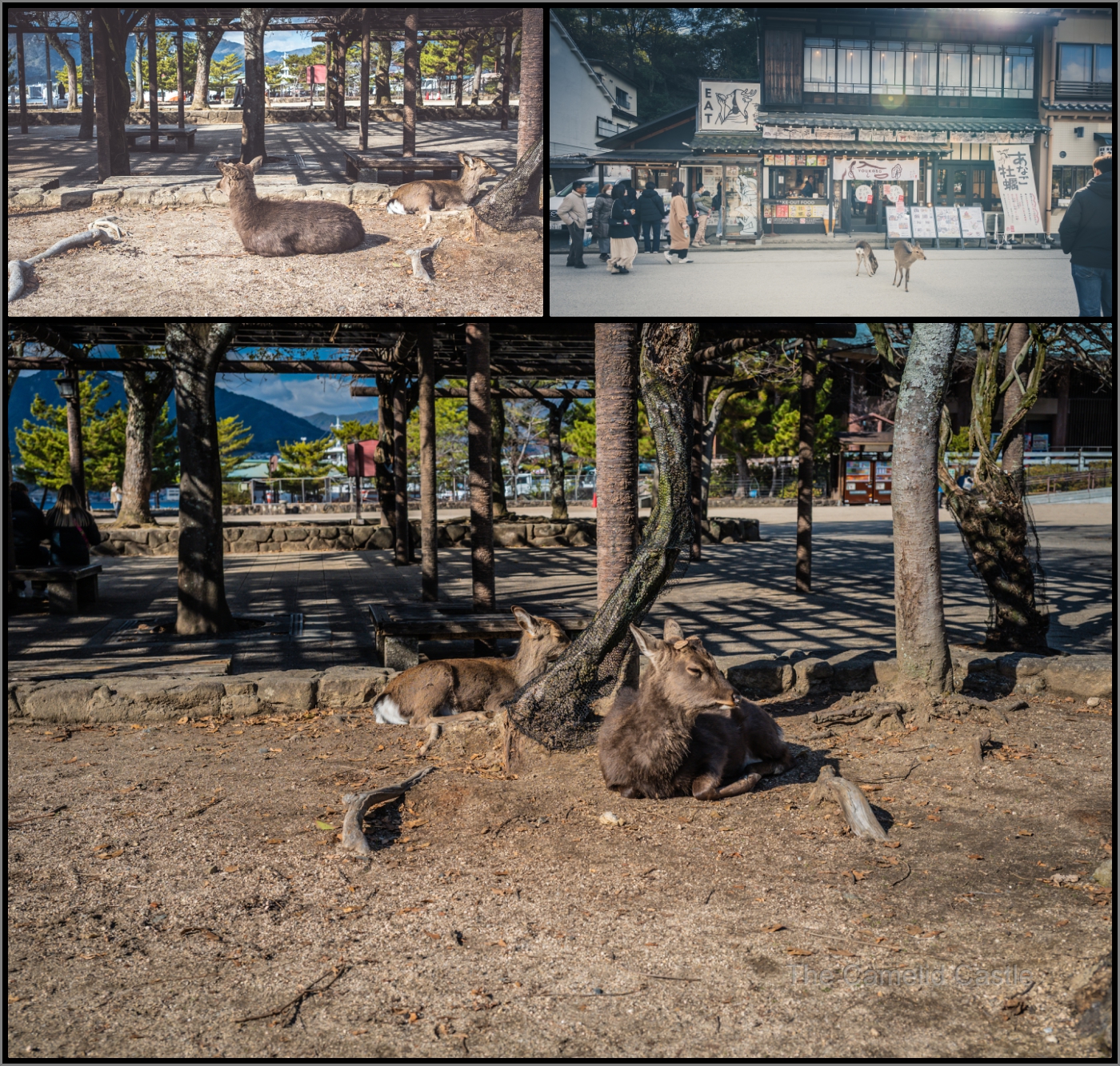
It took all of about 3 seconds for us to find our first deer. These ones were even more tame than the Nara ones and were happy for pats and cuddles. They don’t sell deer crackers here! This made for much calmer deer and the kids fell in love with them.
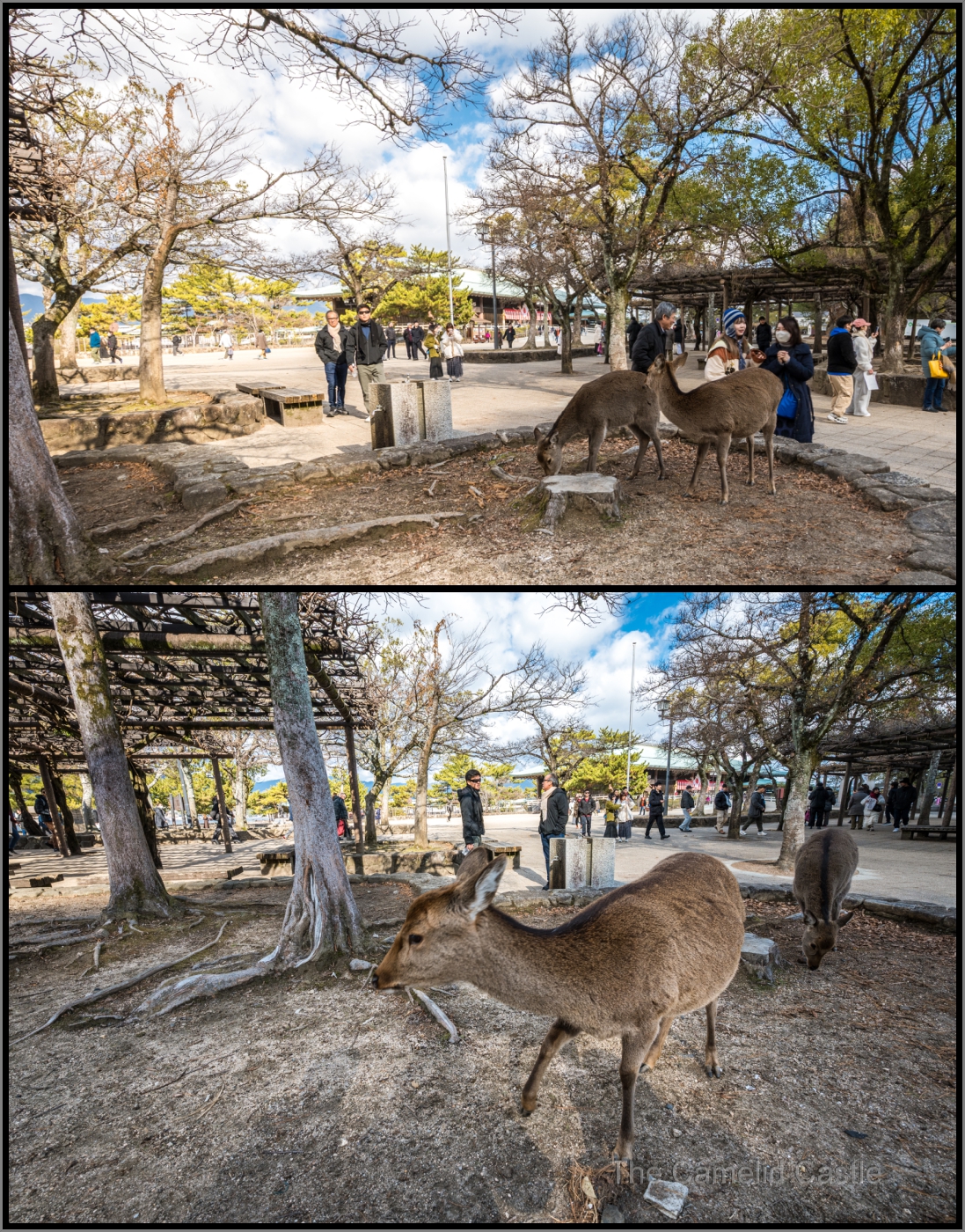
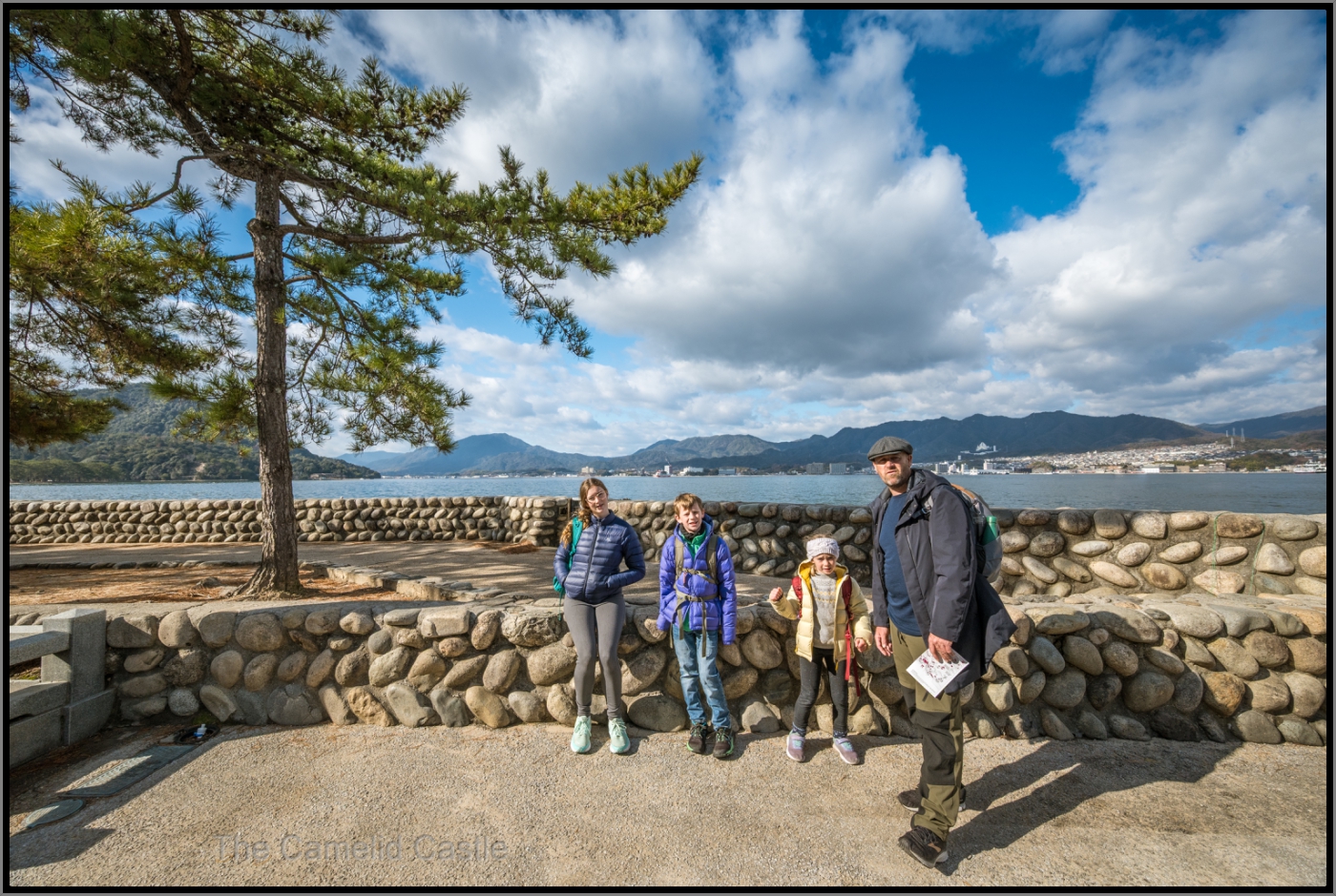
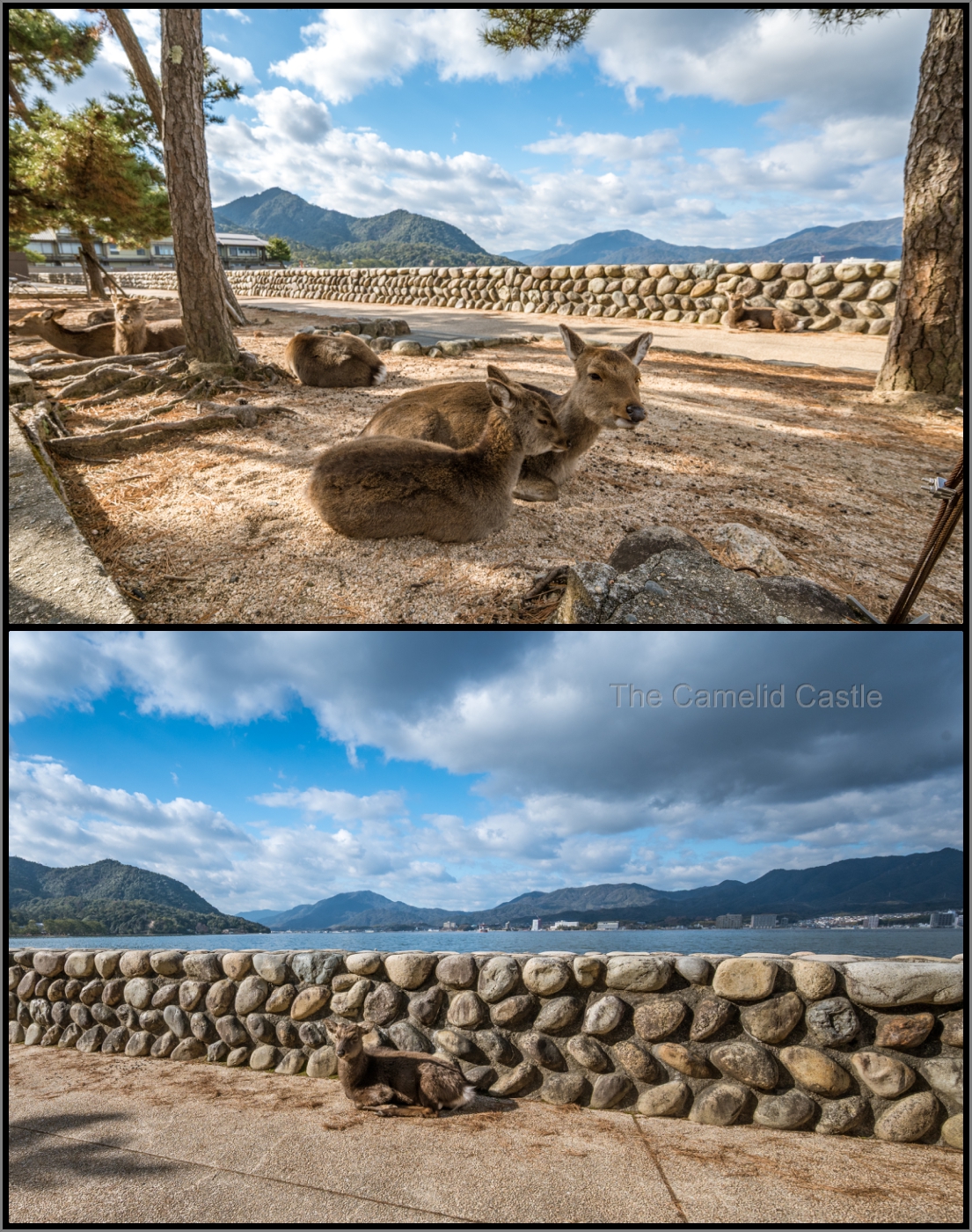
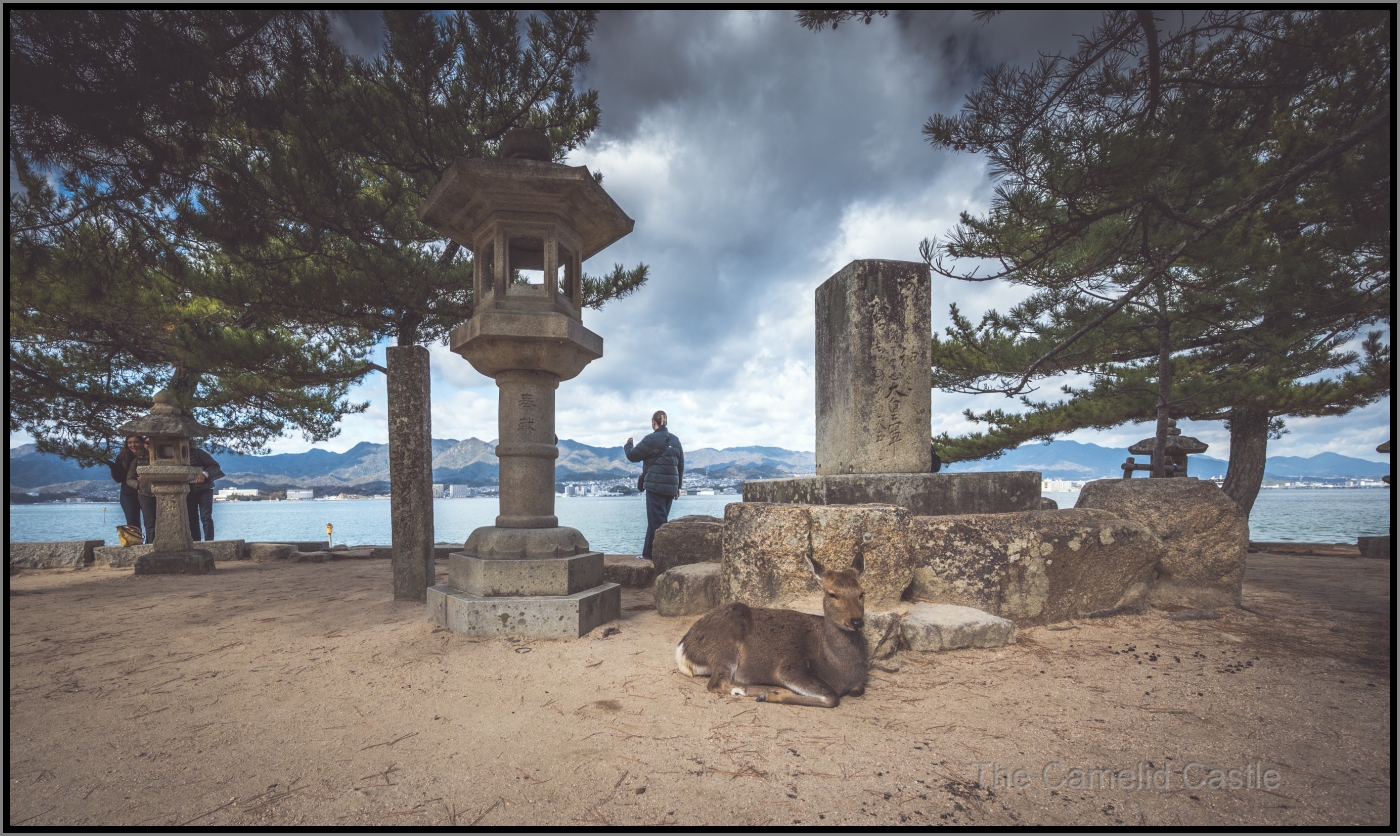
The deer had some pretty nice views! Like Nara they are everywhere and just hang out like they own the place.
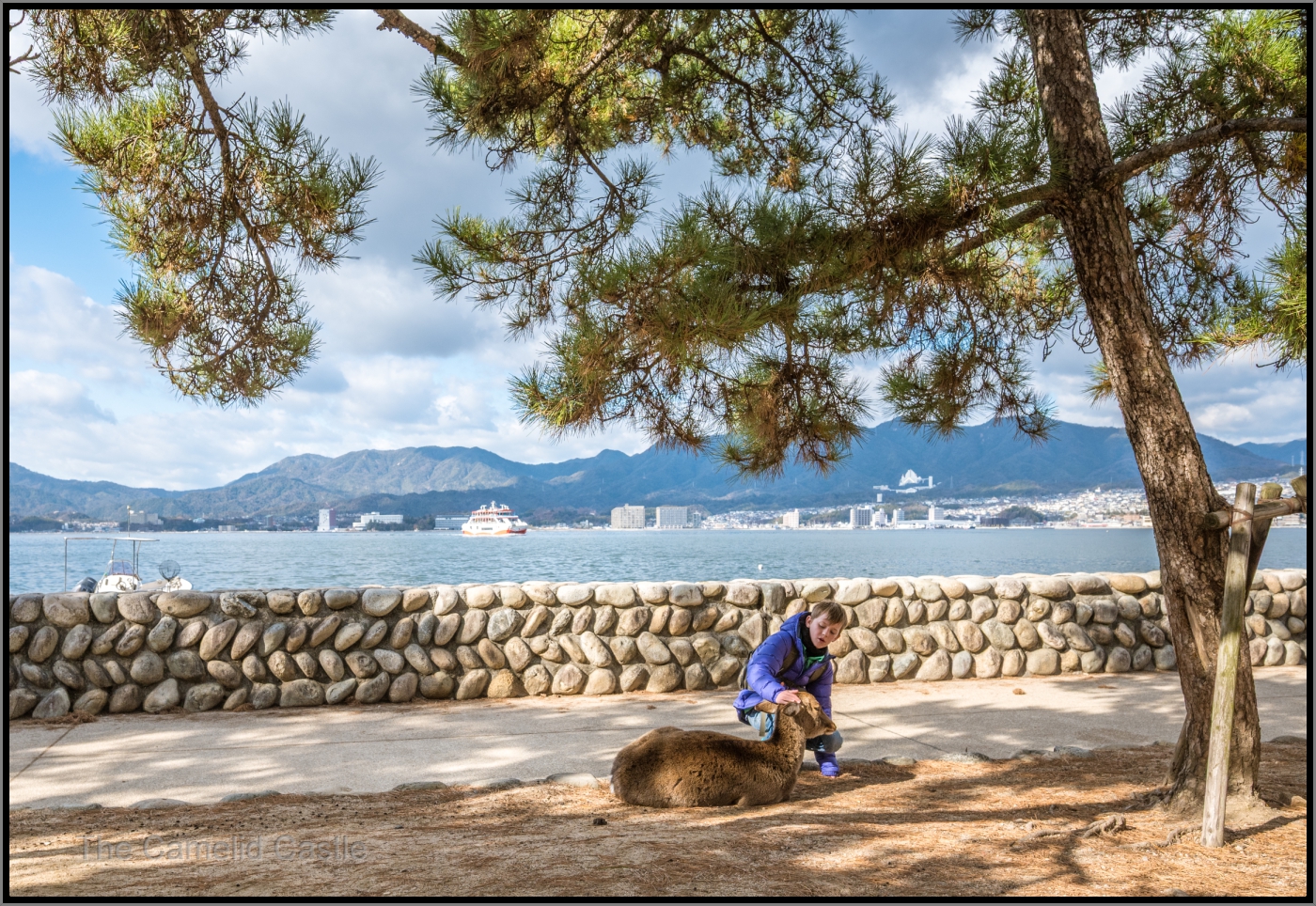
One took a particular liking to Soren’s pocket and bag straps. We weren’t sure why his pocket was so tasty as there wasn’t any food in there but the deer were keen to try and find it.
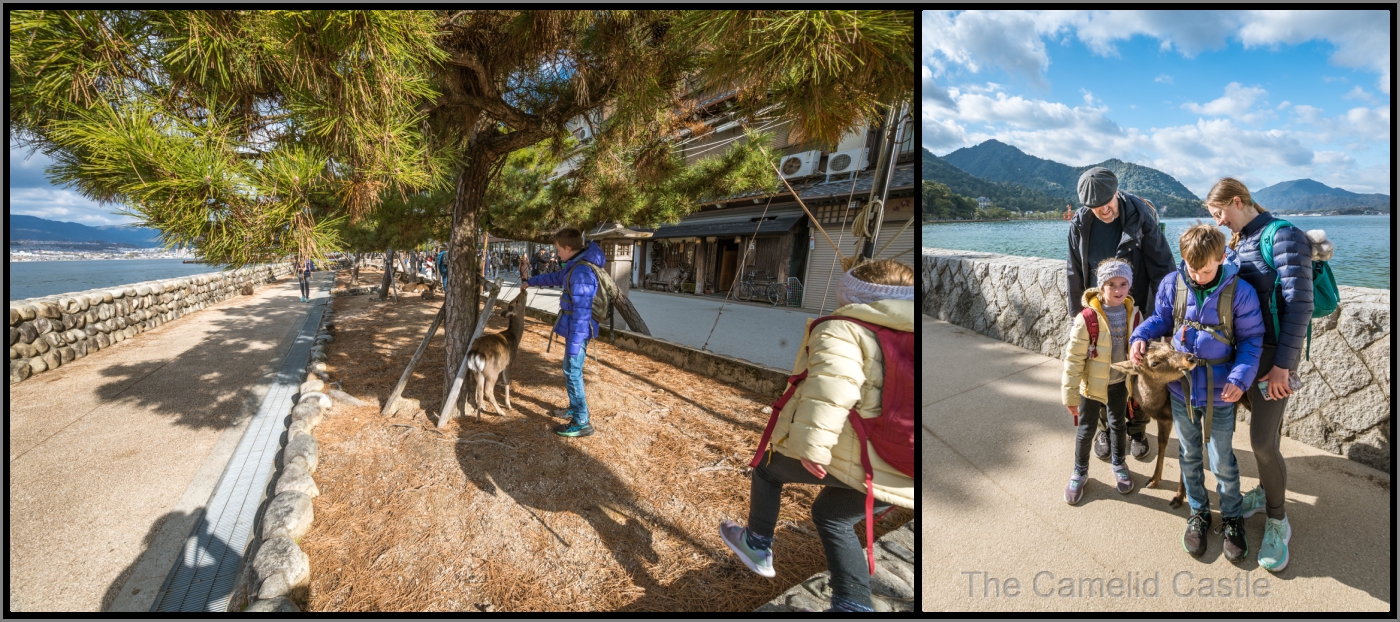
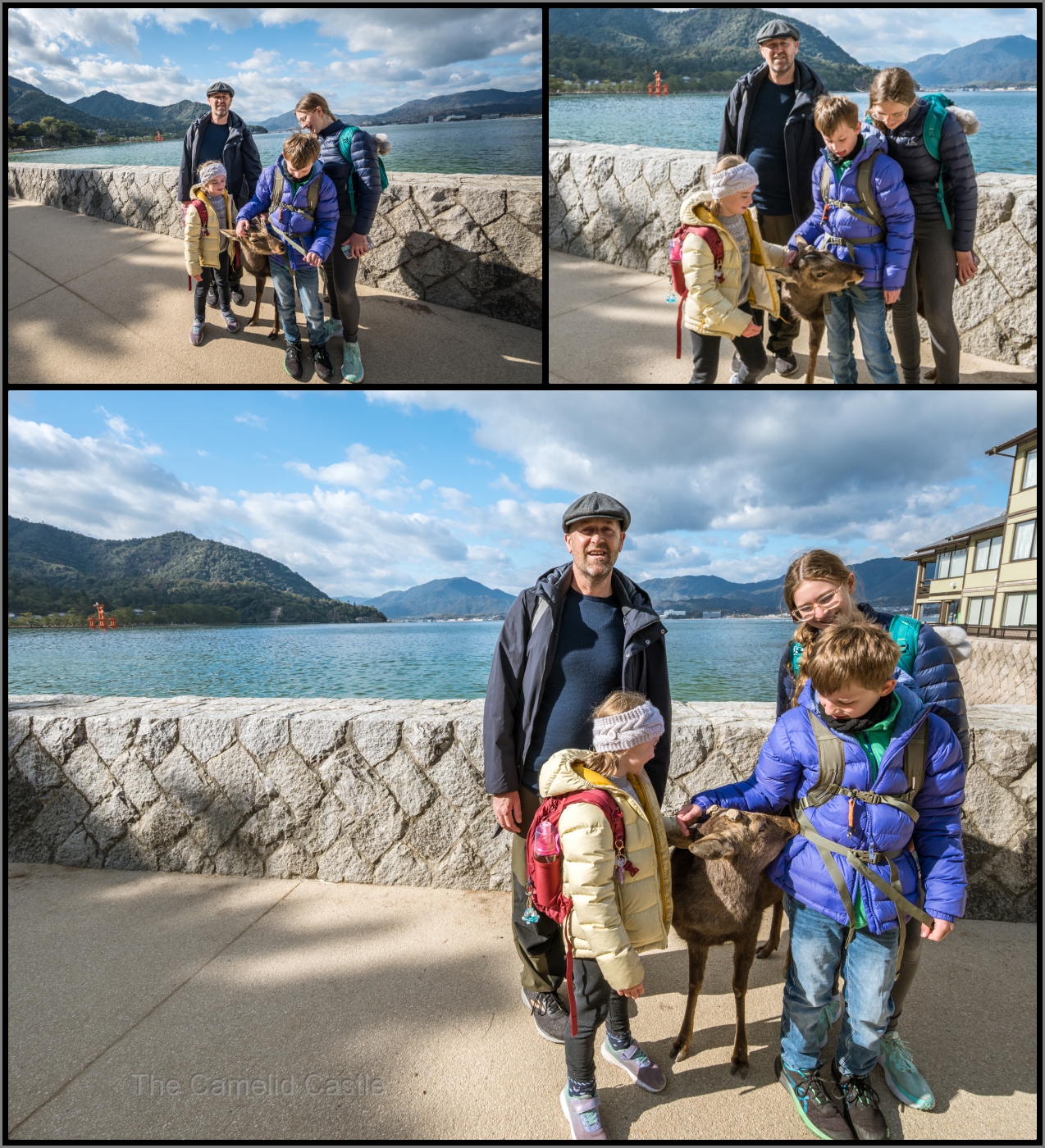
So just like Nara we were getting covered in deer slobber again!
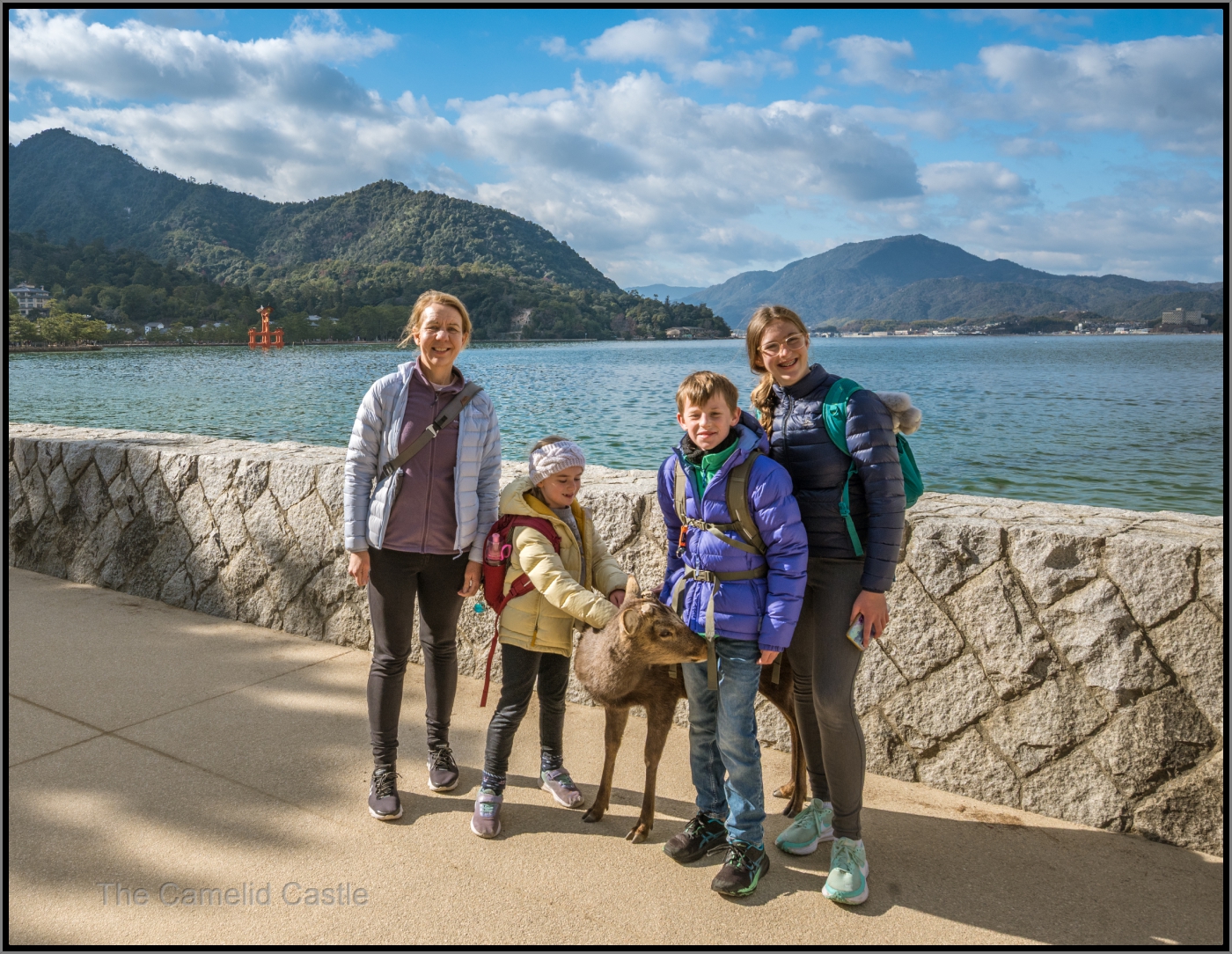
No crackers here but Soren was happy for the attention and pats!
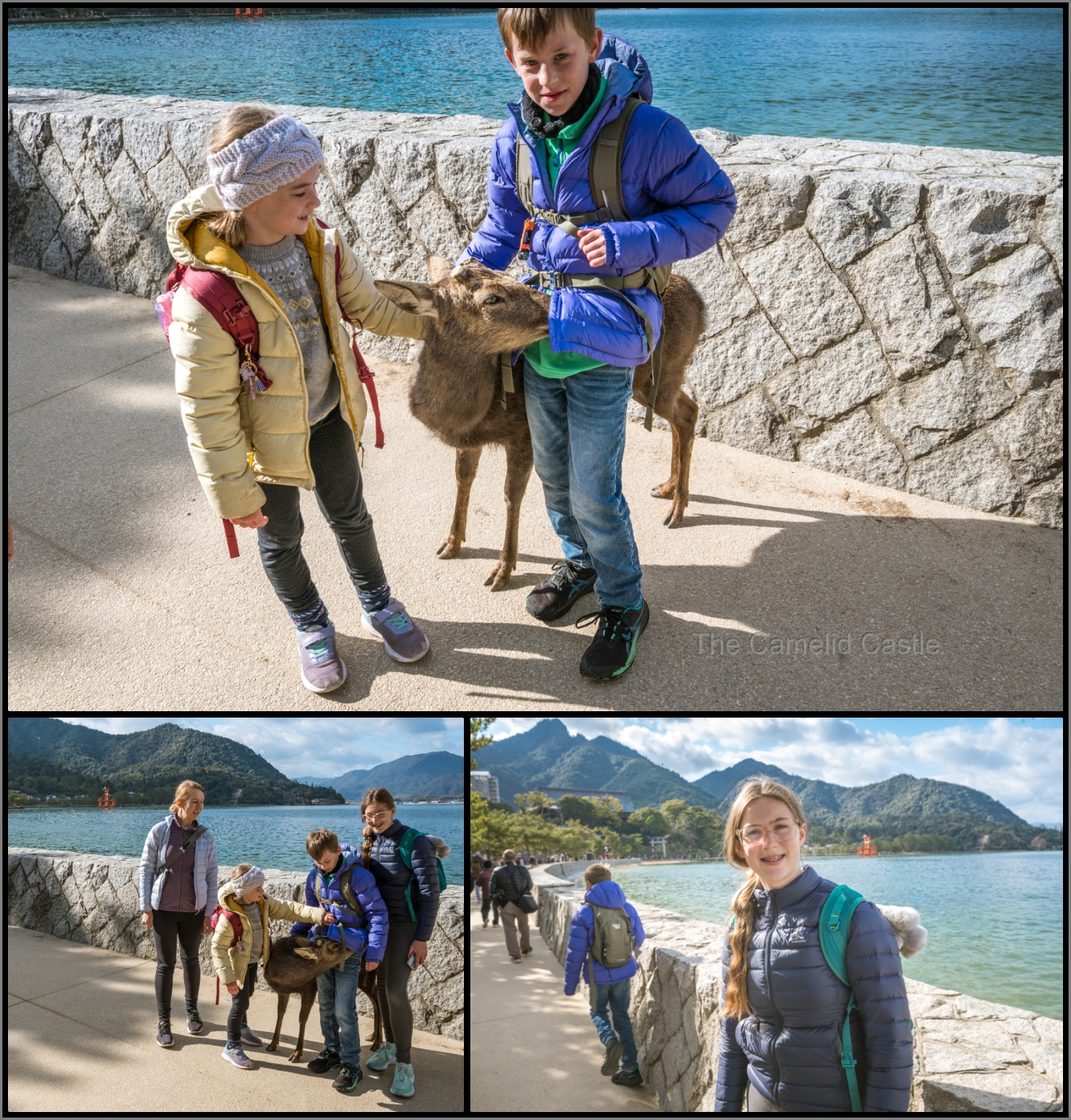
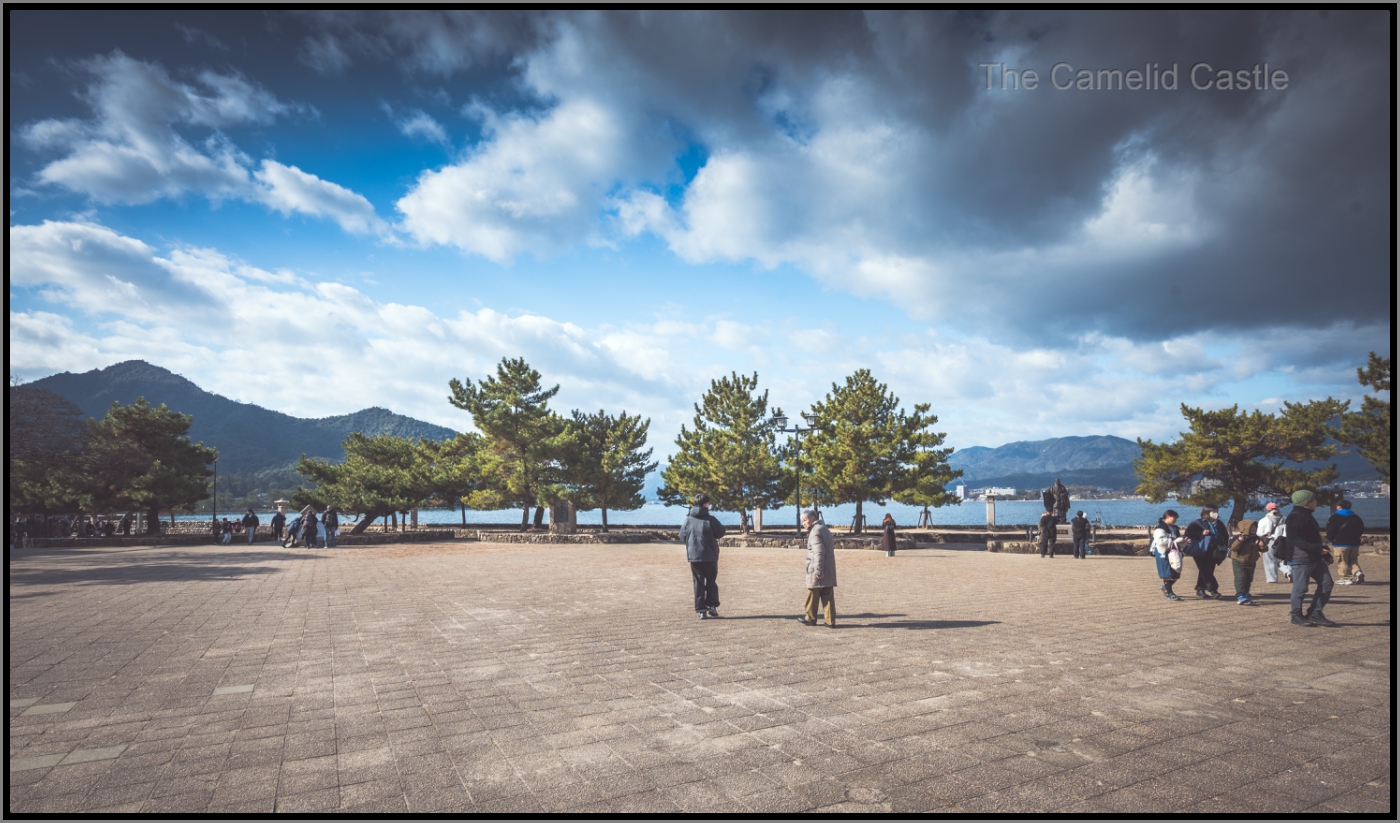
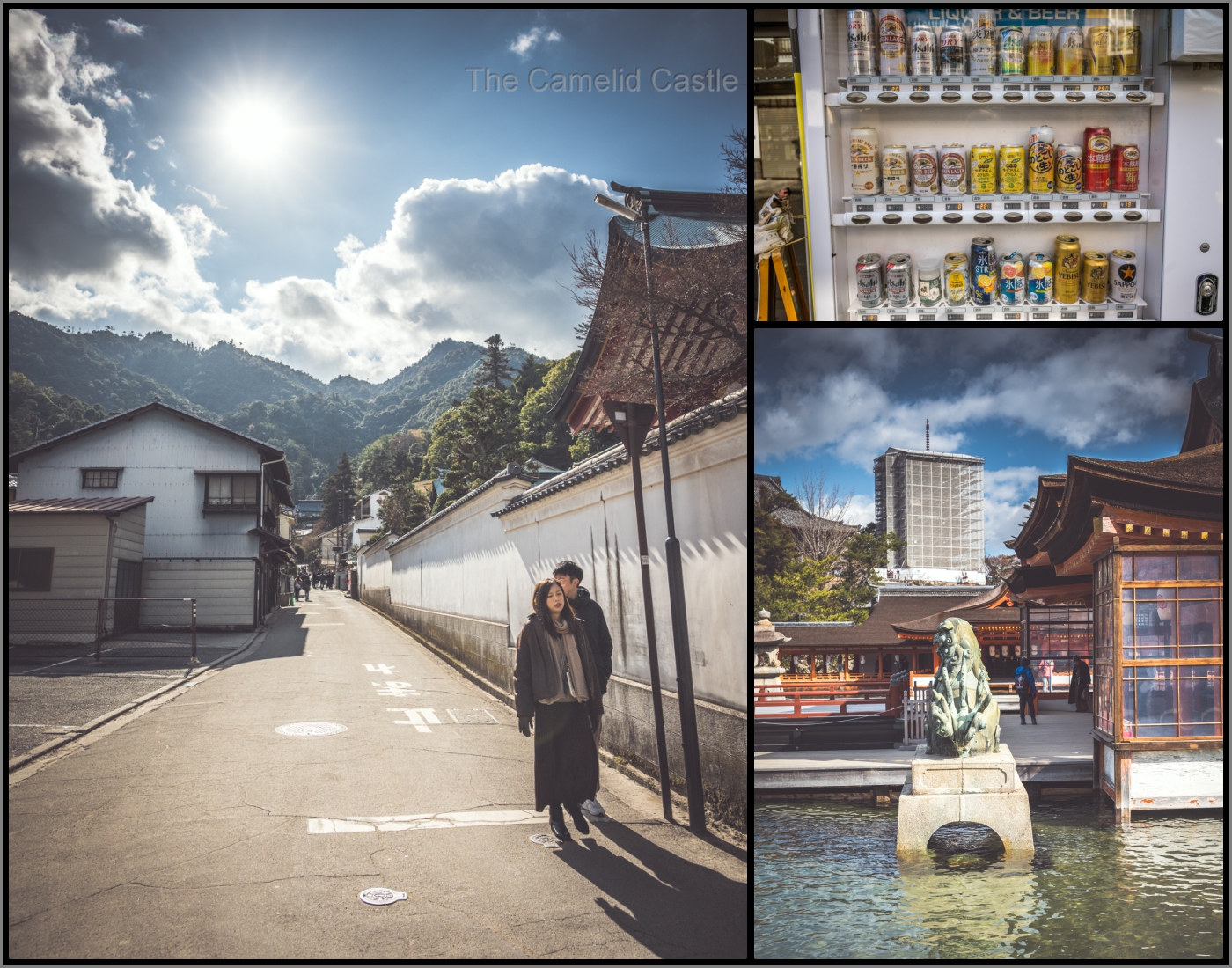
We wandered along the foreshore, patting deer and checking out the views across to the shrine.
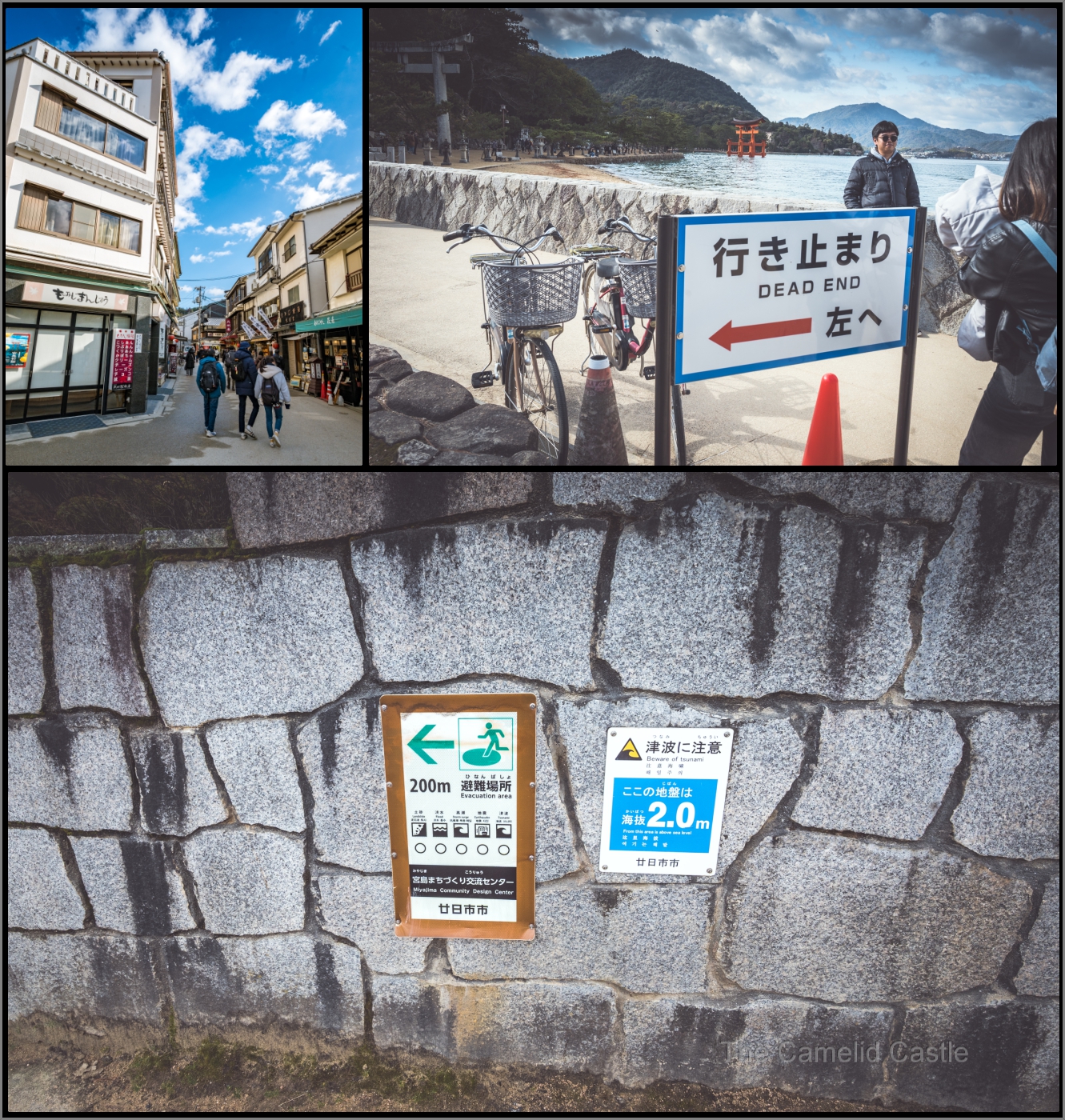
They are pretty keen on their tsunami evacuation plans and routes. There are always signs everywhere!
Itsukushima shrine……
We walked along the waterfront and communed with deer and checked out the views. The Itsukushima Shrine is a Shinto shrine and the entire complex is UNESCO World Heritage listed. It’s one of Japan’s most popular tourist attractions, but being Winter and out of peak Japanese holiday season now, it wasn’t too busy.
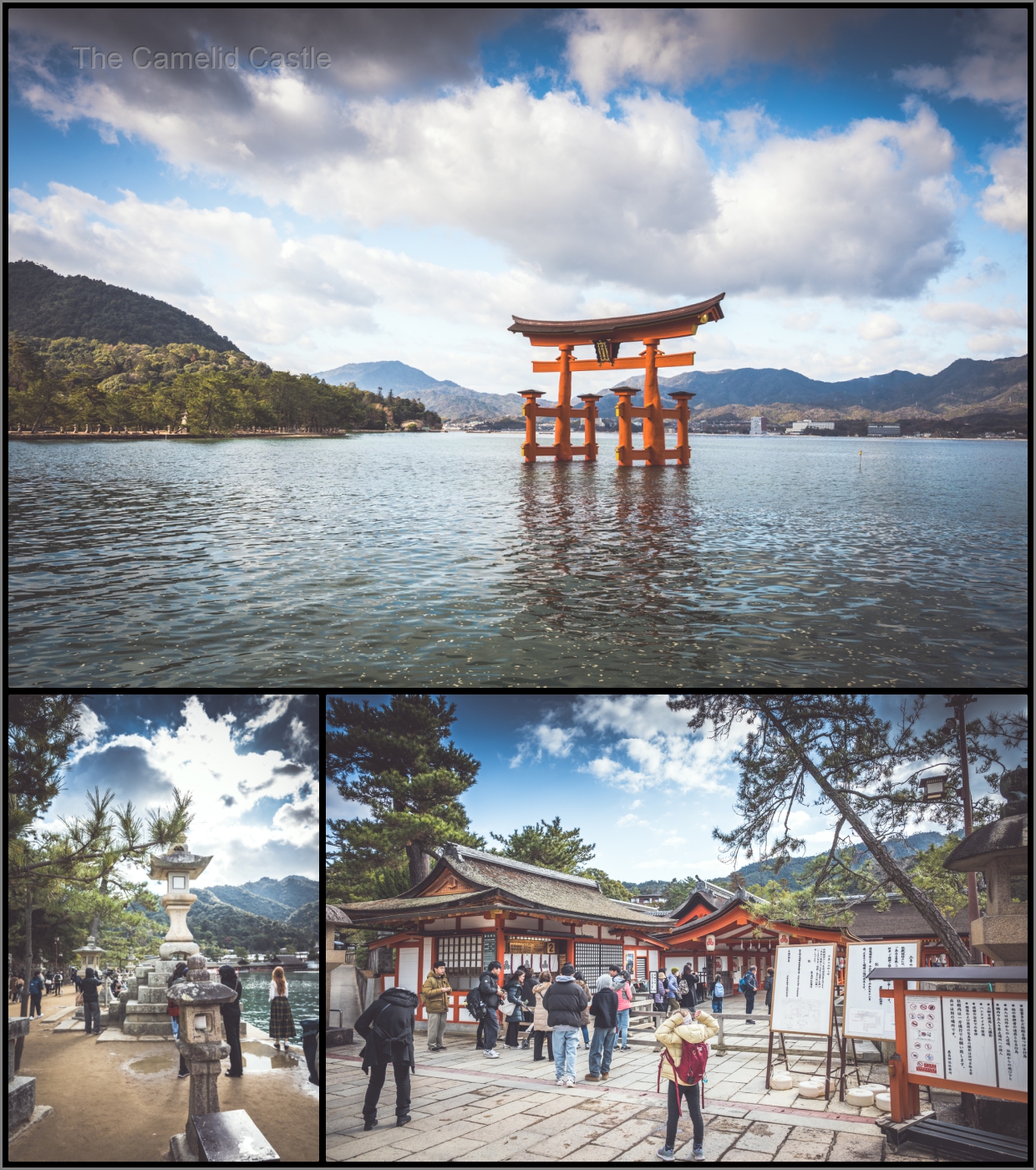
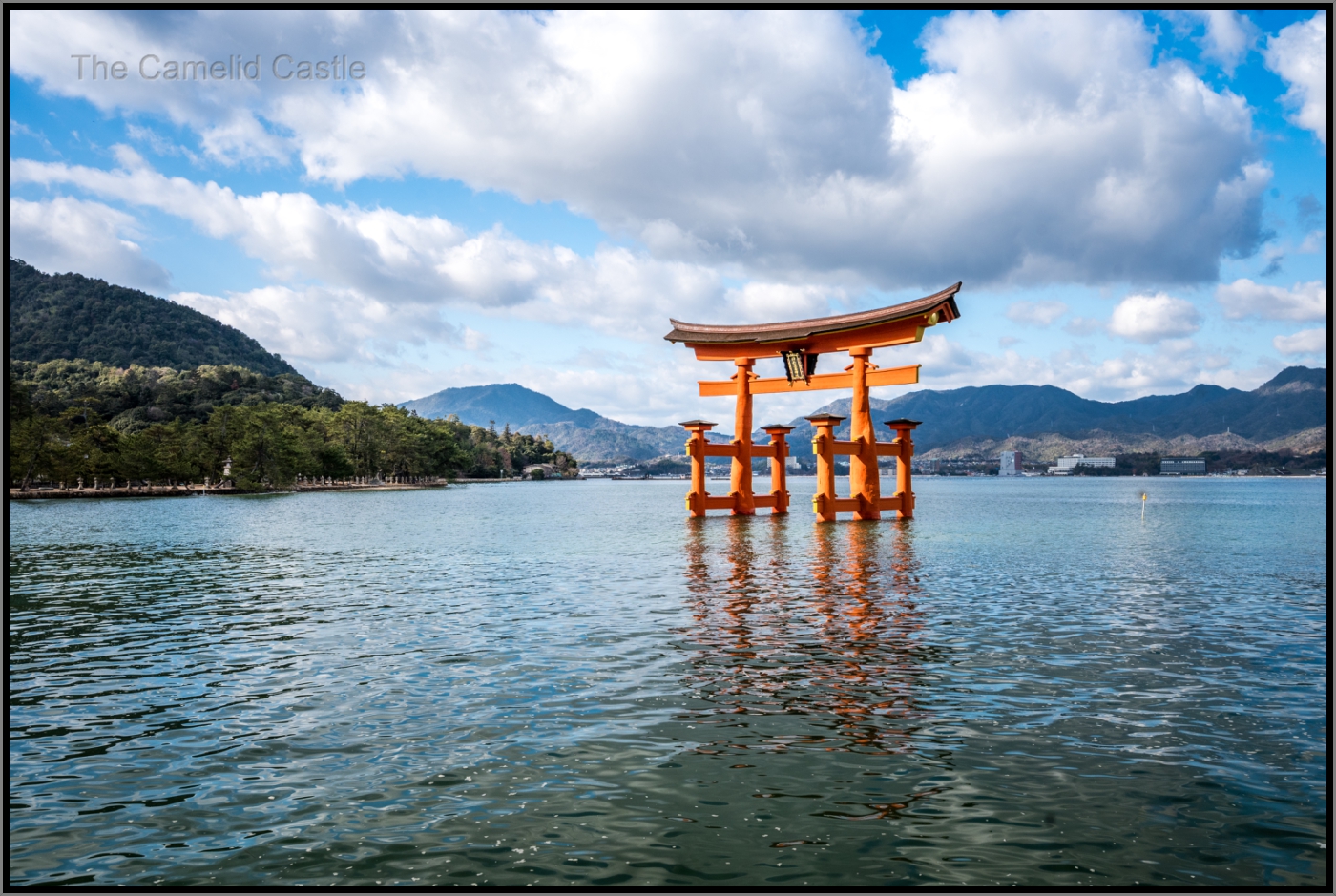
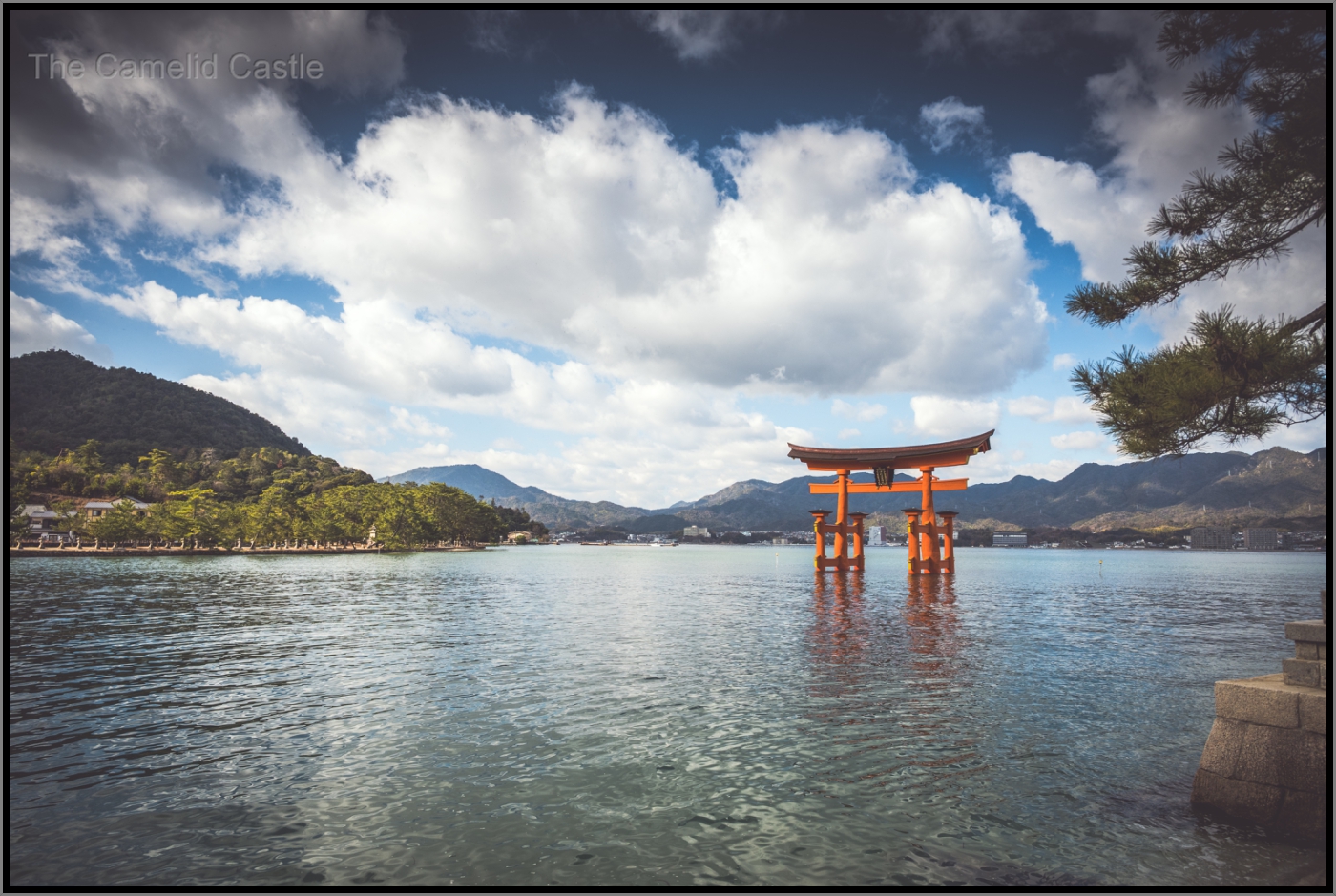
The floating Torii gates are iconic, and one of the most photographed places in Hiroshima. We had made sure we were here for high tide to get the full effect of the floating. The 15m high O-torii gate (the great gate) is built of decay resistant camphor wood. The gate only appears to be floating at high tide. When the tide is low you can walk to the gate and gathering shellfish in front of the gate is popular.
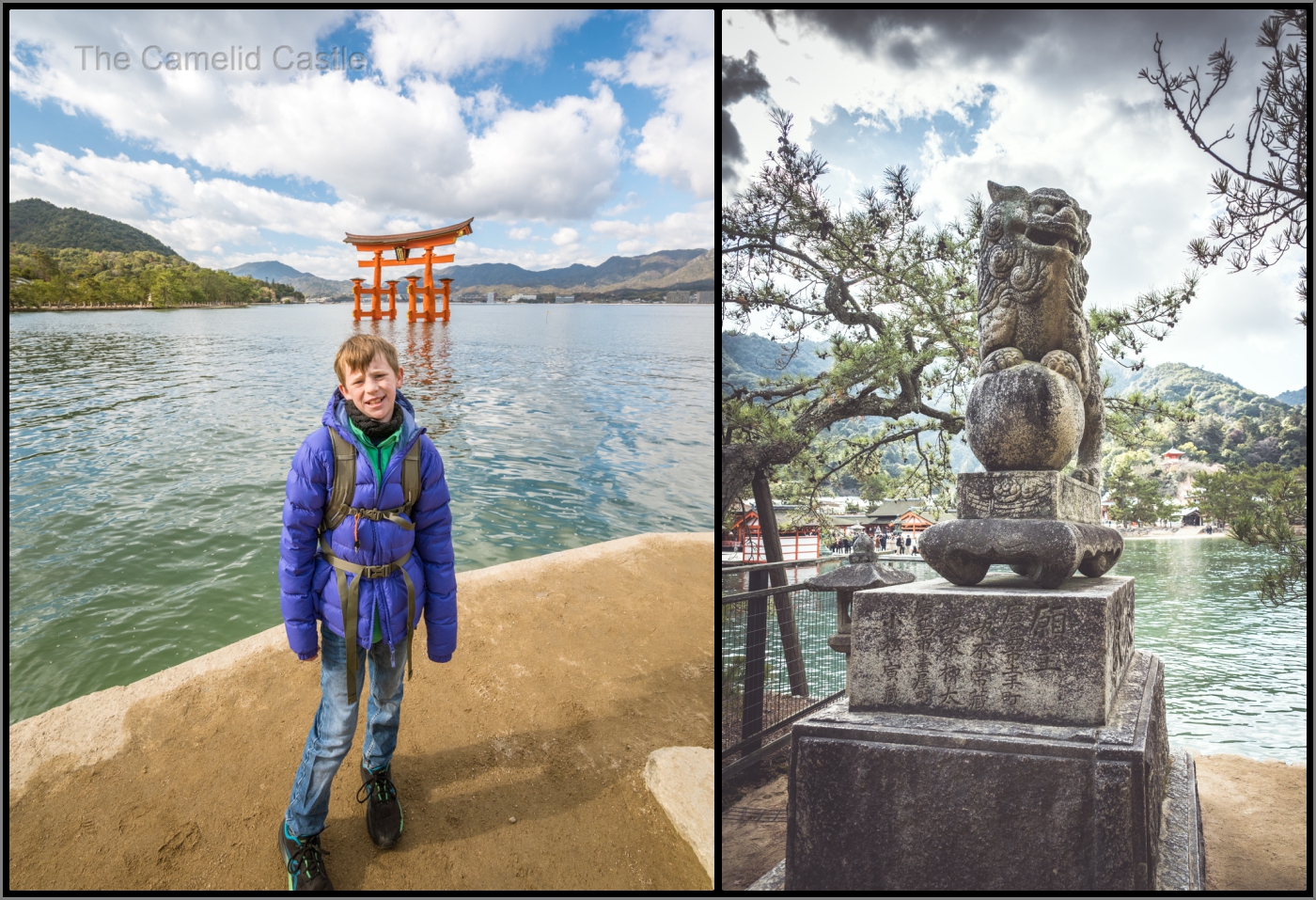
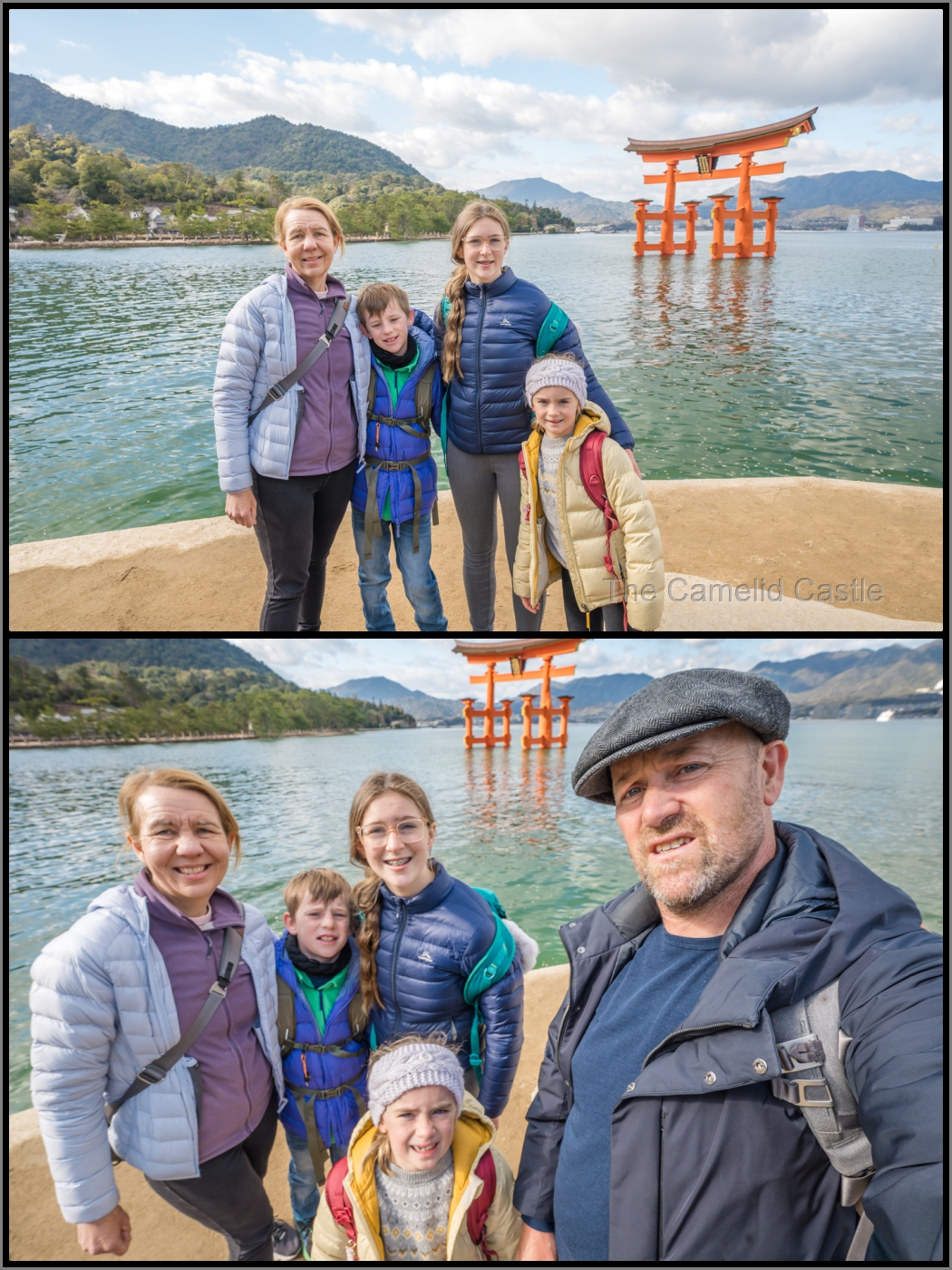
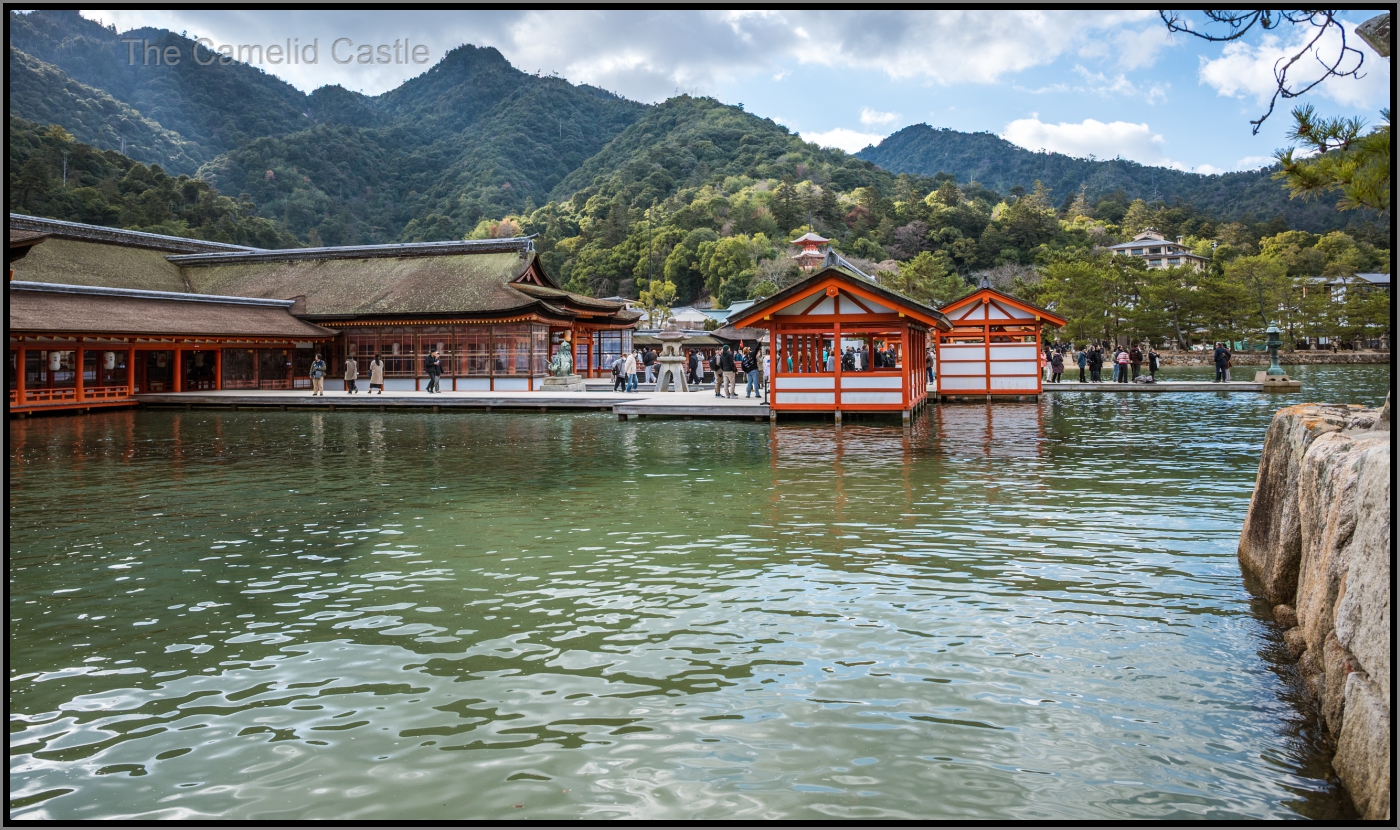
After having our compulsory selfies with the floating torii gate we went for a walk around the Itsukushima Shrine. The shrine is built over water and is beautiful. The Itsukushima shrine is dedicated to the three daughters of Susano-o no Mikoto. Otherwise known as the sanjoshin or “three female deities”, these Shinto deities are the goddesses of seas and storms. In Japanese, the word Itsukushima translates to “island dedicated to the gods”. The island itself is also considered to be a god, which is why the shrine was built on the outskirts of the island.
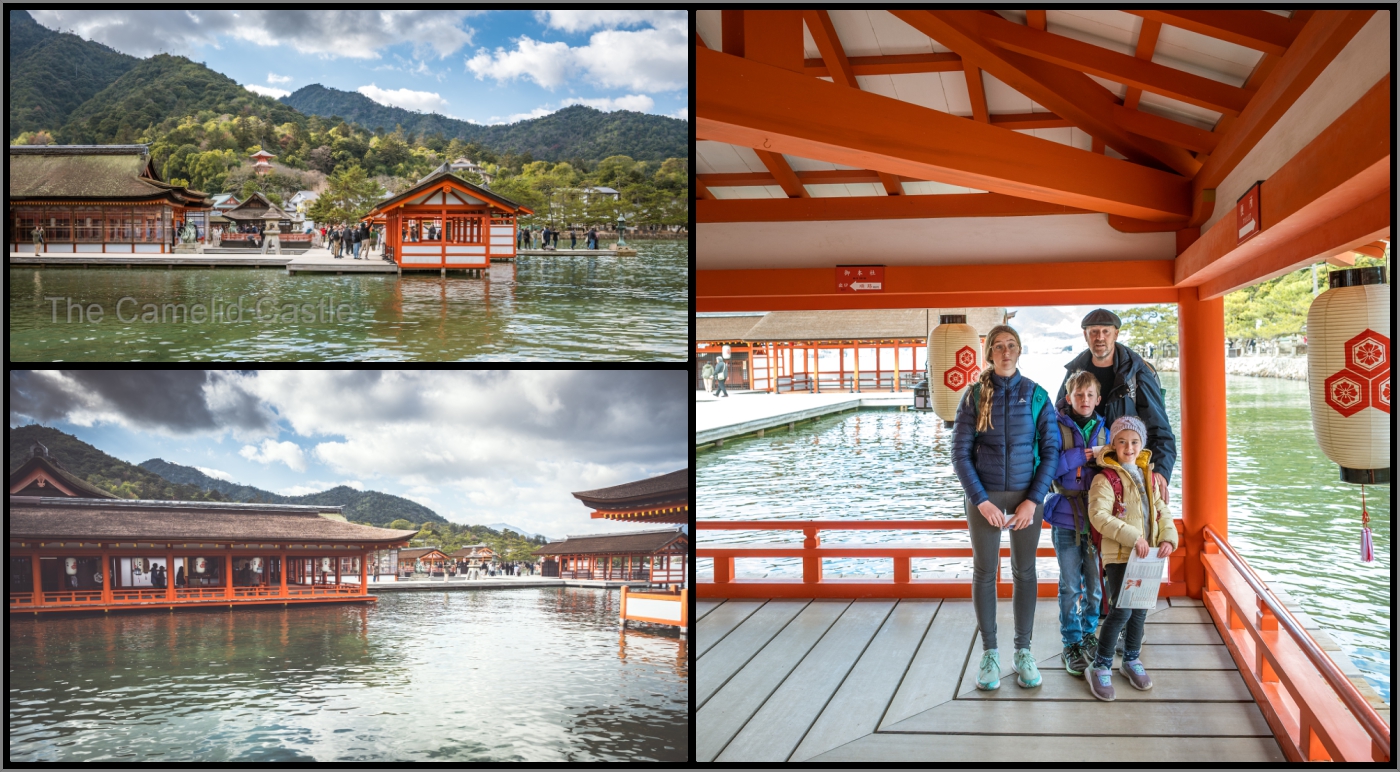
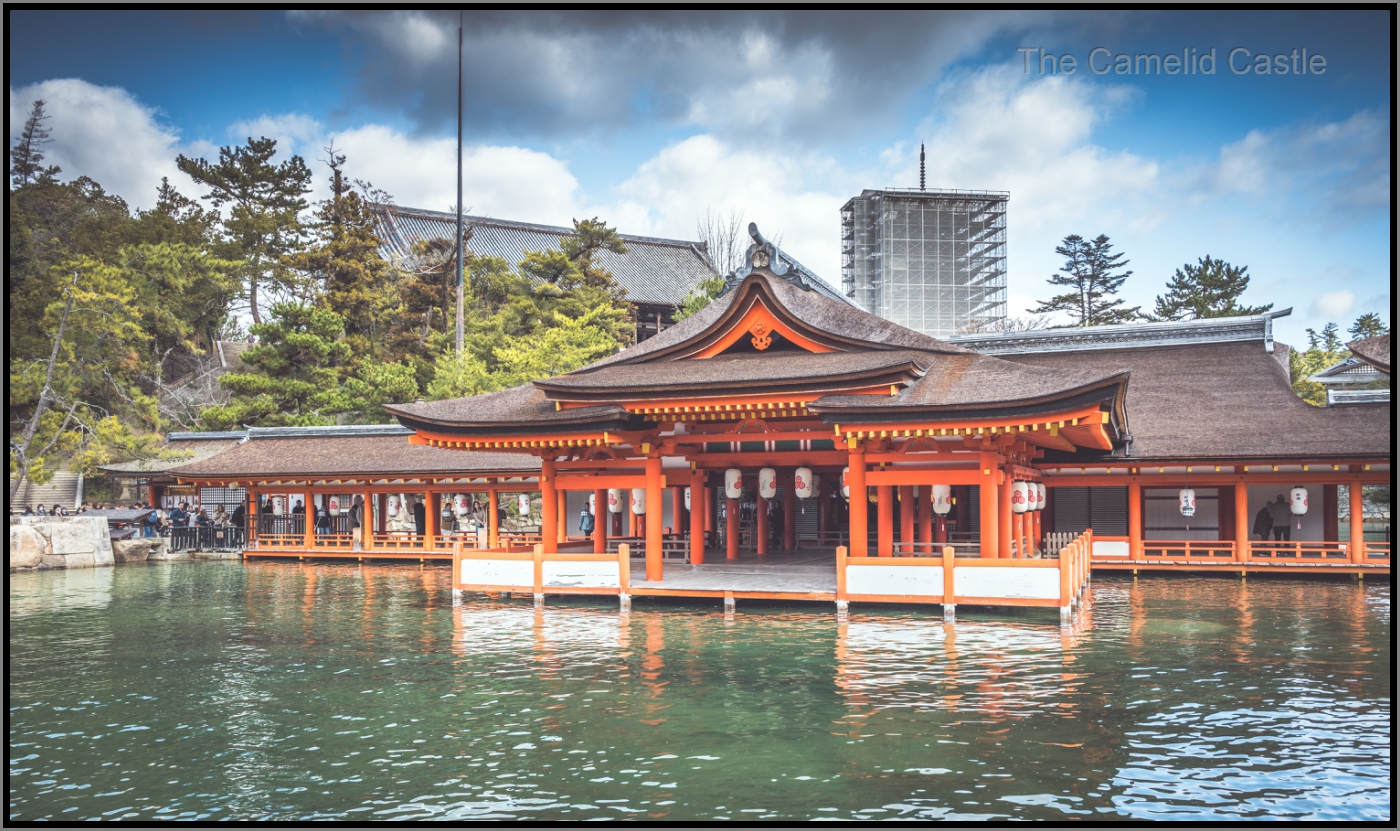
Originally Itsukushima was a pure Shinto shrine “where no births or deaths were allowed to cause pollution”. Because the island itself has been considered sacred, commoners were not allowed to set foot on it throughout much of its history to maintain its purity. Retaining the purity of the shrine is so important that since 1878, no deaths or births have been permitted near it. Even today burials on the island are forbidden and pregnant women leave to give birth and those sick or likely to pass also leave the island.
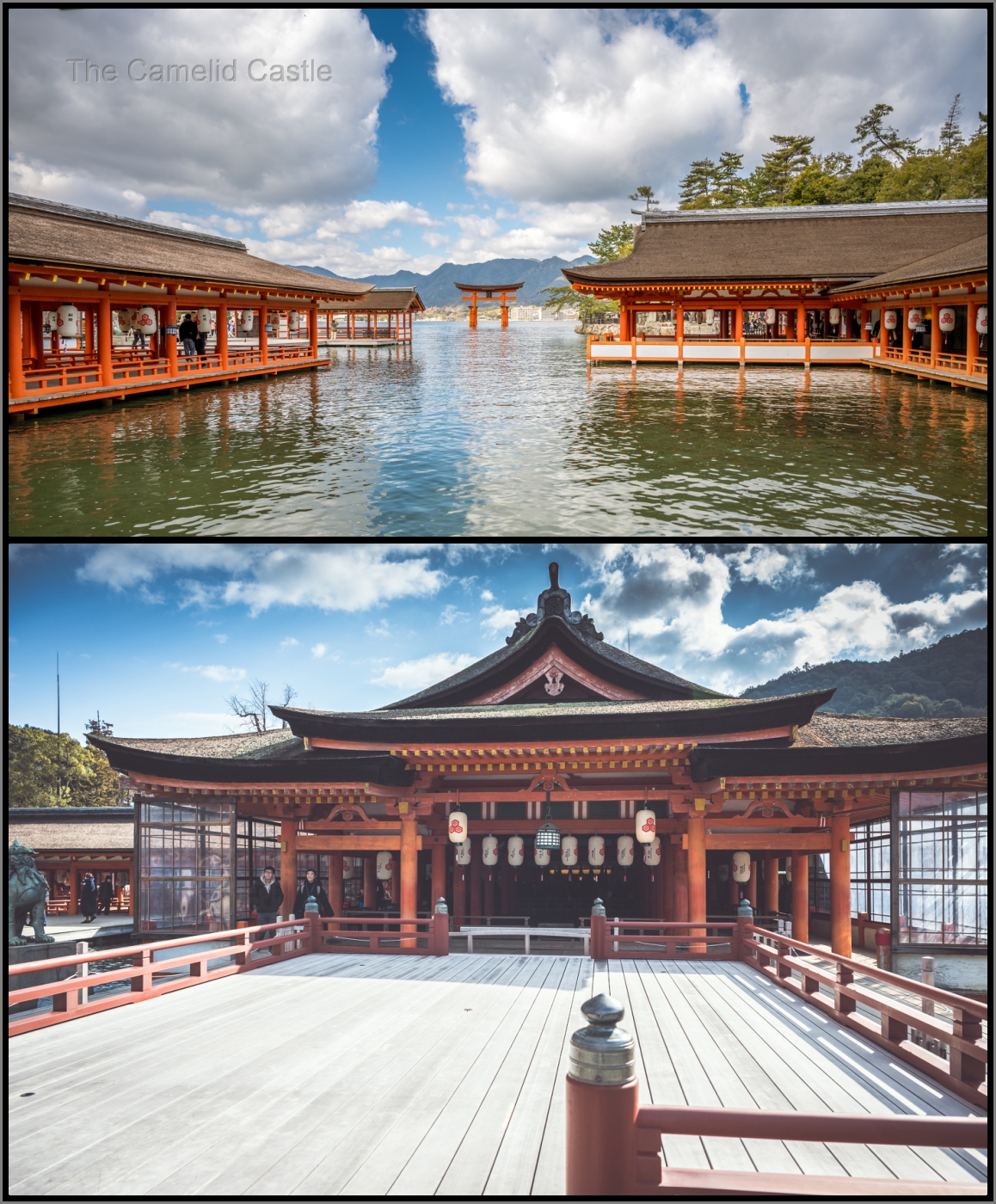
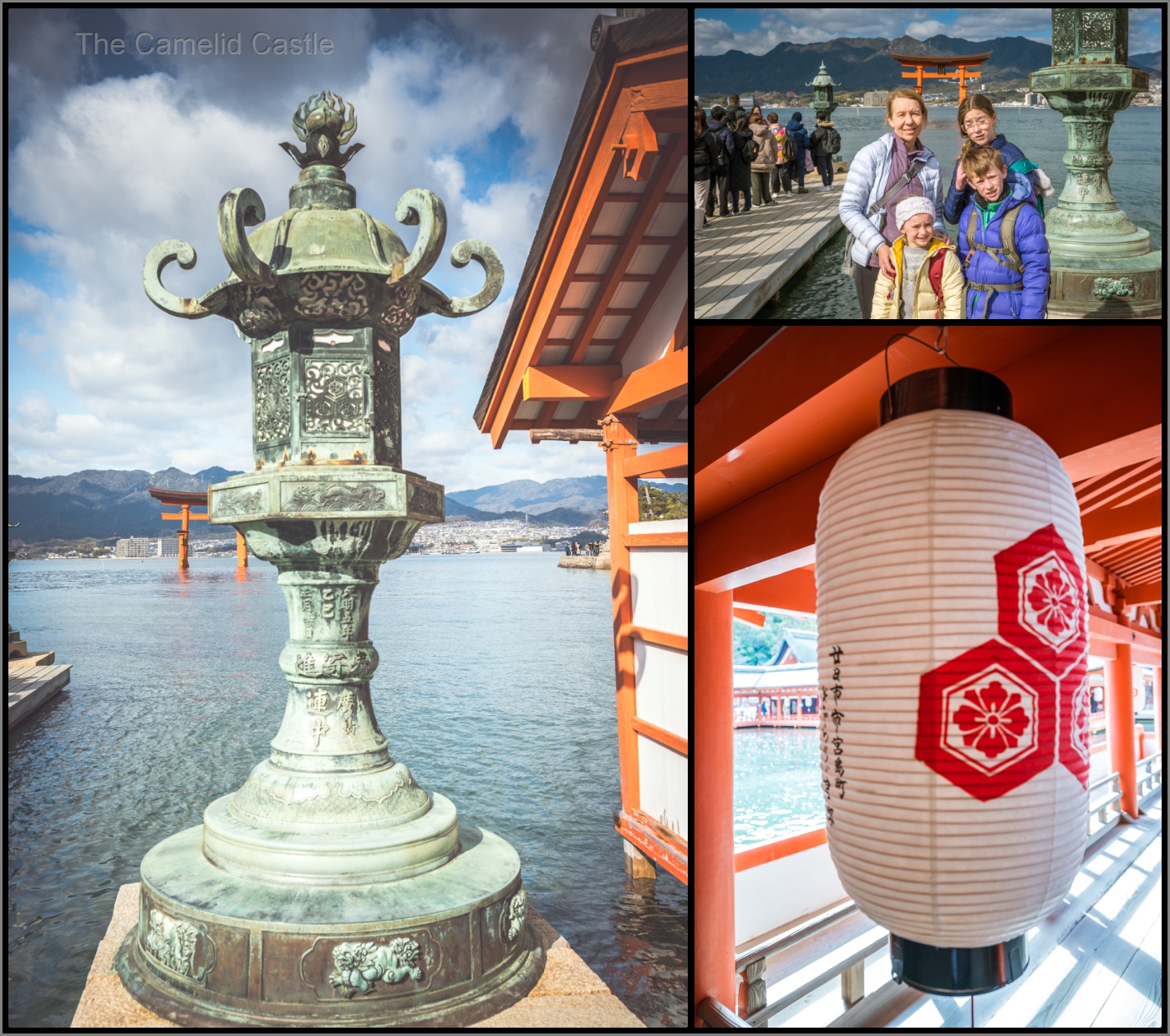
To allow pilgrims to approach, the shrine was built like a pier over the water, so that it appeared to float, separate from the land.[The red entrance gate, or torii, was built over the water for much the same reason. Commoners had to steer their boats through the torii before approaching the shrine.
Miyajima exploring, shopping and lunch…..
We’d enjoy our walk around the shrine, but Soren was continuing to not feel well so we sought out another and was enjoying hot yuzu tea from a vending machines. He now had a rating system of all the different brands.
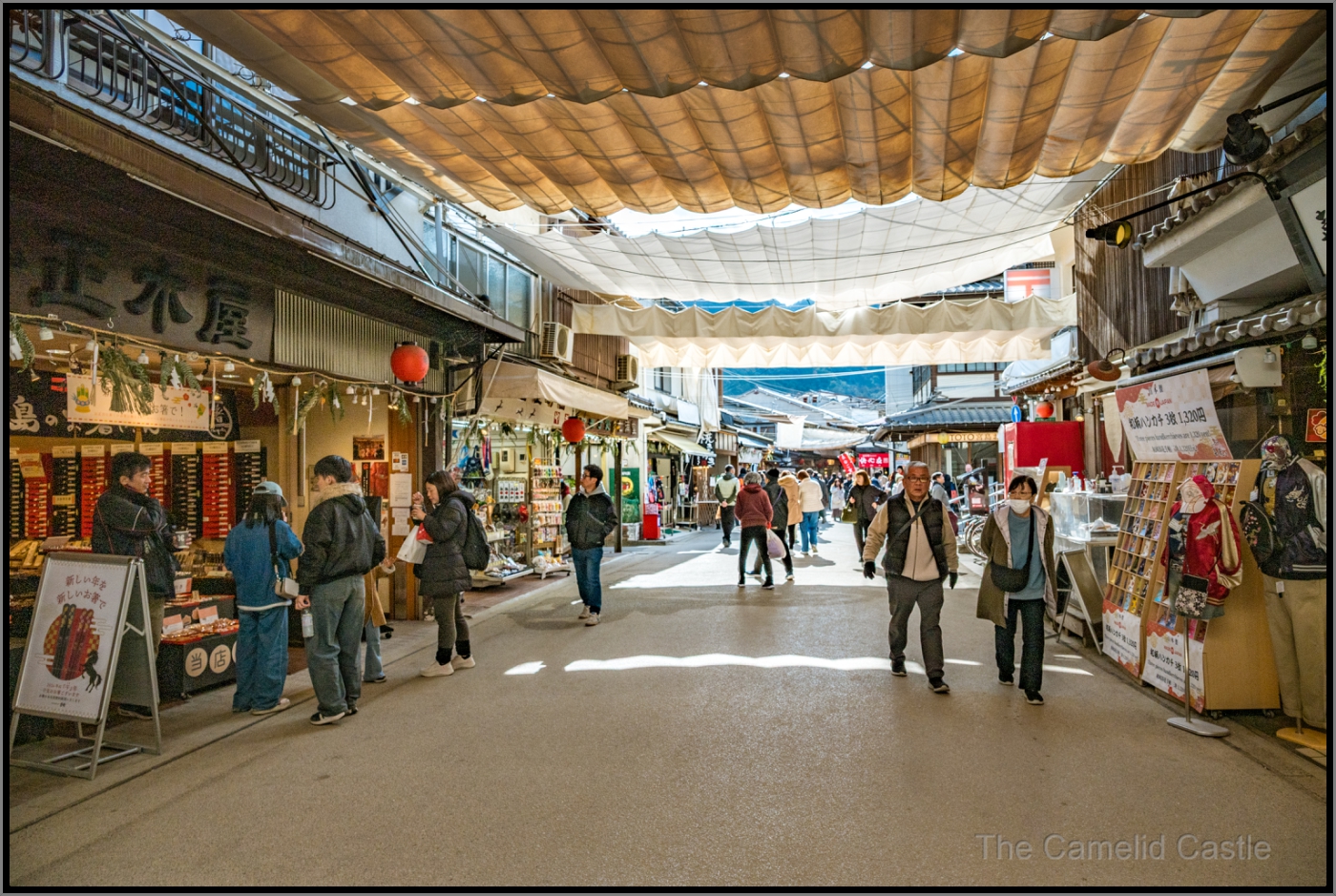
We did some souvenir shoppingb and checked out the marketb and then we were on the hunt for somewhere for lunch. Miyajima is known for oysters, and at least some of the family were keen on trying the local delicacy.
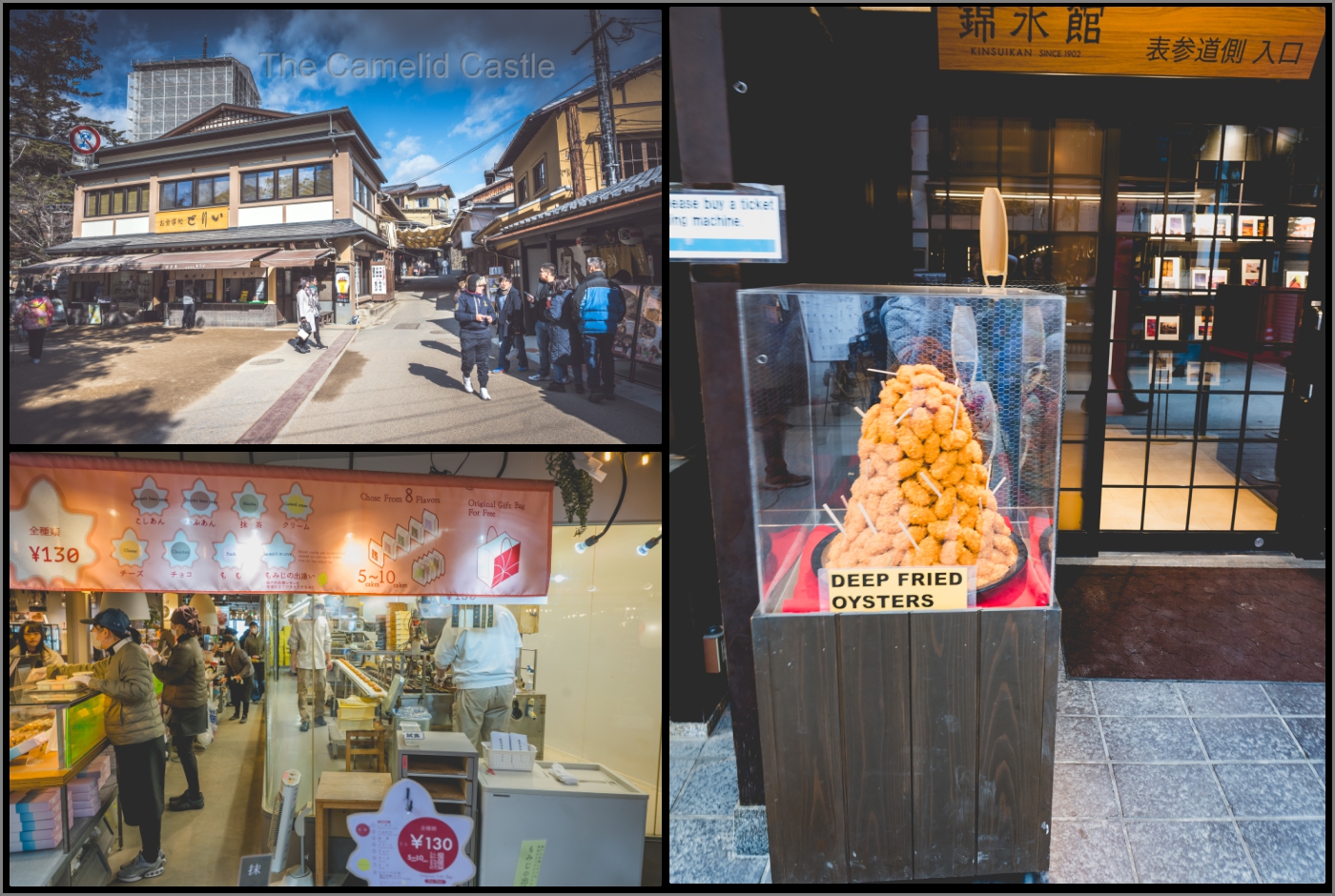
We’d found a place that did chopstick engraving that didn’t have a long wait. The kids had tried to buy some a couple of days earlier in Kyoto, but the wait was too long. Every place we’d seen since had been about 3 times the price, but today we were in luck. Chopsticks were picked out and the names transcribed, and while I waited for the engraving the others wet off in search of food.
All ready for a sit down inside and some warmth, Anto found a place were Anto and Soren had burgers with fried oysters and I even got a veggie tempura that was indeed vegetarian and had no fish sauce. Zinnia had a giant kids udon and Astrid had her burger without oysters.
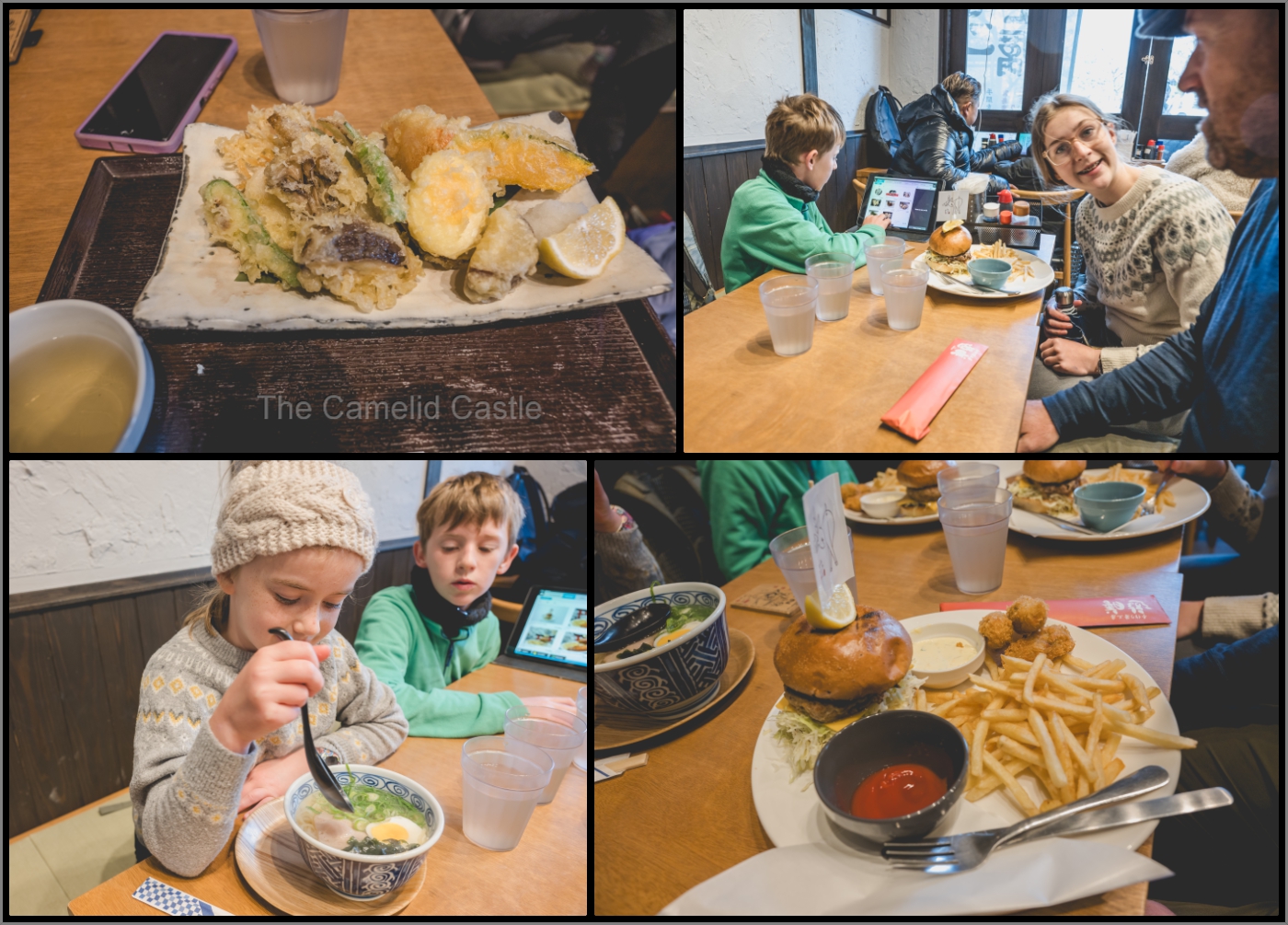
We could see the deer from our lunch spot and had to venture back outside to give them more pats.
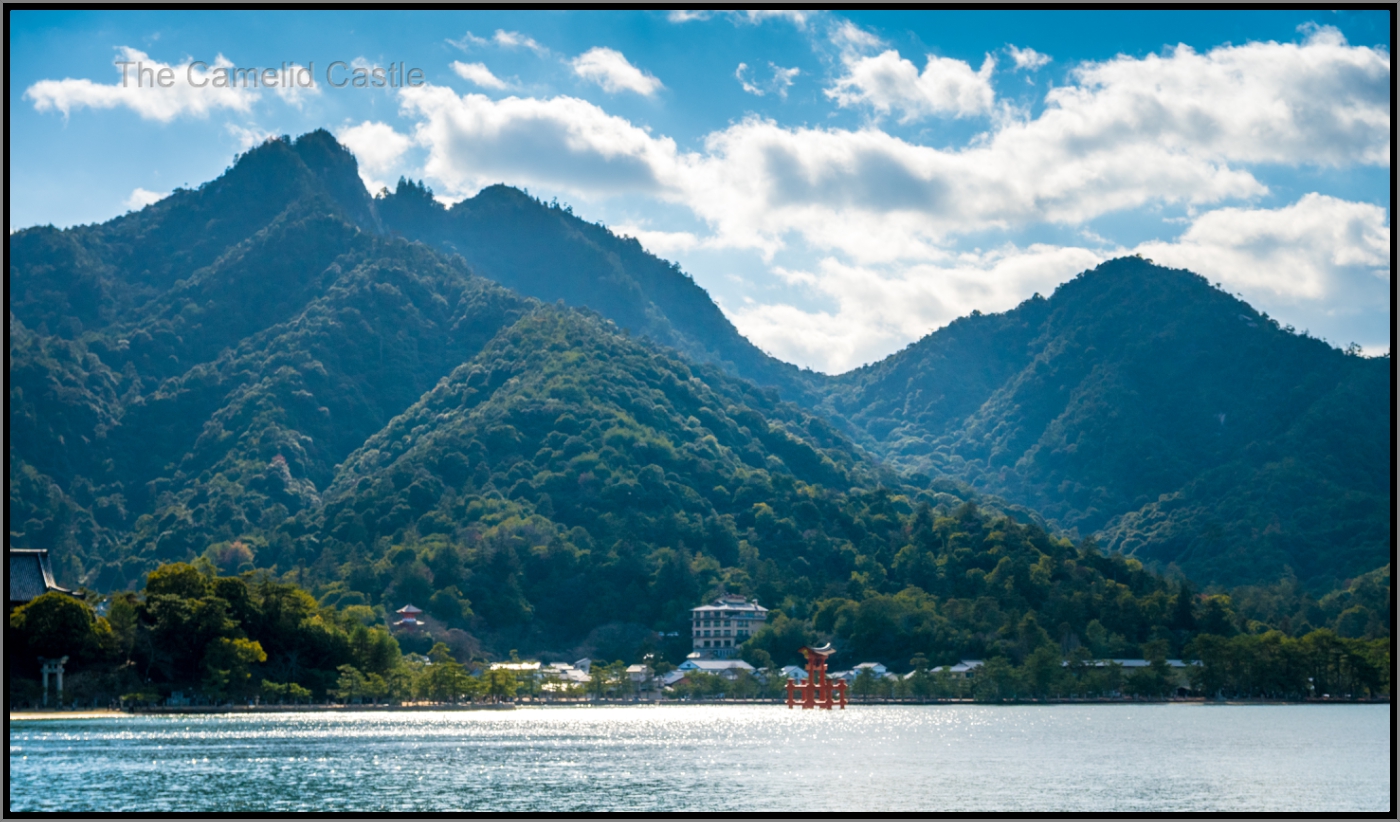
The highest point on Miyajima is Mount Misen. It offers panoramic views over the Seto Inland Sea. We would have liked to do the Miyajima ropeway (cable car) up the mountain but we were aware that several sections were undergoing routine maintenance. It was going to take several hours due to closures of sections and we wanted to get back to Hiroshima to do our other planned sightseeing. We’d all thoroughly enjoyed Miyajima island so maybe one day a repeat visit was in order!
Back to Hiroshima…..
It was another scenic ride back on the 1pm ferry to the train train station. It was even less busy on the return ferry!
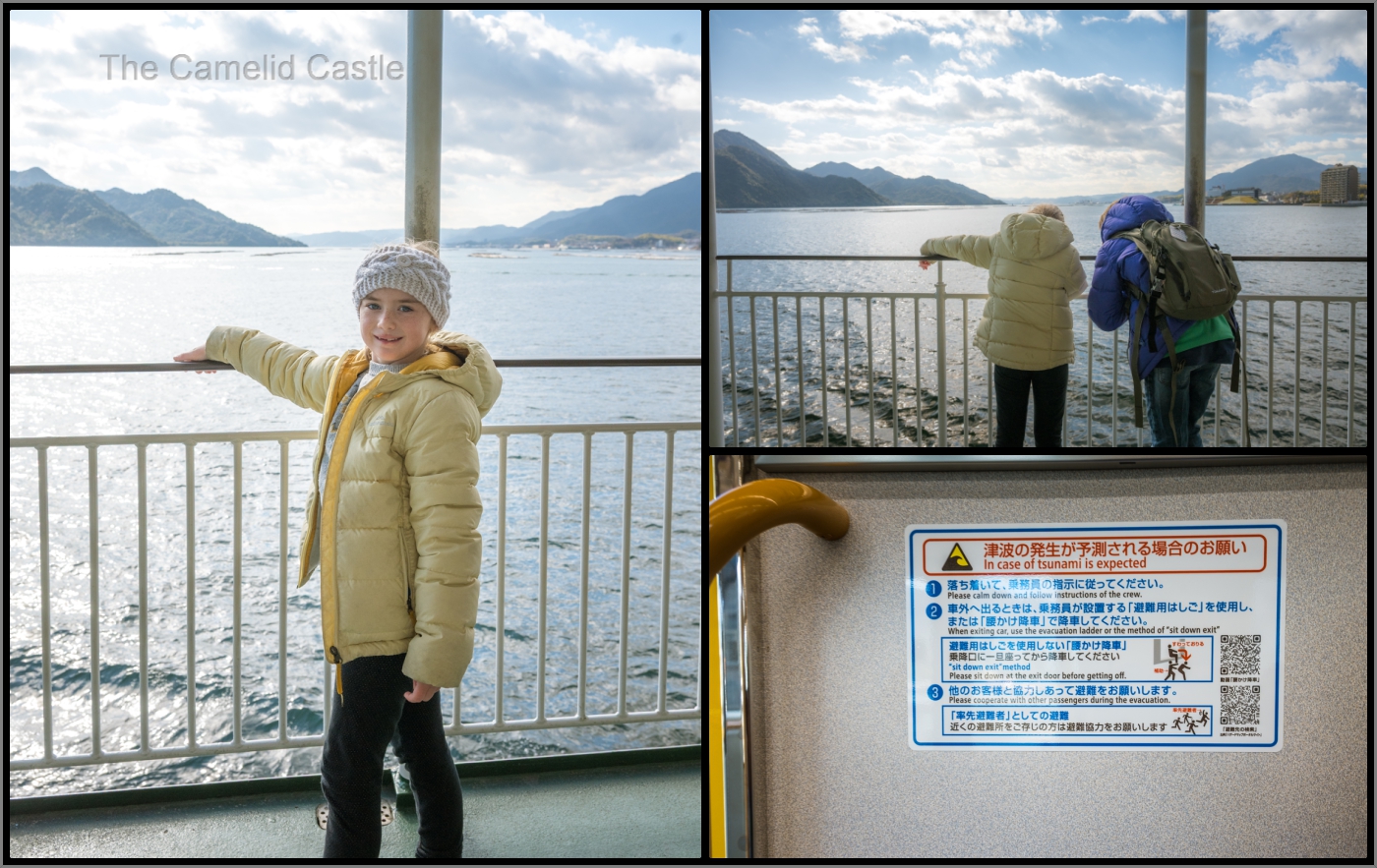
This time the return train into Hiroshima did not stop due to an earthquake, but we saw checking the news that all the shinkansen were still delayed due to the morning earthquake.
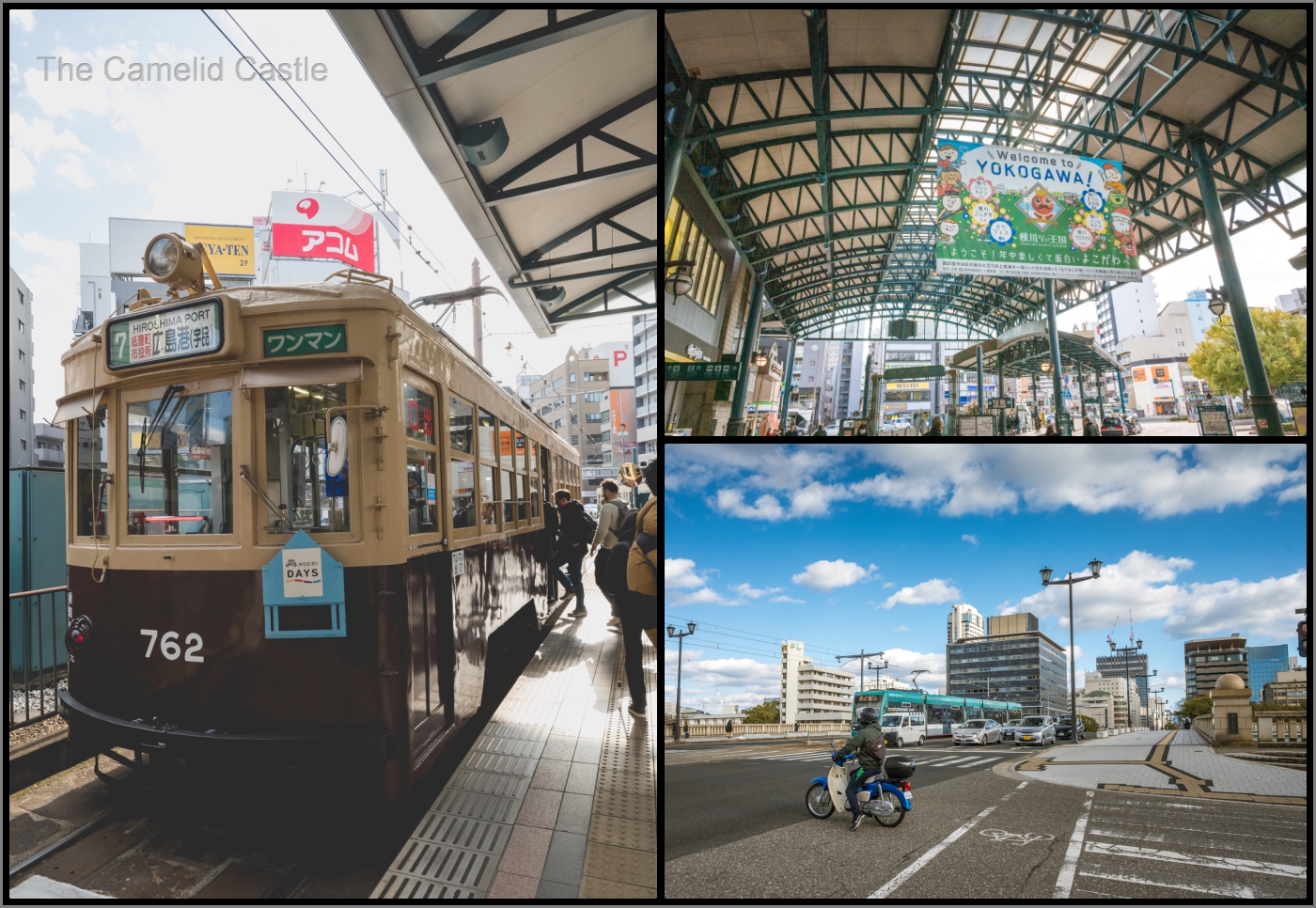
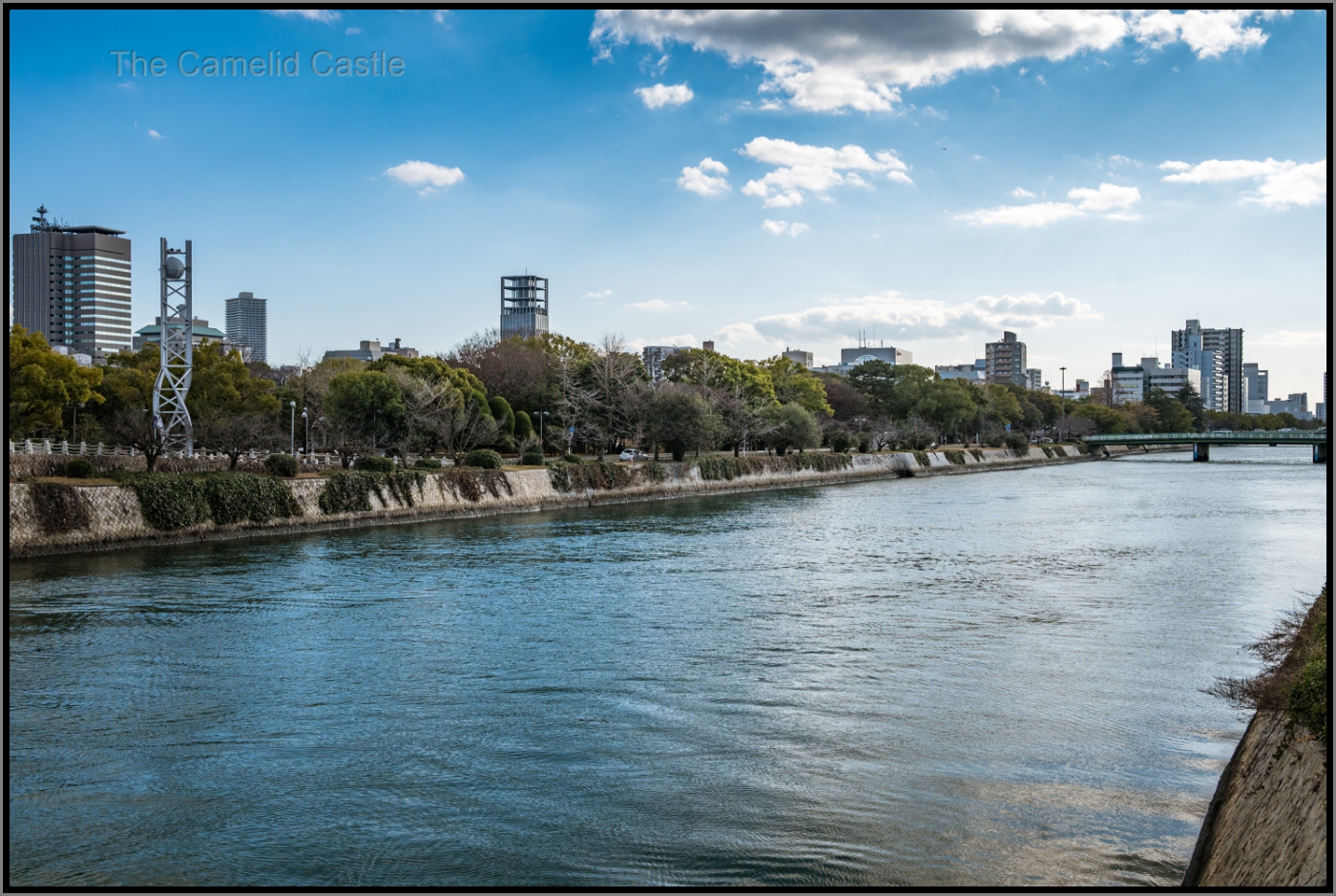
Next on the agenda was the Hiroshima Peace Memorial Park. We caught the tram to Yokogawa station and had a short walk over the find the park.
The A-Bomb Dome….
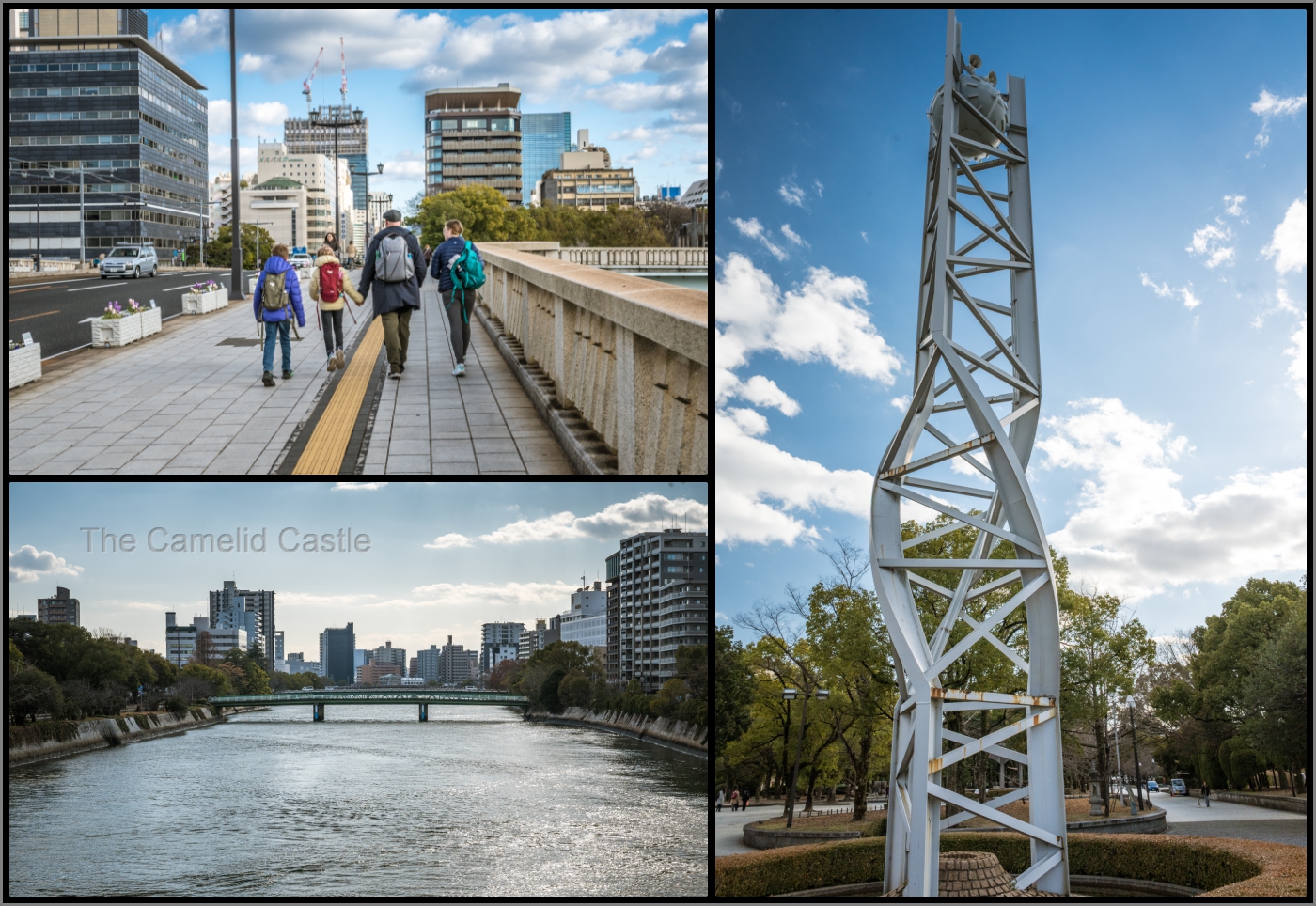
The Hiroshima Peace Memorial Park is in the centre of Hiroshima and is dedicated the historical events on August 6, 1945, when the United States dropped an atomic bomb on the city of Hiroshima. The first city in the world to suffer a nuclear attack.
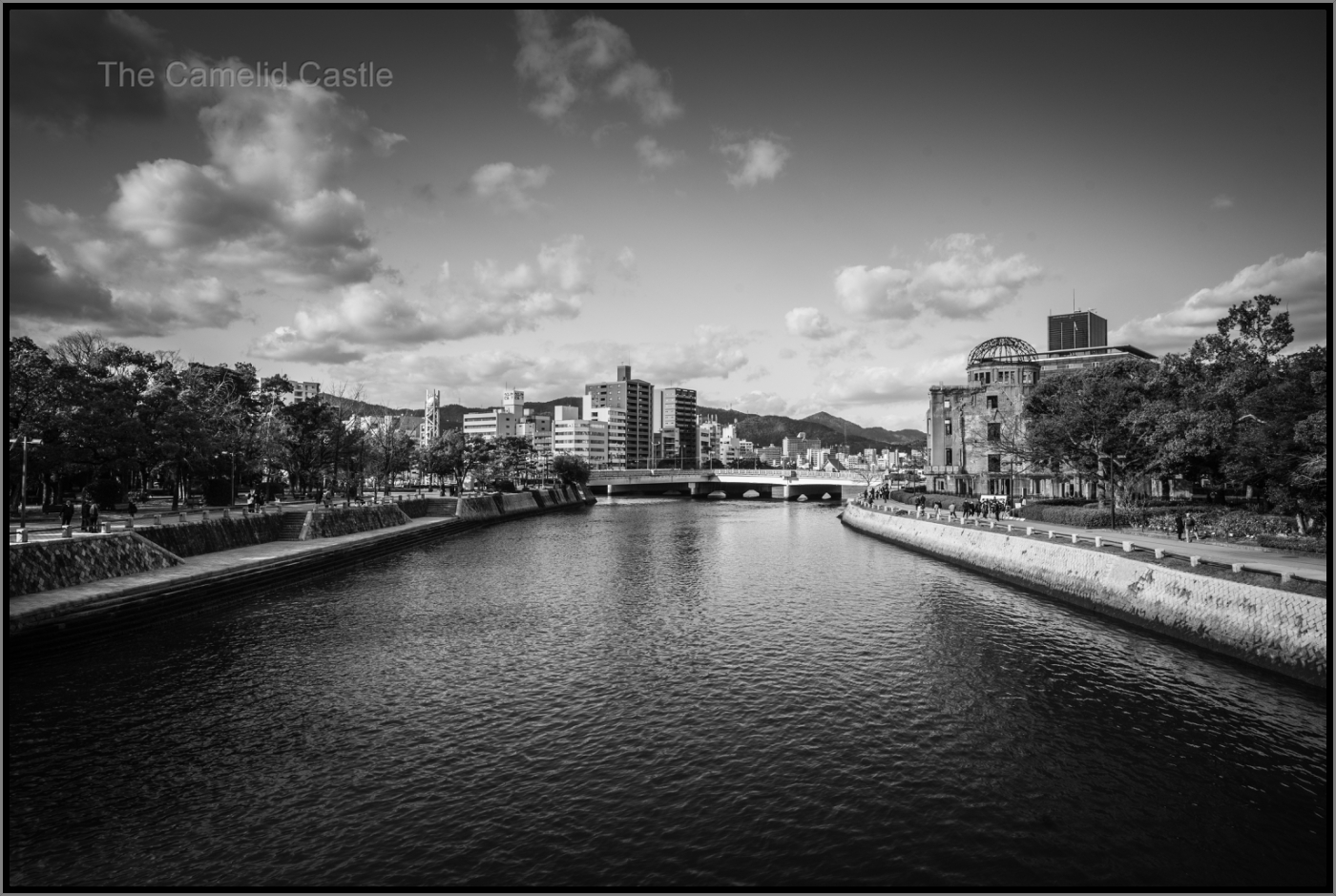
The Peace Memorial Park is built on an open field that was created by the explosion that was formally a busy downtown commercial and residential district. We first went to the A-Bomb Dome, the skeletal ruins of the former Hiroshima Prefectural Industrial Promotion Hall. It is the building closest to the hypocentre of the bomb that remained partially standing after blast. Everything else was entirely flattened.
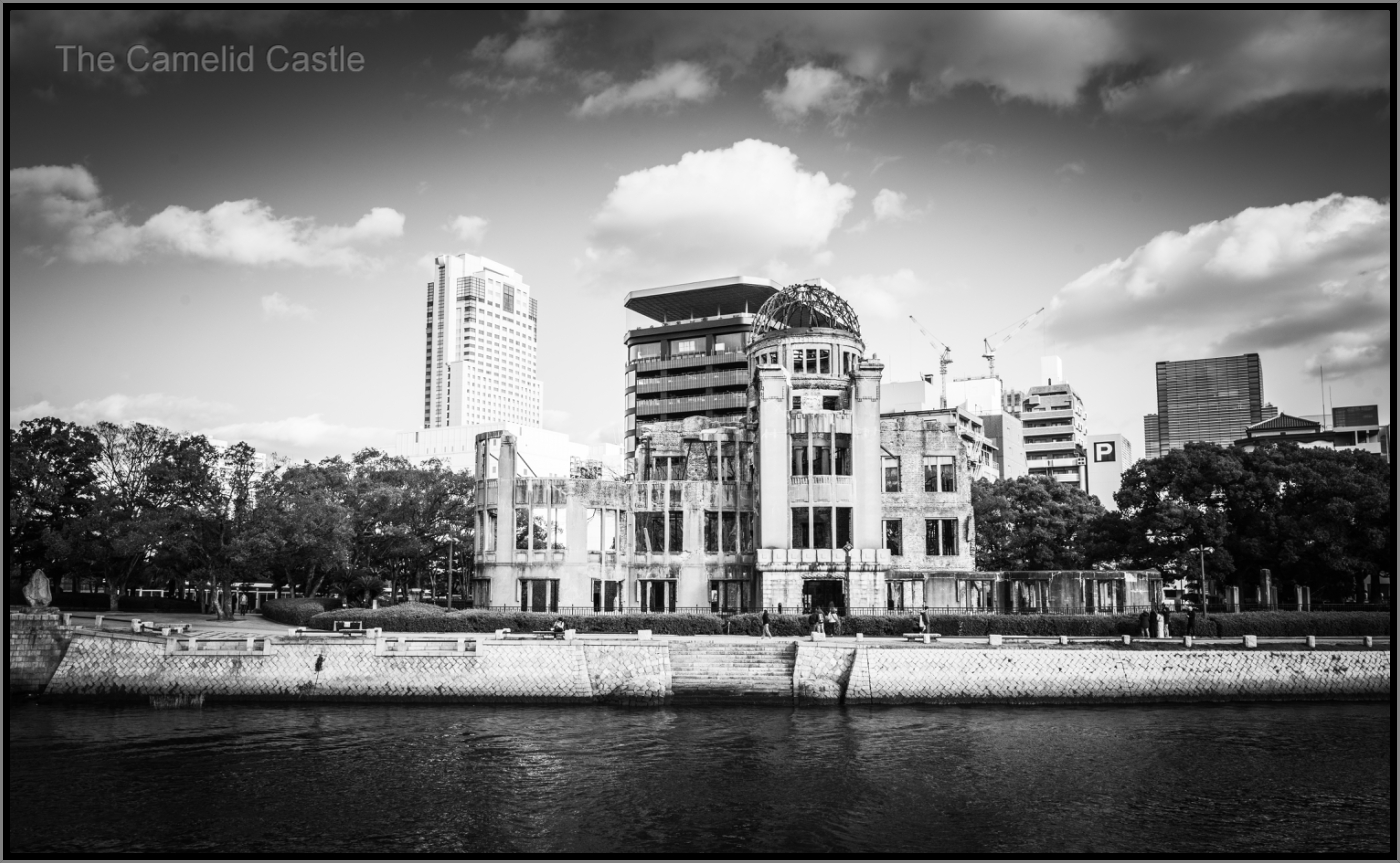
The building was 160m from the hypocentre of the bomb and it’s now a very poignant reminder of the devastation that took place on that fateful day. You can observe the dome from many places through out the park.
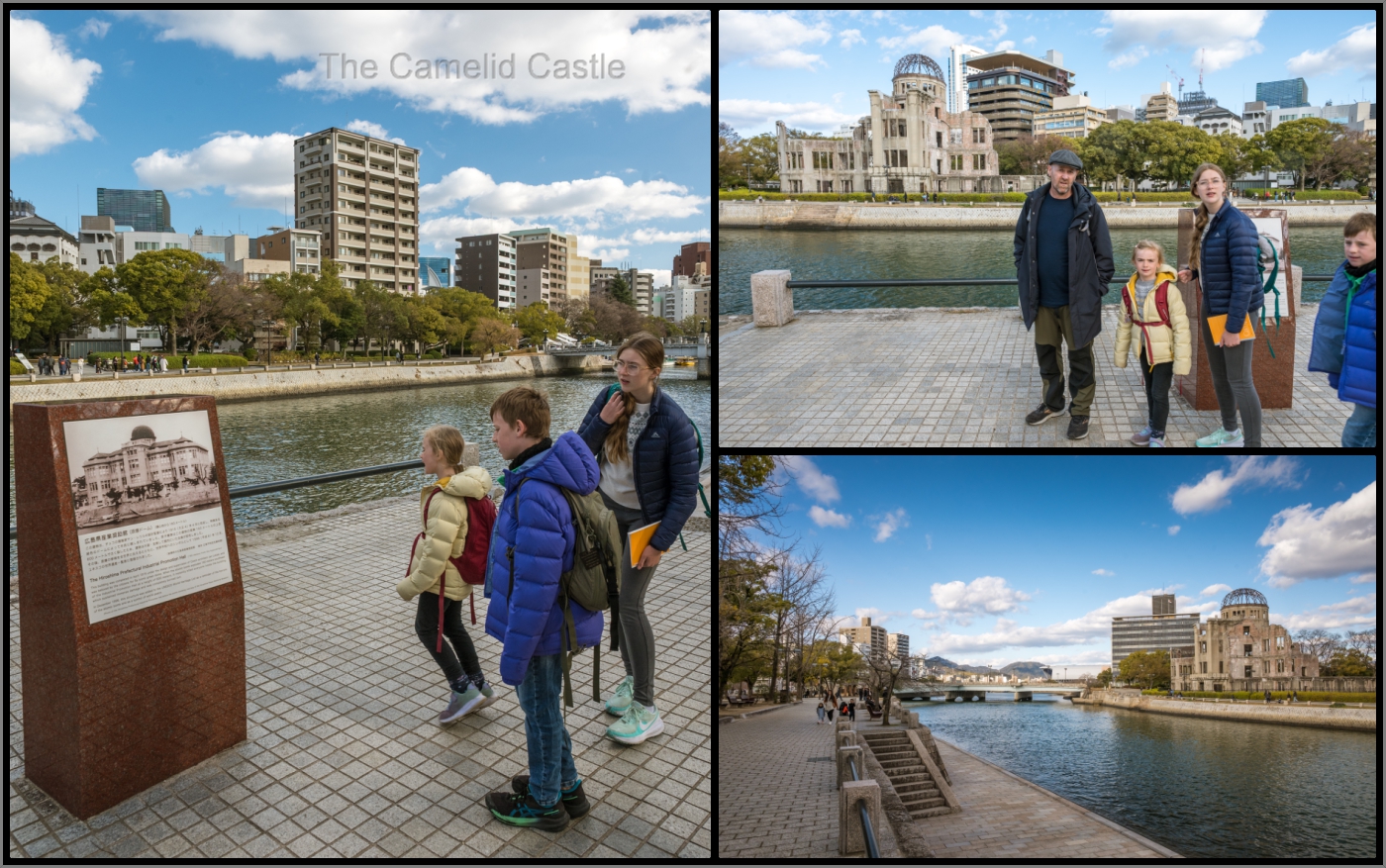
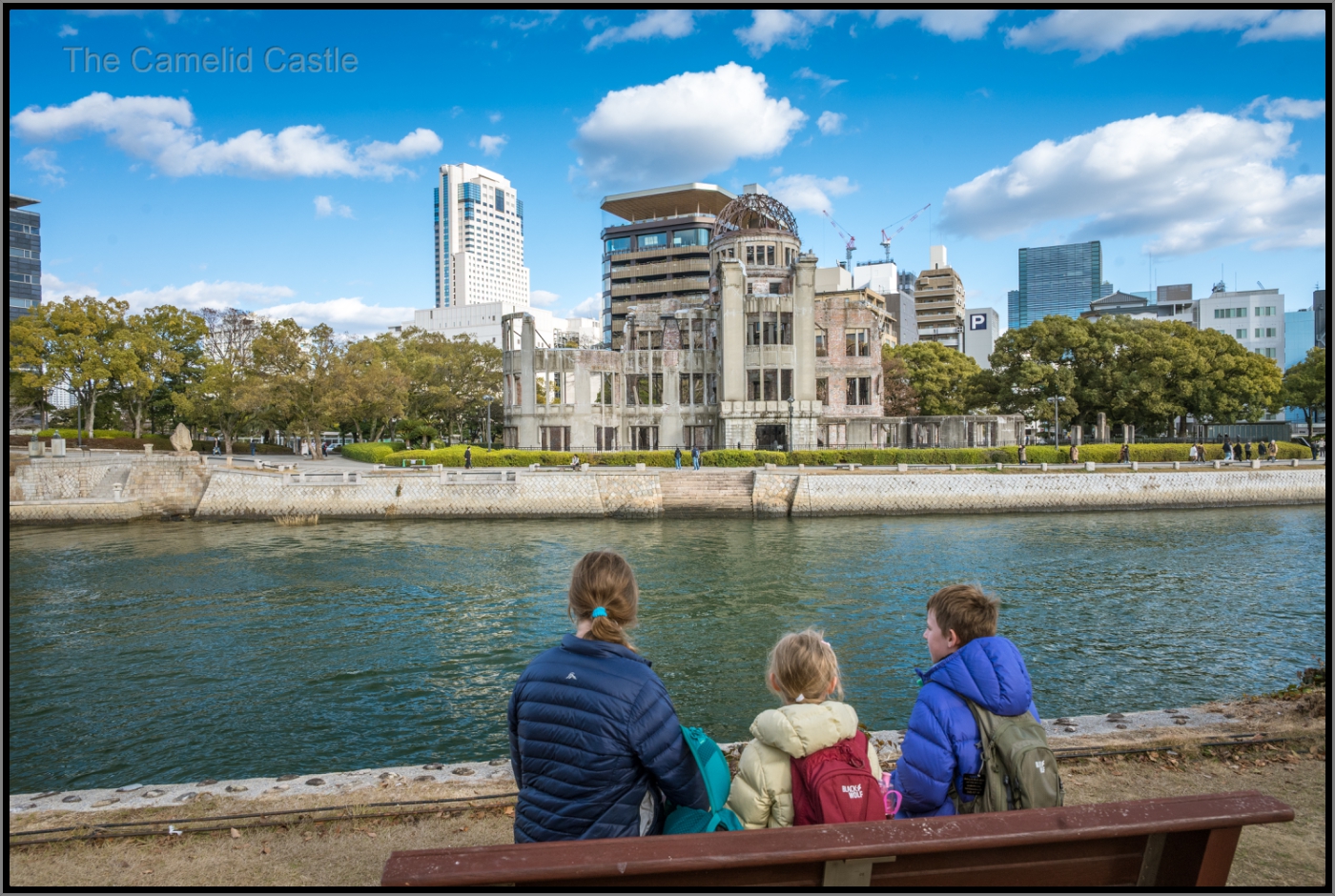
The A-Bomb Dome was added to the UNESCO World Heritage List in 1996. Many survivors and Hiroshima citizens pushed for it’s inclusion for many years. The A-Bomb Dome had been left in it’s post-bombing state in memory of the many causalities, estimated to be at least 140,000 people.
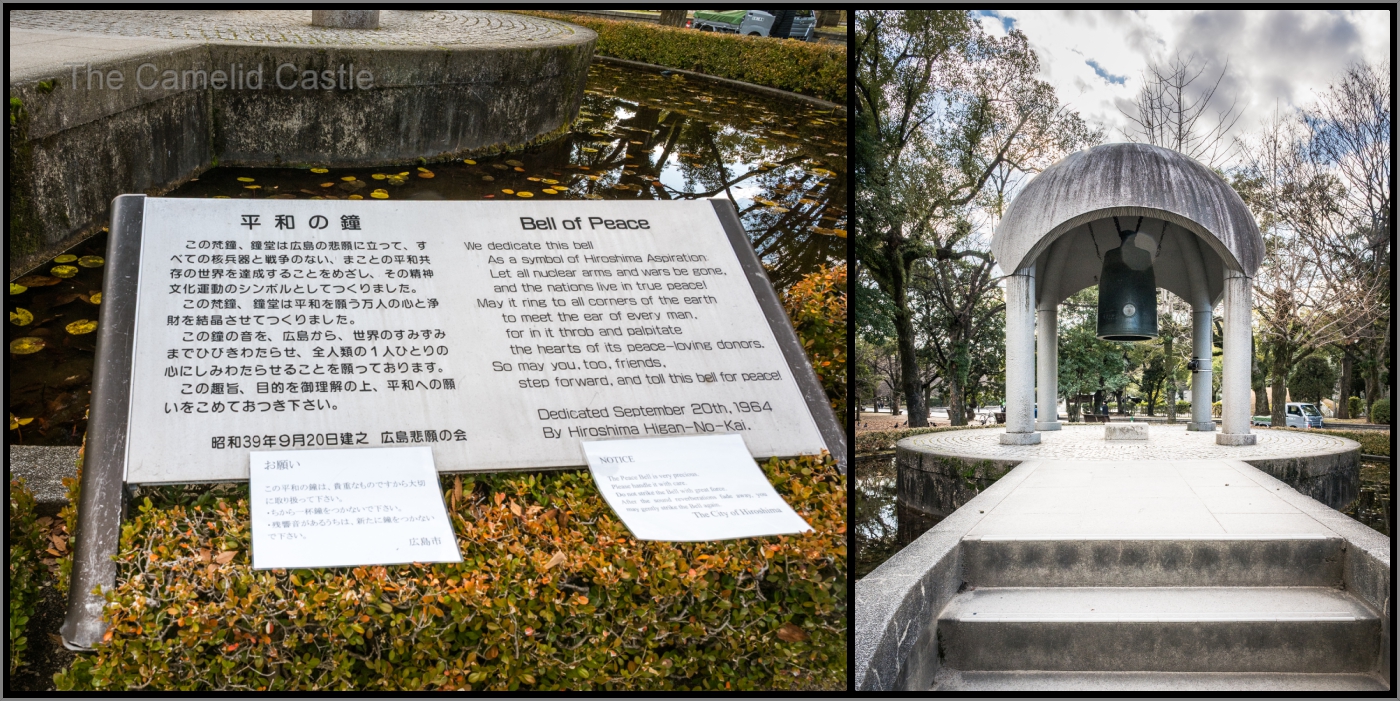
There are three Peace Bells in the Peace Park. The more well-known Peace Bell stands near the Children’s Peace Monument and consists of a large Japanese bell hanging inside a small open-sided structure. Visitors are encouraged to ring the bell for world peace and the loud and melodious tolling of this bell rings out regularly throughout the Peace Park.
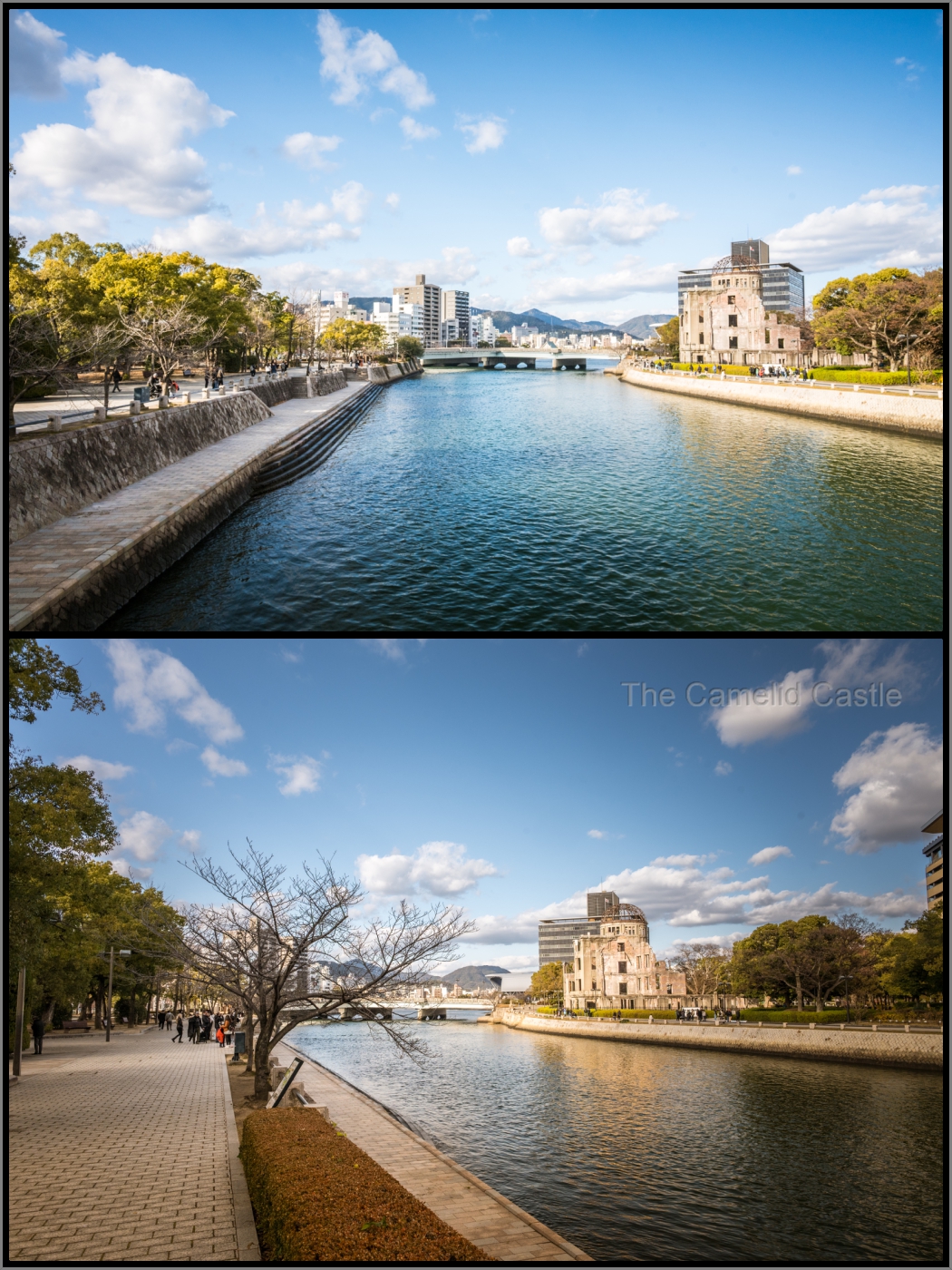
As you walk around the park the A-Bomb dome can be seen from quite a distance. It’s permanent state of preserved ruin is designed as a reminder of the destructive effects of nuclear warfare. Because the explosion was almost directly overhead, the building kept its shape. Its vertical columns resisted the blast’s nearly vertical downward force, and parts of the concrete and brick outer walls remained intact. The building’s durability can also be attributed to its earthquake-resistant design; it has survived earthquakes before and since the bombing.
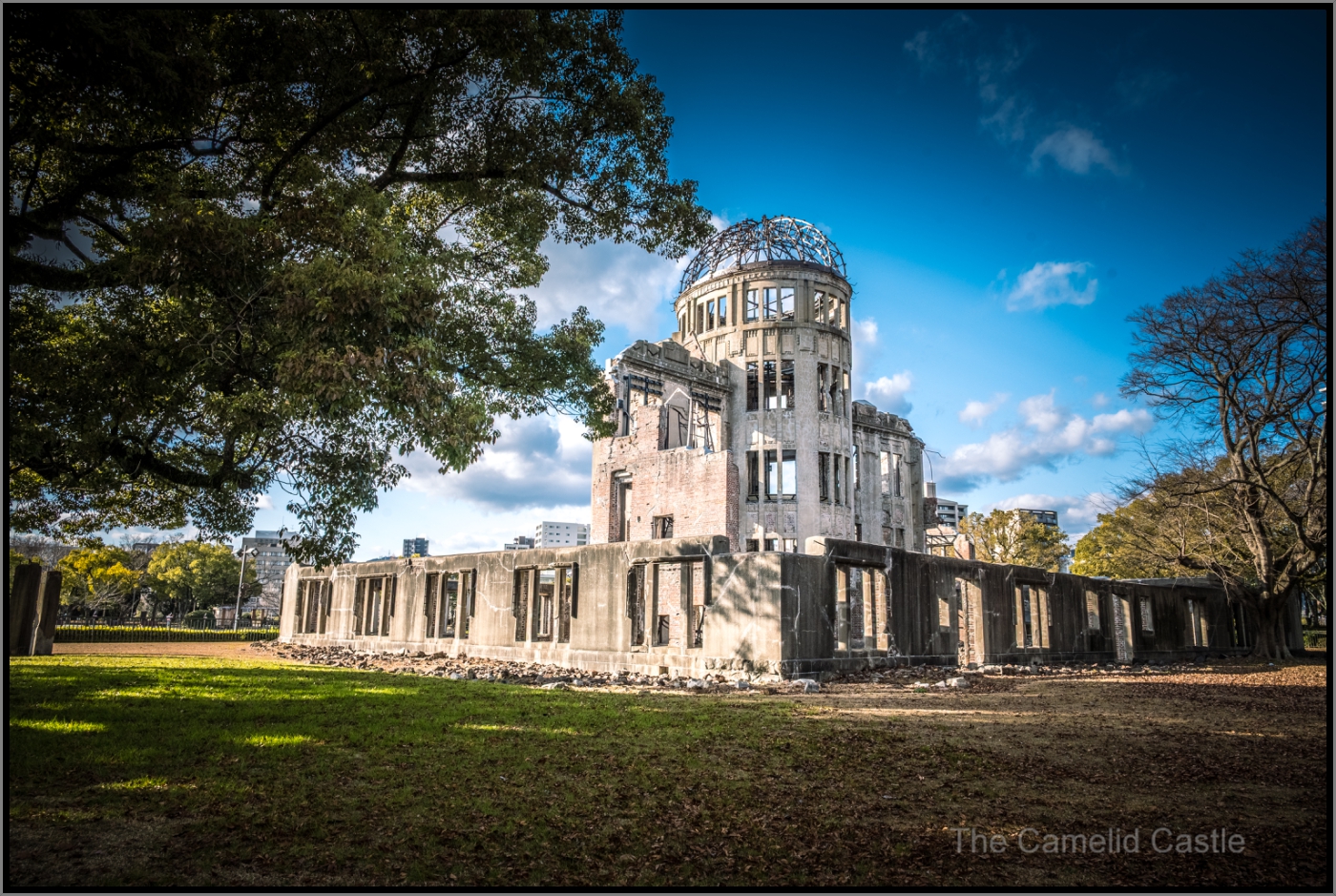
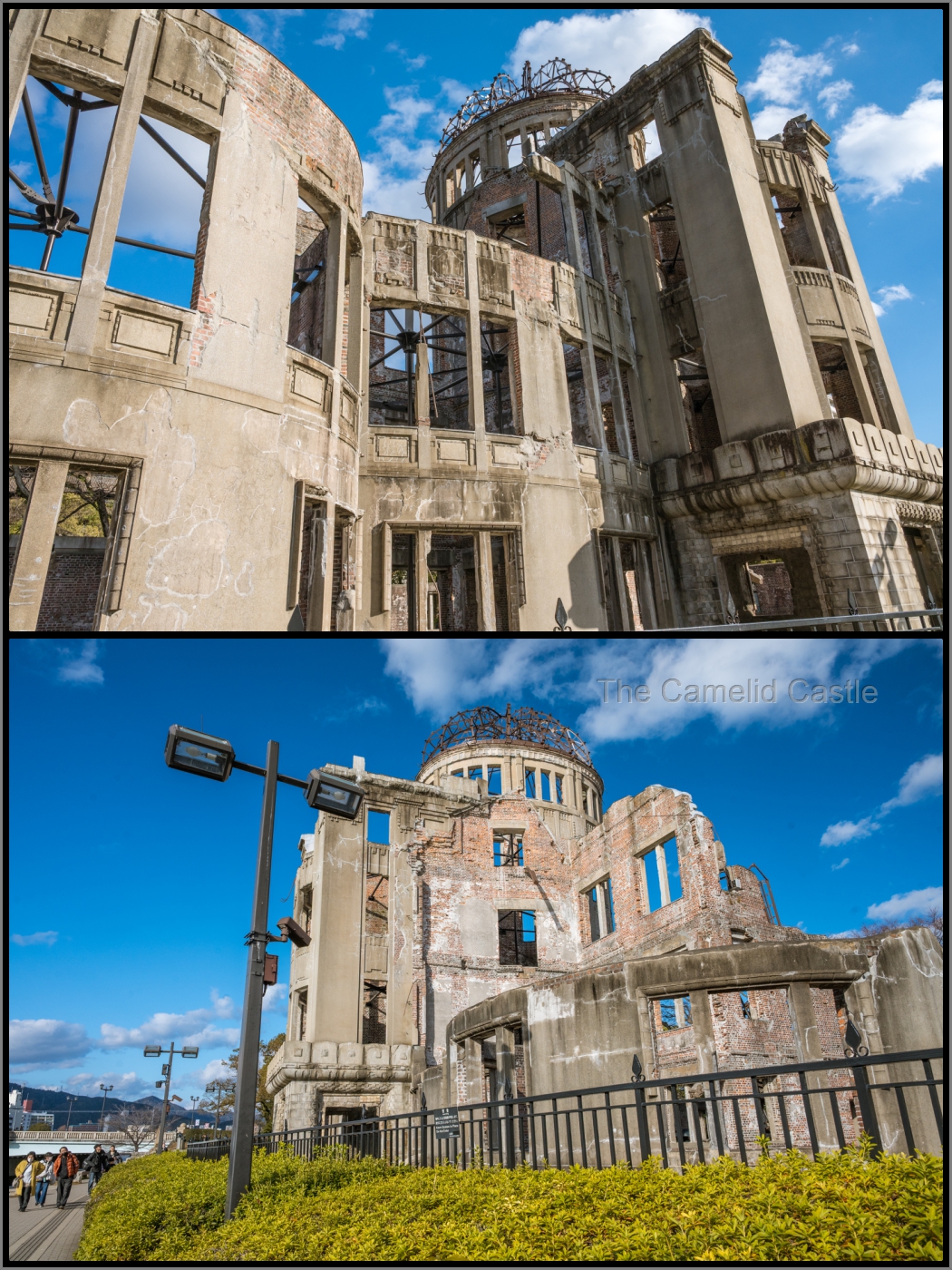
It’s a poignant reminder of the devastation that occurred in the city of Hiroshima. Much of the city has been rebuilt and is very modern, so the A-Bomb dome is in stark contrast, by design.
The Peace Park….
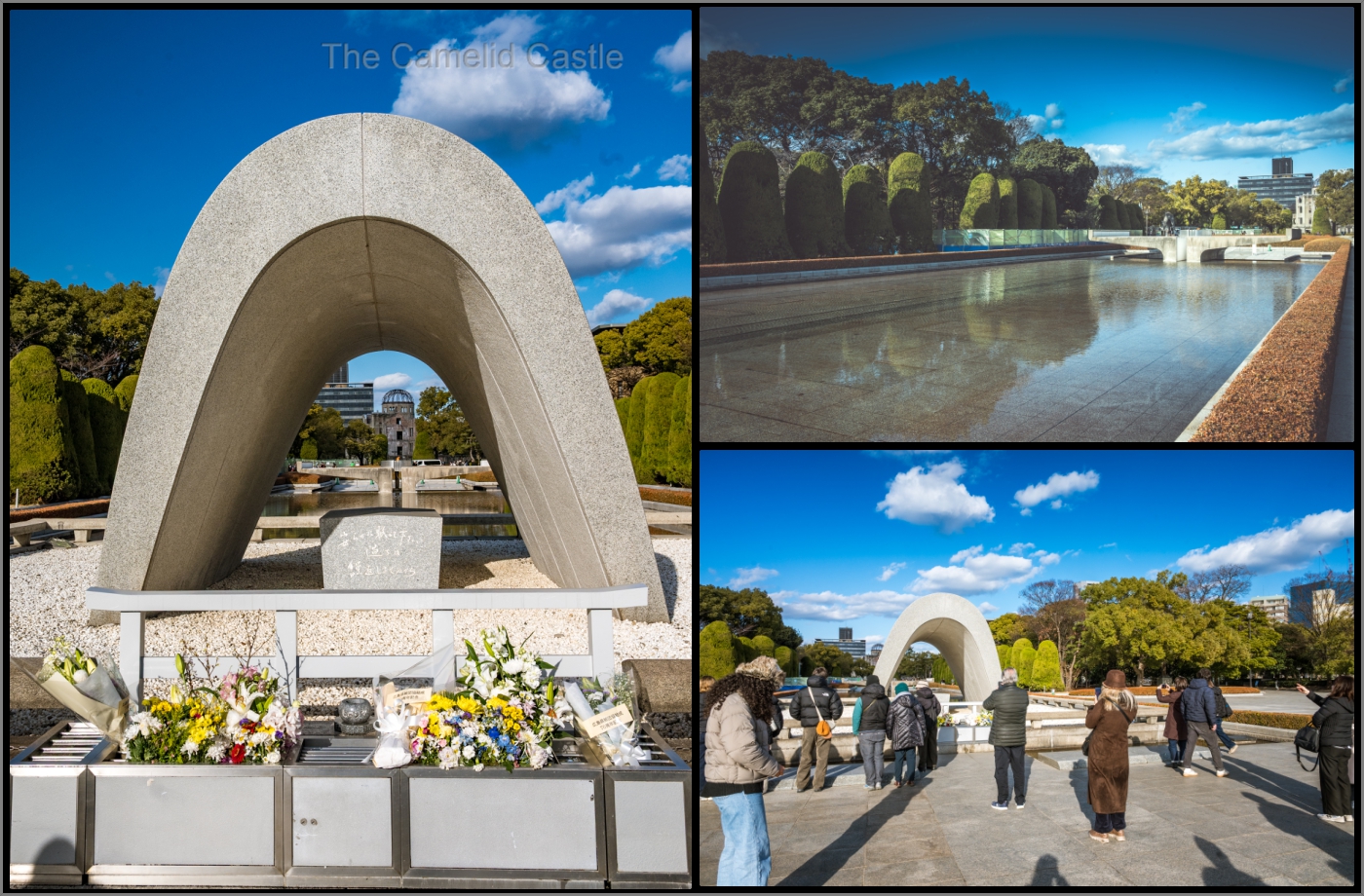
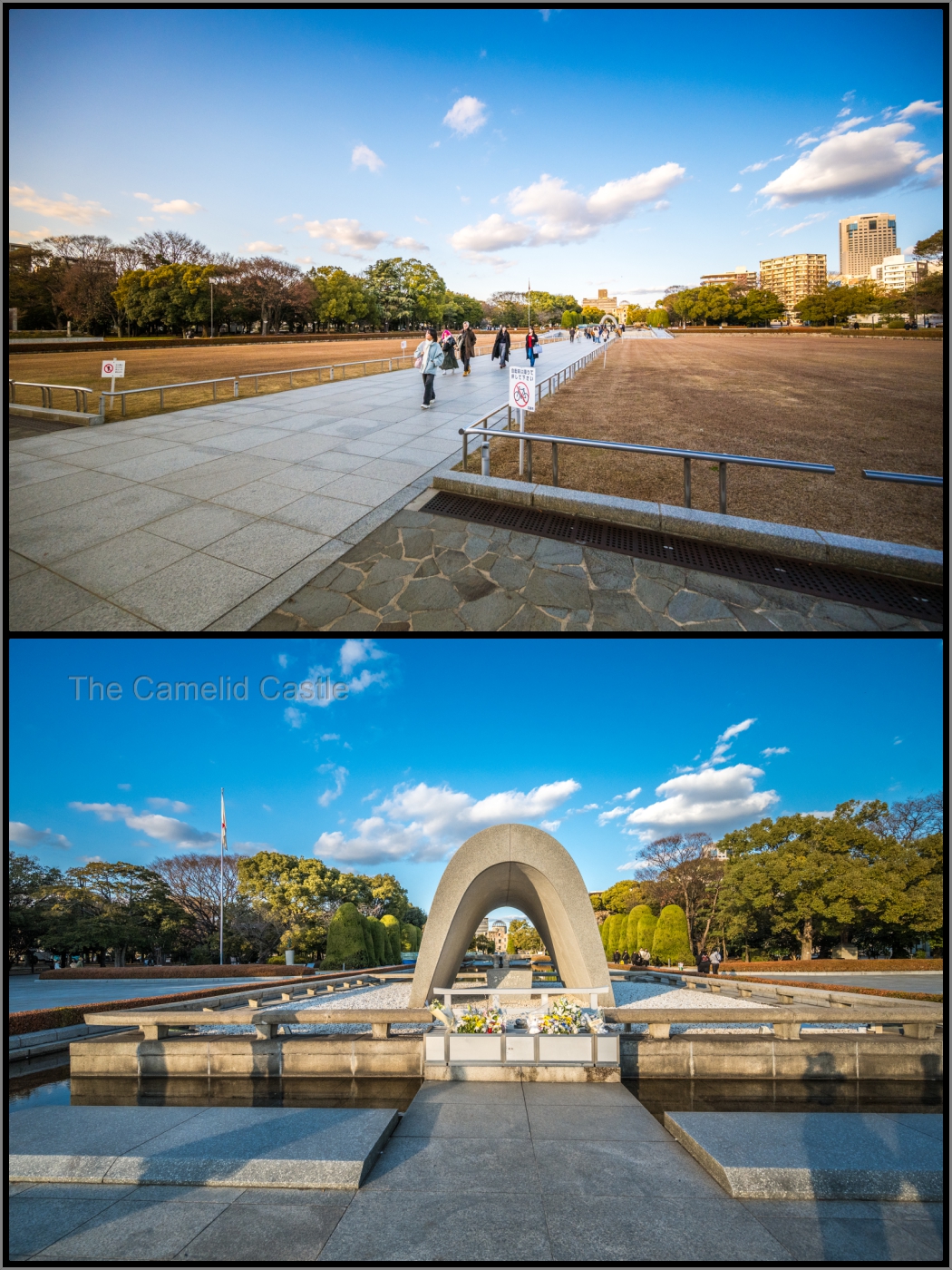
We then walked through the Peace Park, towards the Memorial Cenotaph. The memorial is extremely well done with a tunnel that views directly down to the Dome, with the peace flame in front.
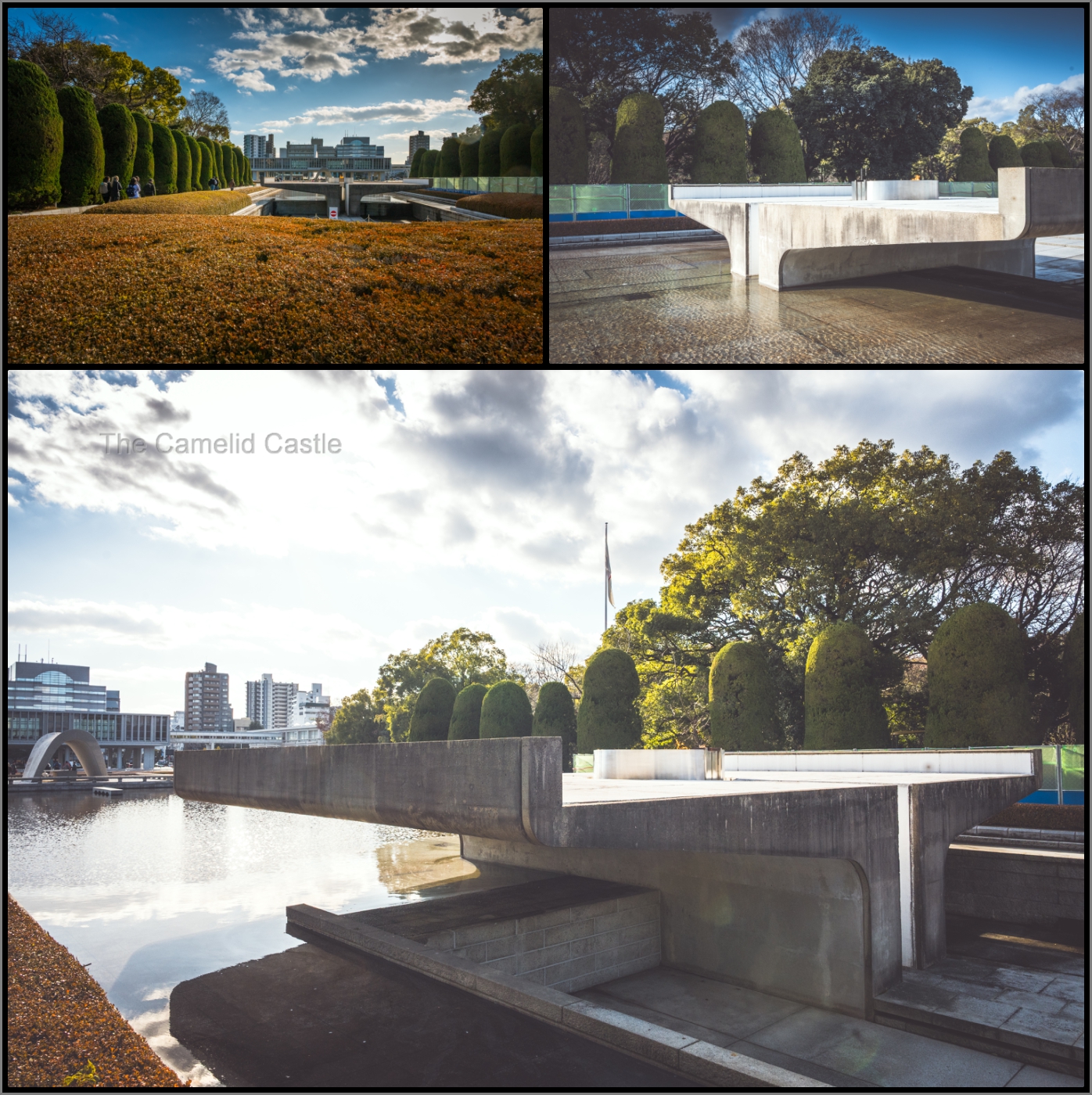
Near the centre of the park is a concrete, saddle-shaped monument that covers a cenotaph holding the names of all of the people killed by the bomb. The monument is aligned to frame the Peace Flame and the A-Bomb Dome. The Memorial Cenotaph was one of the first memorial monuments built on open field on August 6, 1952. The arch shape represents a shelter for the souls of the victims. The cenotaph contains the inscription “please rest in peace, for [we/they] shall not repeat the error.”
A moving visit to the Peace Memorial Museum….
We then went to the Hiroshima Peace Memorial Museum. All the kids were free for this museum and adults were less than $2 AUD admission.
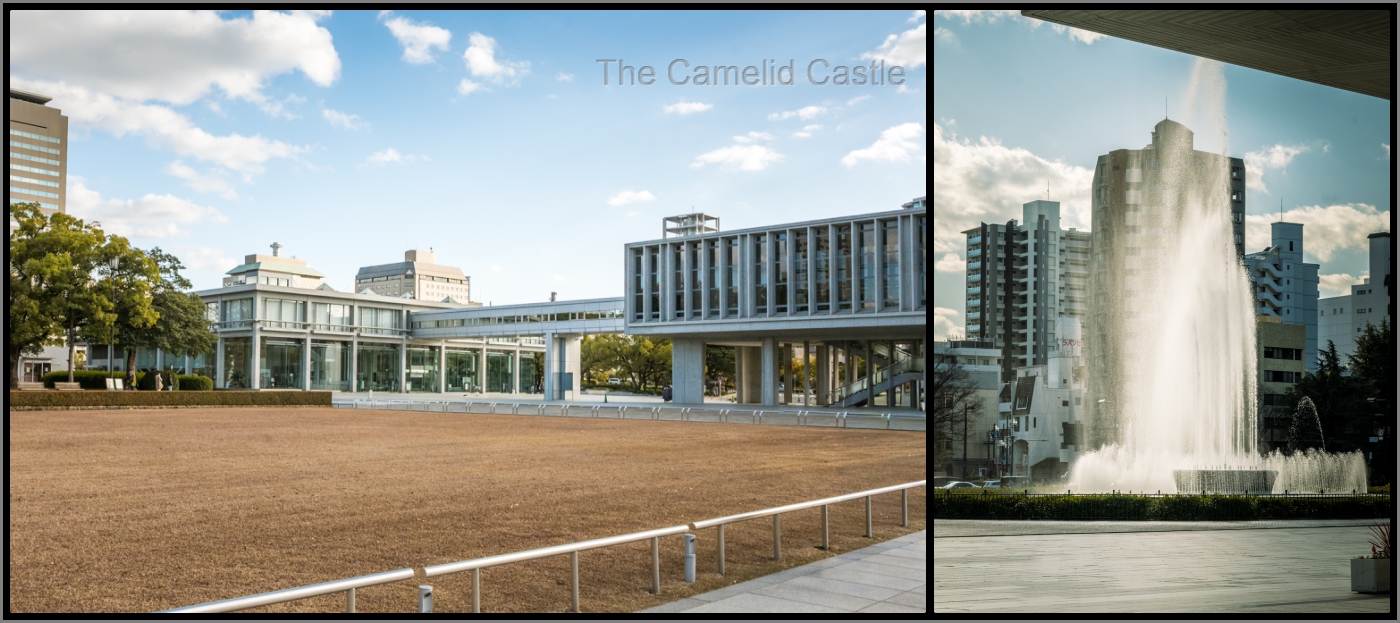
The museum was established in 1955 and is a very popular destination for Japanese school students and international visitors. There are over 1 million visitors a year and the low entrance price is by design, to encourage people to visit.
The museum is quite modern and the exhibits can best be described as harrowing. The photographs, stories and videos were interesting but at times very graphic. Zinnia, at 7 years old, had to be skipped through several sections.
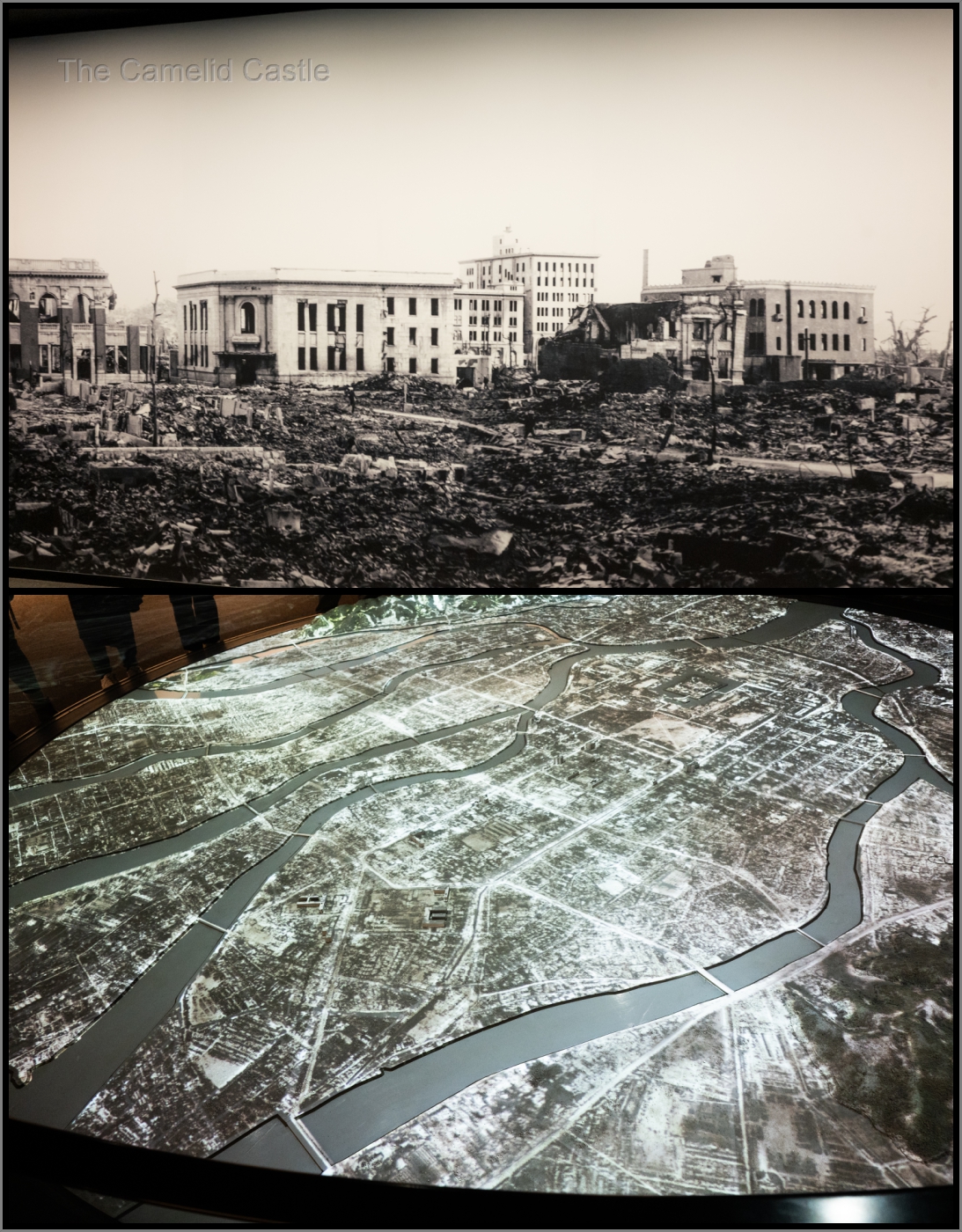
The above image is of a simulation of the bomb and showed the real time devastation to the city. Many other exhibits had artifacts from houses that survived the explosion and there were many photos and videos with first hand survivor tales and graphic descriptions of the events that occurred that day and in the proceeding days and weeks.
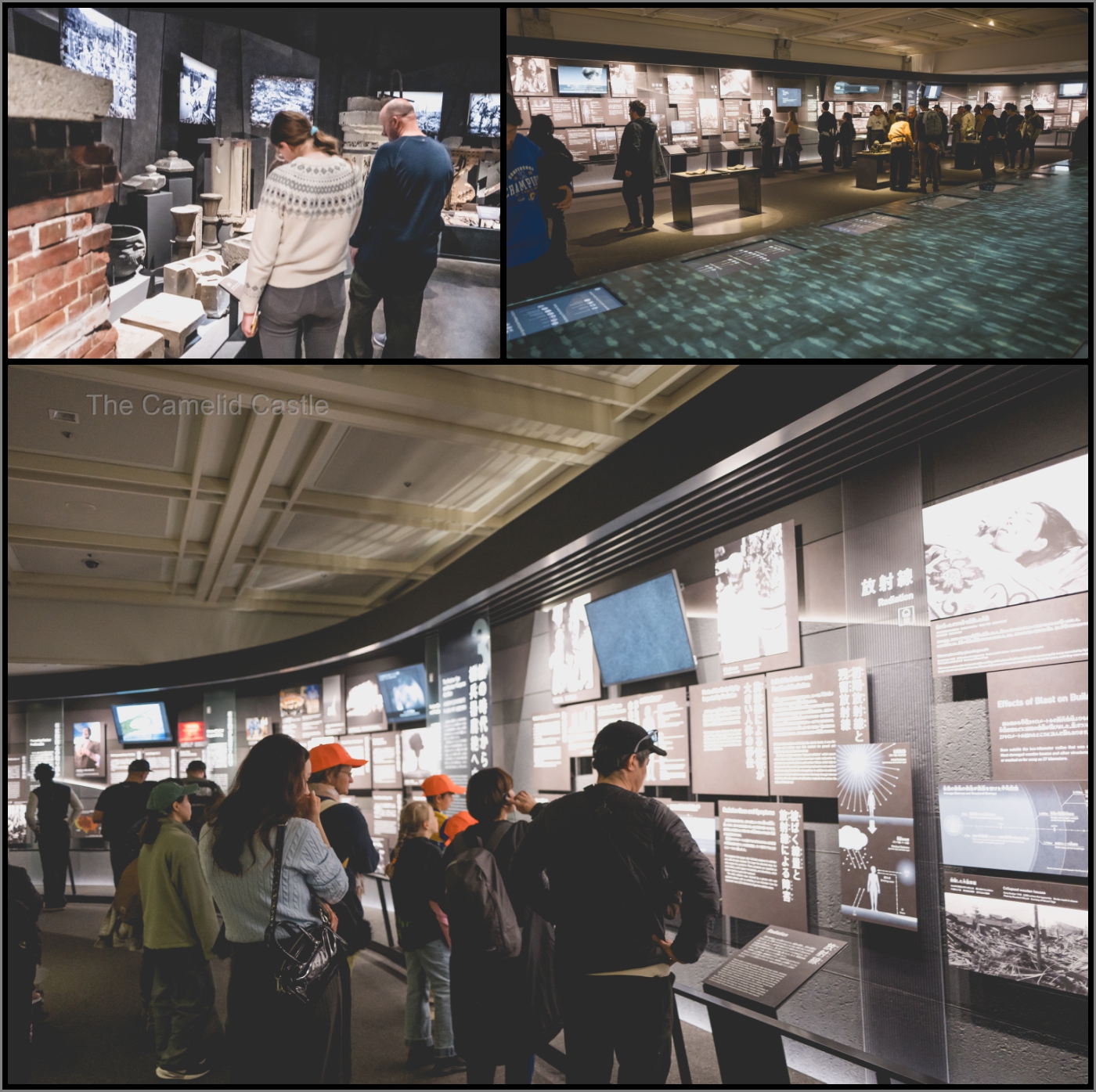
The other kids were interested and learnt a lot, but agreed it was difficult to read many of the stories and accounts. It was definitely worth visiting and it was surreal walking around a city that was so devastated 80 years earlier and seeing the images and artifacts first hand. Until this visit I had not comprehended the horror that unfolded after the initial blast and the suffering involved by such a large number of people. The museum also explained the events leading up to the bombing and reasons Hiroshima (and Nagasaki) were chosen to be bombed.
The museum included views out over the Peace Park and towards the A-Bomb Dome. The below photograph is taken from inside the museum.
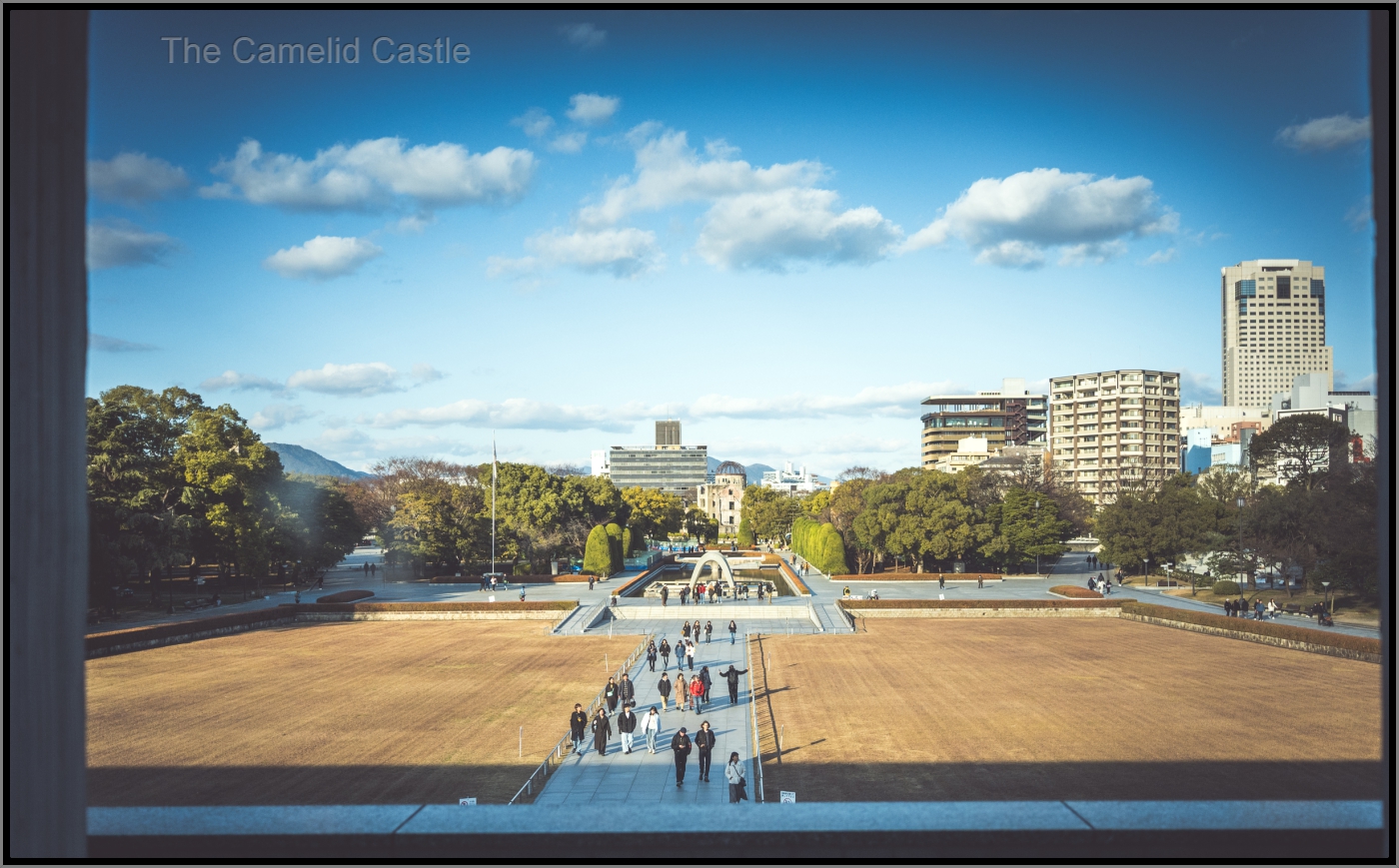
Anto and I could have spent several more hours in the museum, although it was pretty heavy going at times we thought it was very well done and absolutely worth a visit if you are in Hiroshima. The museum is very much presented from the Japanese experience in the war, which was a slightly different perspective to what we had studied during school. The exhibits were appreciated by the kids but it definitely held more interest for Astrid and Soren. They did self-select which bits they skipped through as some of the exhibits were confronting at times.
We emerged from the museum and needed to lift our spirits somewhat so had another walk through the Peace Park in the nice afternoon light, with a final visit to the cenotaph.
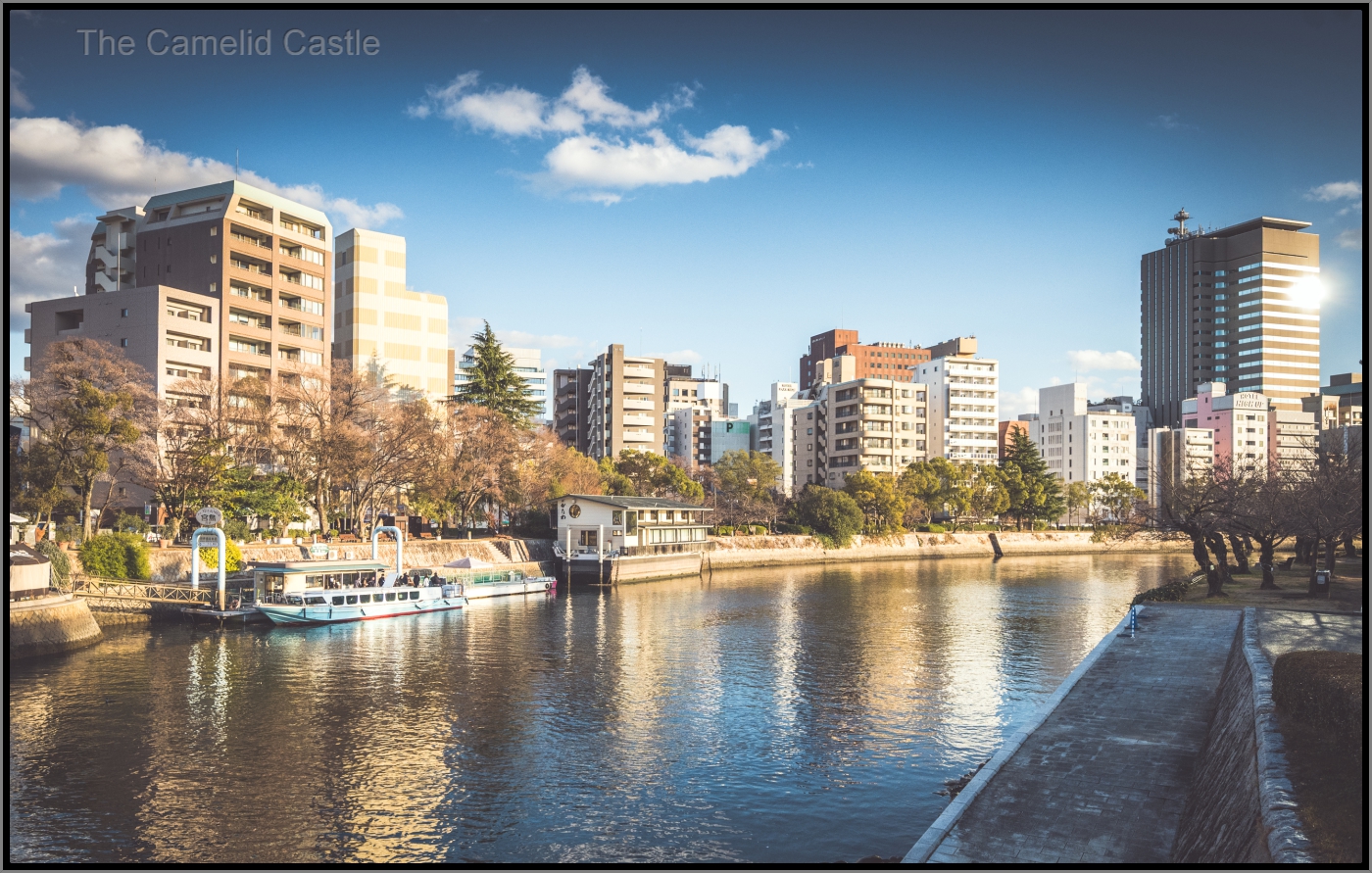
With a bit of spare time went for a walk through the city towards the train station and got some nice late afternoon views of the city. The entire city area was rebuilt post bombing so is quite modern and obviously contains a lot of buildings built in the 50s and 60s.
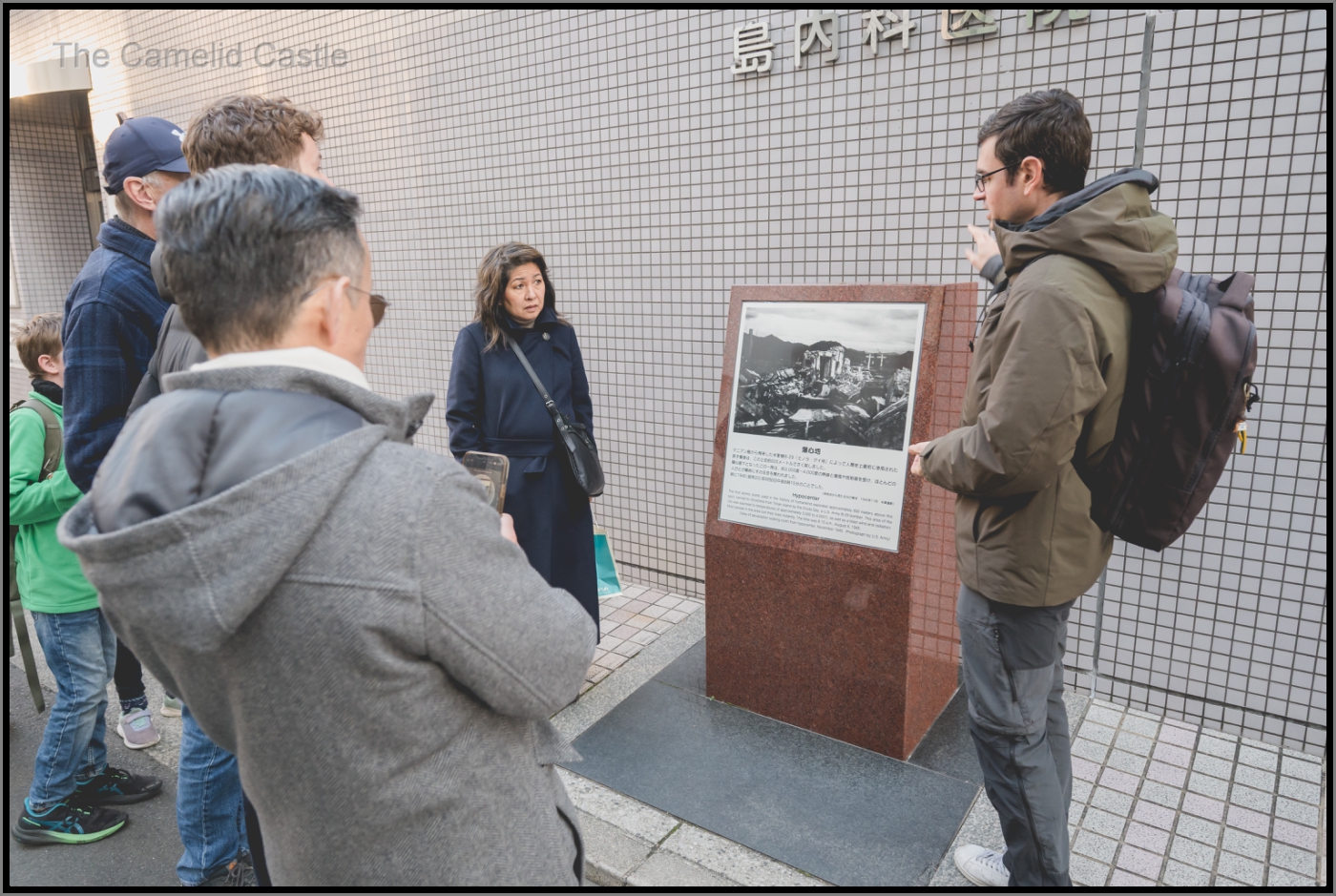
On our wanders we went past the plaque marking the hypocentre of the bombing.
Hiroshima wanders…..
Anto had located a nice garden near the station which we were keen to see. Unfortunately when we got there it was past the last admission but it looked awesome through the fence!
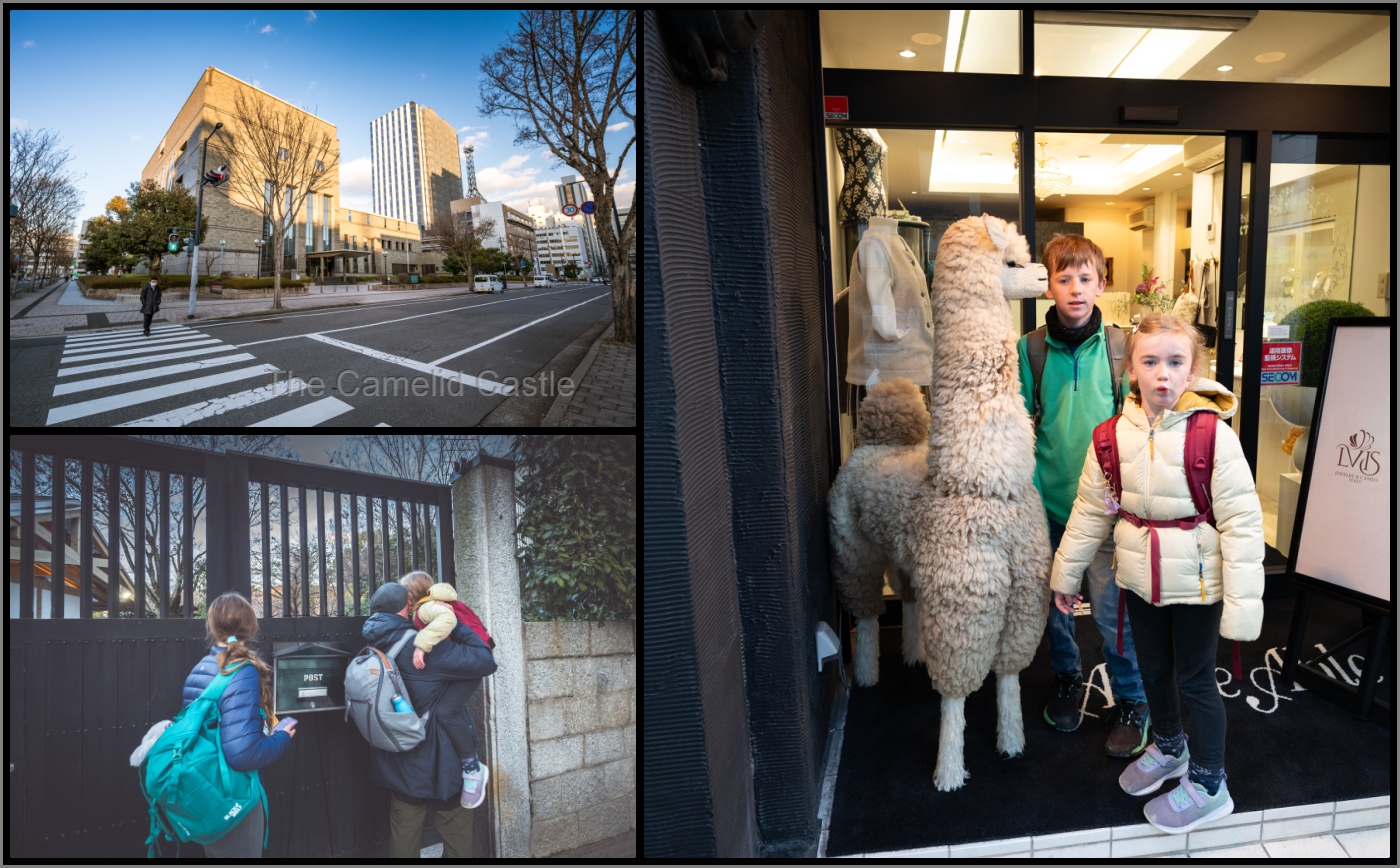
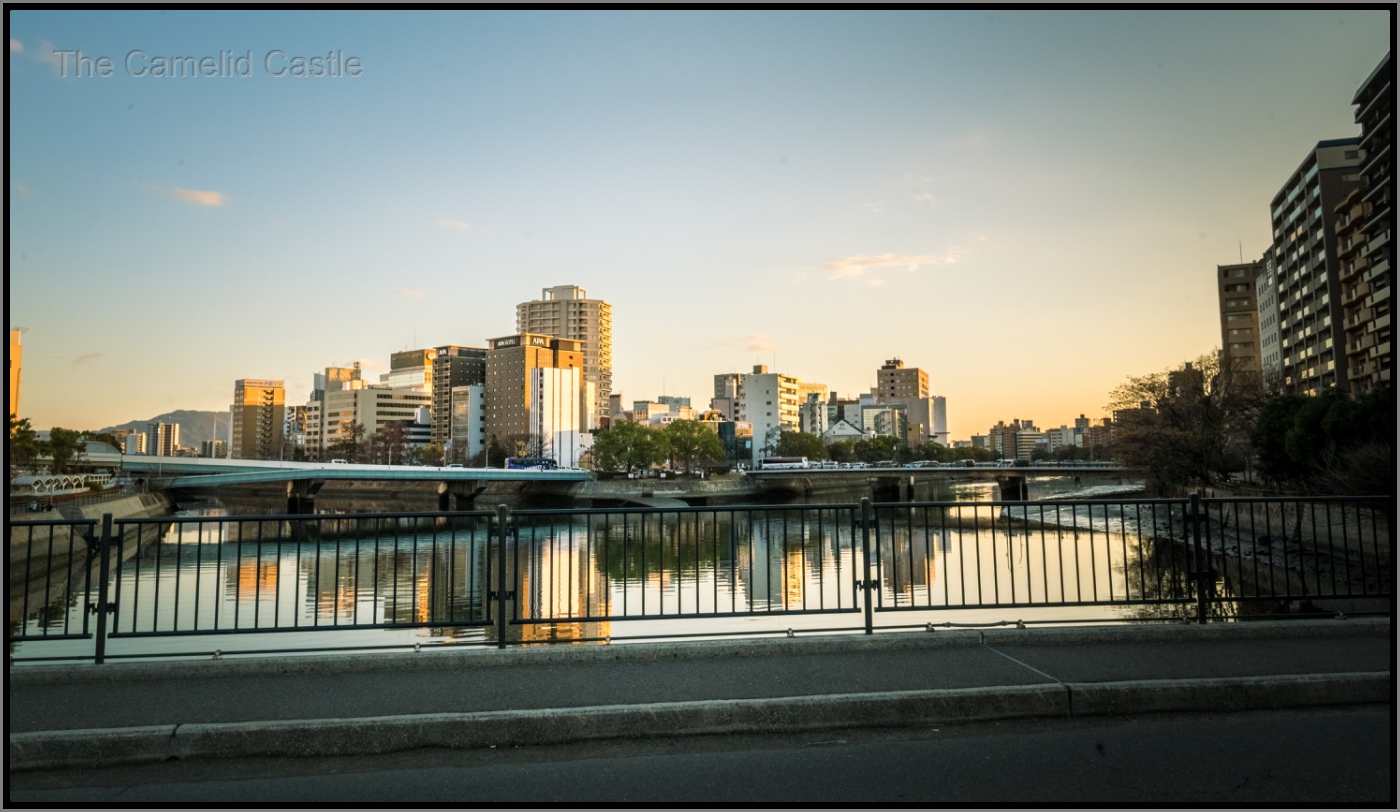
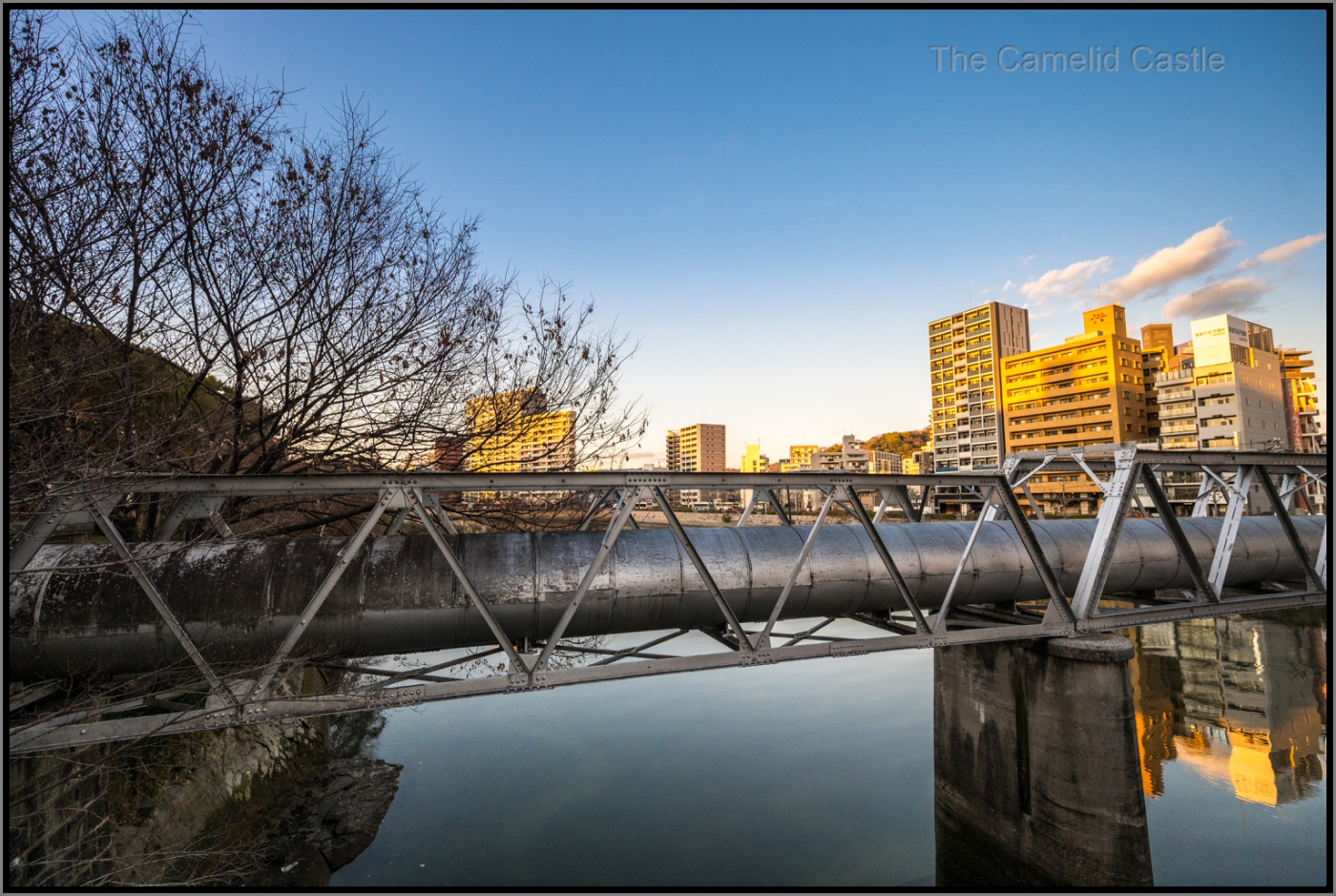
We’d only planned a day in Hiroshima but we barely scratched the surface of the city. We’d had amazing weather and were treated to a lovely sunset as we walked back towards the train station.
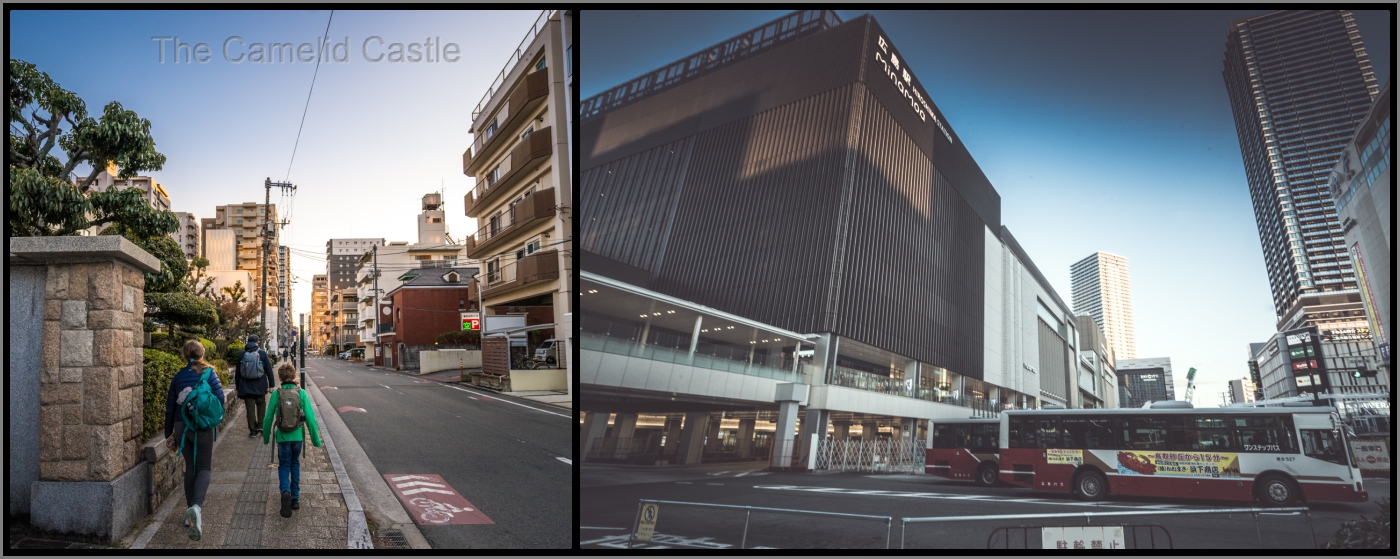
Back on the Shinkansen…..
When we got Hiroshima station the shinkansen were back online but many were still delayed due the earthquake and aftershocks. Luckily our train back to Osaka was on schedule.
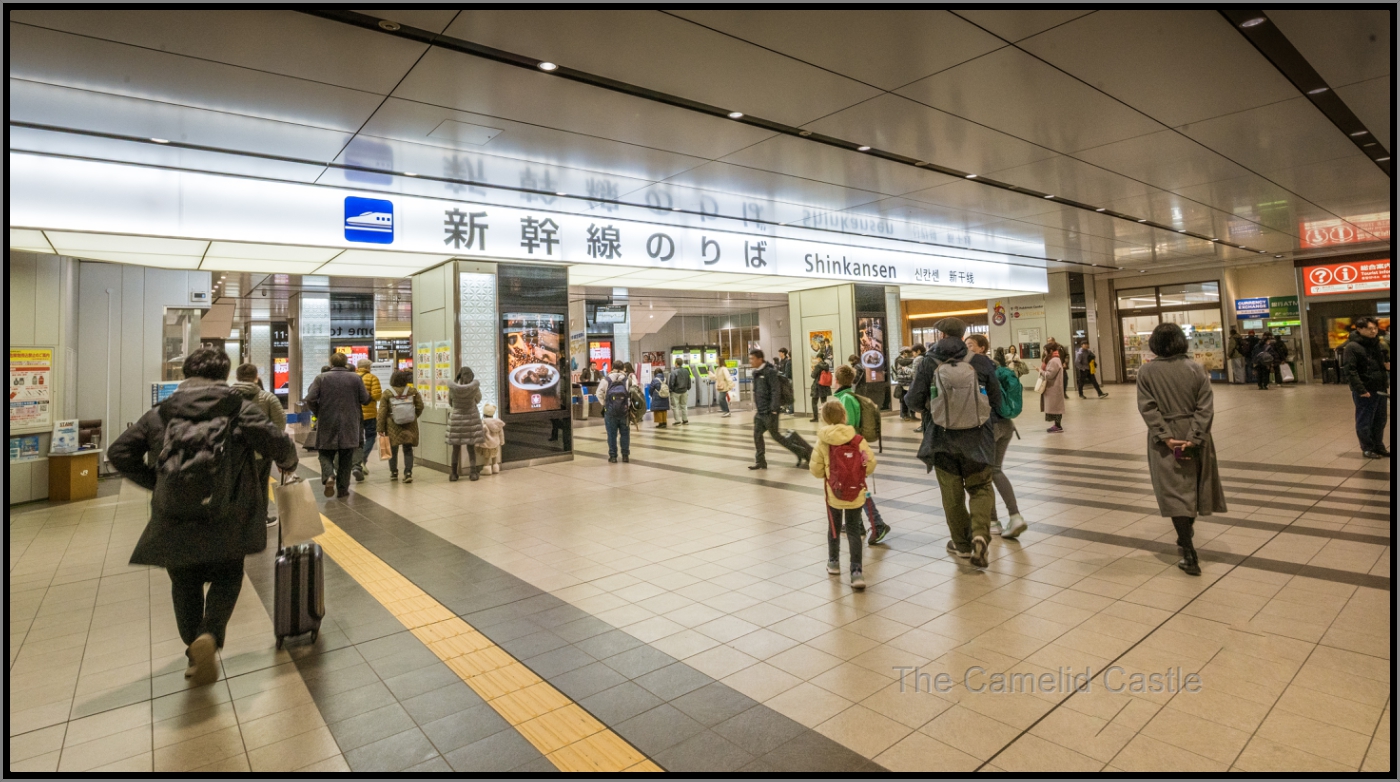
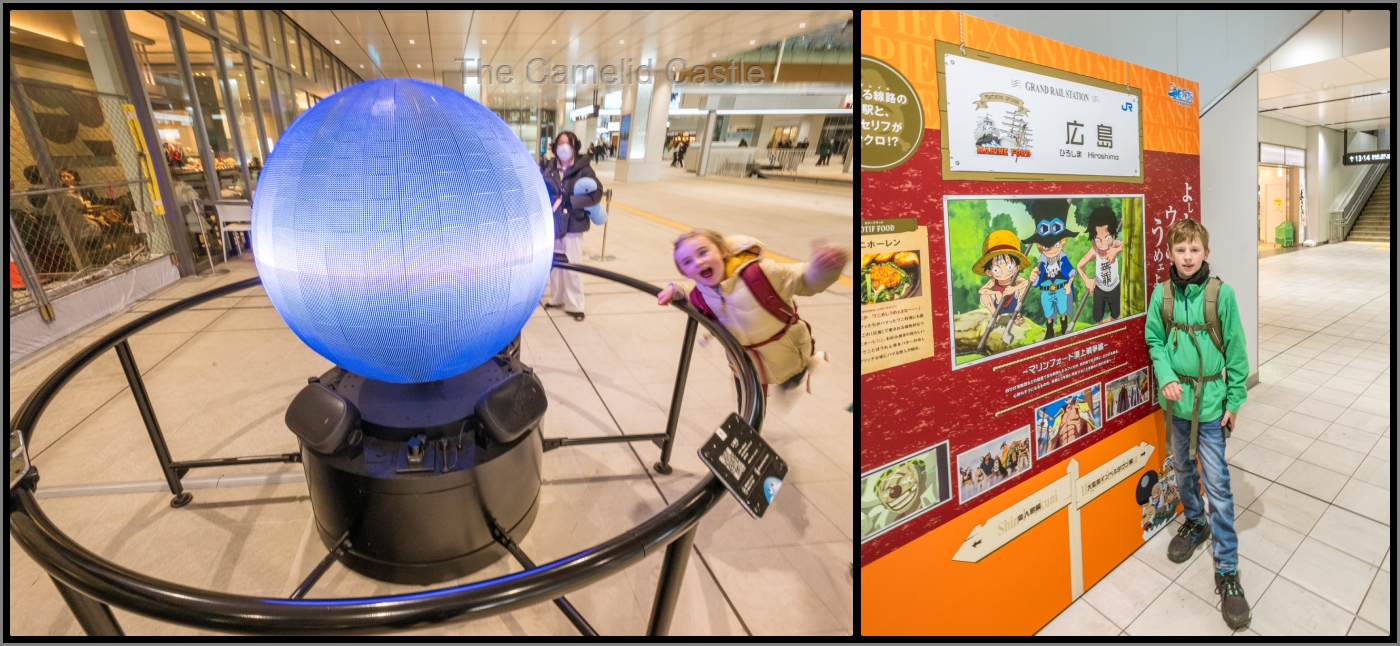
We grabbed some food for the trip back and checked out some of the cool things in the station.
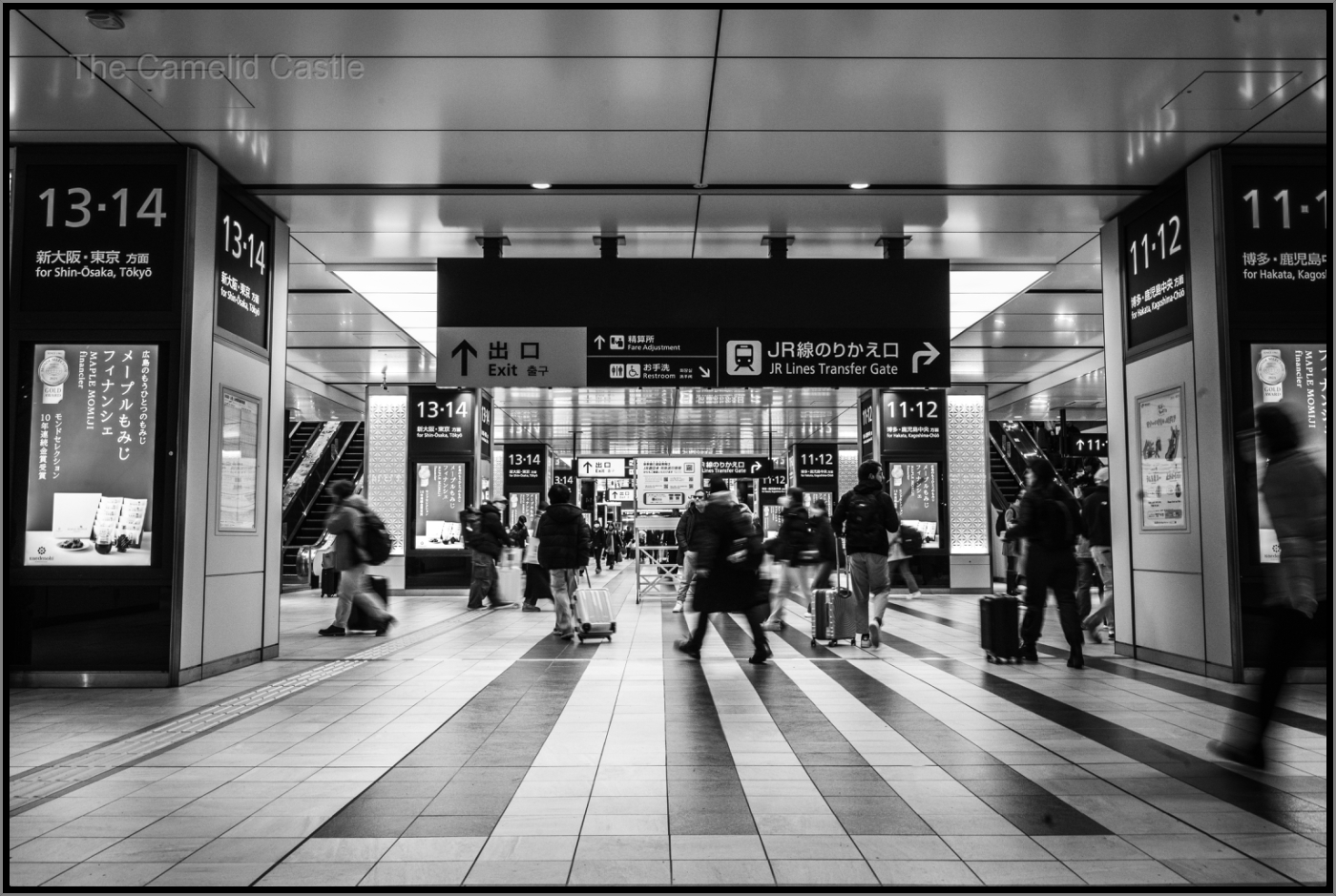
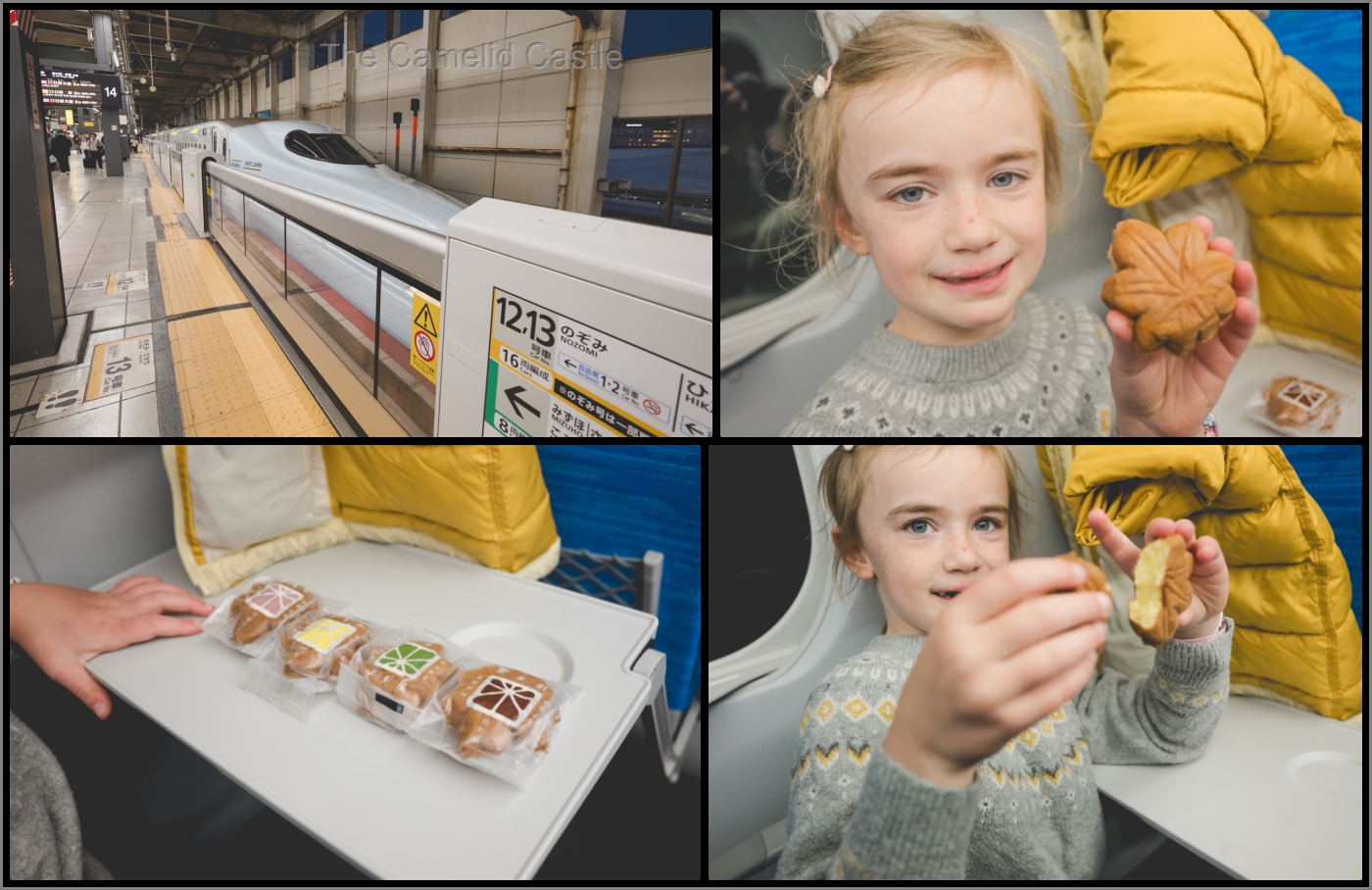
We left Hiroshima just after 5.40pm and after a bit of food, including the momiji manju we’d purchased over on Miyajima island. This is a famous Hiroshima specialty, originating from Miyajima Island in the late Meiji period. These small, maple-leaf-shaped cakes consist of a fluffy, sponge-like batter filled with traditional red bean paste or modern flavors like custard, chocolate, or cream cheese. We’d purchased a range of flavours and the kids were keen to try
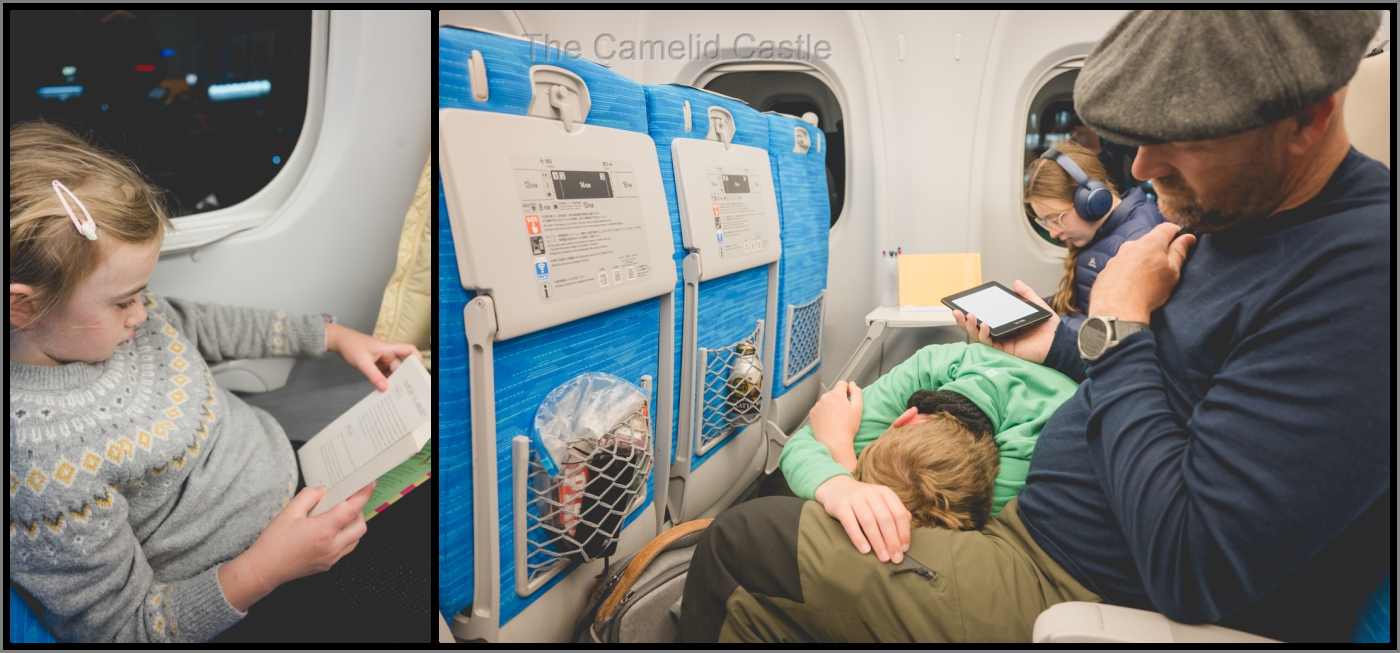
Soren slept most of the way back! We all knew how he felt. It was a long day but we’d all enjoyed our time in Hiroshima and glad we made the decision to go. Luckily we got seats reserved seats on the limited express from Shin-Osaka station to our local station so it made the trip back a little faster for the weary travelers.
We made it back to our Osaka apartment around 8pm, and were all ready to collapse into bed. It had been another big day of walking and our first Japanese earthquake! We were off to Universal Studios the next day so there was definitely no rest in store for us……
Up next….
A big day at Universal Studios Japan!