18 January 2026 – Hakone
We had decided to do a day trip to Hakone, which is approximately 100km West of Tokyo. Hakone is known for it’s Mt Fuji views and amazing thermal springs and onsens. While out and about the previous day we’d stopped into Shinjuku station to pick our Hakone free pass (they aren’t free despite the name) and our train tickets. This turned out to be a wise move as we were on an 8am train from Shinjuku so we had a 6.15am Sunday morning alarm as it takes at least 40 minutes to get to Shinjuku from where we are staying in Taito city. This was not ideal after a a string of late nights and our evening viewing of the Metropolitan Government Building light show, the previous evening. We were running out of days in Tokyo, so were doing our best to fit everything in!
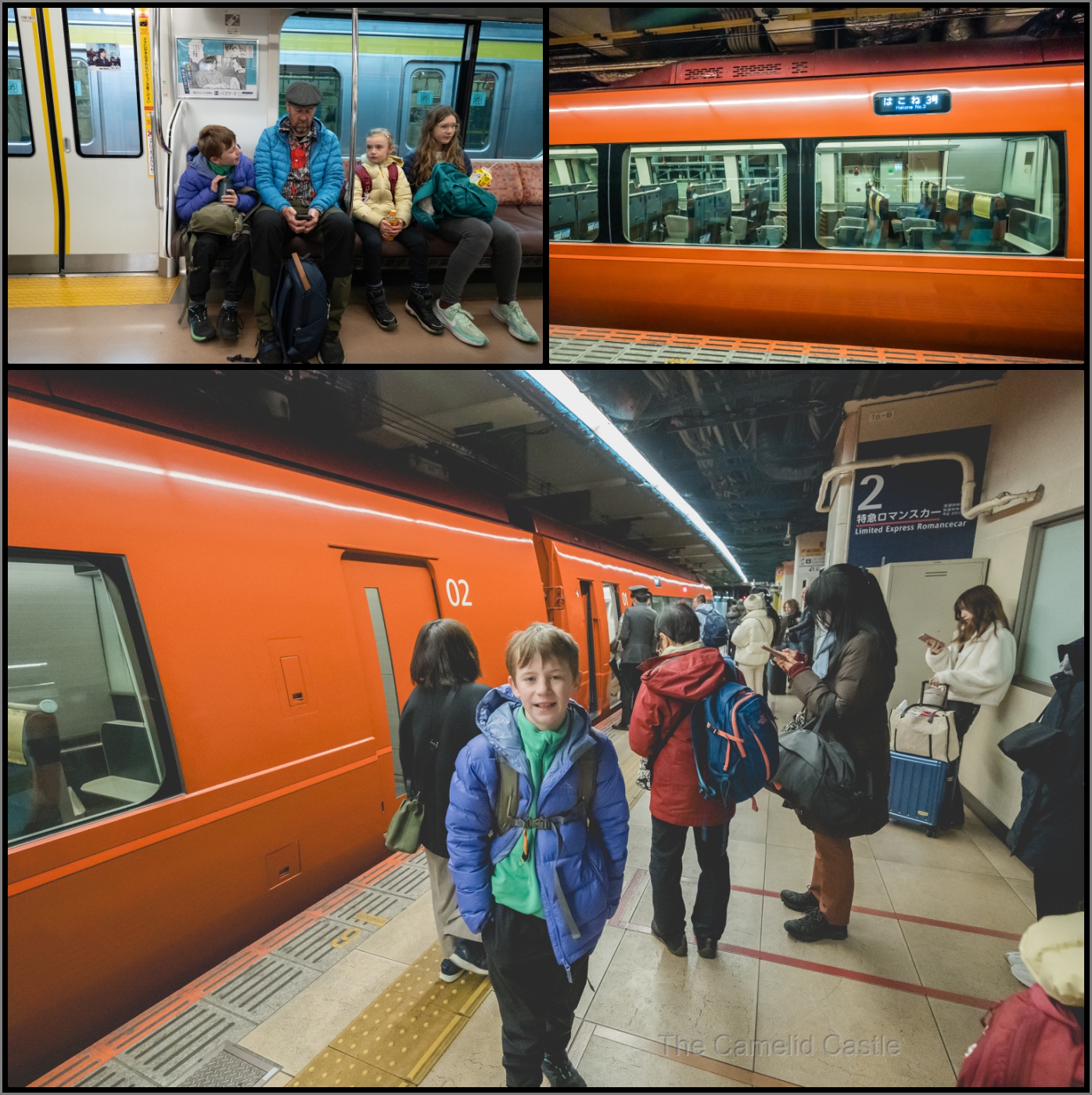
Off to Shinjuku for the Romancecar
It was another breakfast of random convenience store items, picked up in Shinjuku station. We had plenty of time to eat in the 90 minute trip to Hakone on the ‘Romancecar train’. We’d booked the Odayku Romancecar for the morning trip as it had nice big windows for Mt Fuji view,s and was slightly faster than the local trains. The Romancecar is named as it was one of the first trains that didn’t have seat dividers/armrests, so it was considered romantic back in the 50s.
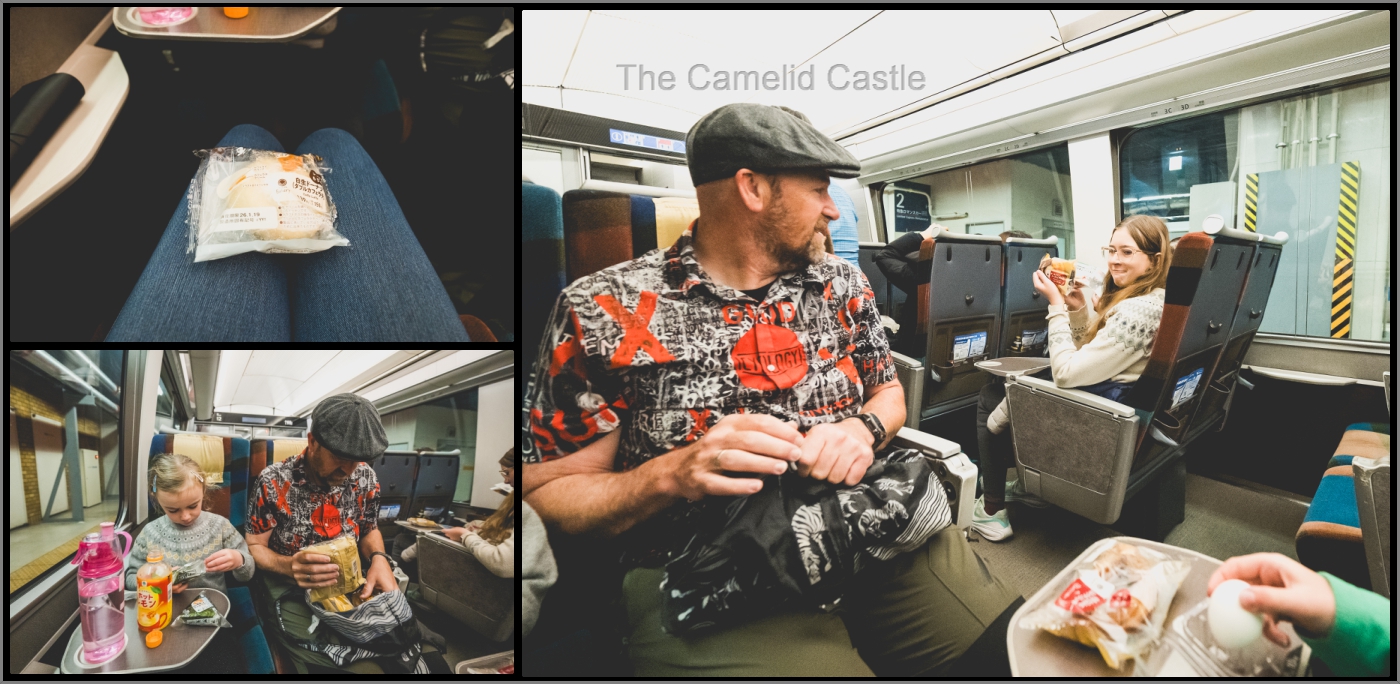
As the train left we tucked into our breakfast items and watched the towns zip by. The front section of the train had an enclosed glass cabin so you could get some good views out the front of the train.
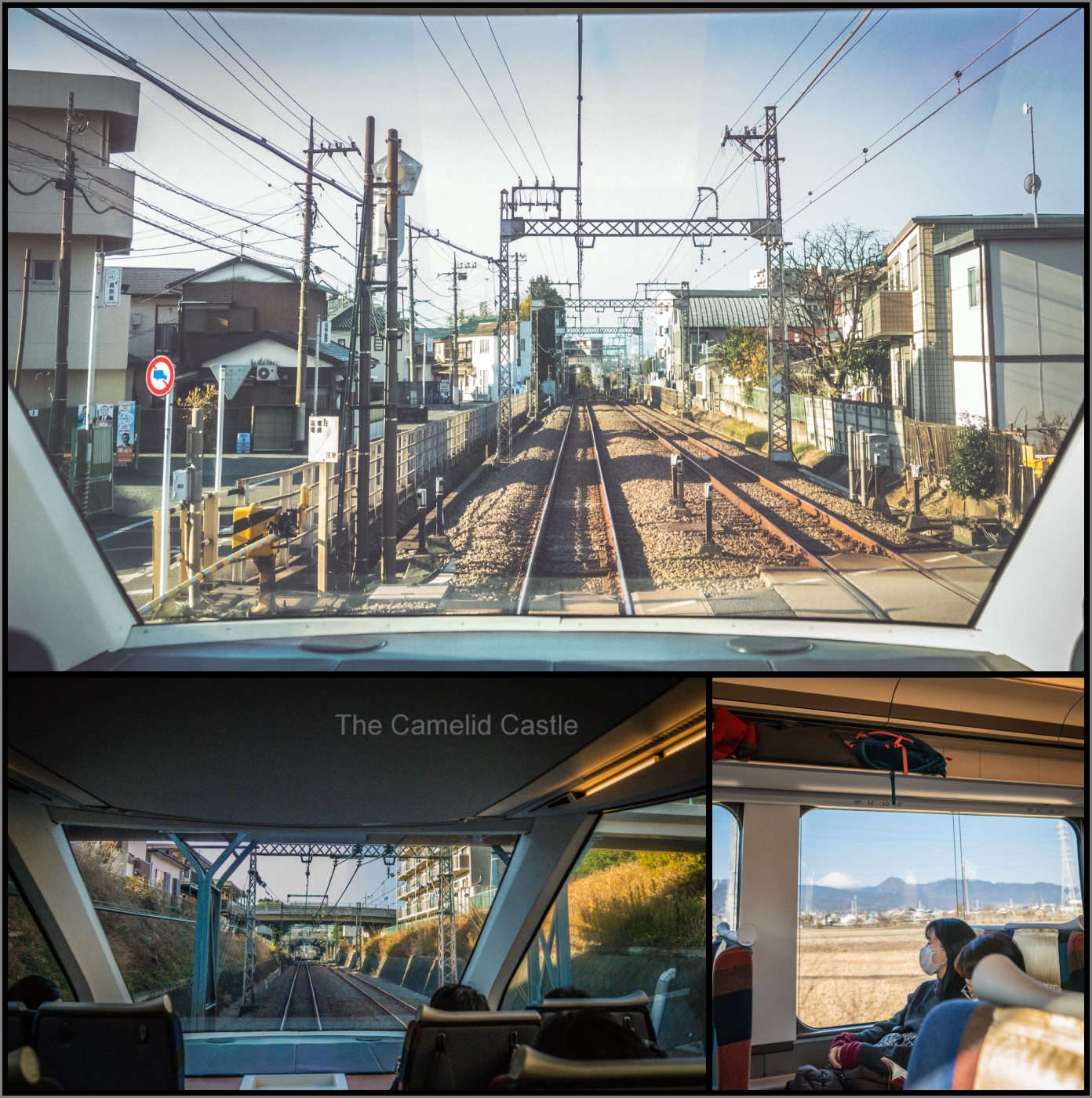
Our trip to Hakone was much slower than the Shinkansens we’d been zipping around Japan on, but we did get some nice Mt Fuji views as we approached Hakone. We’d been exceedingly lucky with spotting Mt Fuji several times during our stay in Japan. Some people try repeatedly and never get to see it, and we’d managed quite a few Fuji sightings already, with more to come today. It still didn’t get old for us to watch the snow-capped peak poking out from the behind other mountains.
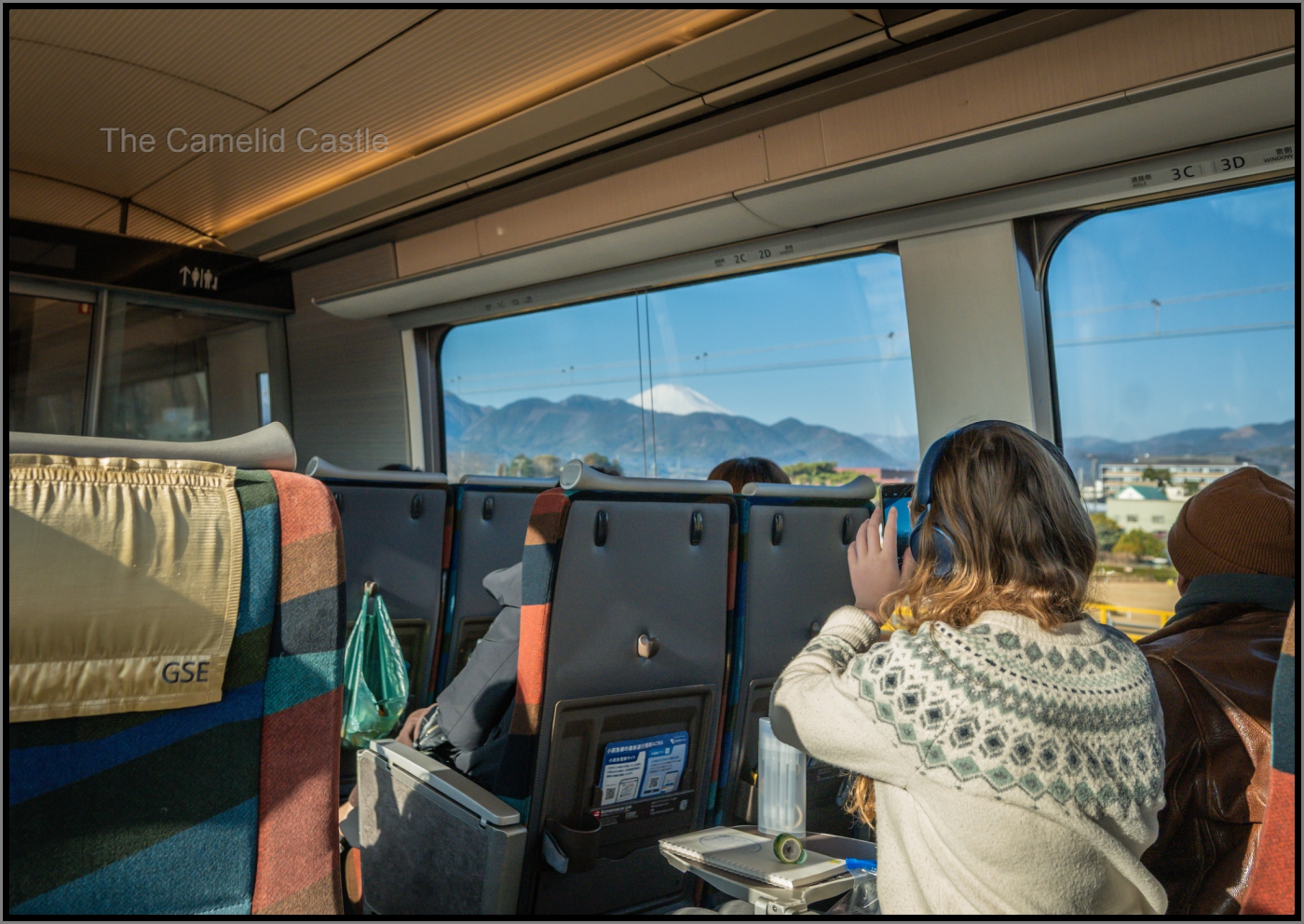
Hakone is a resort town in the Fuji-Hakone-Izu National Park , it’s most famous for its hot springs (onsen), natural beauty, and sweeping views of Mt. Fuji. Located just 80–90 minutes west of Tokyo, it is a popular escape from the city, and a popular day trip from Tokyo.
Commencing the Hakone loop
There most common way to see Hakone is via the is sightseeing loop around the mountainous Hakone, that includes buses, a pirate ship, cable cars and a funicular. You can do the loop either clockwise or anti-clockwise. We decided to go clockwise which turned out to be a very good decision.
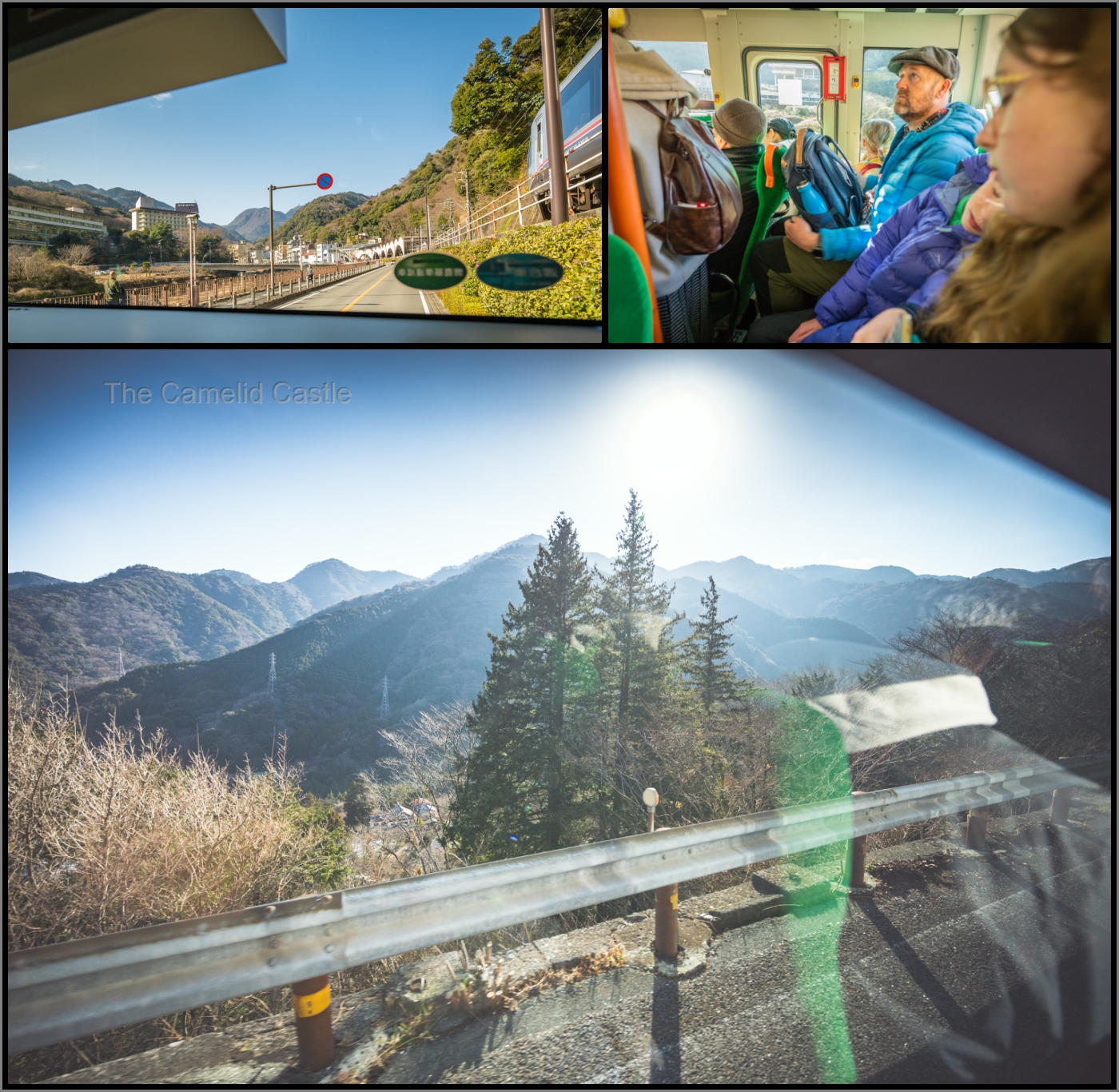
After some nice days in Tokyo, over the past few days at 15/16 degrees the forecast for Hakone was minus 4 to 6 for the day. Luckily by the time we arrived in Hakone, it was up to at least 4 degrees. We lined up for the bus to Motohakone. There were plenty of staff around directing people to the correct buses, which did save a lot of confusion. The bus ride was scenic but involved climbing through some mountains on a winding road.
Lake Ashi and the Hakone Shrine
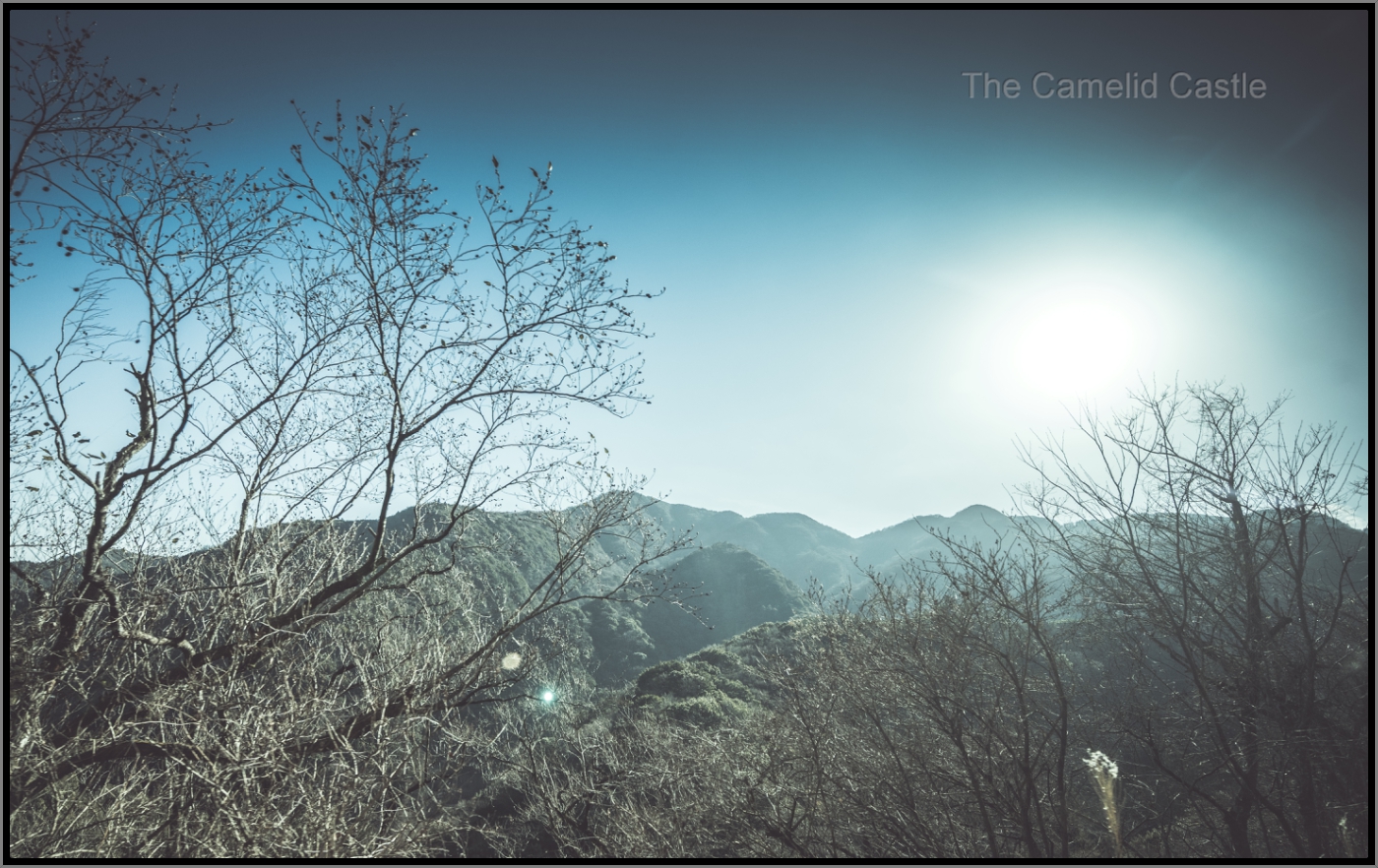
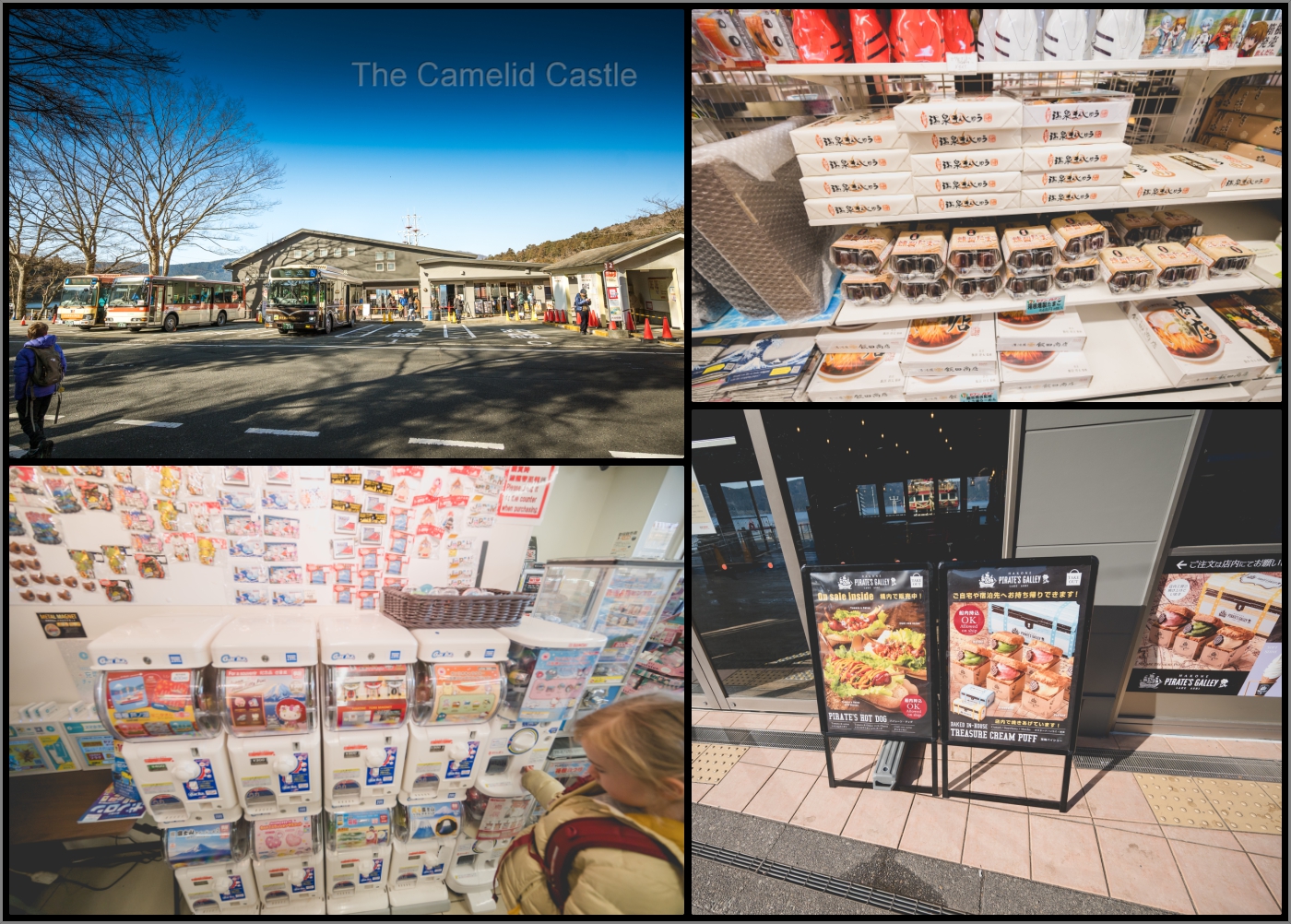
We arrived at Lake Ashinoko (Lake Ashi), which is a caldera lake created by a volcanic eruption. We planned to go on the pirate ship cruise across the lake, but first we were going to walk along some of the lake foreshore and up to Hakone Shrine. Hakone is famous for black eggs, and we found them on sale everywhere, along with of course, gashapon capsule machines, which the kids had to check out!
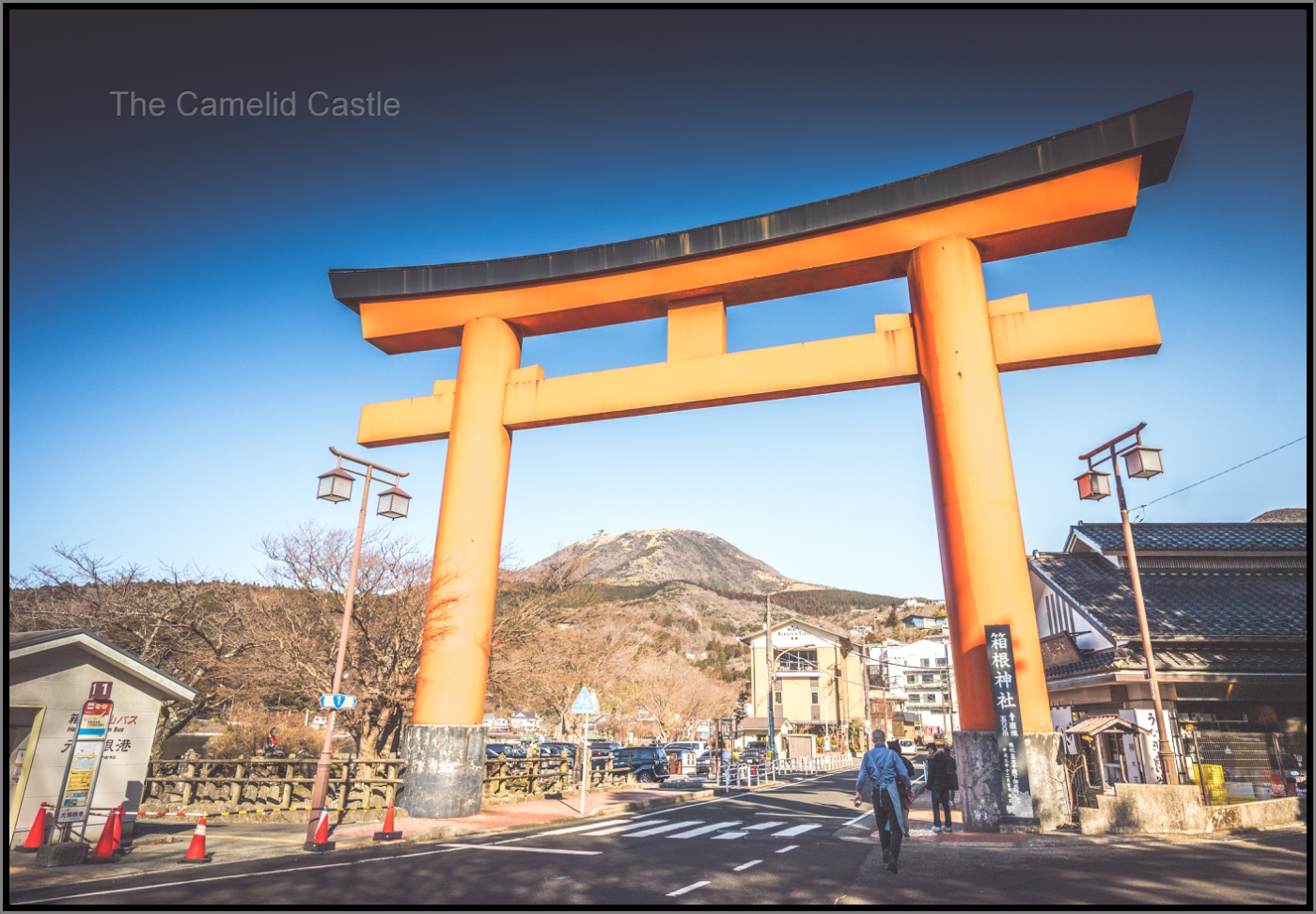
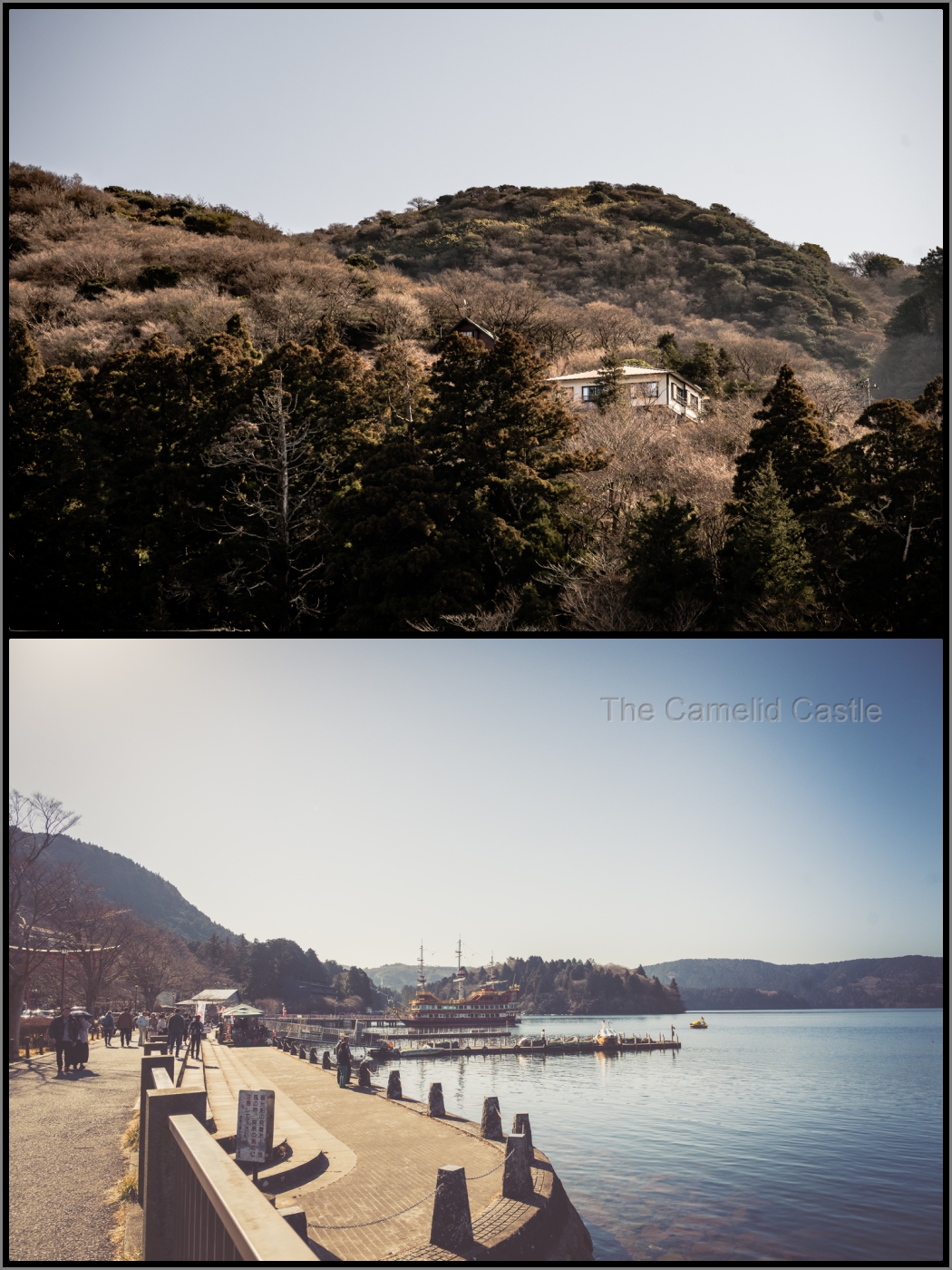
We walked along the lakeside path up to the Hakone shrine. It was a beautiful sunny day a nice day for wandering around the lake. Just for something different, there were more torii gates!
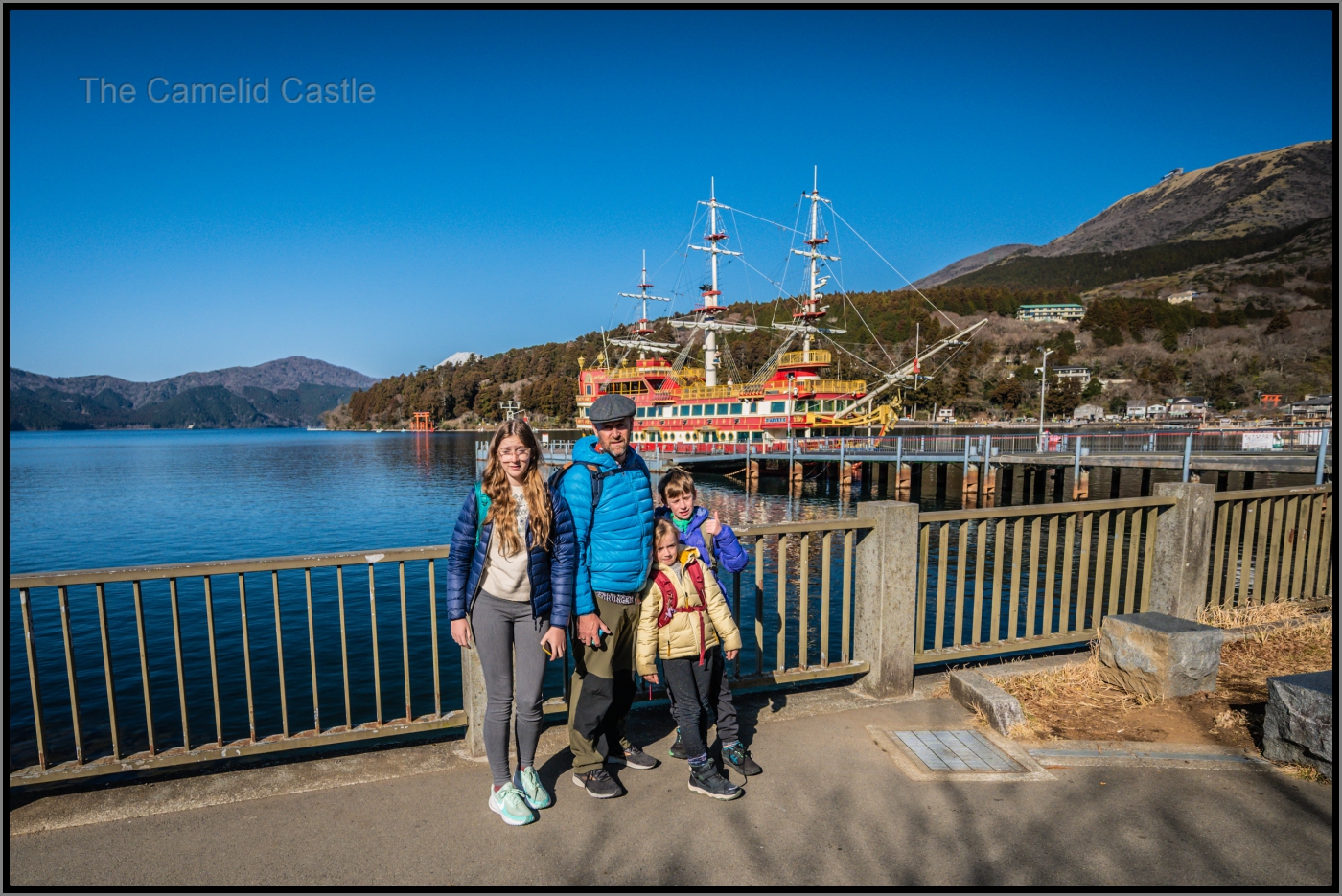
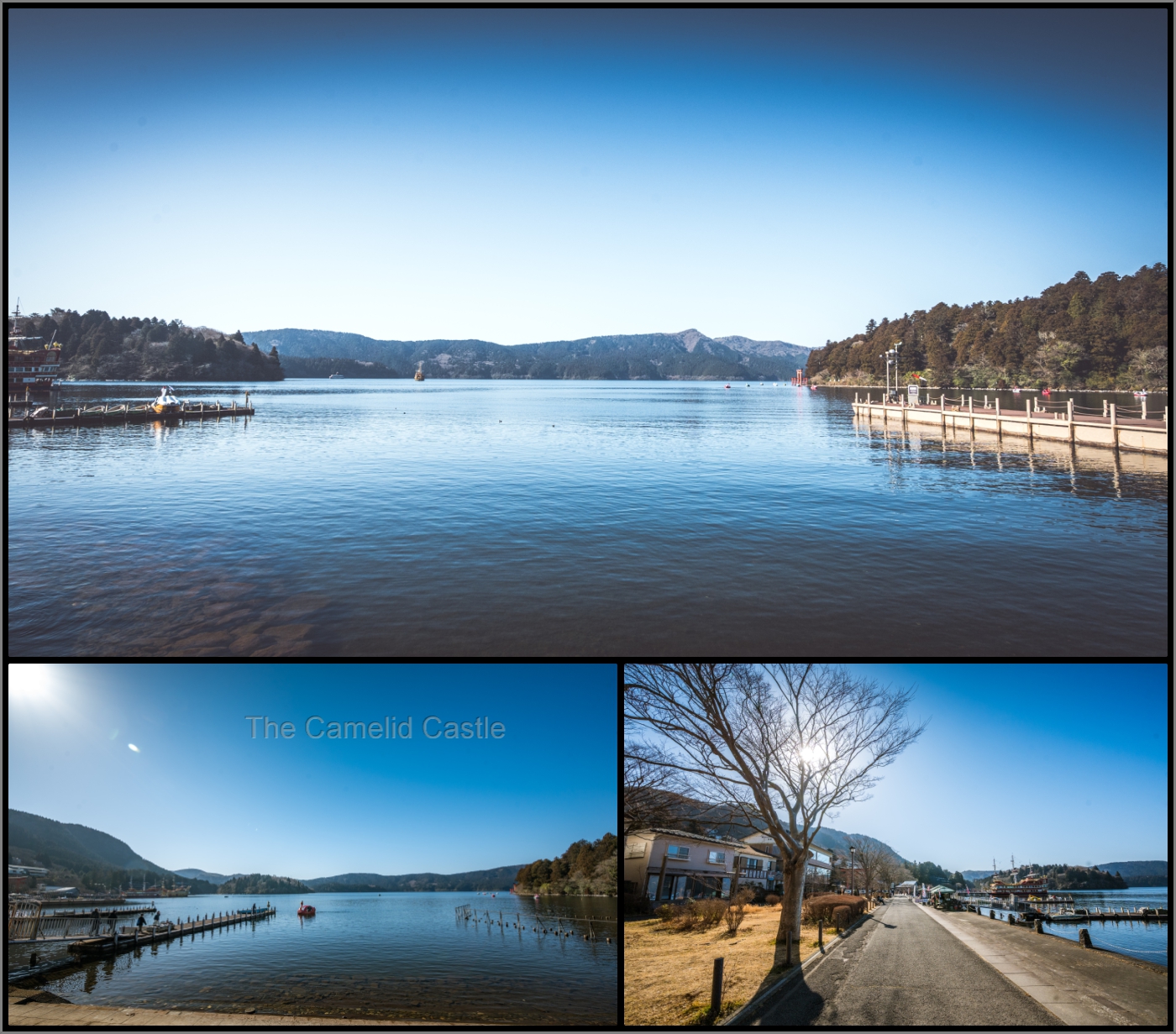
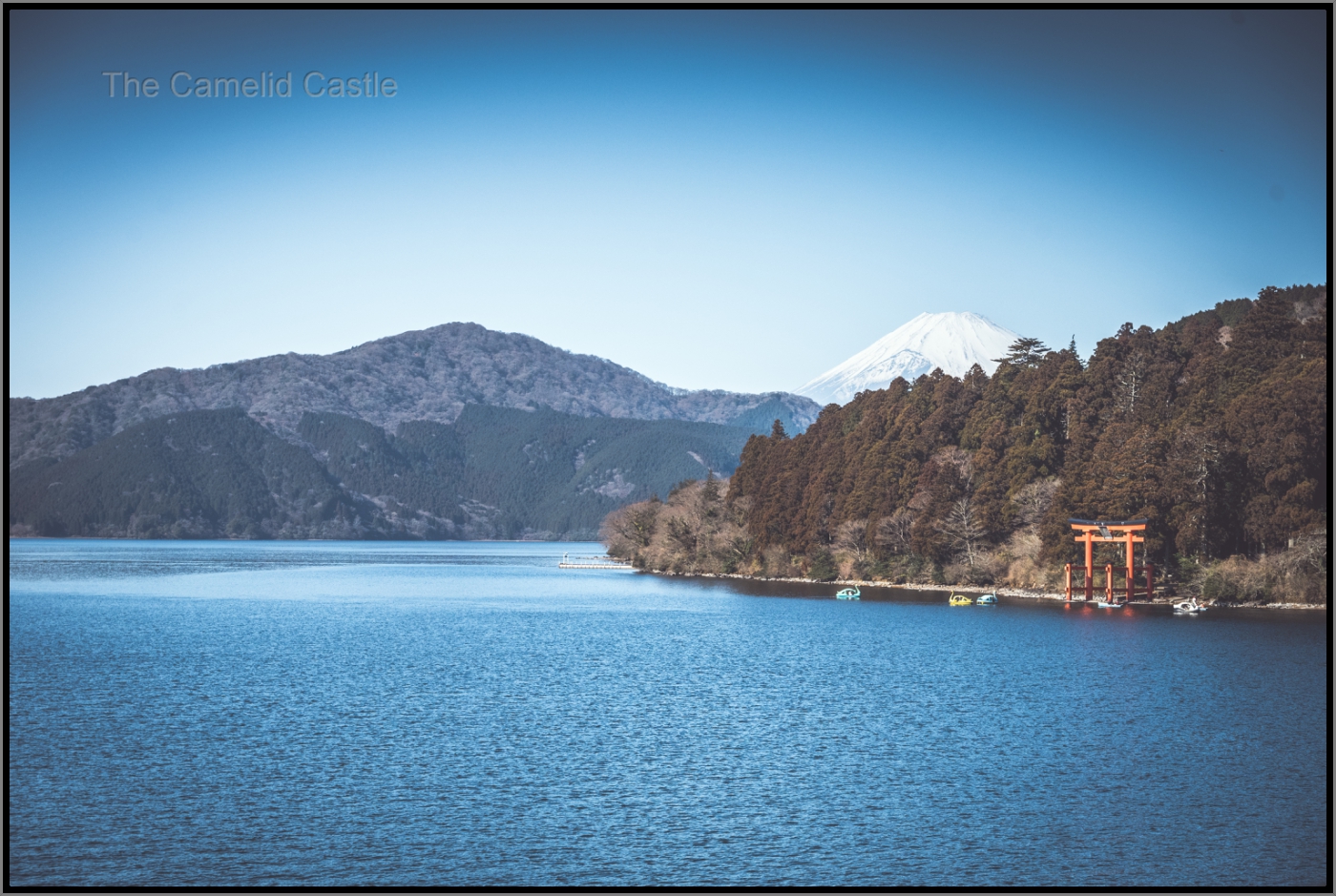
The pirate ships are hard to miss! The Pirate Ship cruise takes you across Lake Ashi from Motohakone to Togendai, and gives excellent views of the floating torii gate of the Hakone Shrine. We decided we’d walk around to the shrine first.
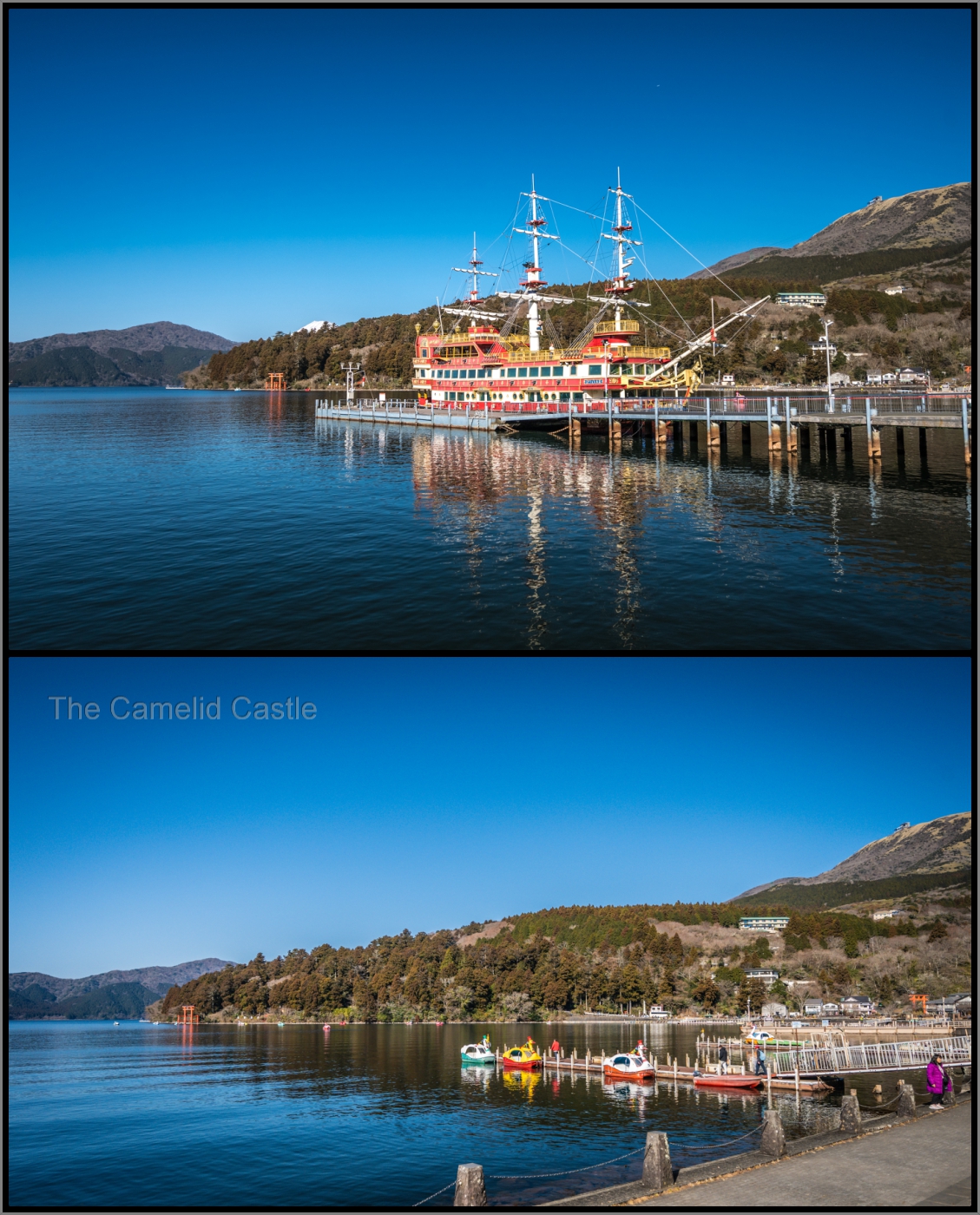
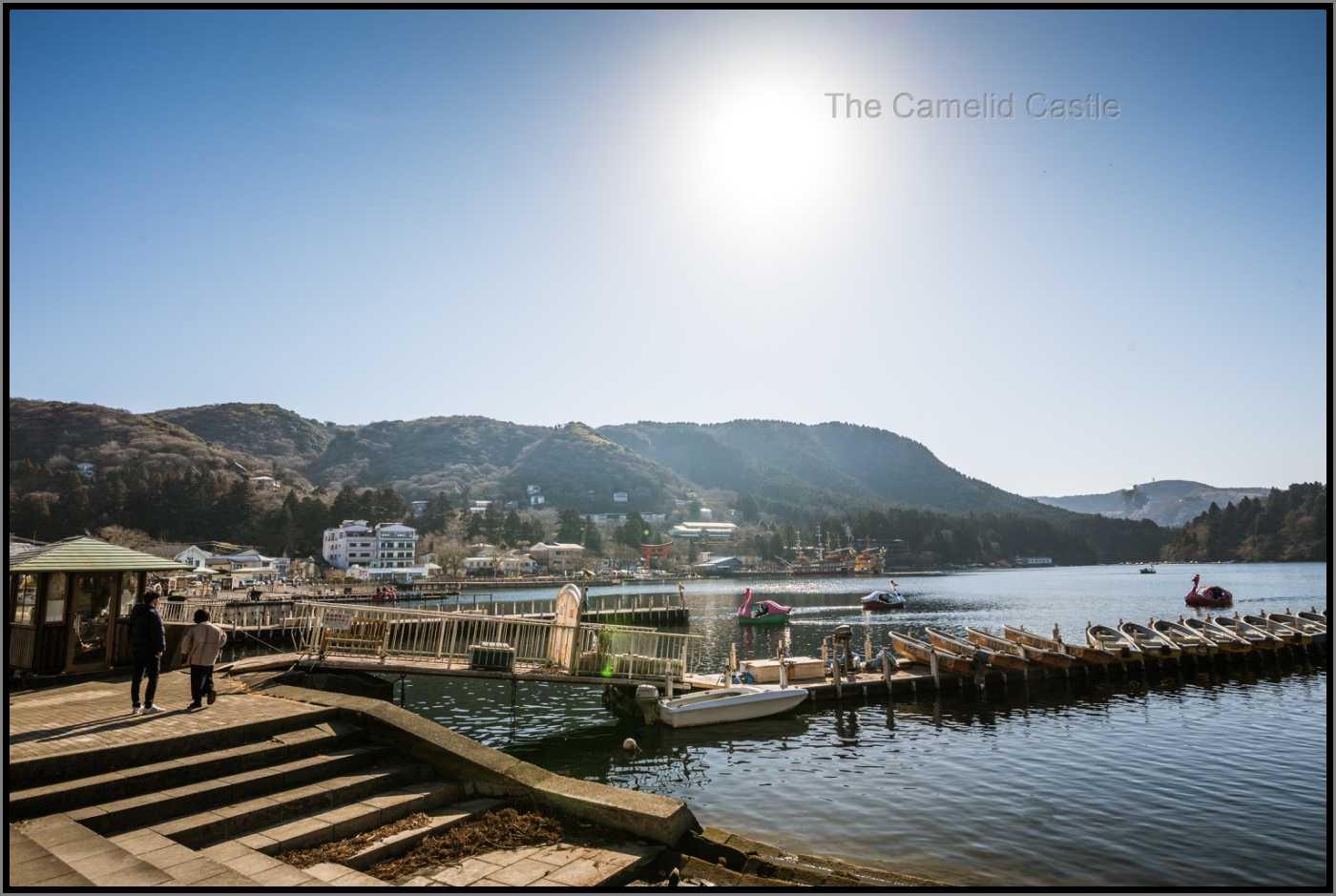
The Hakone Shrine stands at the foot of Mount Hakone along the shores of the lake. The shrine buildings are hidden in the dense forest, but are well advertised by its huge torii gates, one standing prominently in the lake, and two others over the main street of Moto-Hakone.
A path leads from the torii gate in Lake Ashinoko up a series of steps flanked by lanterns through the forest to the main building, which sits amongst the tall trees.
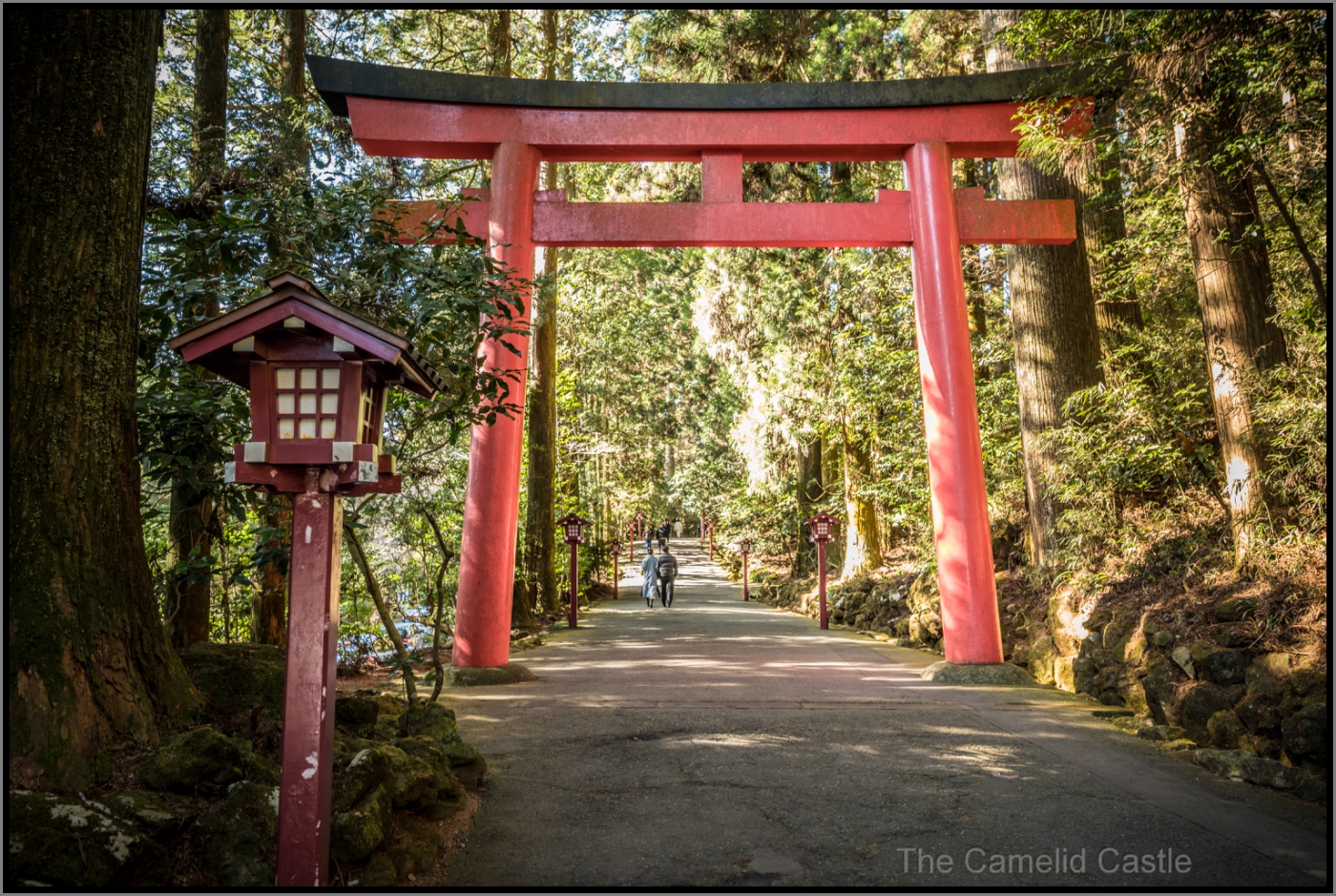
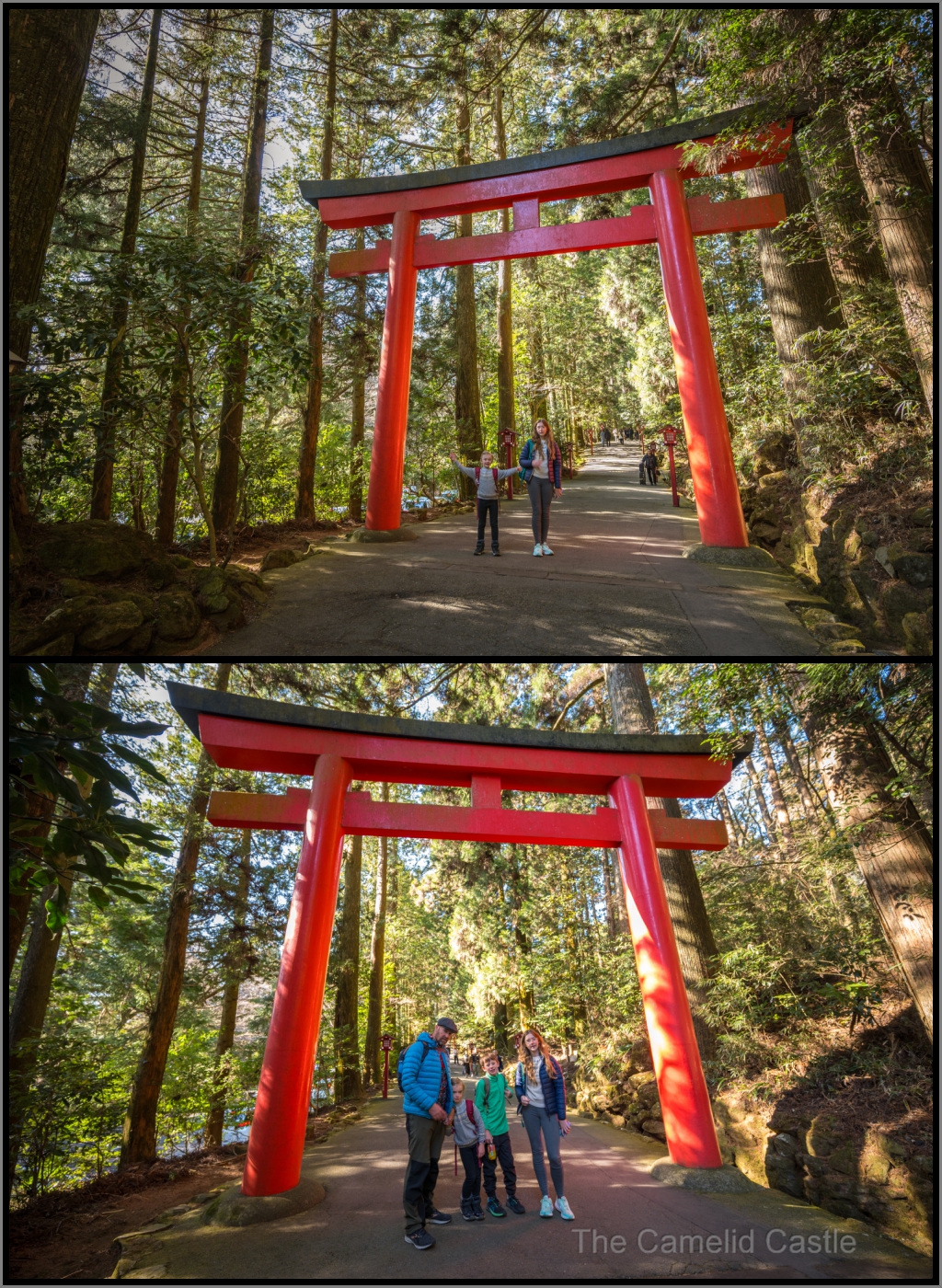
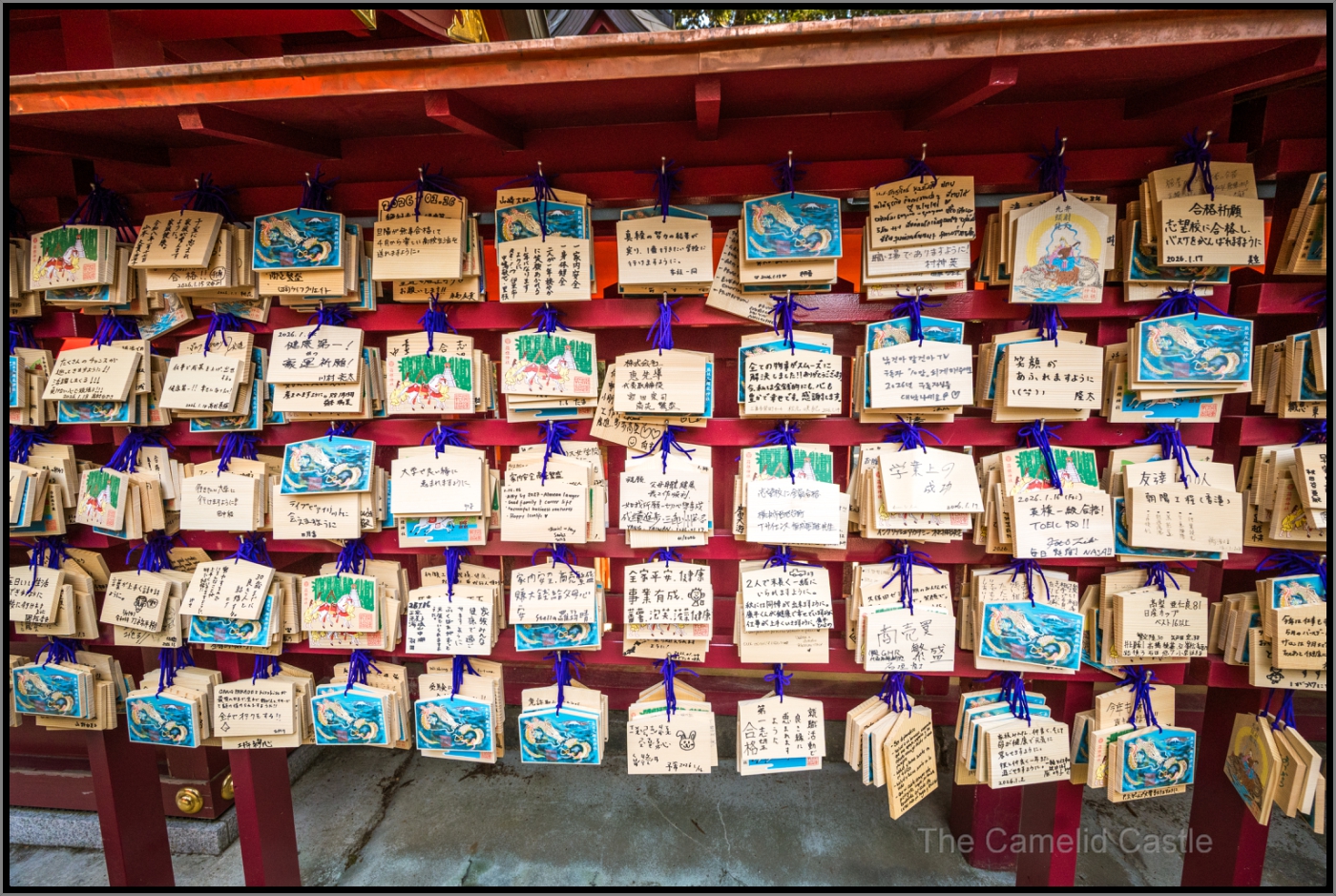
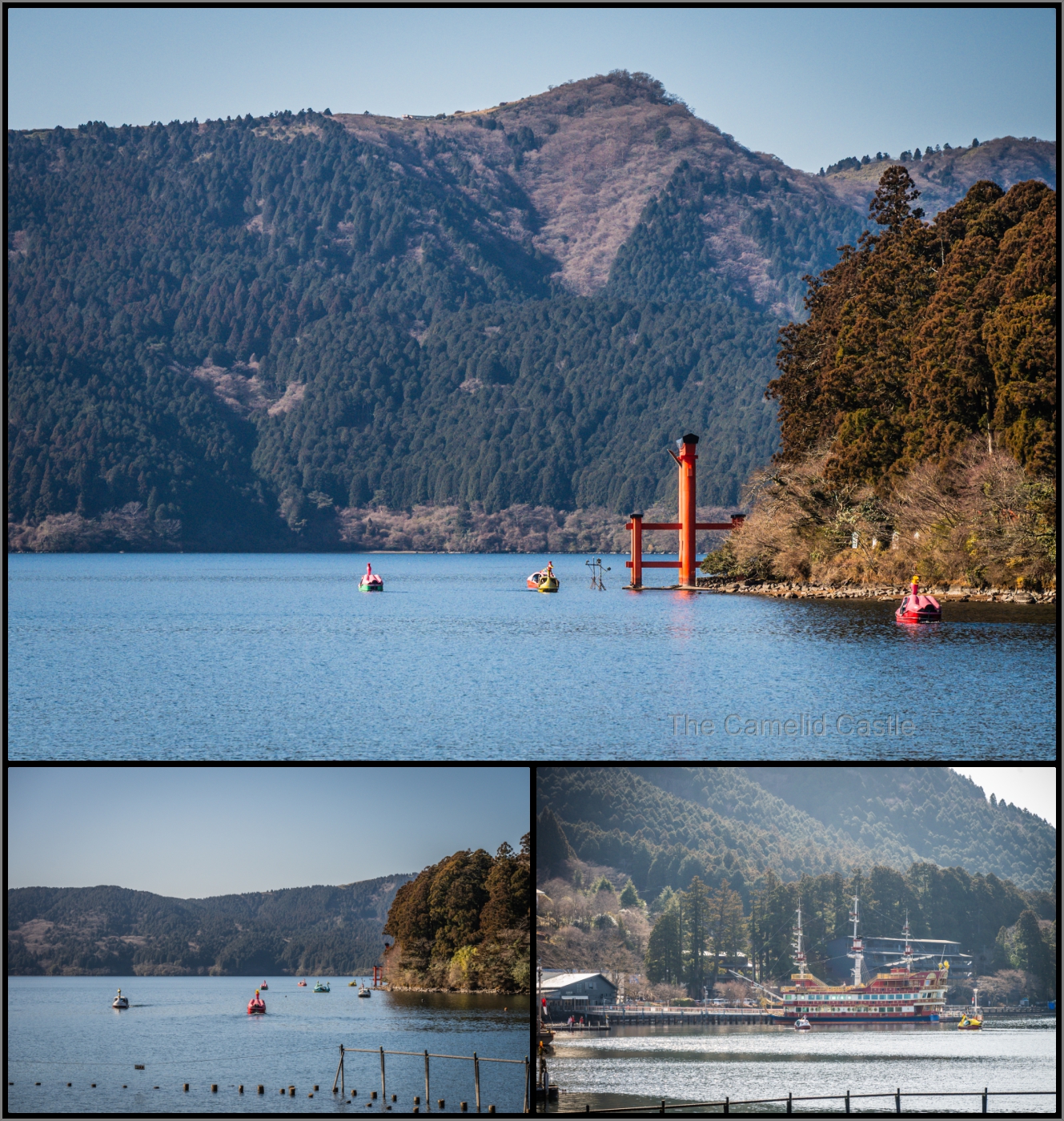
Like Miyajima in Hiroshima, there was also a torii gate in the water. Unfortunately the path down to the lake was closed, so we admired it from a distance but the Hakone shrine was bustling with plenty of people, and some interesting stalls selling various foods.
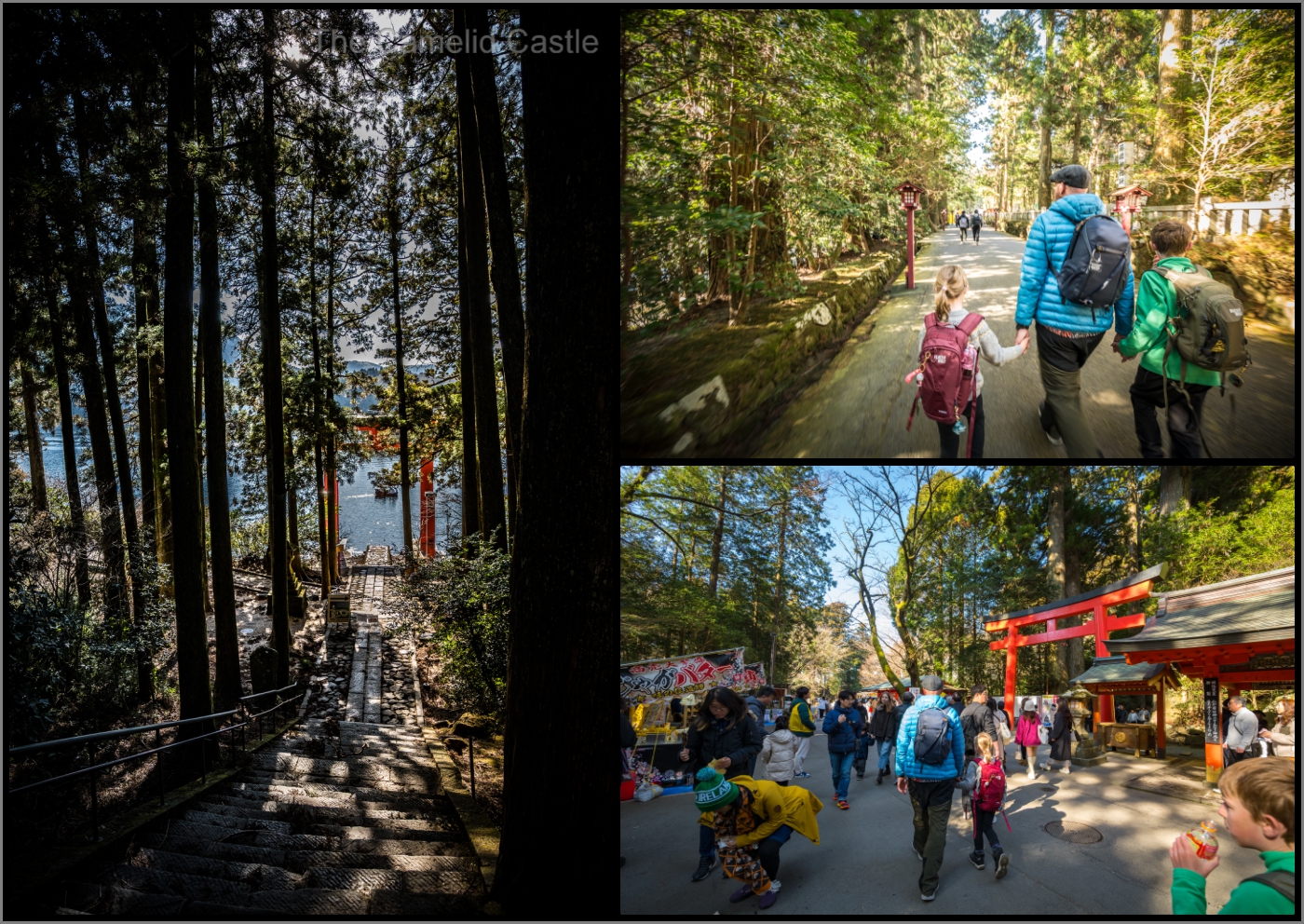
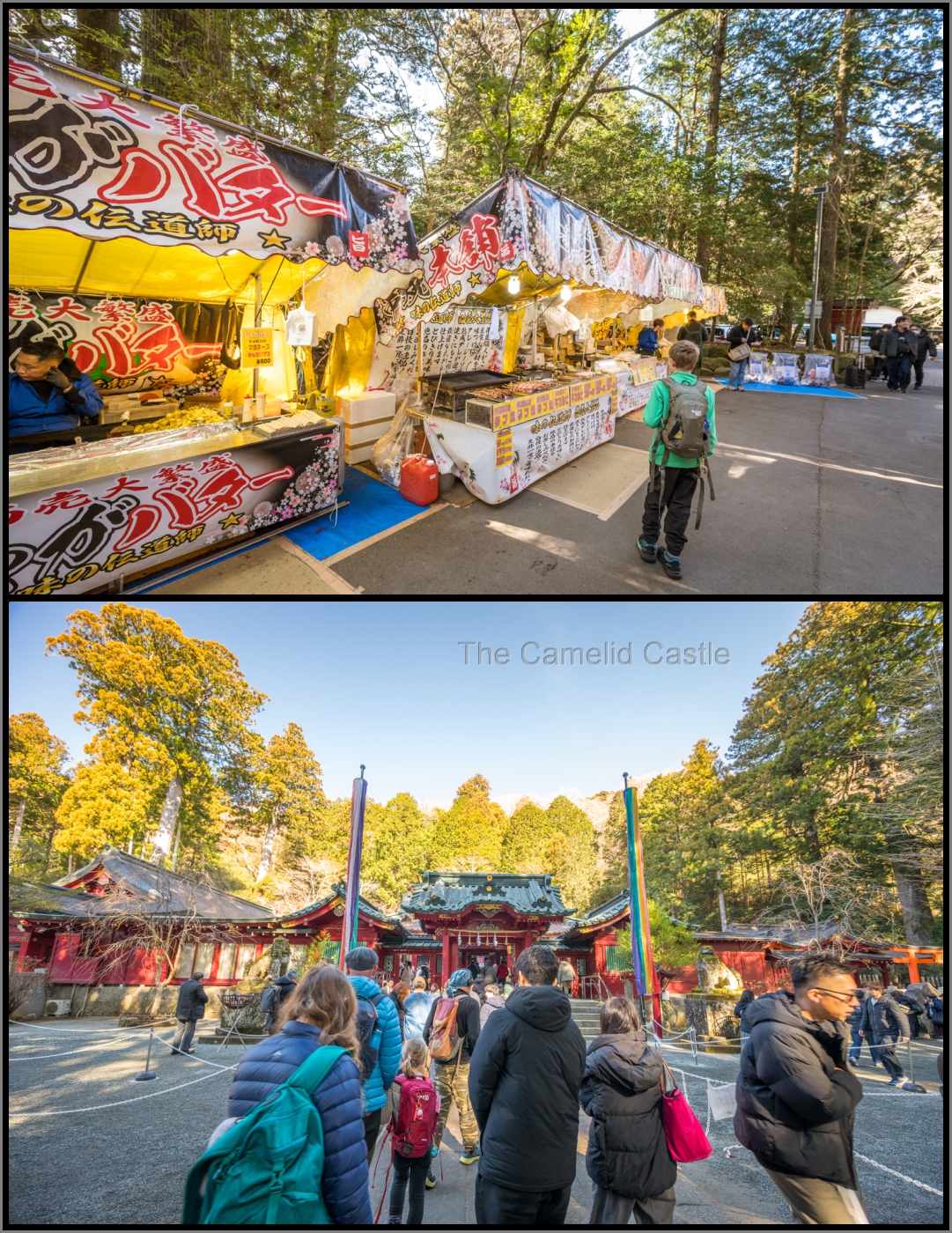
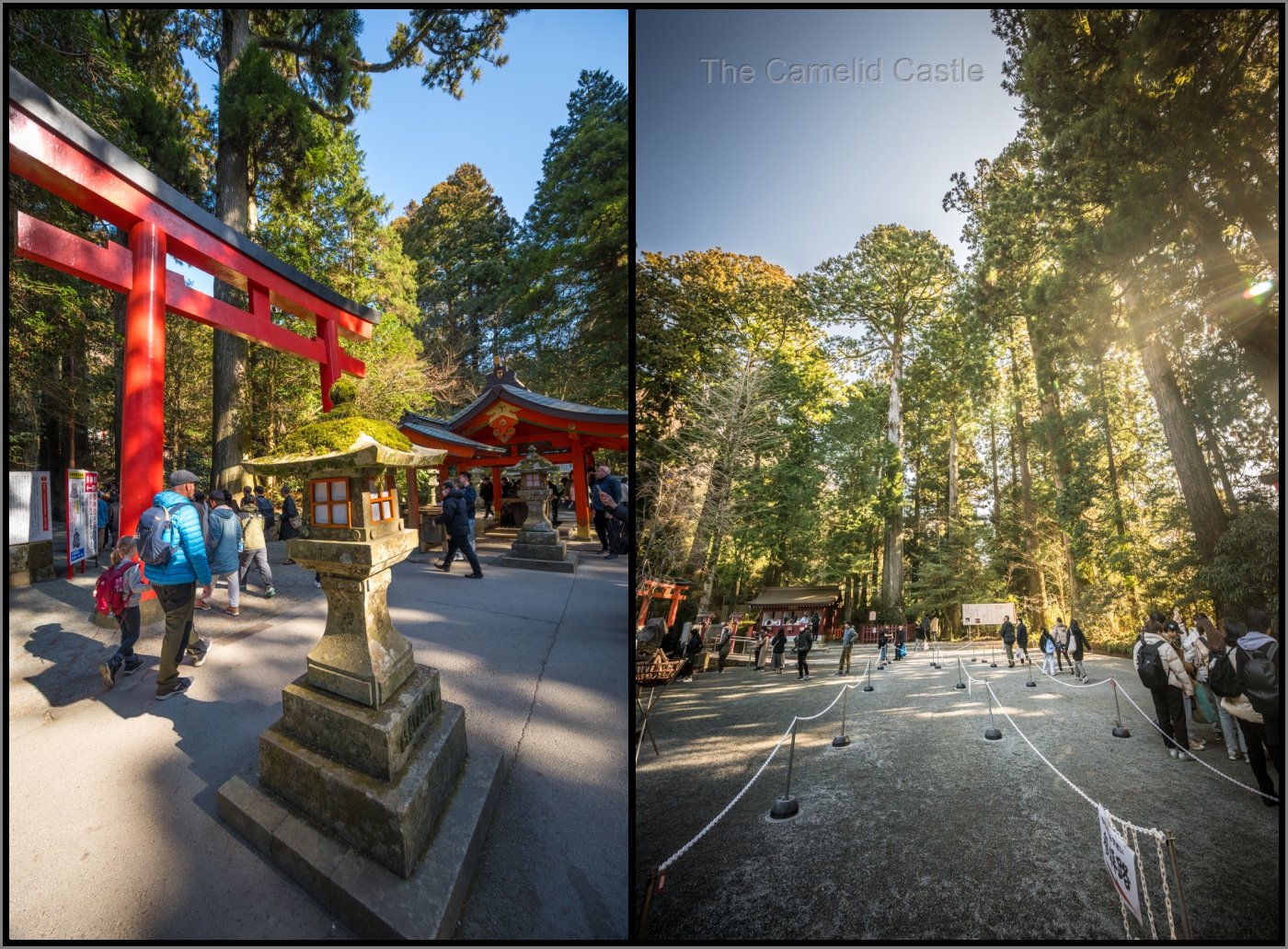
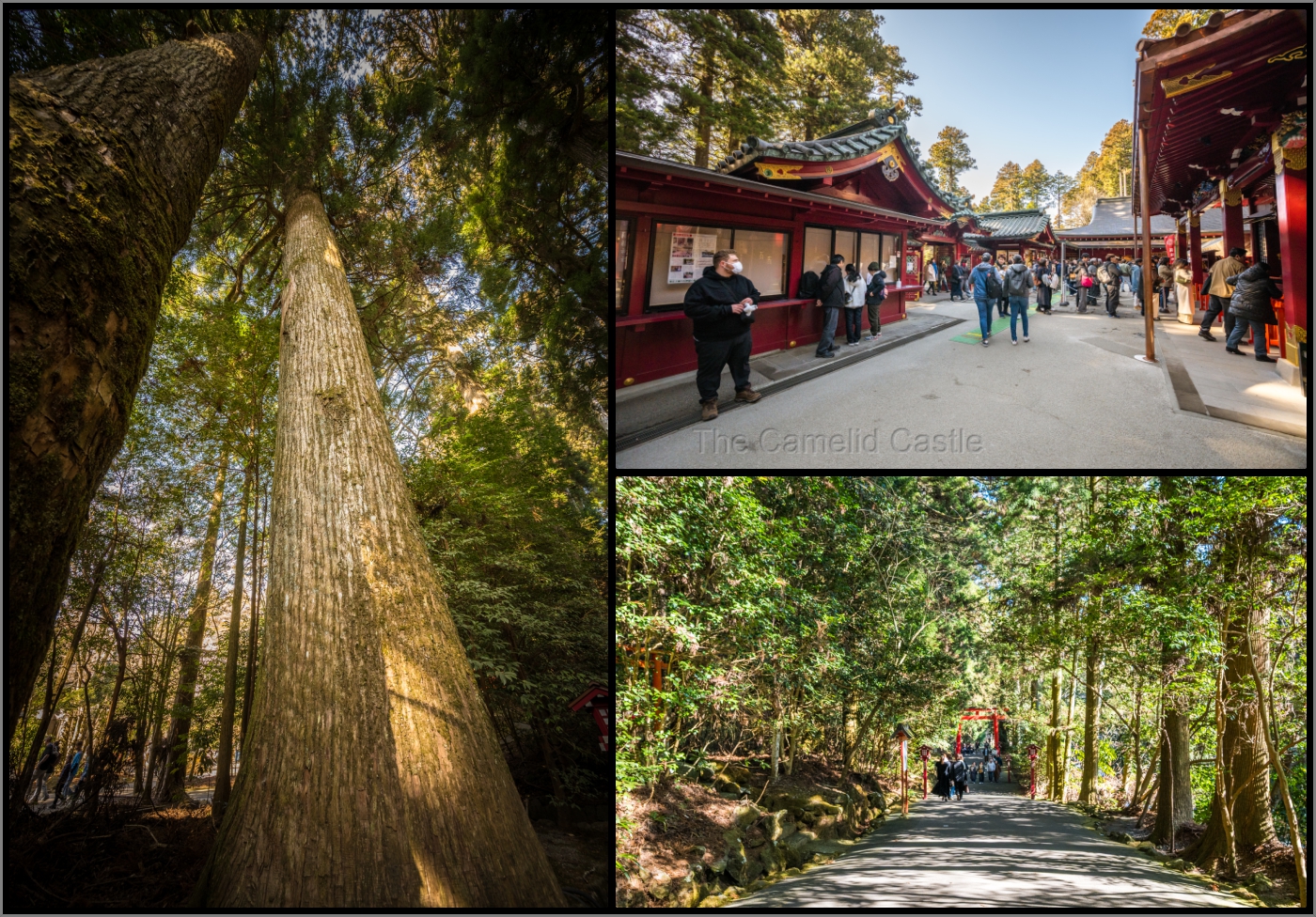
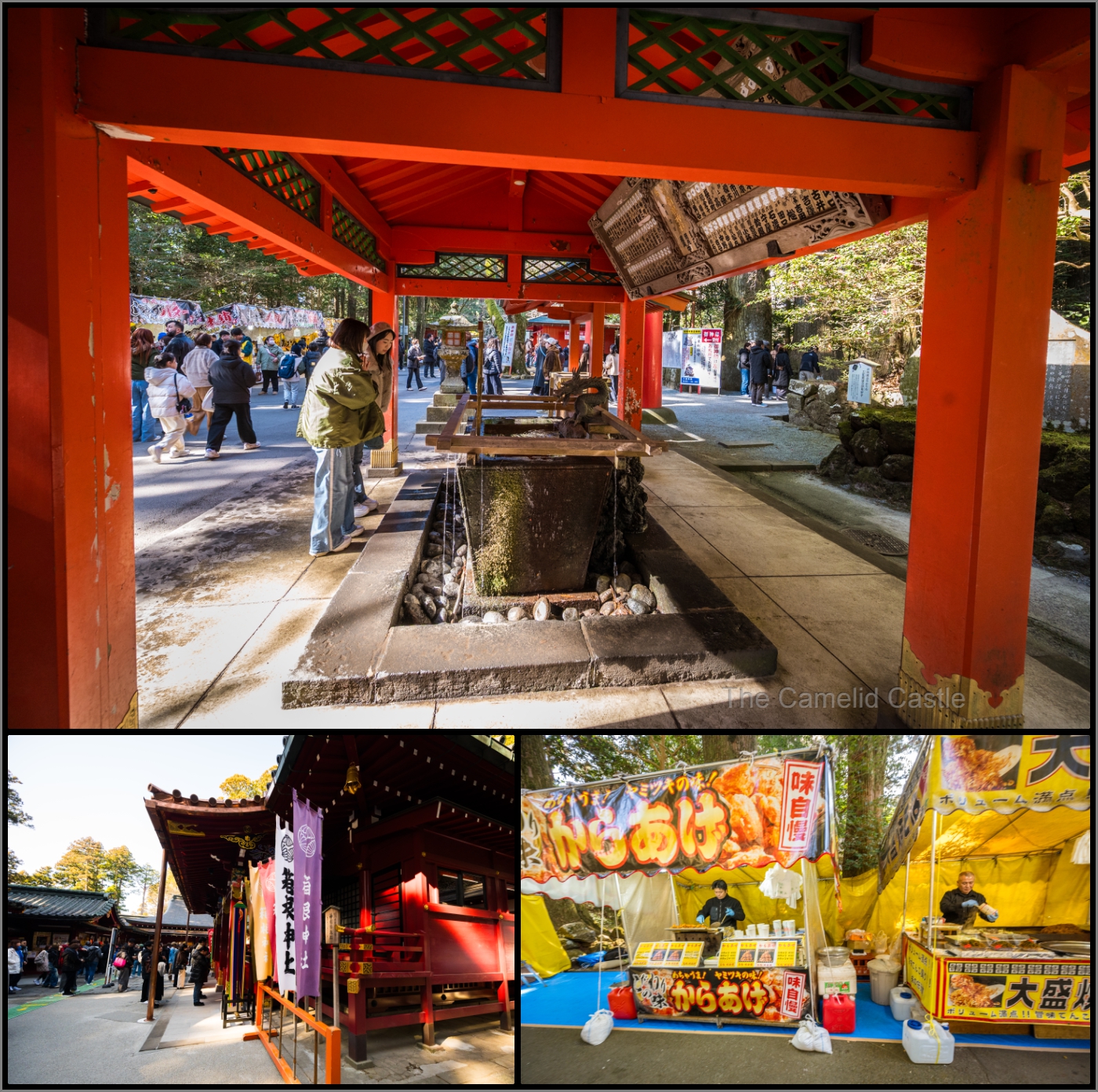
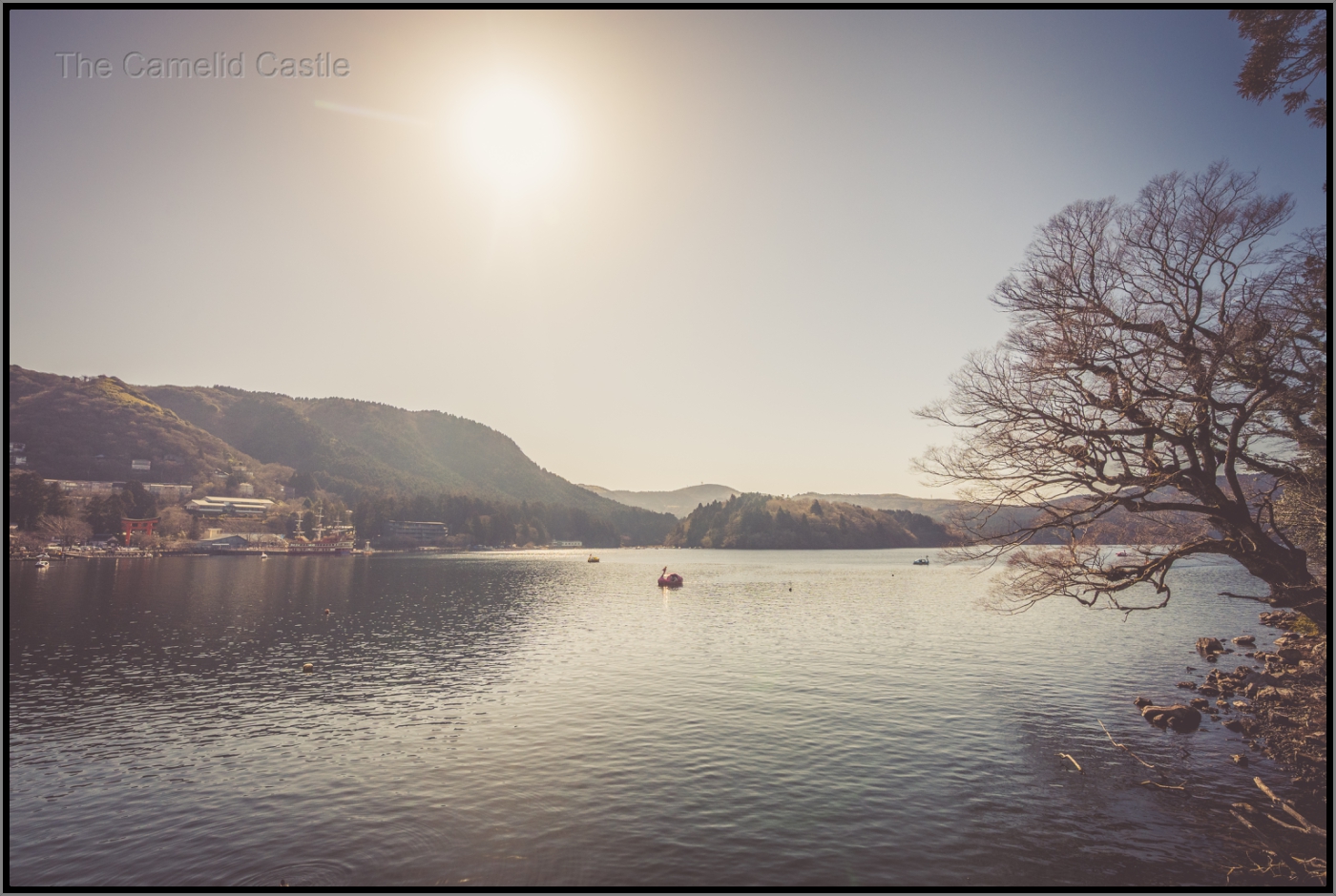
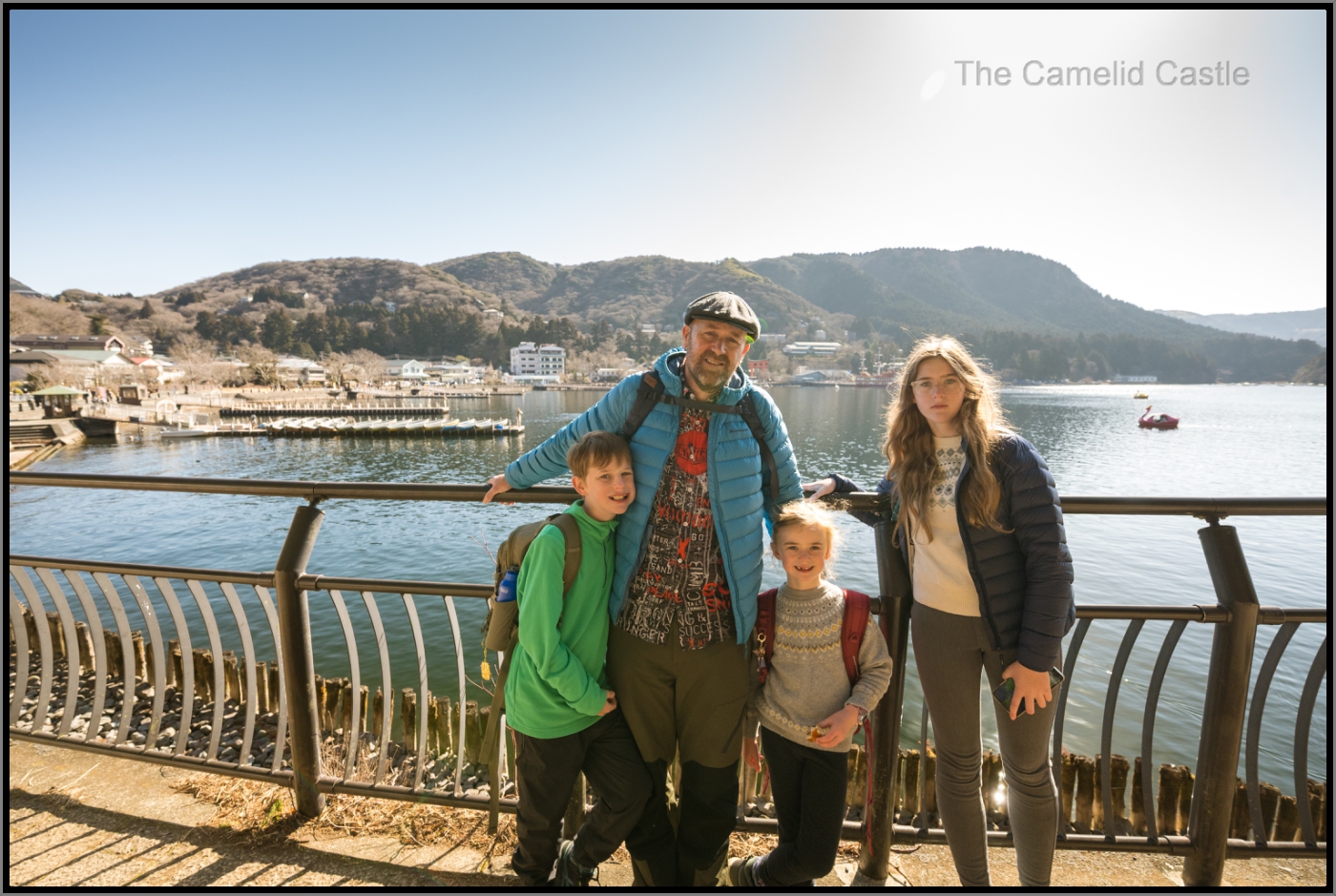
As we weren’t getting any closer to the floating torii, gate we wandered back towards the lake and enjoyed the beautiful Winter’s day and watched the many swan boats out on the lake.
There were plenty of birds of prey circling, which were fun to watch! The kids were keen on swan boats but we had a date with a pirate ship. We had plenty of activities to get through in a day so decided we’d better do the pirate ship cruise next, which turned out to be another wise choice.
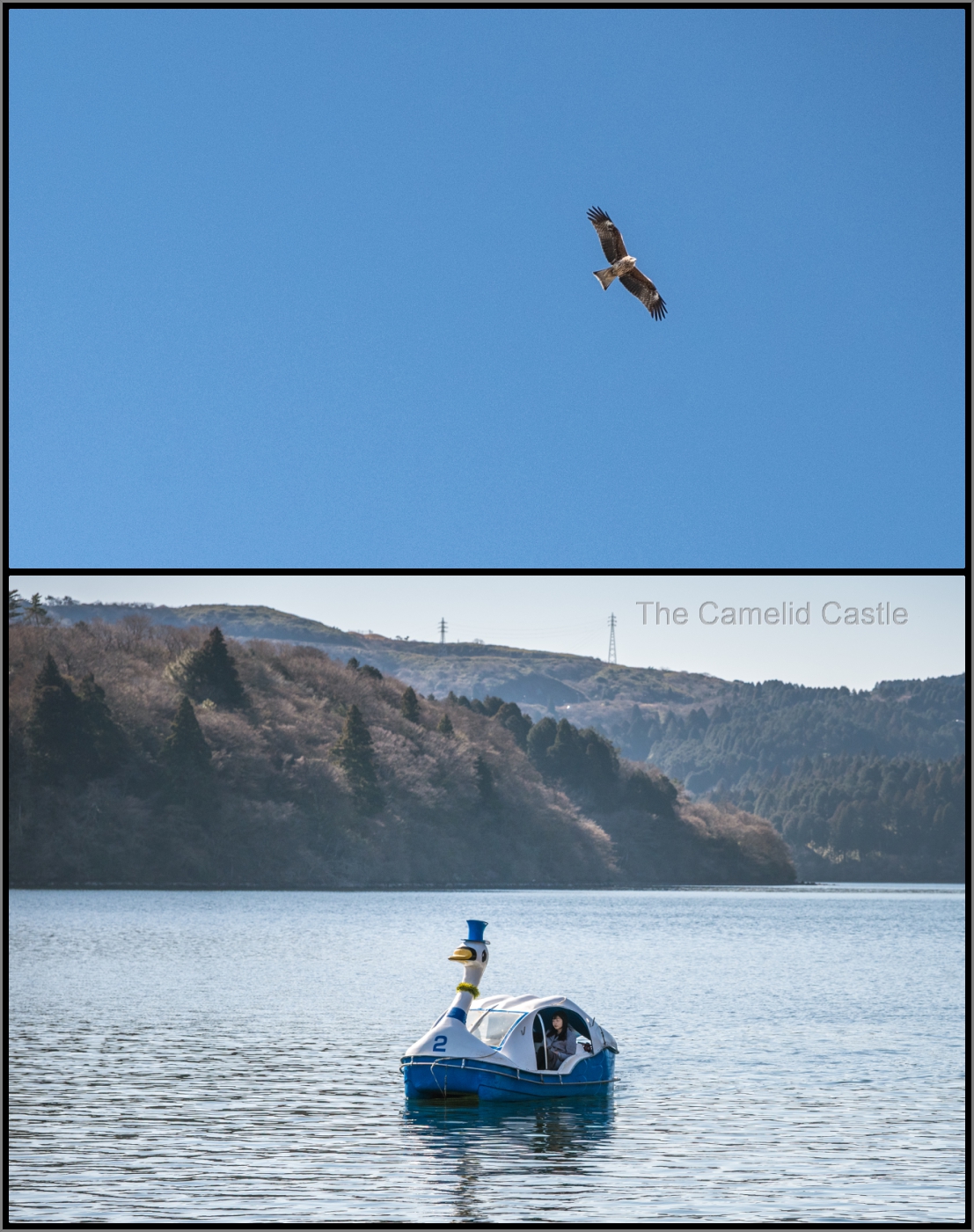
We could definitely see the ‘floating’ torii gate pretty well from our wander around the lake, but paddling a swan boat out seemed another popular option.
A pirate ship with a view….
It was down for find the next pirate ship. A crossing between ports takes between 25 and 40 minutes. The open upper deck is best to catch views of Mount Fuji, which are best on clear, sunny days. Well that is what we had today!
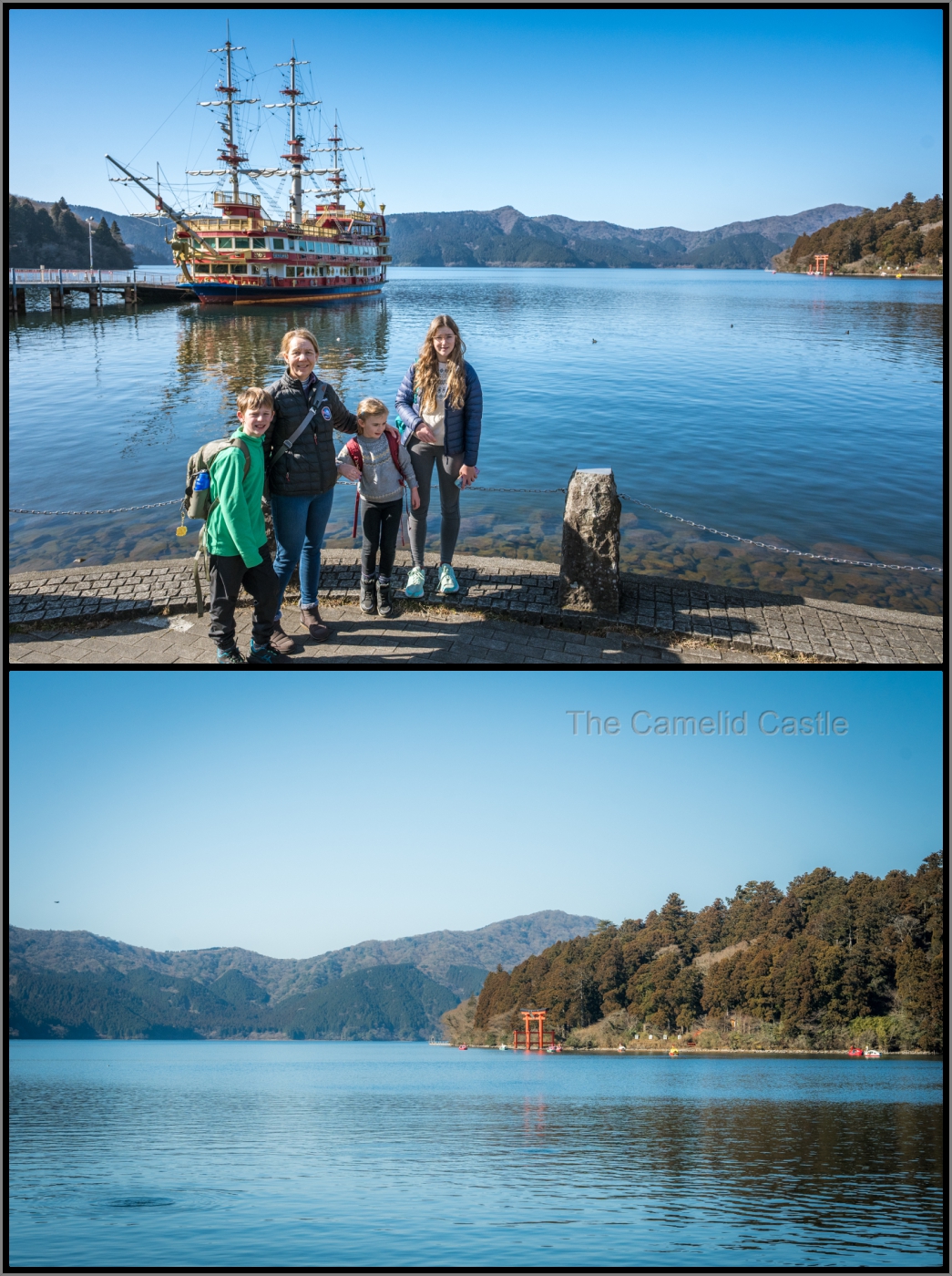
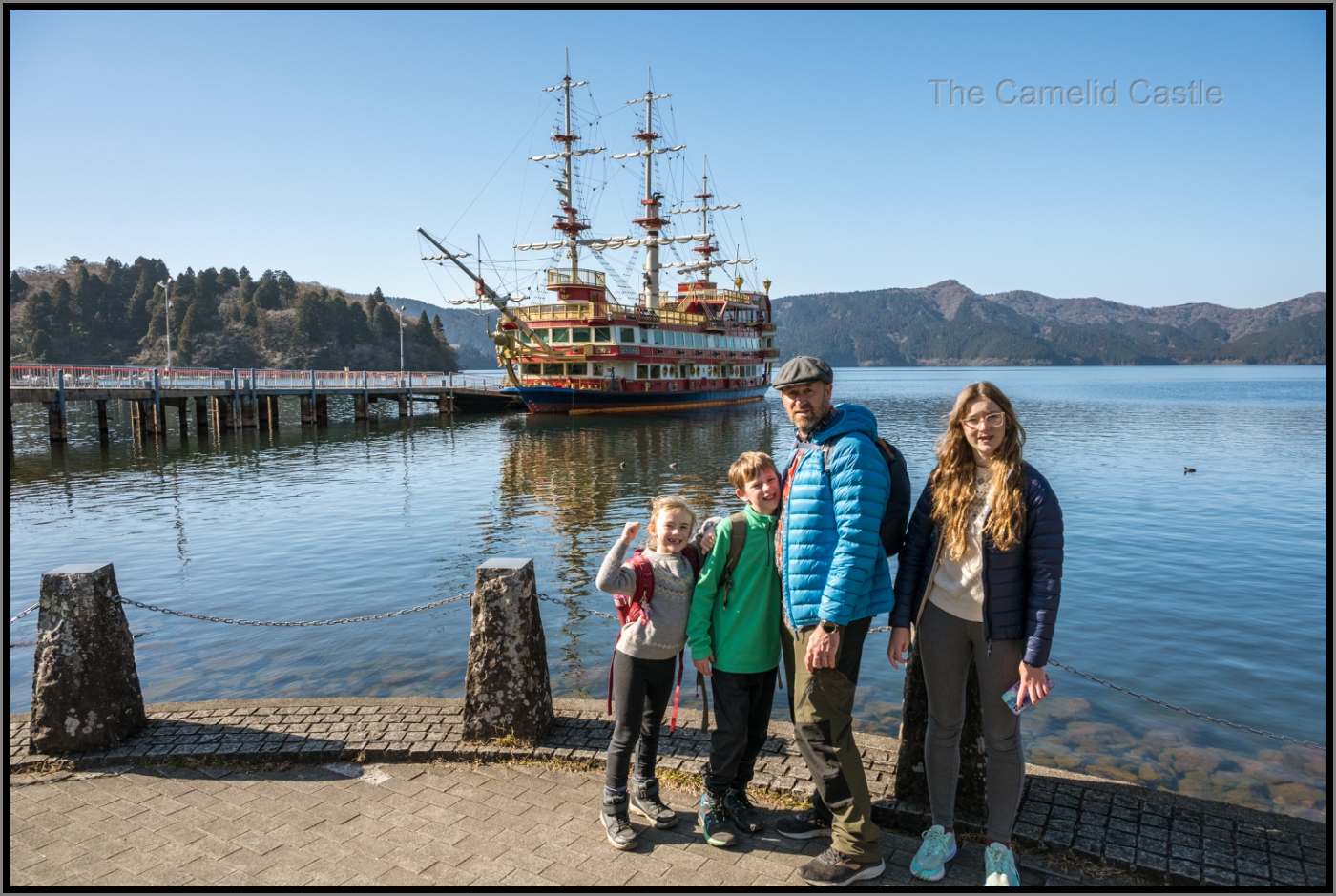
In the line for the pirate ship there was an amusing message on repeat. The Hakone free pass includes the pirate ship cruise, but only in economy. We kept hearing ‘today is a beautiful day, we recommend first class for best views of Mt Fuji. Today is a clear day. First class will have Mt Fuji in the direction of travel. First class is highly recommended for the best experience.’ This was on repeat and it was quite amusing. We were happy with our economy seats as we planned to go up on deck and enjoy the short cruise across Lake Ashi from the deck. Unsurprisingly Mt Fuji was just as visible from the economy section of the ship as the first class section.
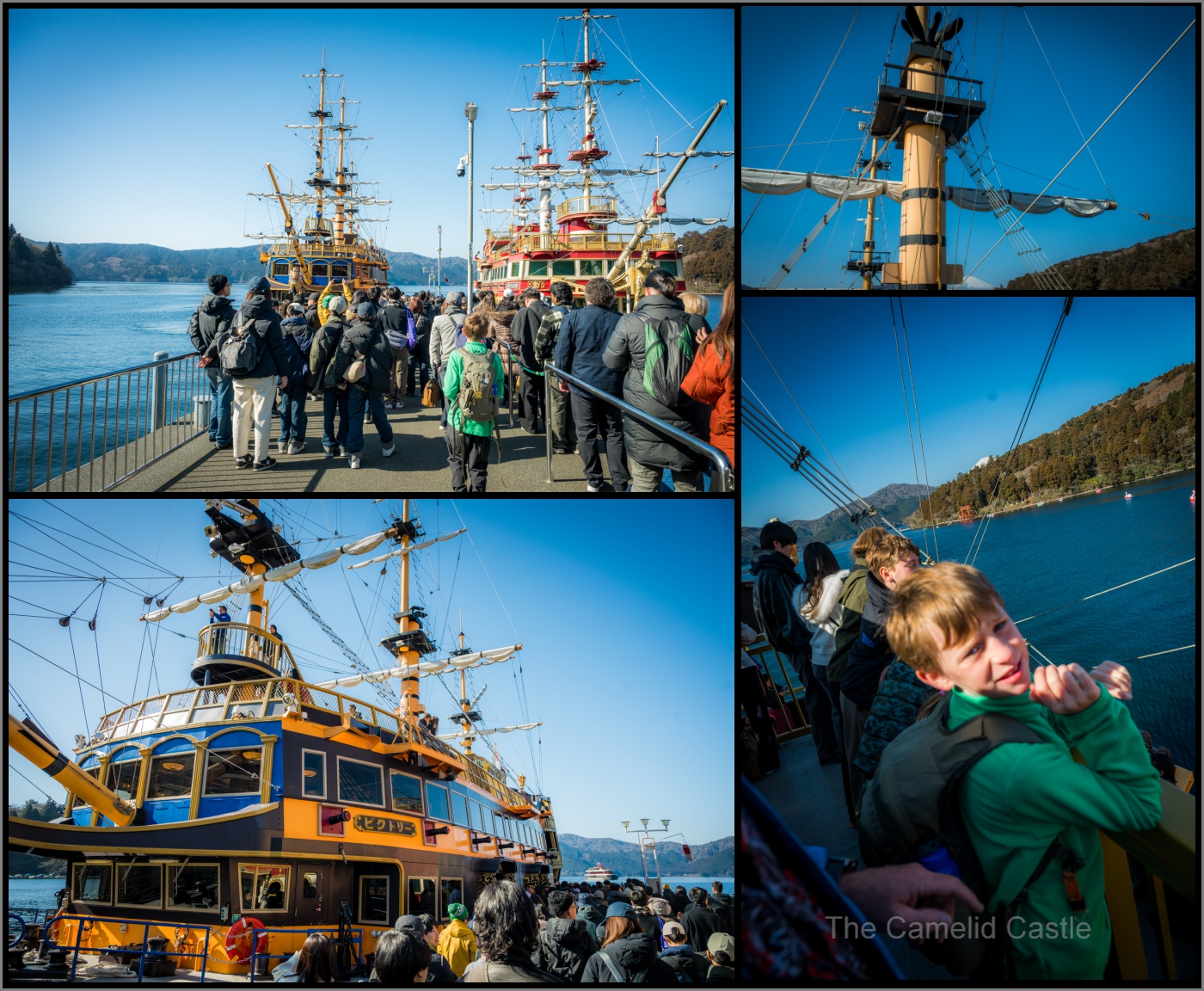
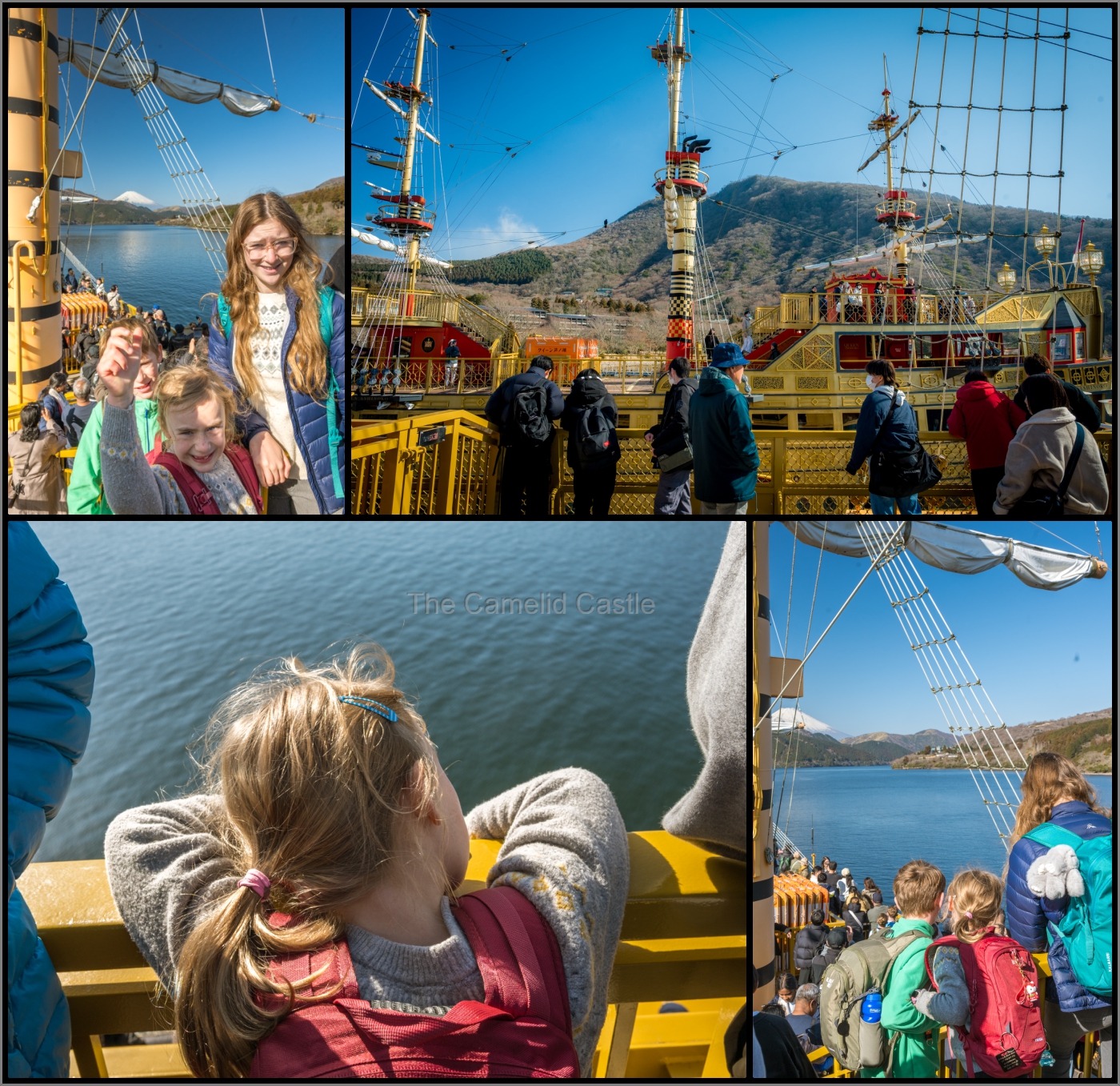
It was rather crowded on the ship, but many people head to first class, or inside. We went up to the upper deck as we were here for the views!
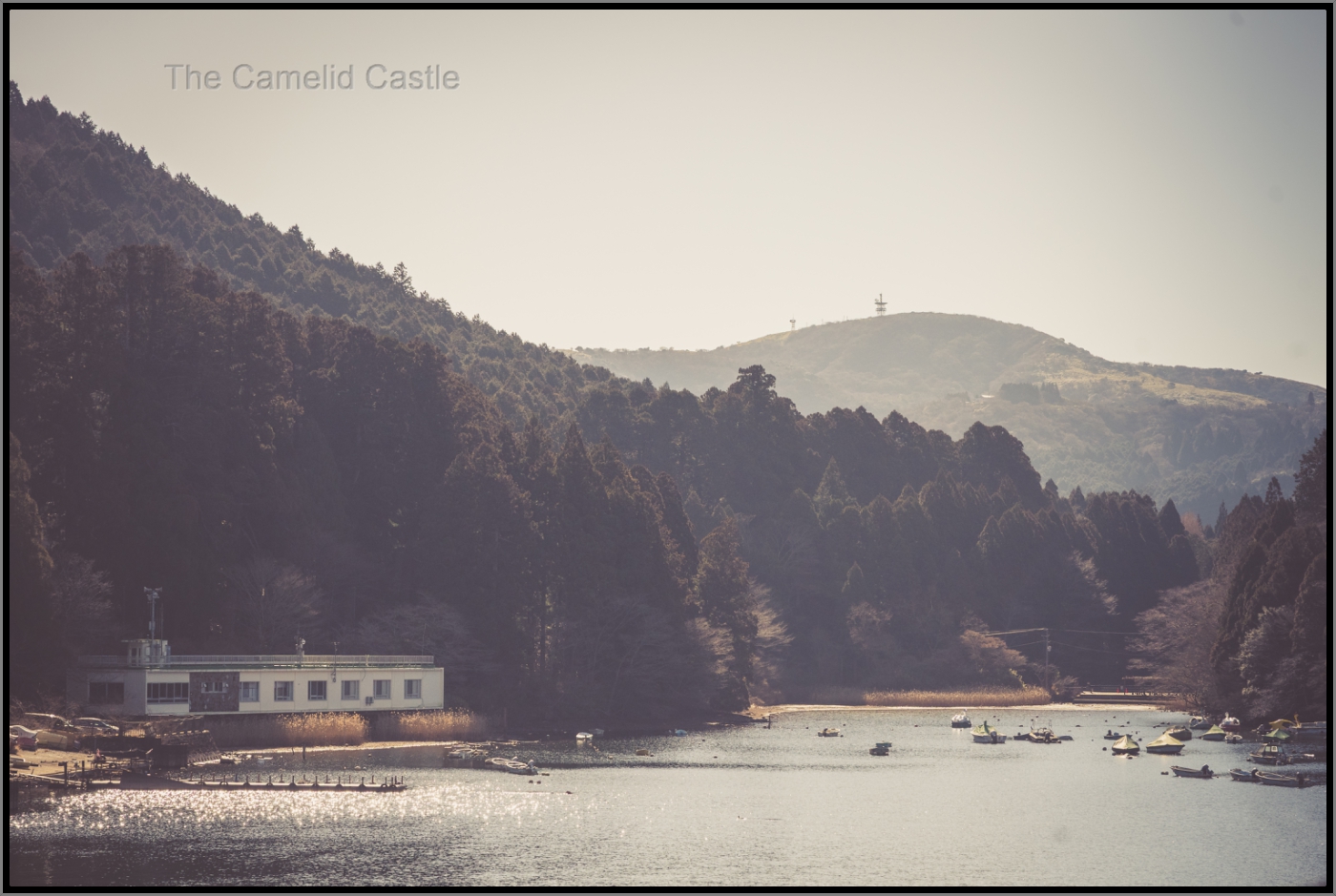
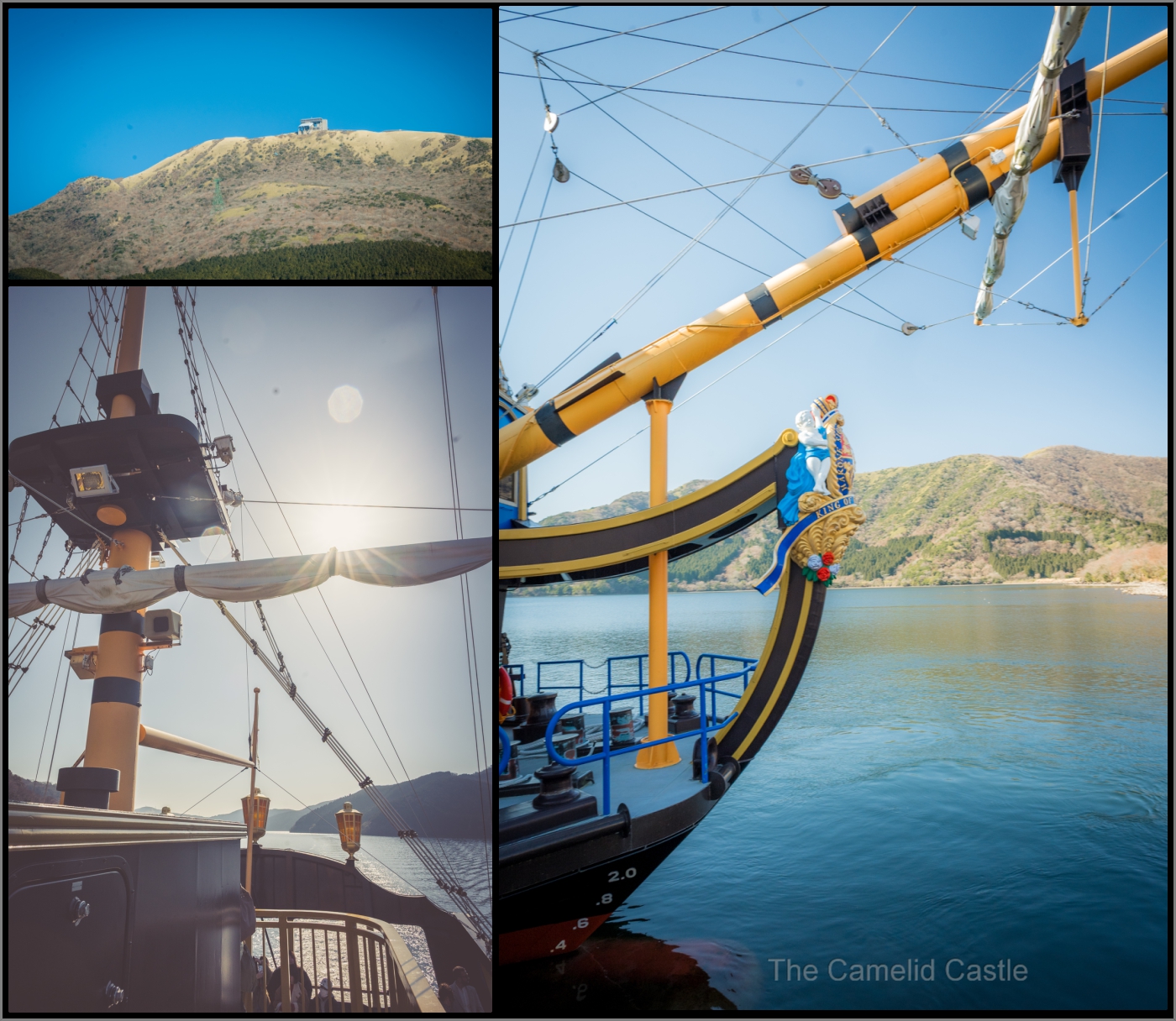
Before long we were off and cruising and we had stunning views of the Hakone Shrine floating torii gates and Mount Fuji peaking out from behind!
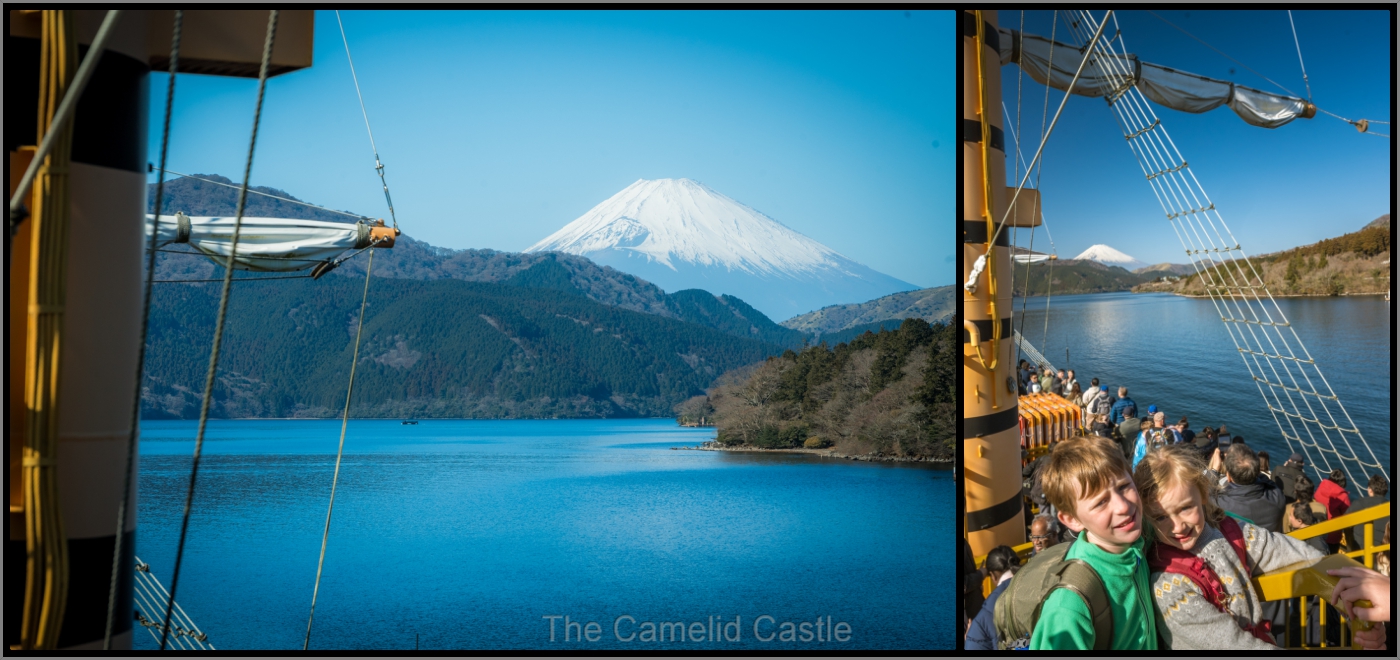
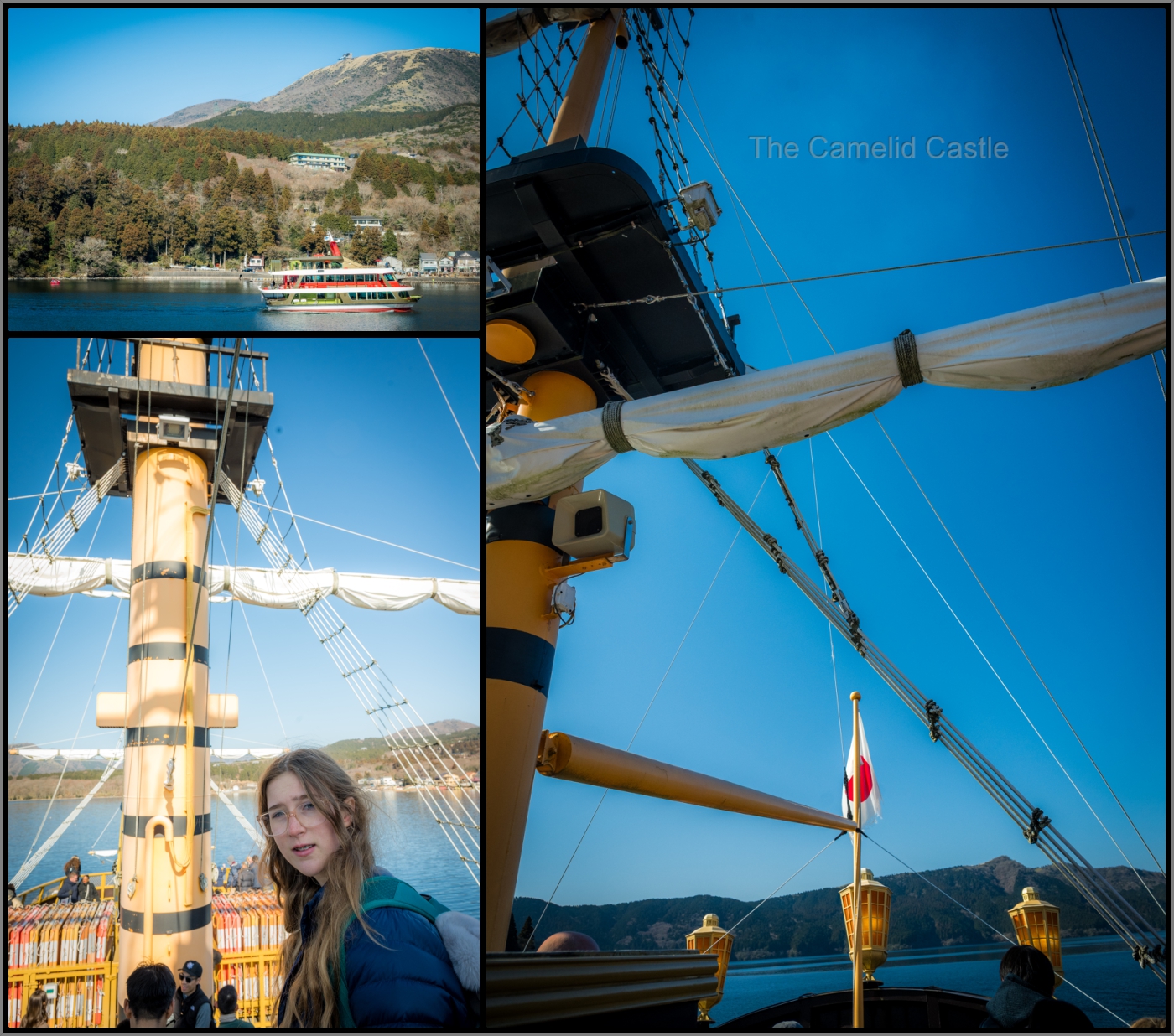
We were more than happy to stand up on deck and watch the Lake Ashi scenery float past.
The Ropeway…
Once we arrived in Togendai and left the pirate ship, we decided to go straight to the Togendai station and jump on the ropeway (which is actually a cable car). There was a cafe and souvenir shop in Togendai but we were here for the views so it was off to the ropeway.
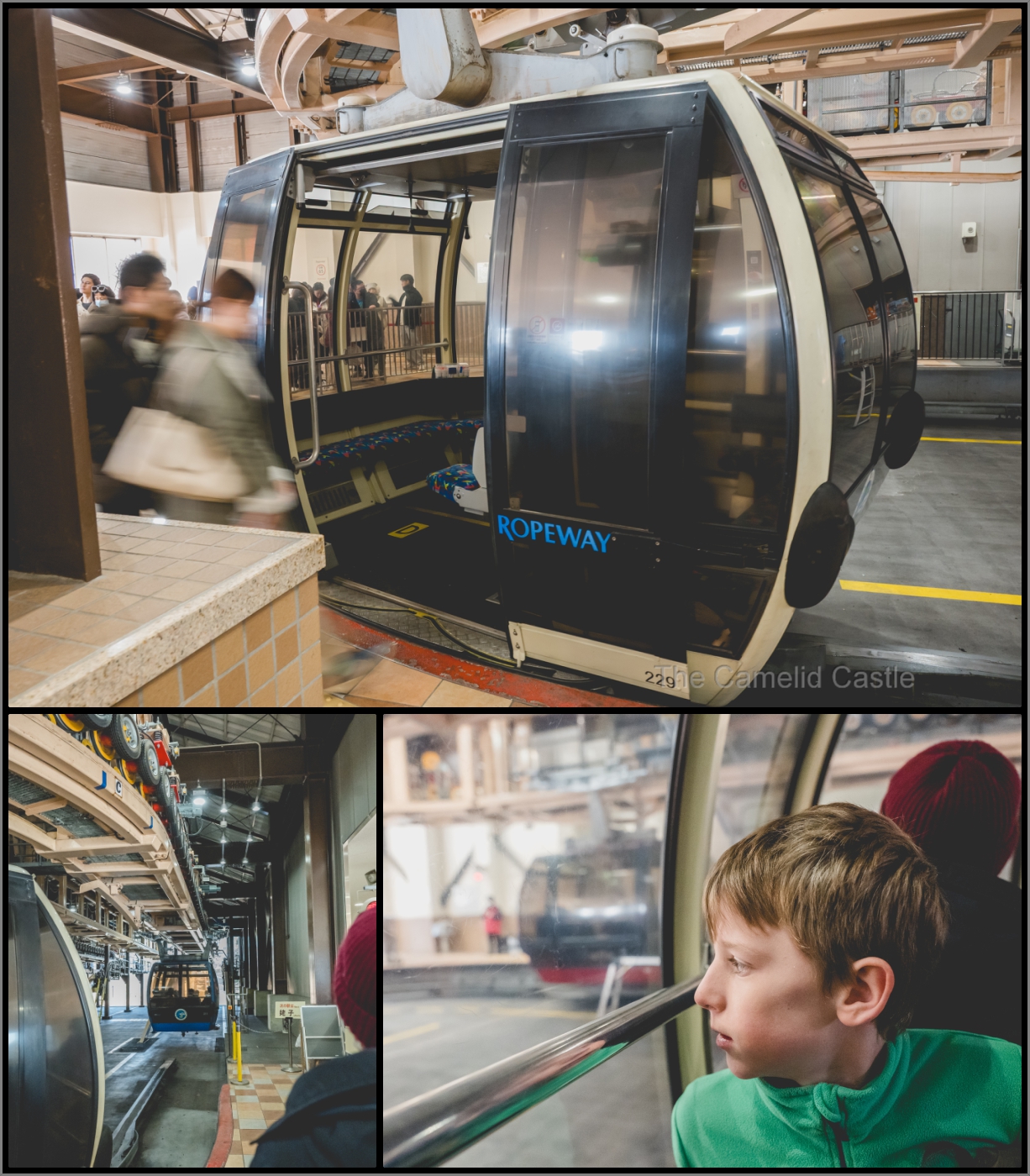
There was a bit of a line, so we had some time to watch the loading and unloading of the cars but we finally made it on and enjoyed the scenic ride up out of Togendai.
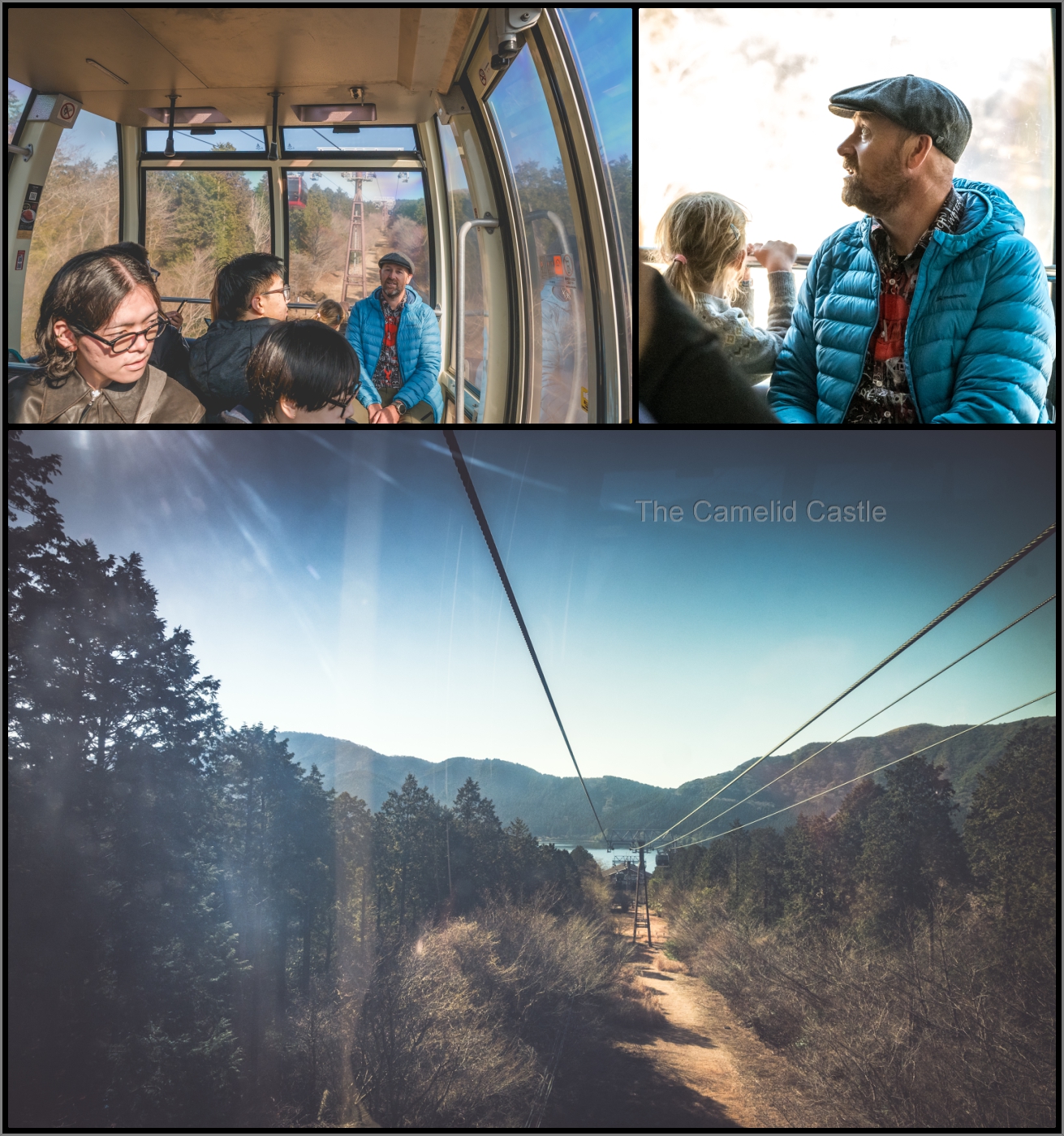
The Hakone ropeway is a 4km aerial gondola connecting Sounzan Station (top) and Togendai Station (bottom). The full journey takes around 30 minutes and gives views over Lake Ashi and over to Mount Fuji. Sure enough, the weather gods were smiling as we had fabulous views over the lake and to the peak of Mount Fuji.
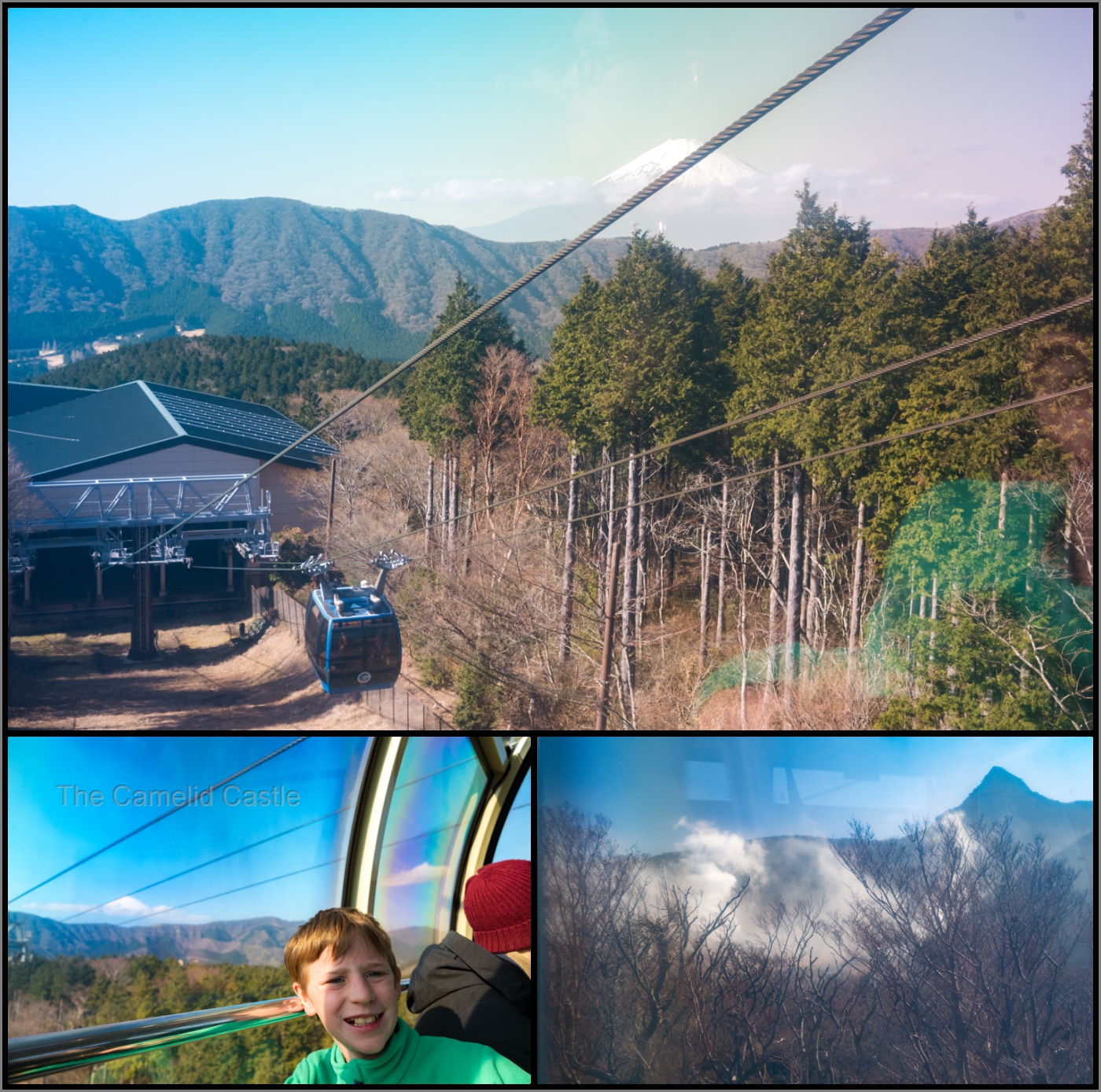
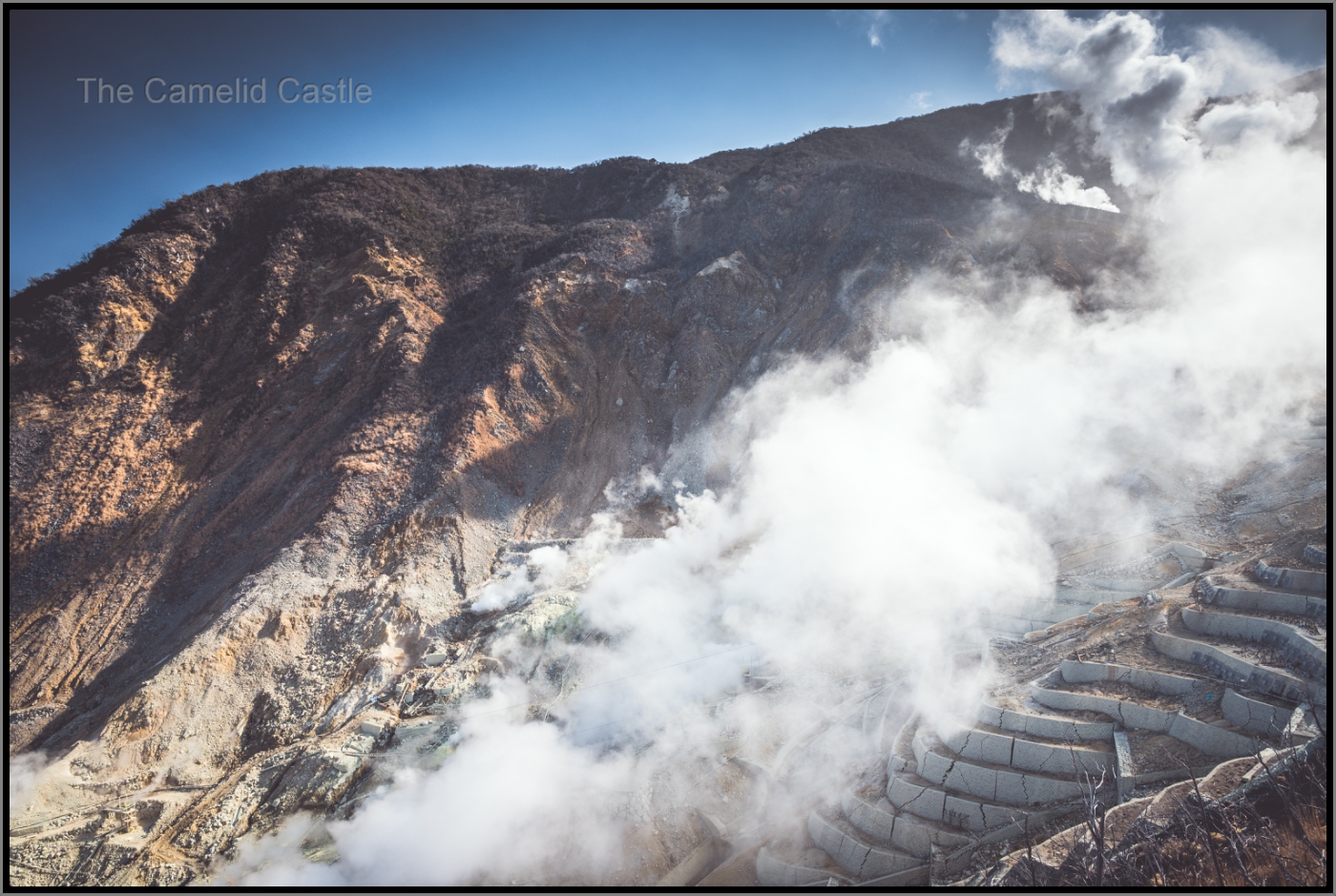
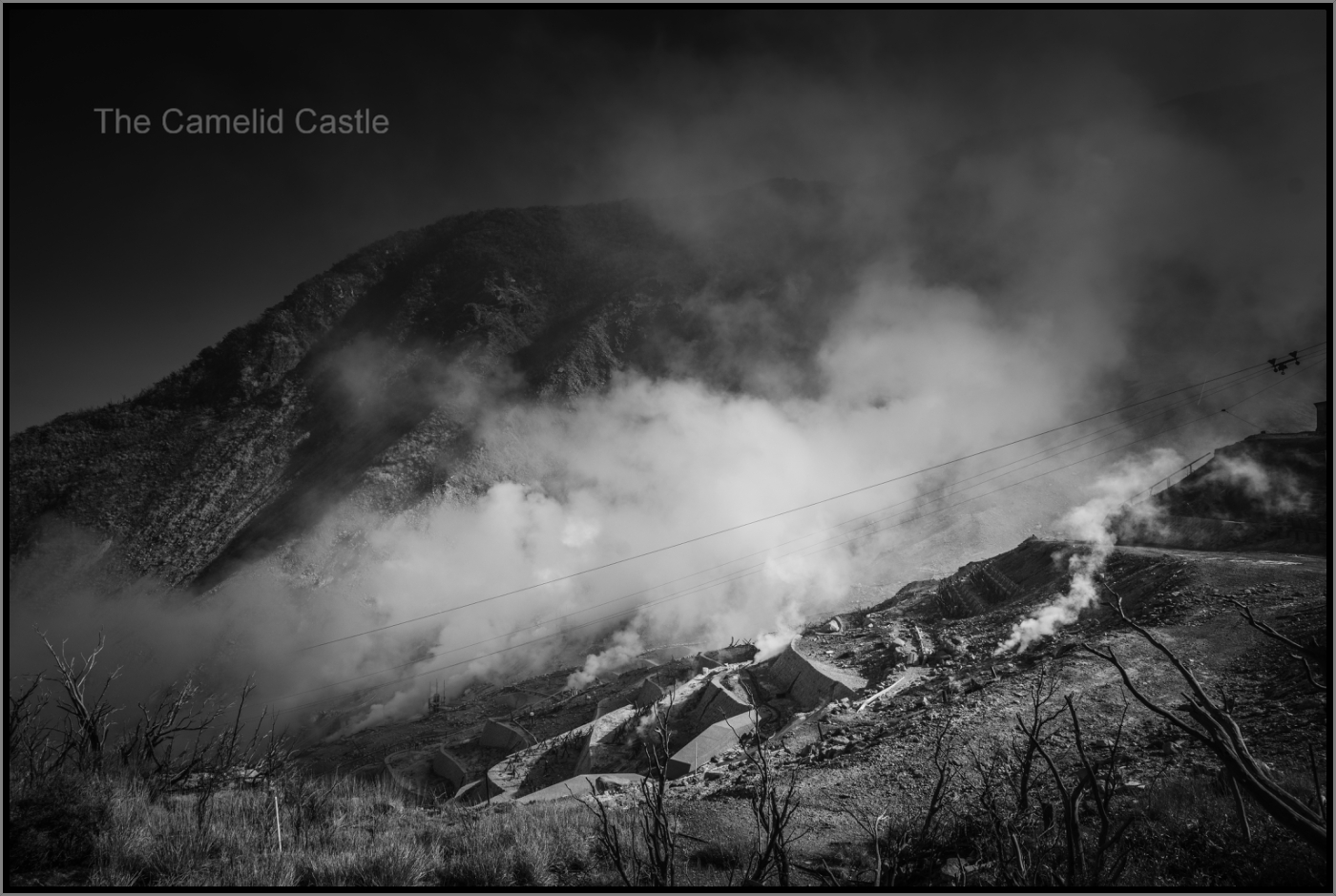
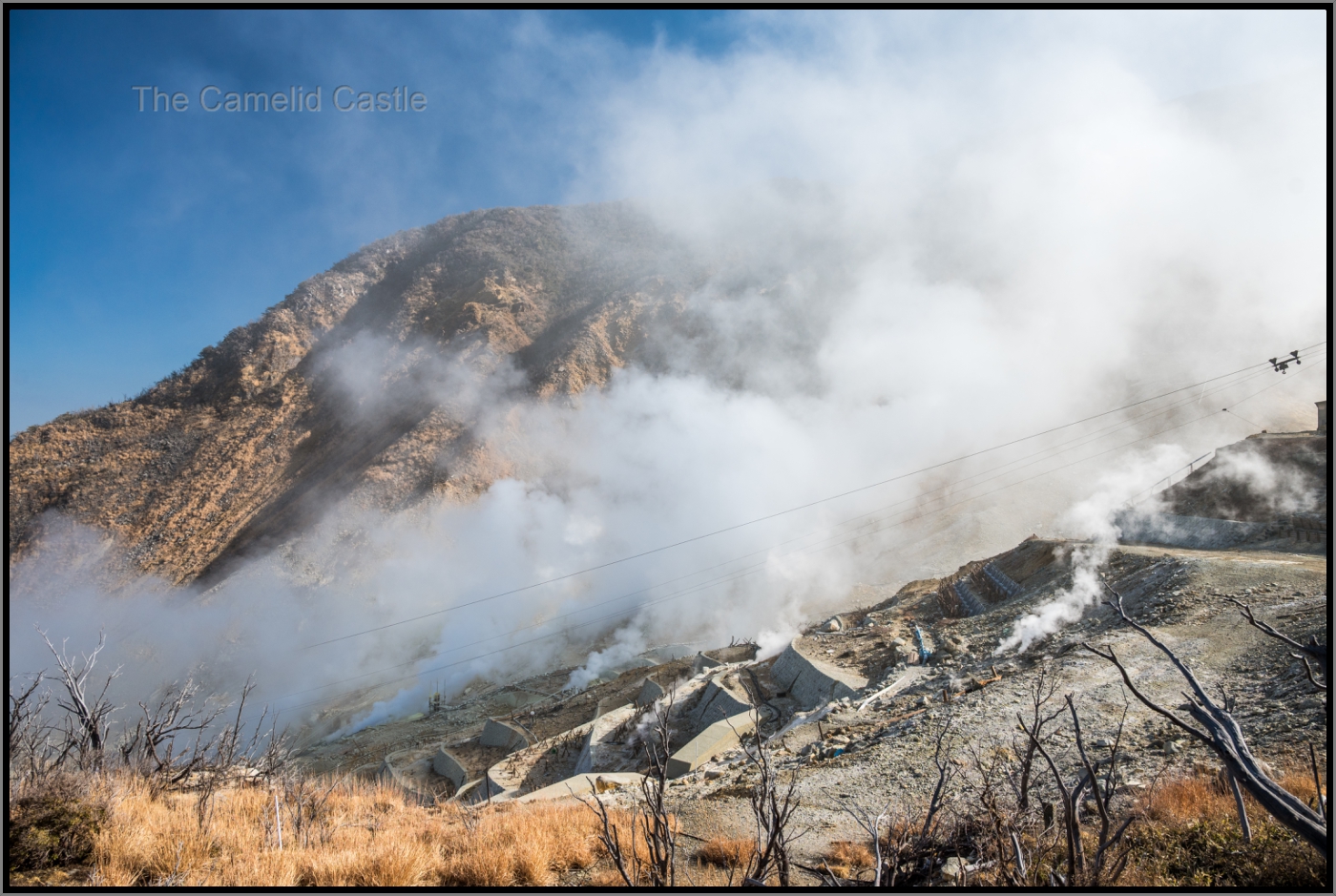
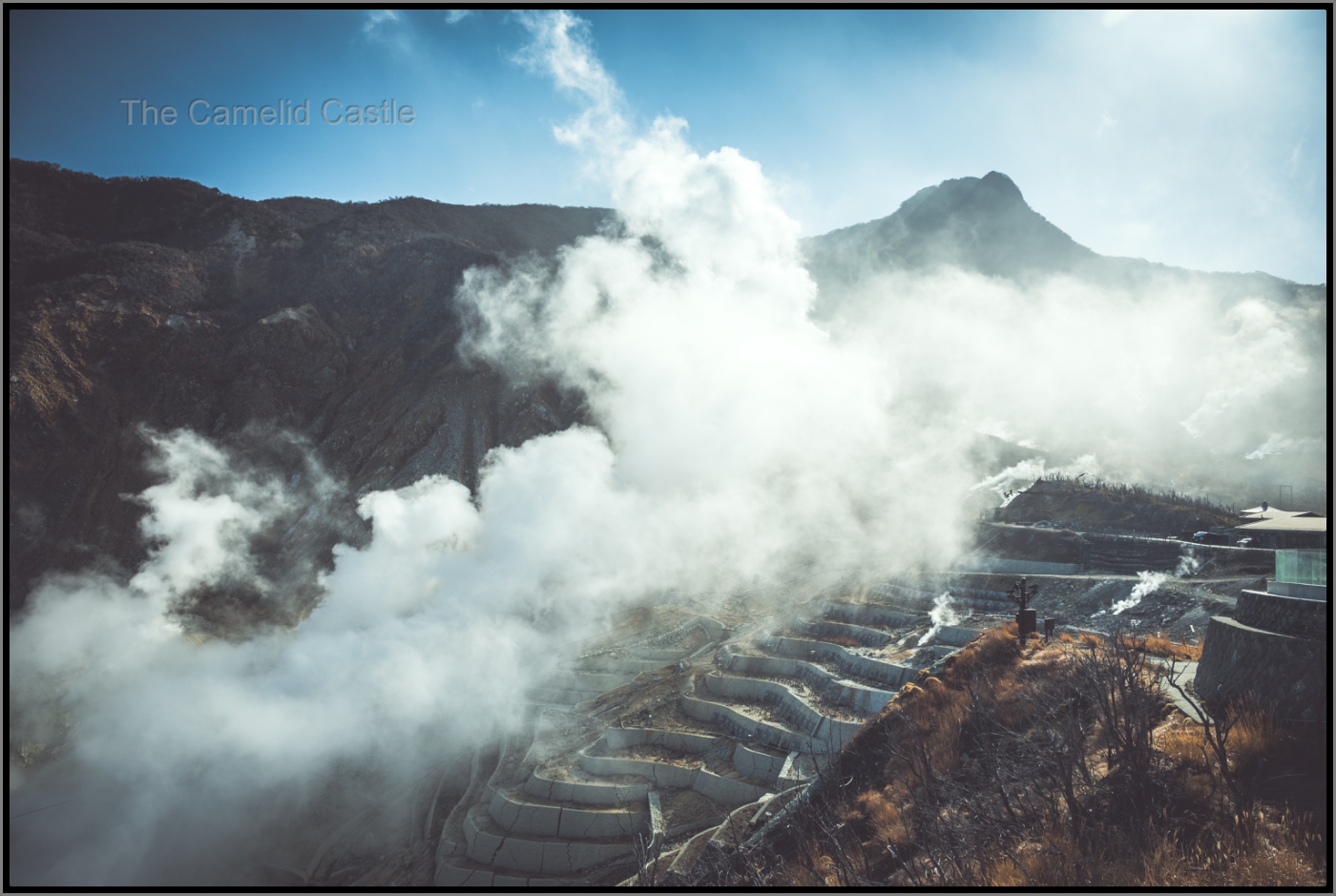
Aside from the great Mt Fuji views we could see the steam emerging from the mountain as we passed over the sulfurous Owakudni ‘boiling valley’.
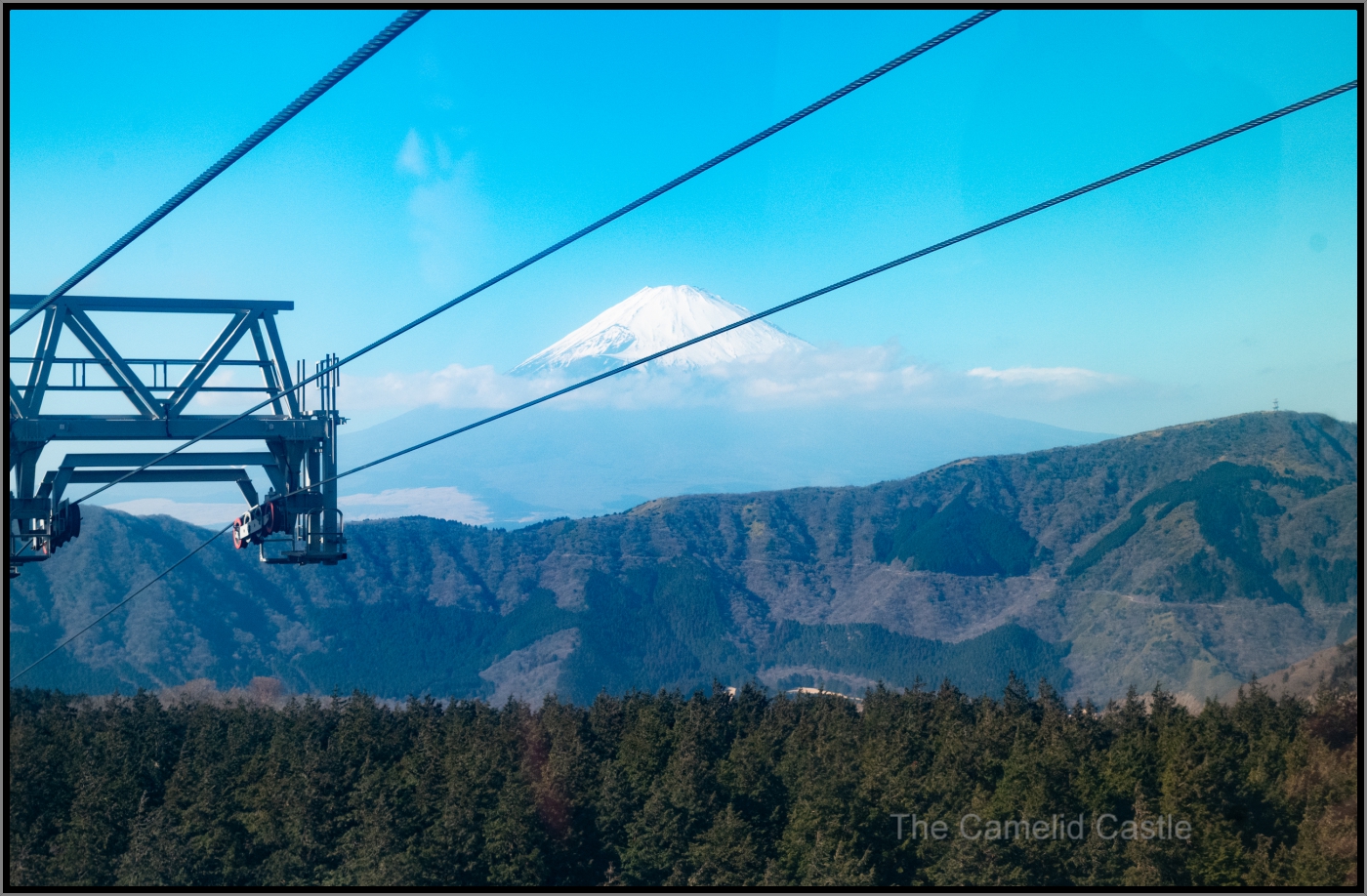
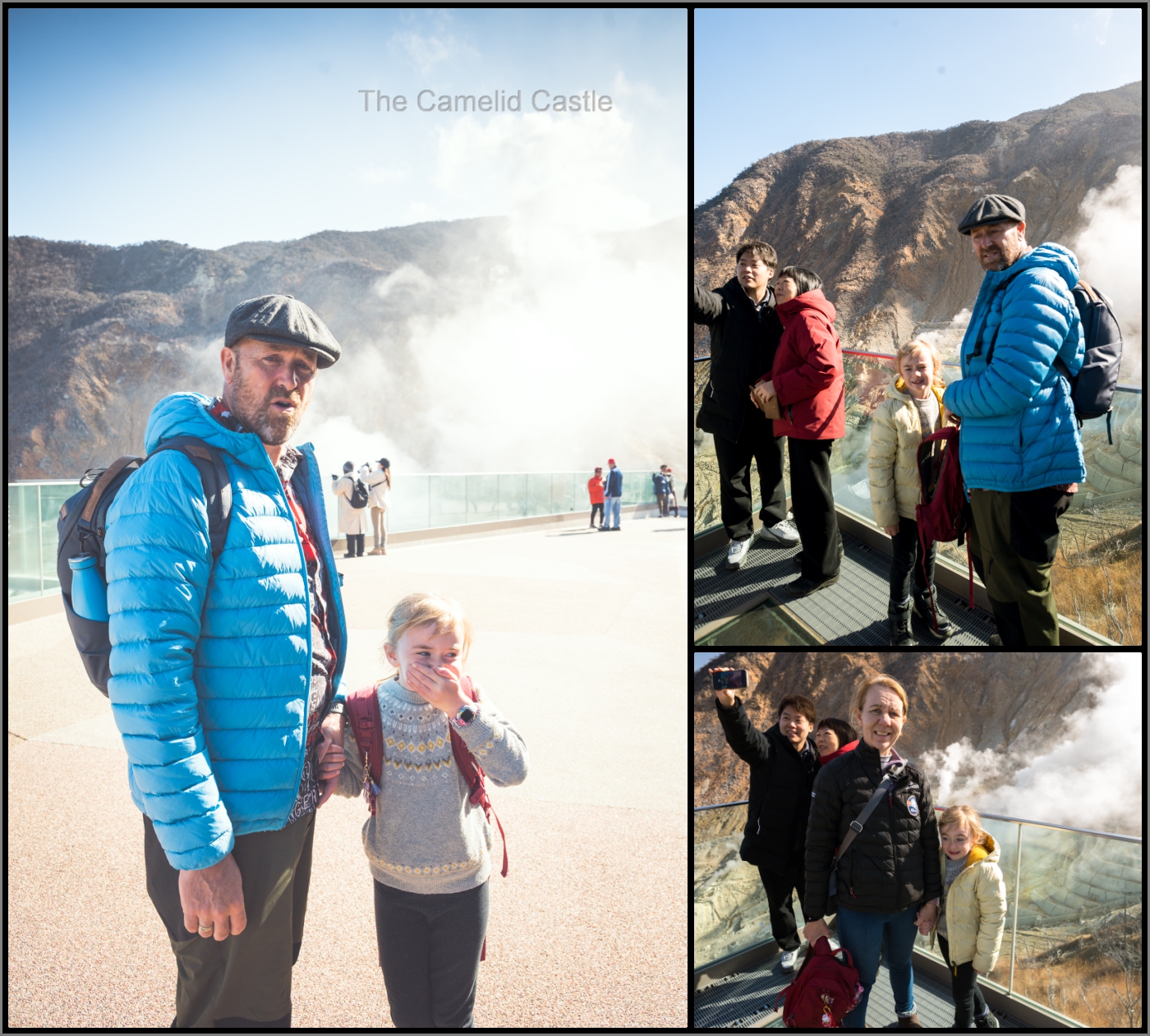
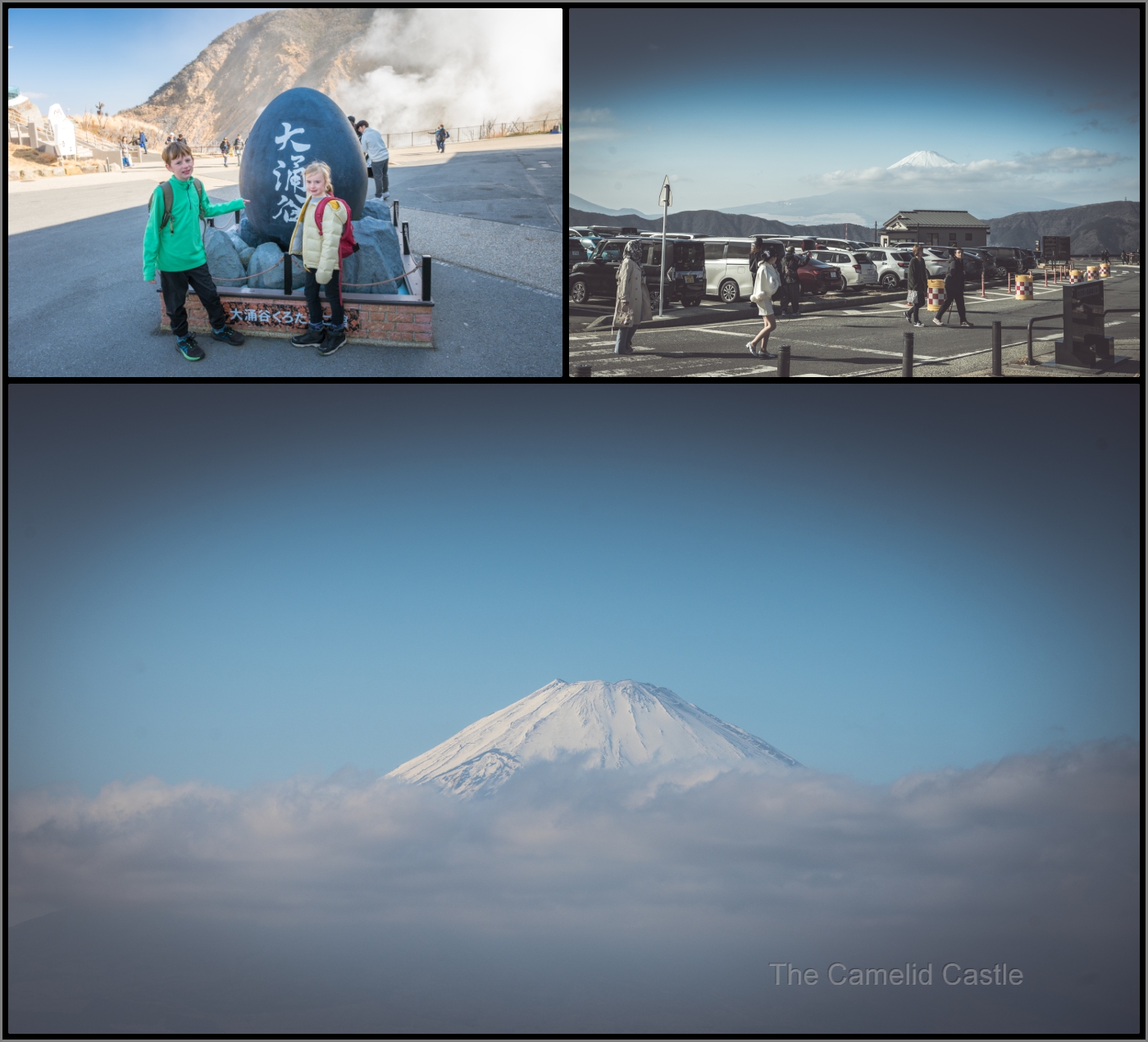
We hopped off the ropeway at Owakudani, which is the midpoint of the ropeway at 1000m above sea level. The strong sulphur smell did not impress the kids, but the steam coming out of the ground was quite impressive.
The Boiling Valley…..
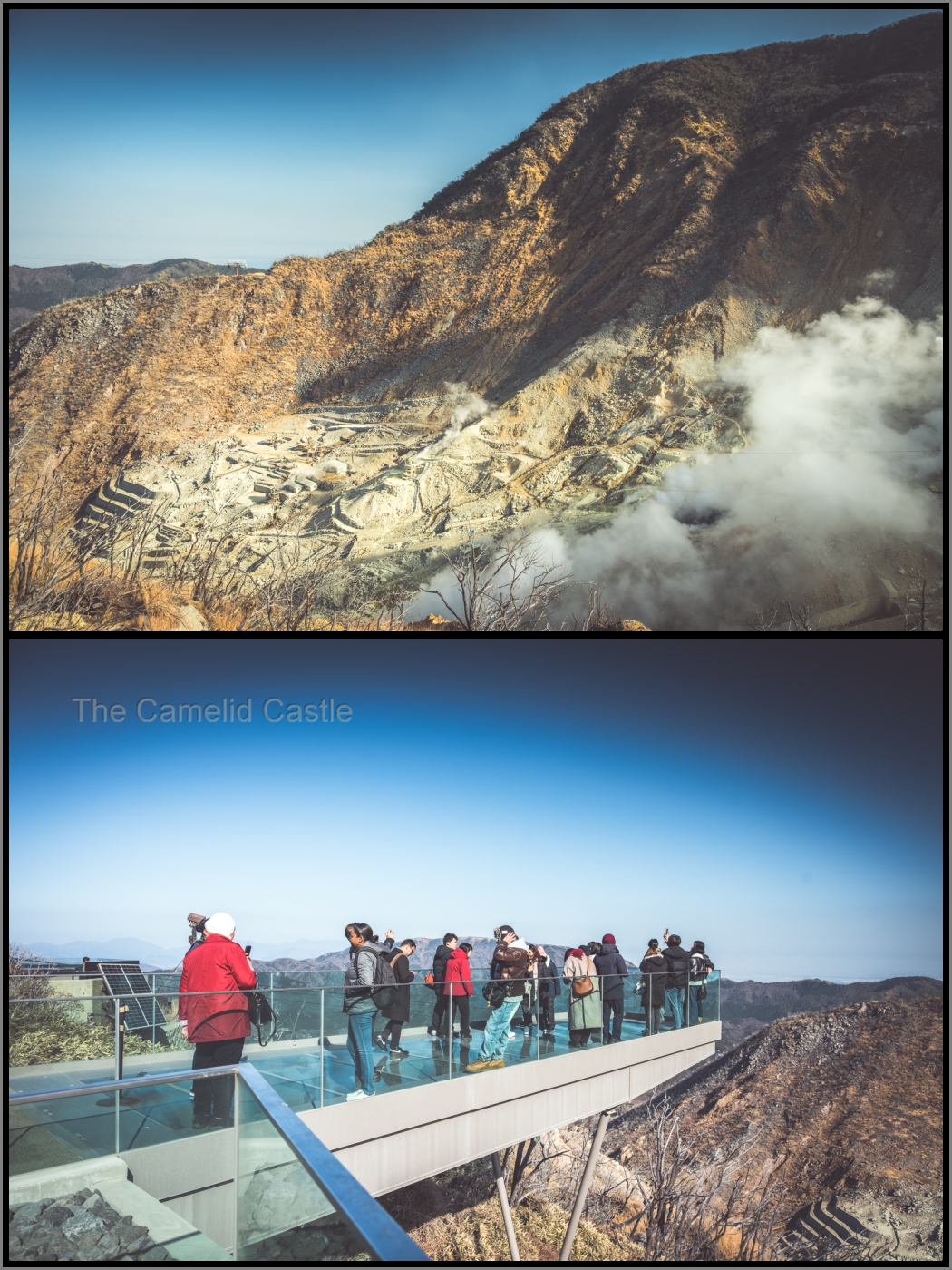
The viewing platform lets you get a different view of the steam emerging from the valley. It was scenic but smelly!
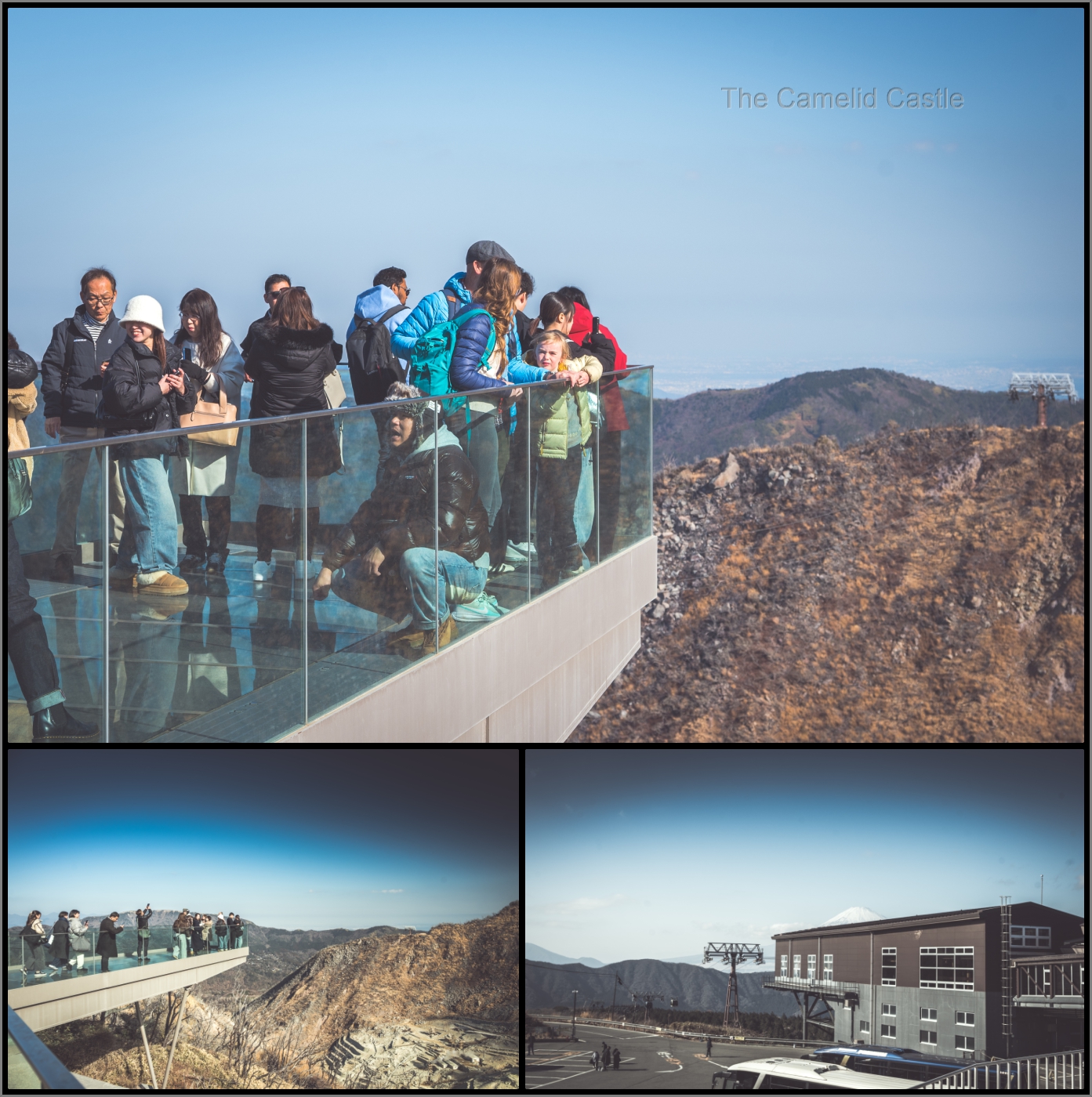
Ironically some of the best views of Mount Fuji were from the carpark at Owakudani! The cloud was starting to roll in and we noticed the peak was starting to get more obscured.
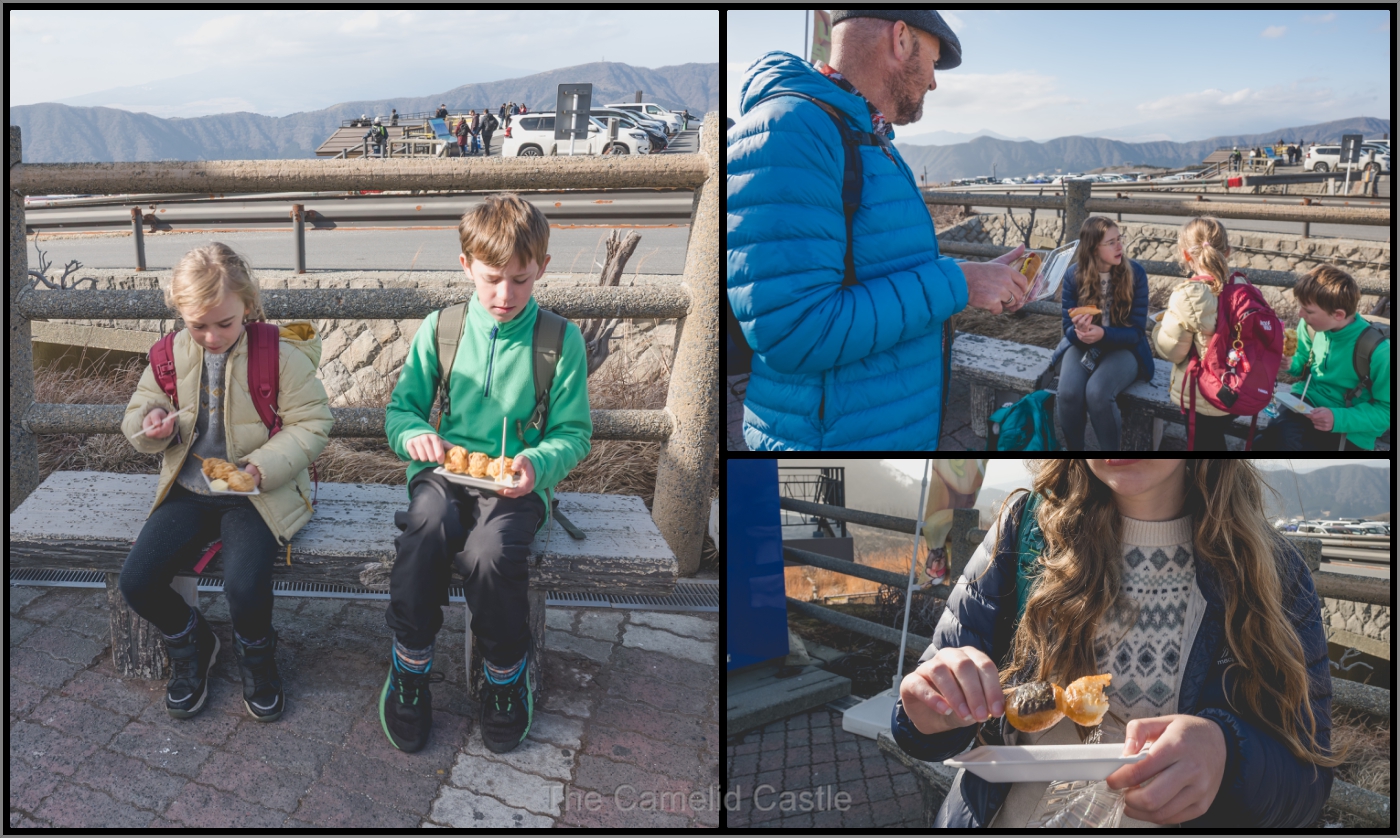
It was now lunch time. There were a few places that had some snack items, but nothing I could eat so the rest of family got a variety of foods to provide some sustenance. Including deep fried mochi and hot dogs along with black eggs.
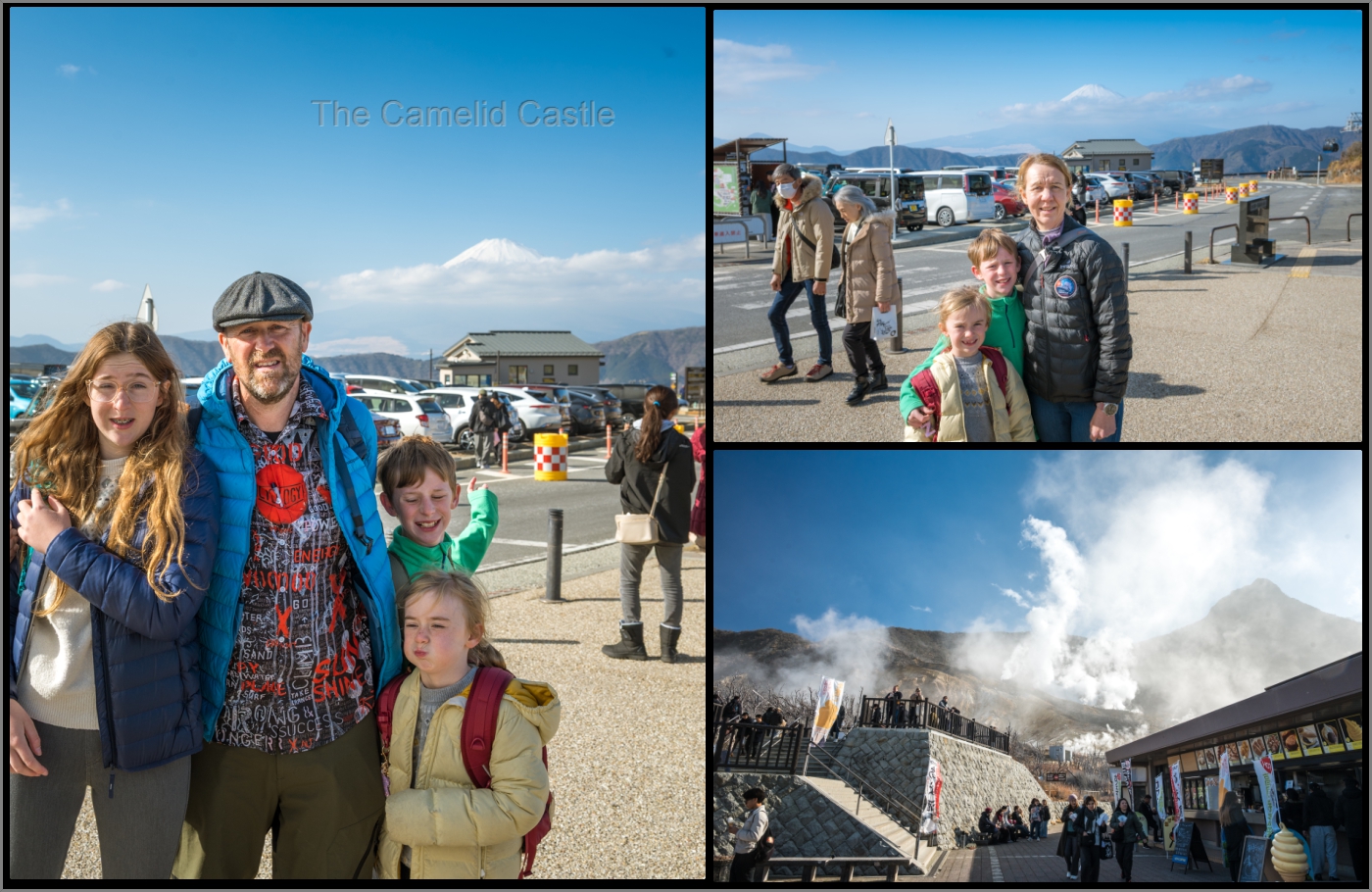
Lunch with Mt Fuji views…..
We ate lunch with views of Mt Fuji. The cloud was really starting to come in and as we watched and ate, the peak pretty much disappeared under cloud. We were glad we’d decided to do the trip this way around, and this section with the best Mount Fuji views during the morning.
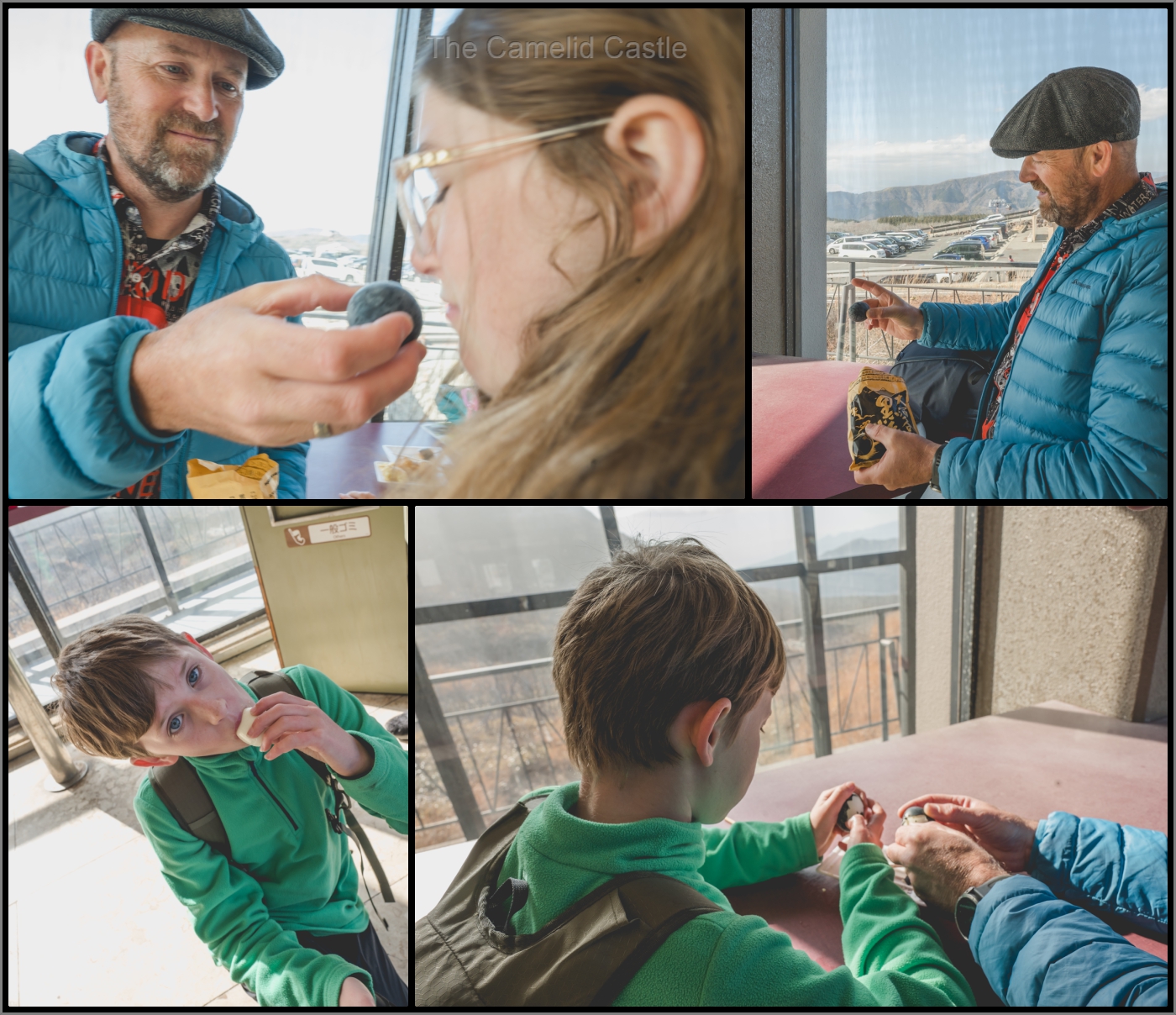
Owakudani is famous for it’s black eggs. Eggs are cooked in a hot spring that contains sulphur and iron, which turns the shells black but the centre of the eggs remain the regular white/yellow. We of course bought a few eggs as the kids wanted to try them. They do smell quite like sulphur but otherwise taste like a regular egg.
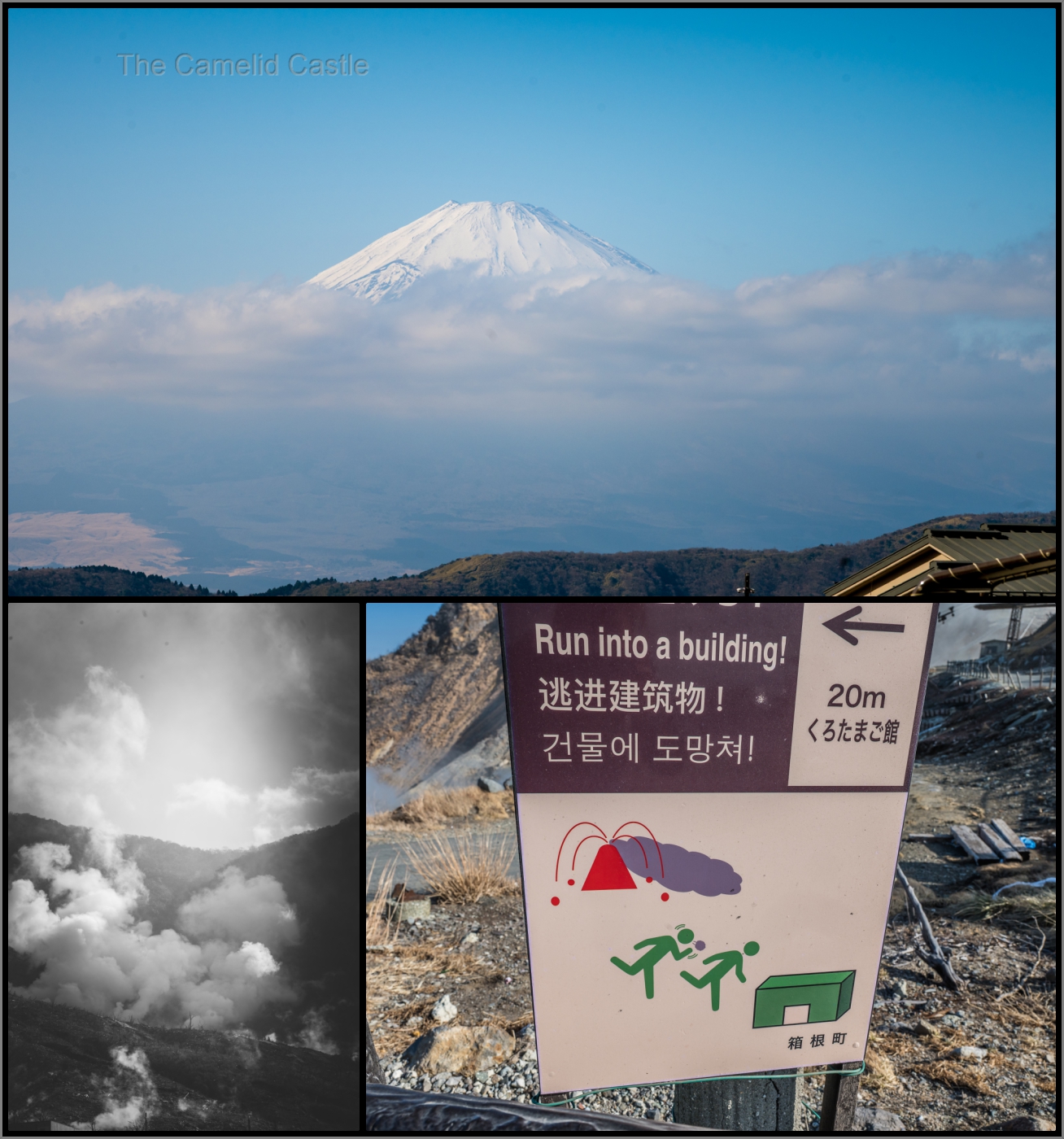
As usual, the Japanese signs continued to be descriptive and quite amusing!
Buses, funiculars and trains…..
The ropeway section from Owakudani to Sounzan (the top station) was closed for maintenance in January. We did know about this prior to arriving in Hakone. You normally get pretty good views of the boiling valley as you head over this section. However, we were doing this section by replacement bus, which was another winding mountain trip. The line of cars and buses coming up the mountain was huge and at a standstill coming up. We flew down, going against the traffic, so again we were glad we were doing the loop clockwise or we would have been stuck in traffic for hours.
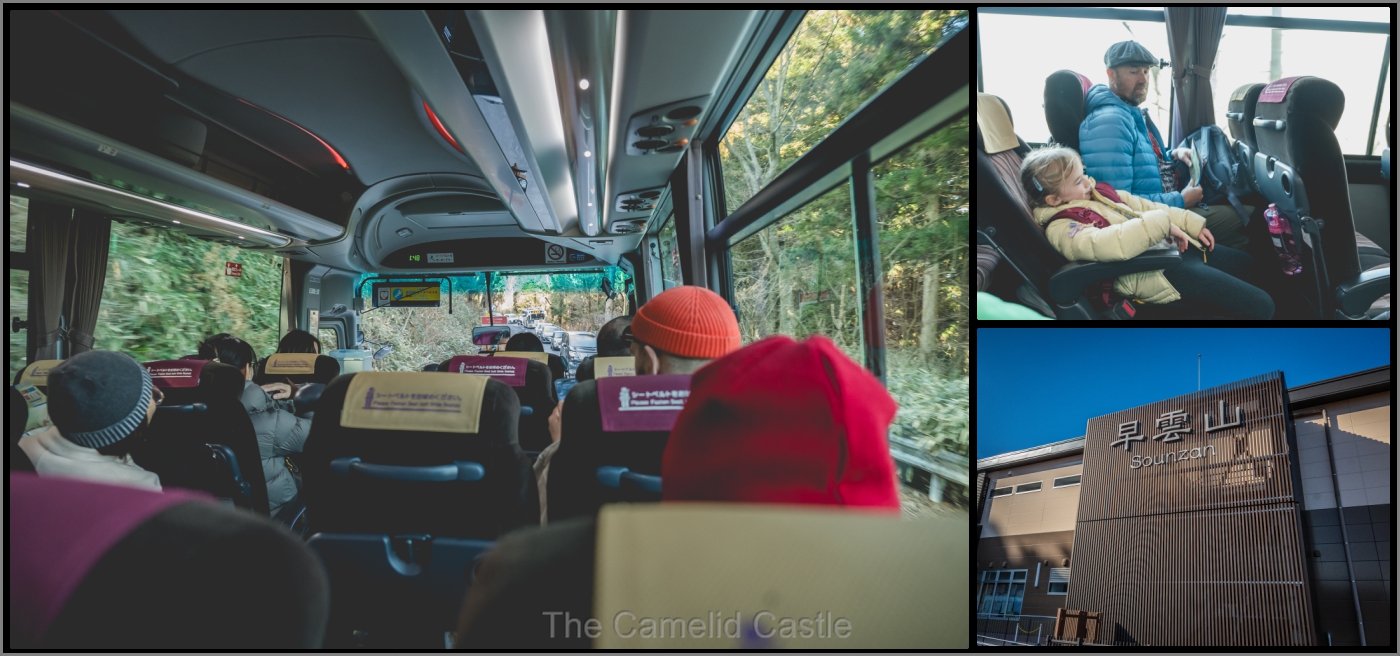
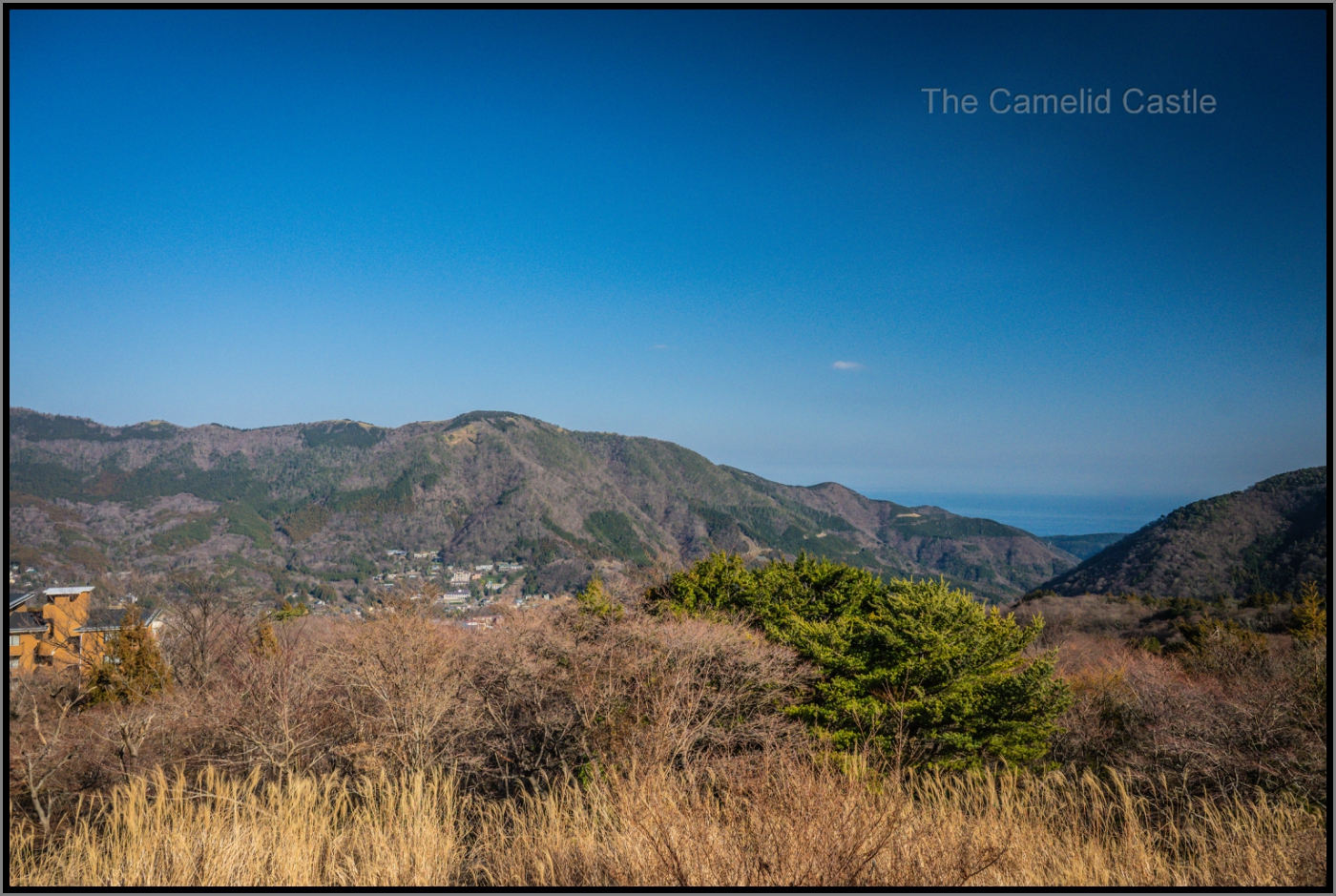
The bus arrived at Sounzan, which has great mountain top views.
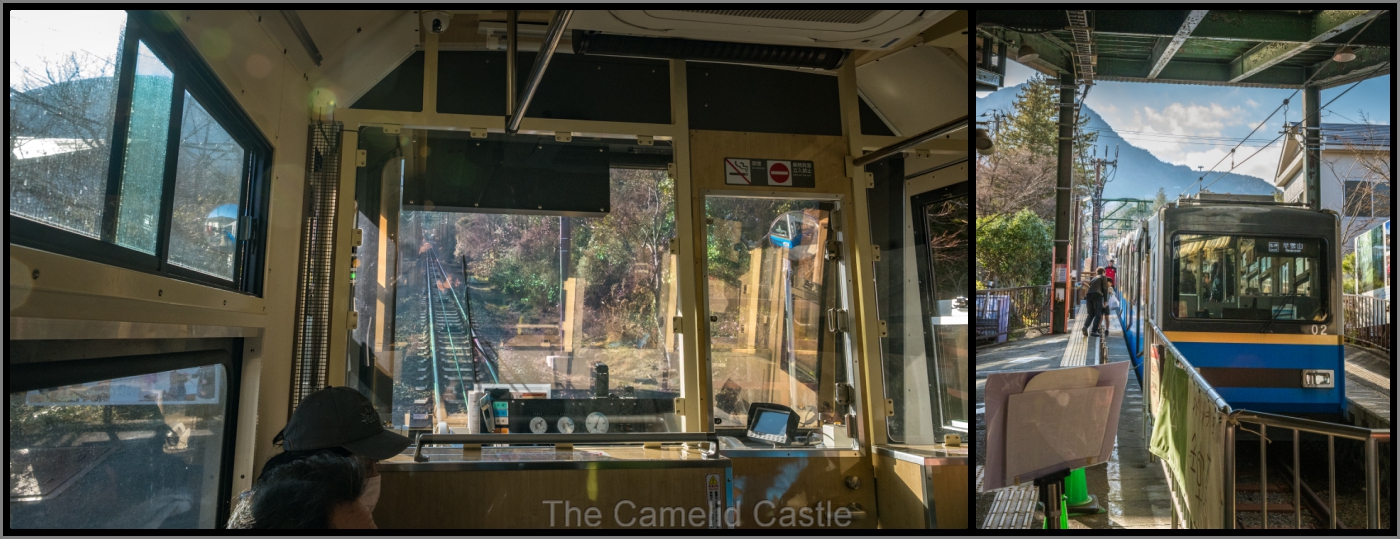
From Sounzan you then hop on a cable car (which is what we call a funicular). It’s a 1km journey to the next stop of Gora and is very steep but you do get some nice views. There are a number of stops on the way and a few museums you could visit. We head straight to Gora, as none of the museums were on our must do list. There did appear to be a few shops and nice streets we could have wandered if we had more time.
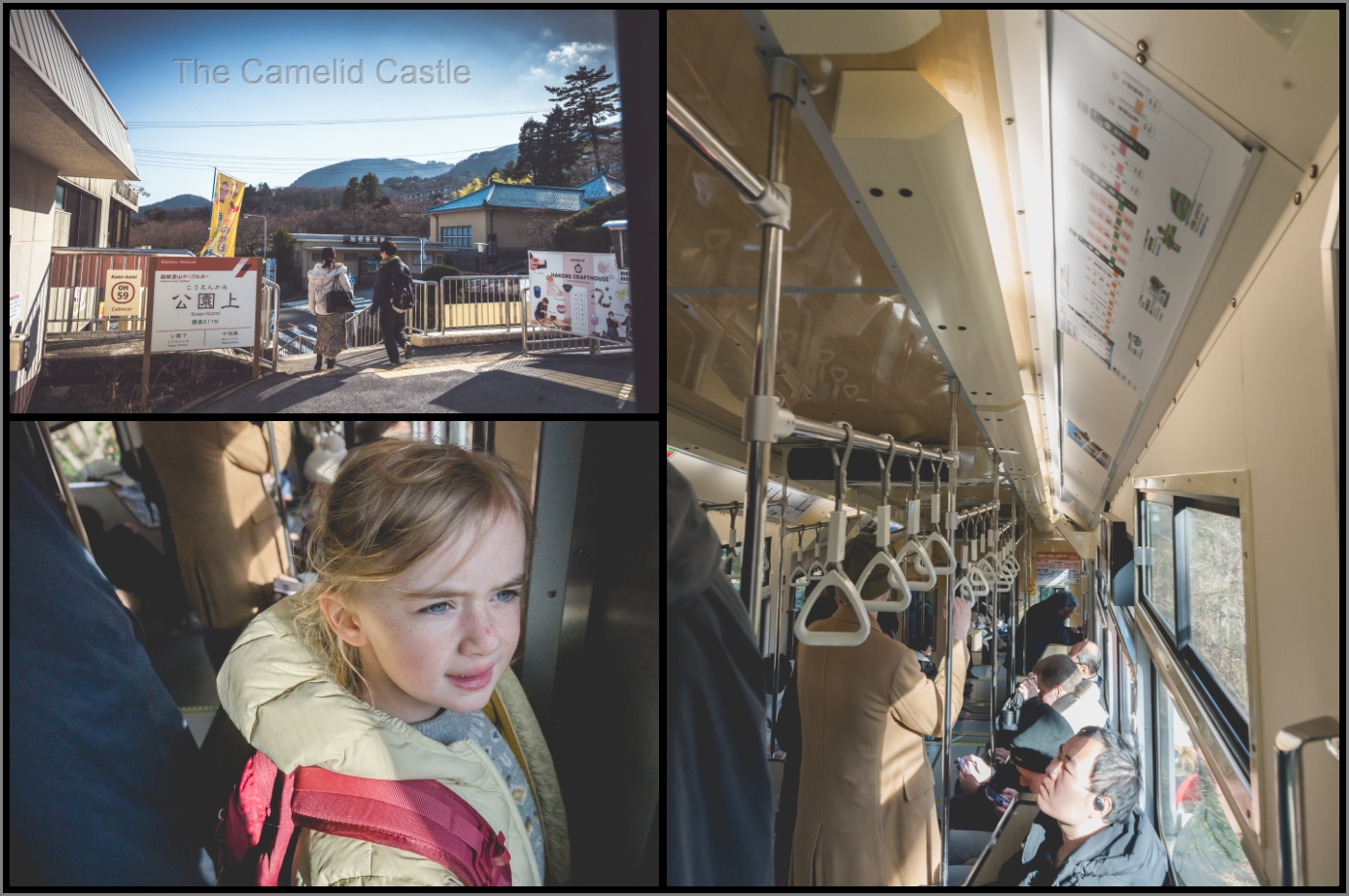
The kids were still collecting their train stamps everywhere. We had managed to get a few today on the various cable cars and funiculars and we think at this point Zinnia put her water bottle down while getting a stamp at the station from Gora. We didn’t realise until we’d caught the train to the next town.
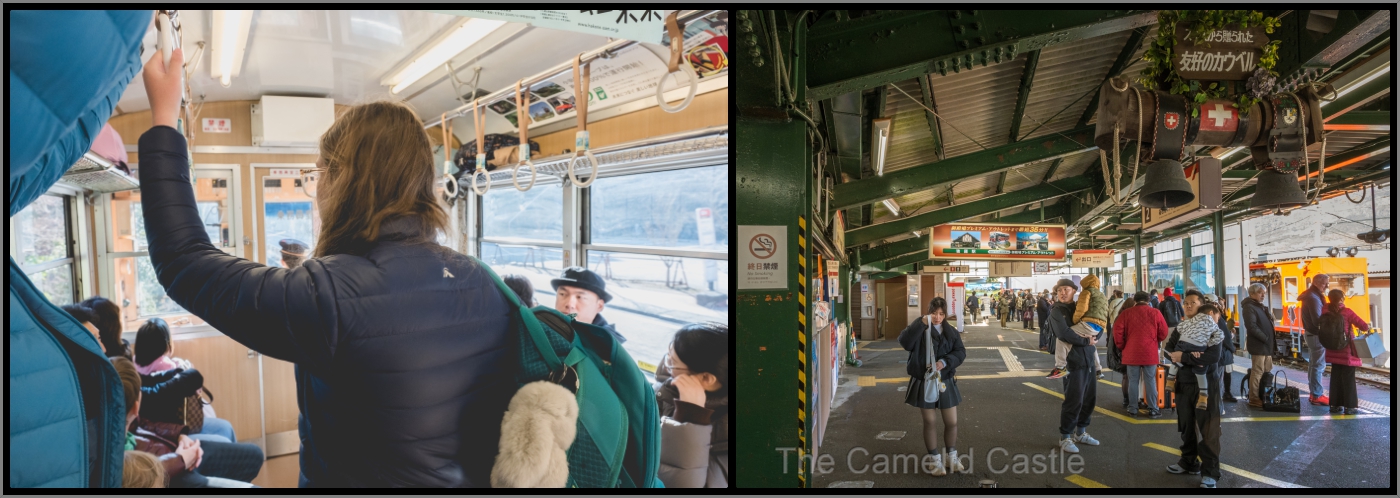
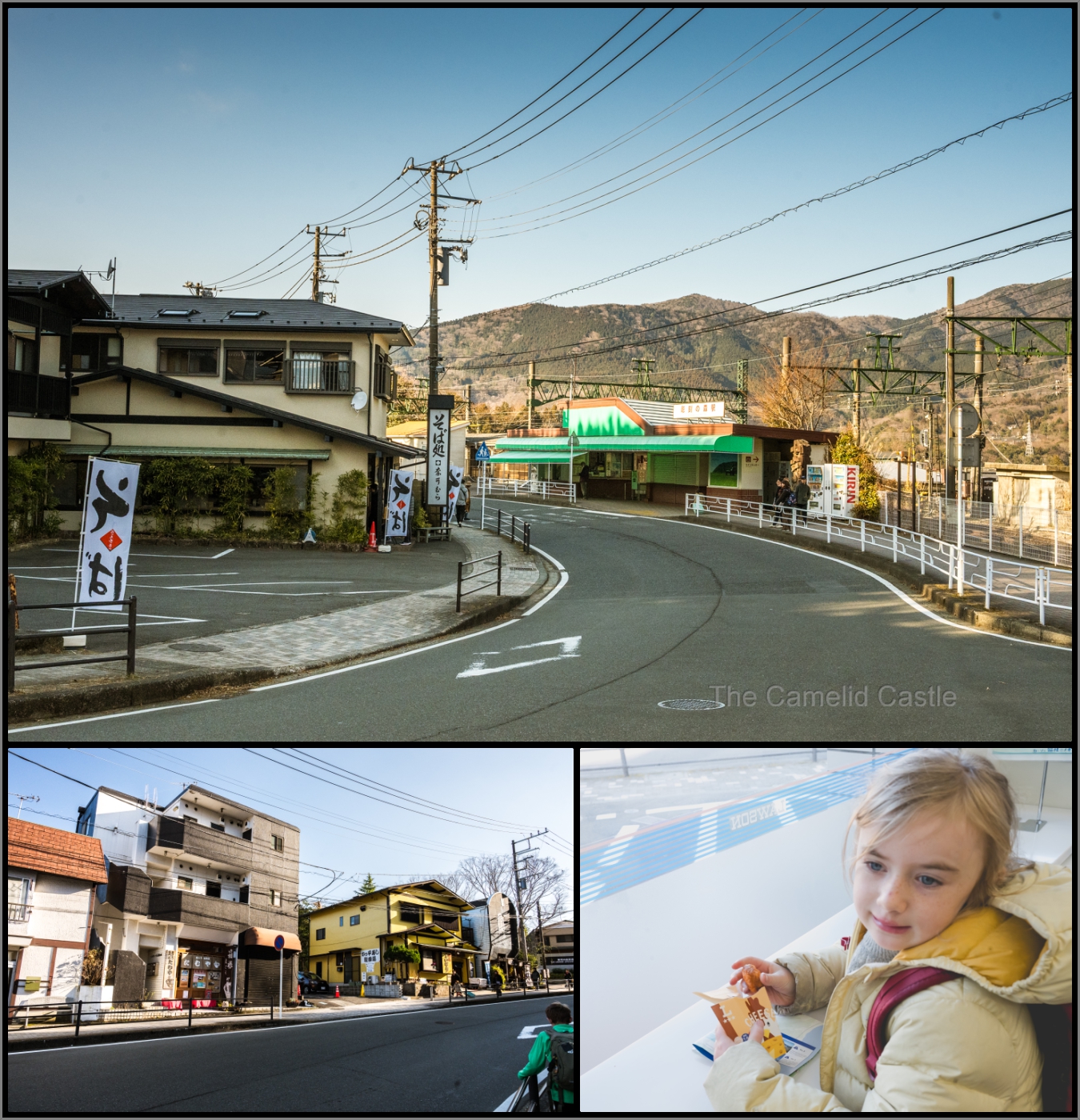
At this point we were all hungry so we found a Lawson and grabbed some afternoon snacks (or the usual egg sandwhich for me). There were a few restaurants in town but we’d manage to arrive well after the lunch service and before dinner, so it was konbini snacks again, while trying to placate Zinnia over the missing drink bottle.
To Onsen or Open Air Museum…
Anto, Soren and Zinnia wanted to do an onsen (Hakone is a huge onsen town and there were several around). Astrid and I were not all that keen today, so there was a bit of a family debate but in the end we decided not to onsen and instead go to the Hakone Open Air Museum. This was not covered by the free pass (although there was a small discount). The reviews for the Open Air Museum were excellent and it was definitely worth doing.
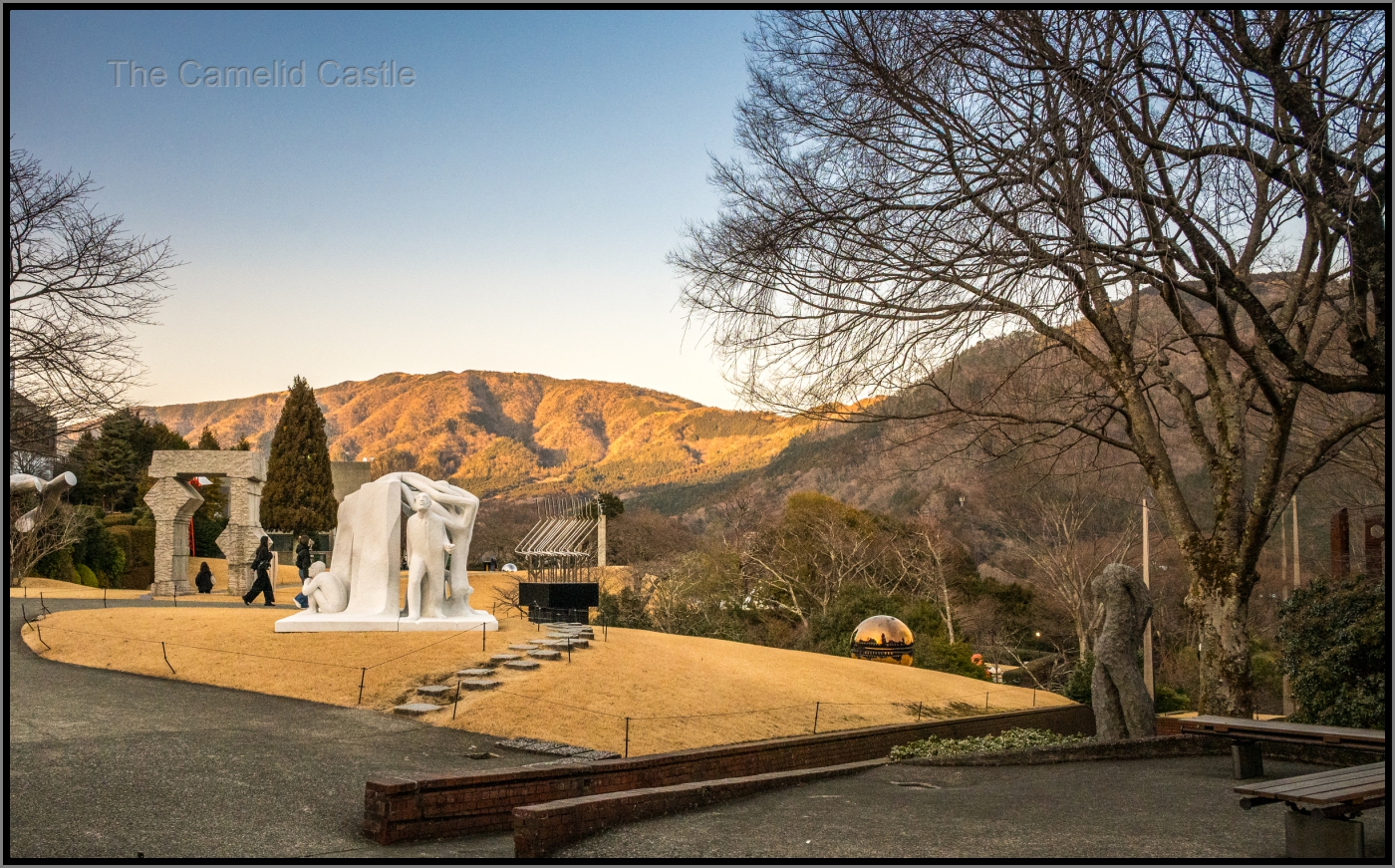
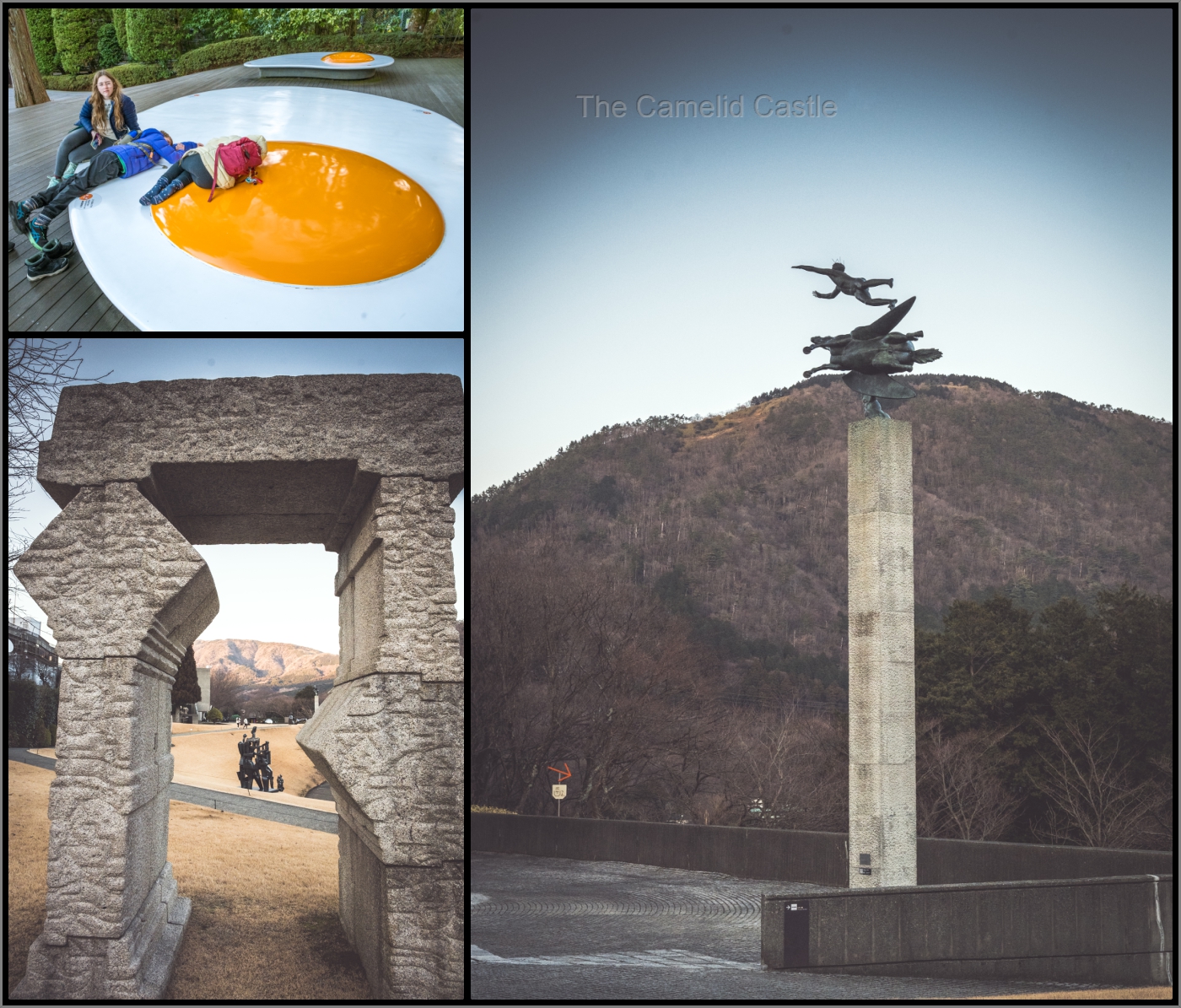
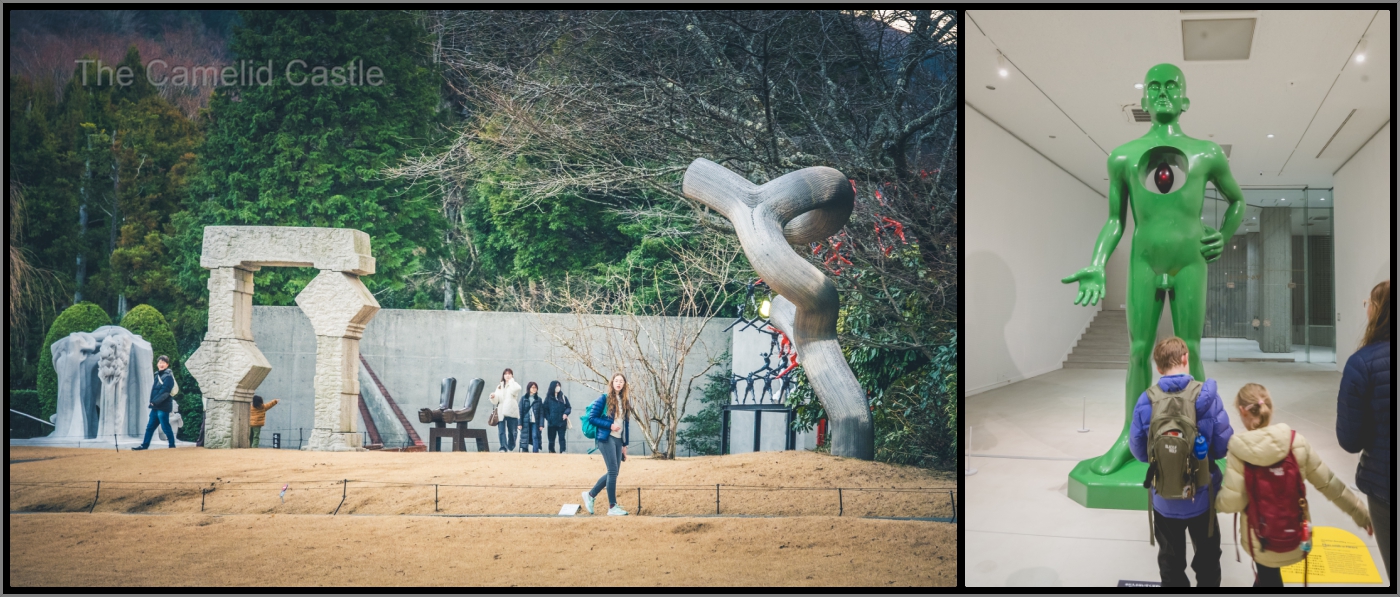
The museum has a large sculpture park. Plenty of the exhibits were interactive and encouraged kids to climb over them. The museum was first opened in 1969 and is Japan’s first Open Air Museum. The museum covers 70,000 square metres. There are some indoor pavilions but the majority of the museum is outdoors.
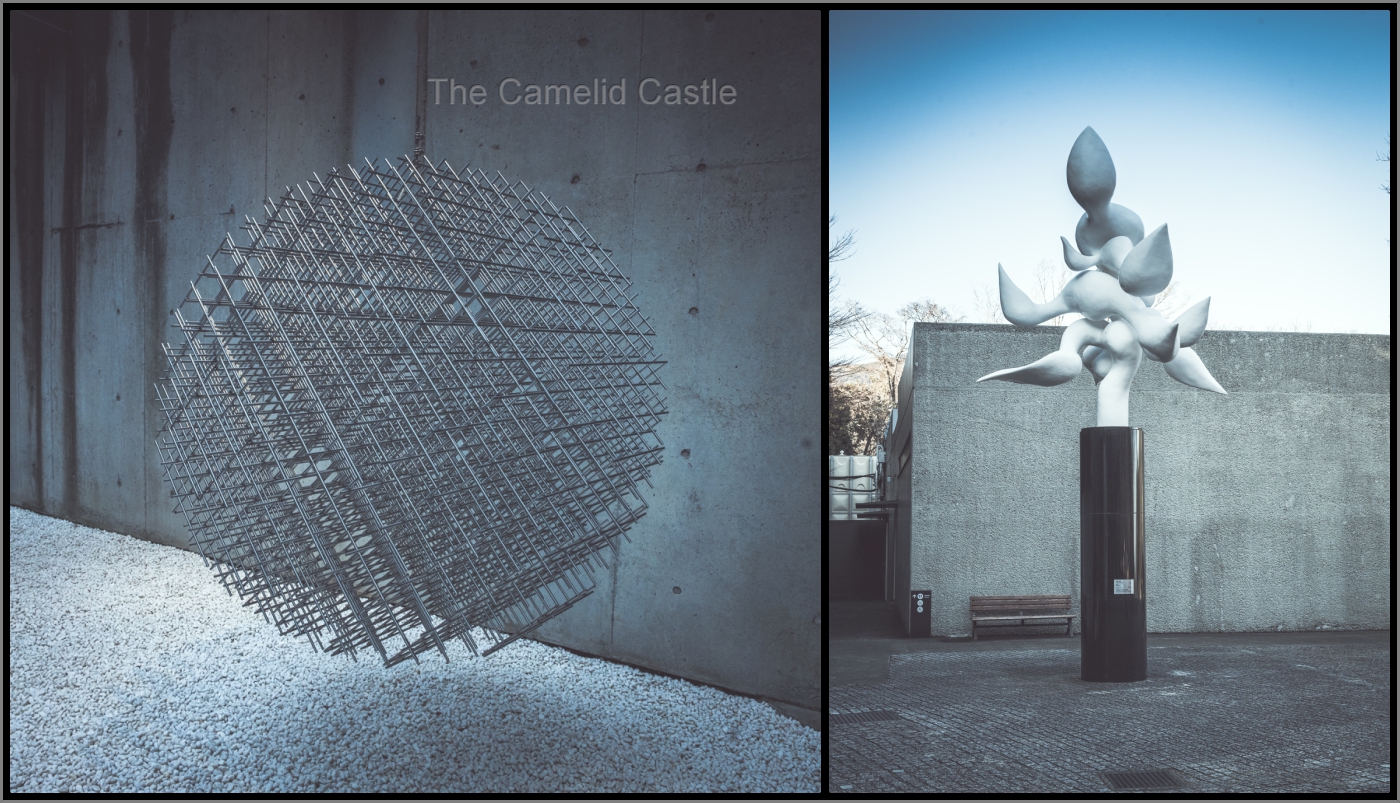
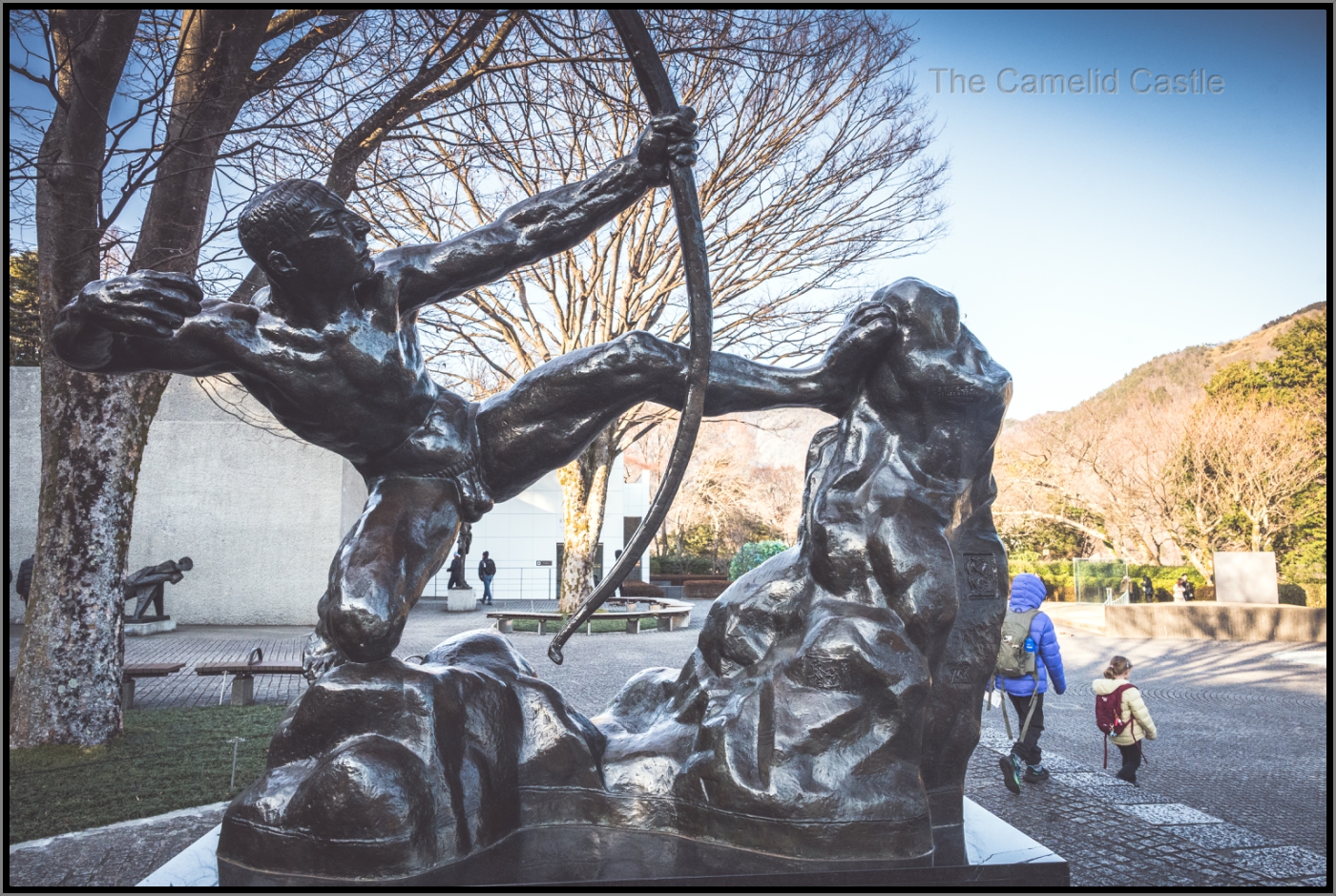
We were immediately captivated by many of the sculptures and exhibits. The late afternoon light was fabulous and we all had a great time wandering, and clambering all over the exhibits.
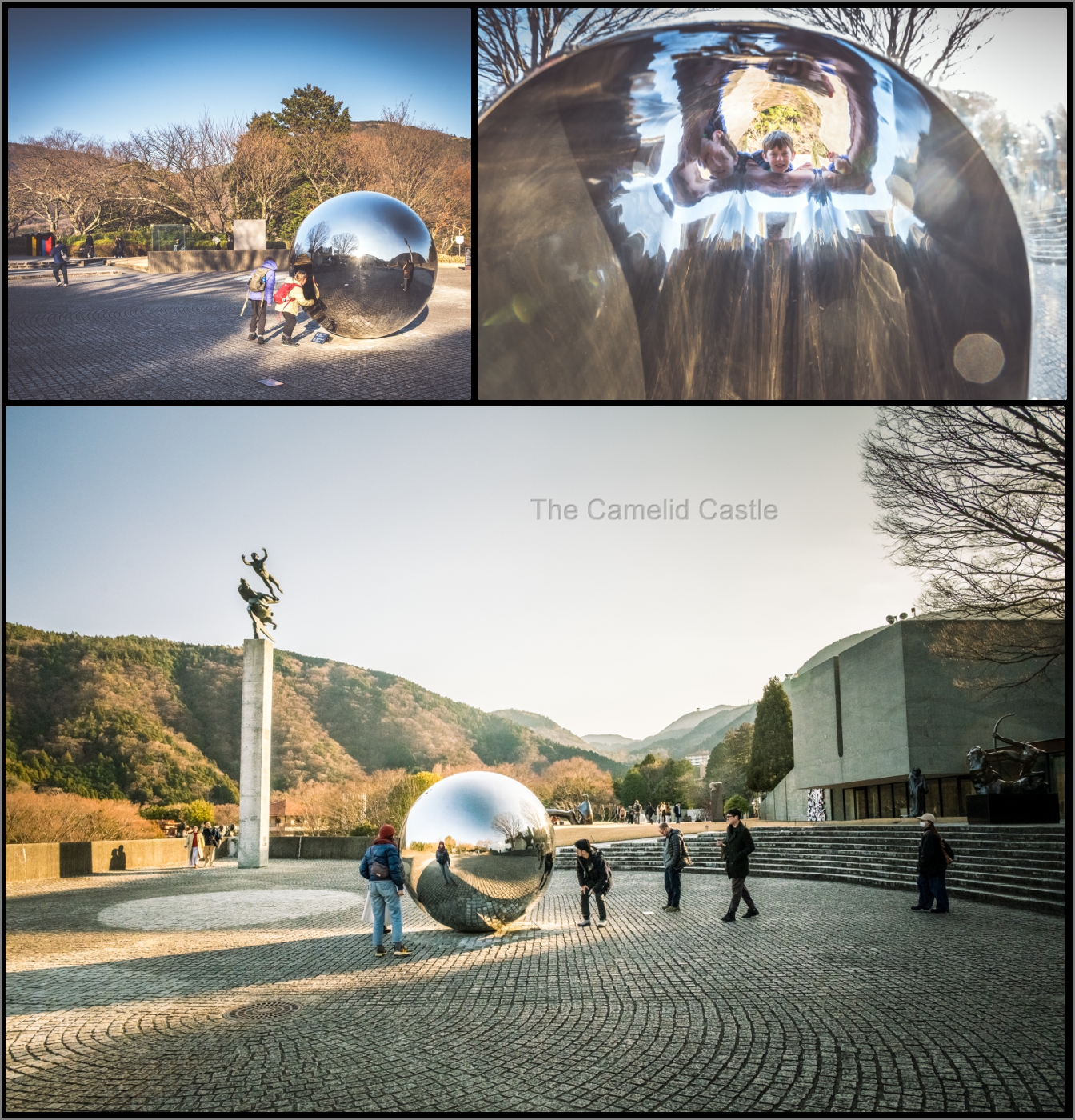
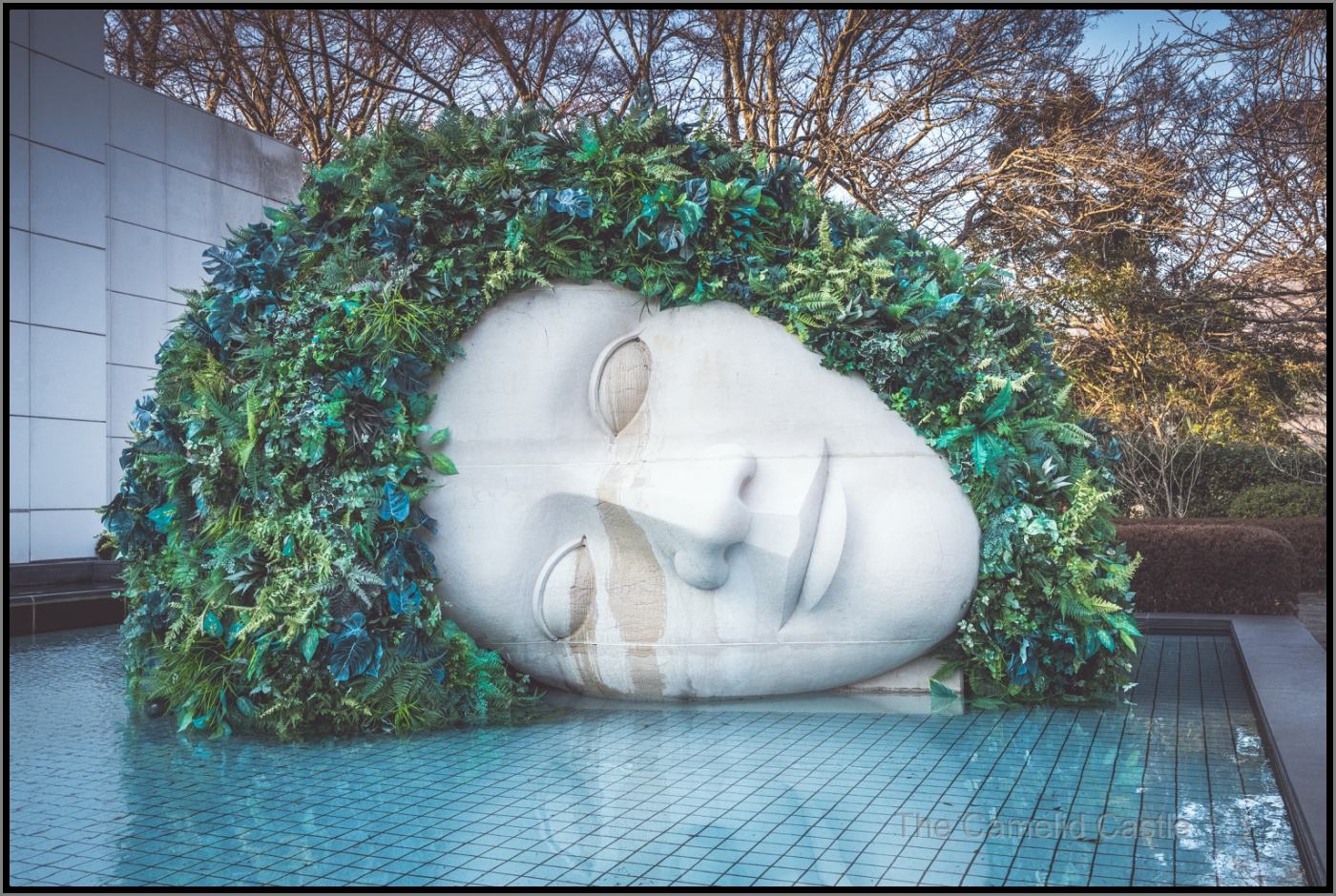
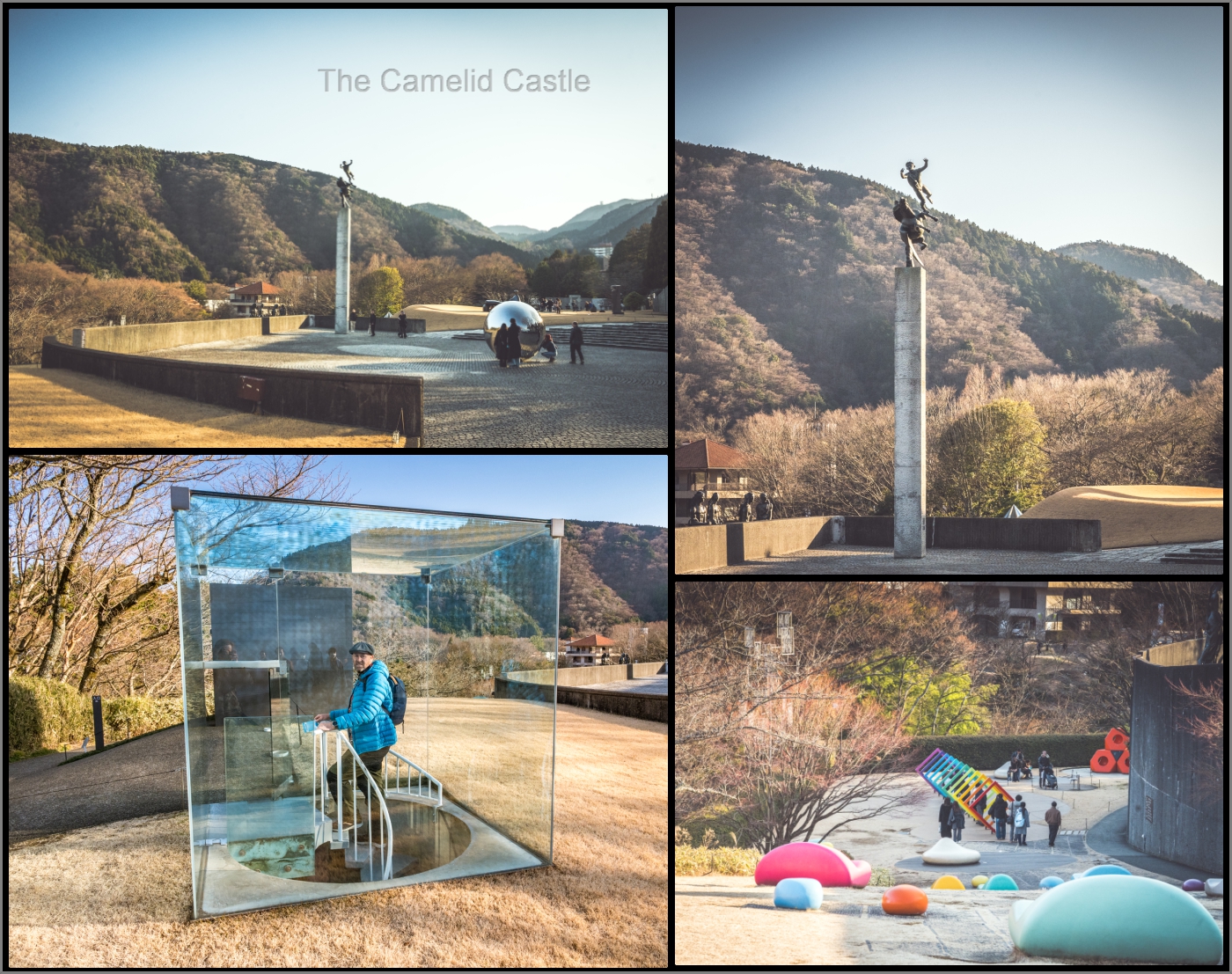
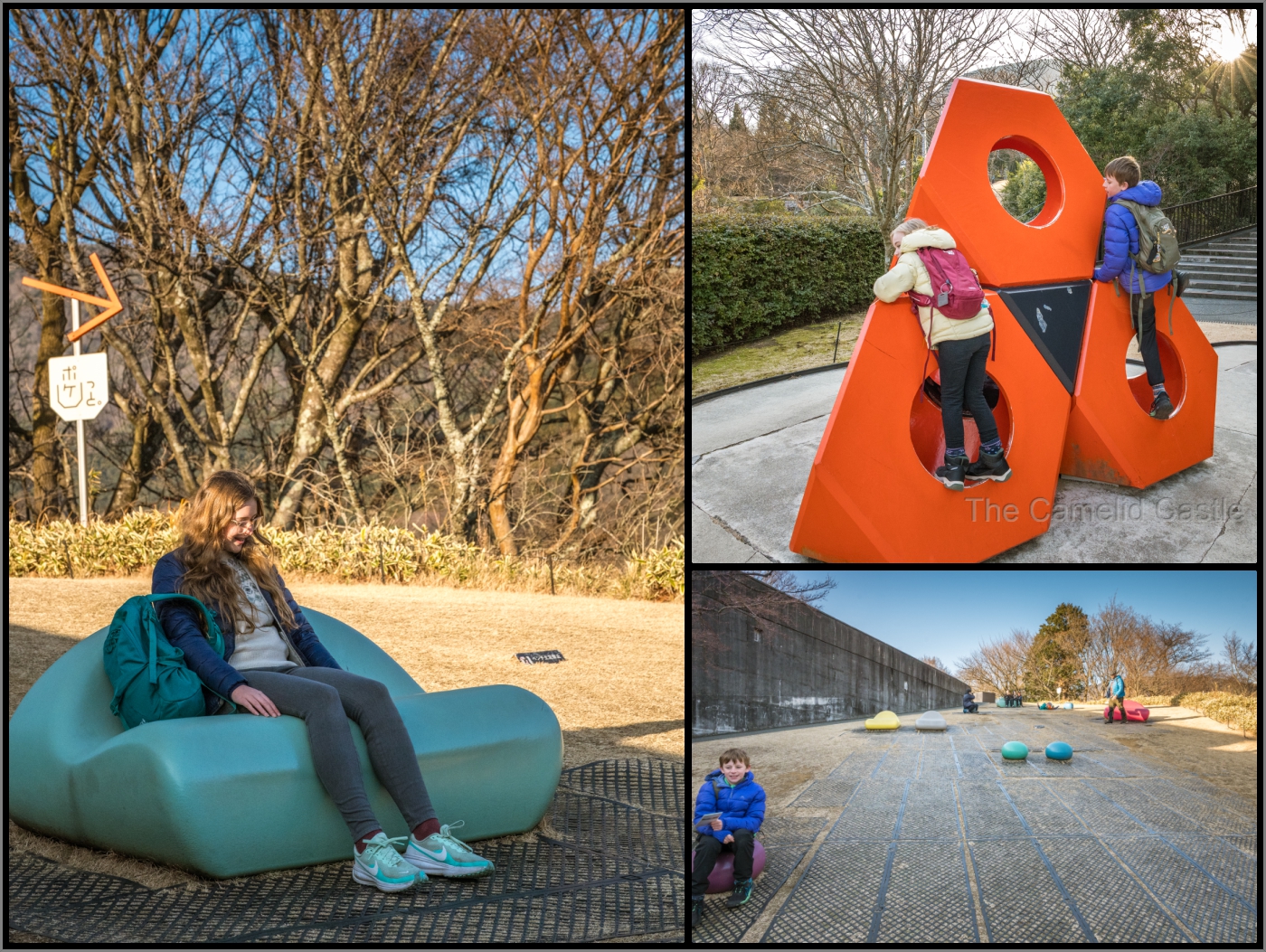
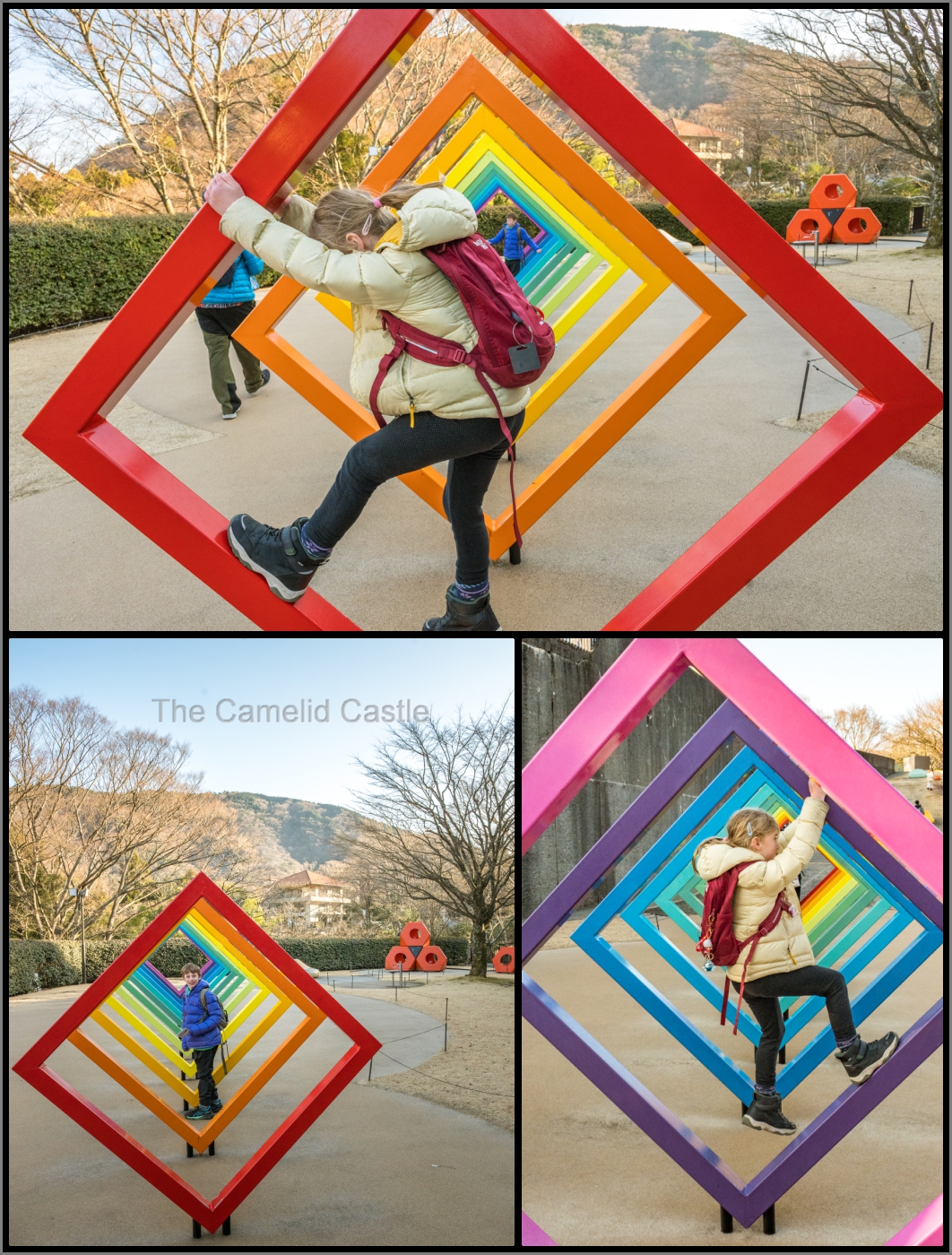
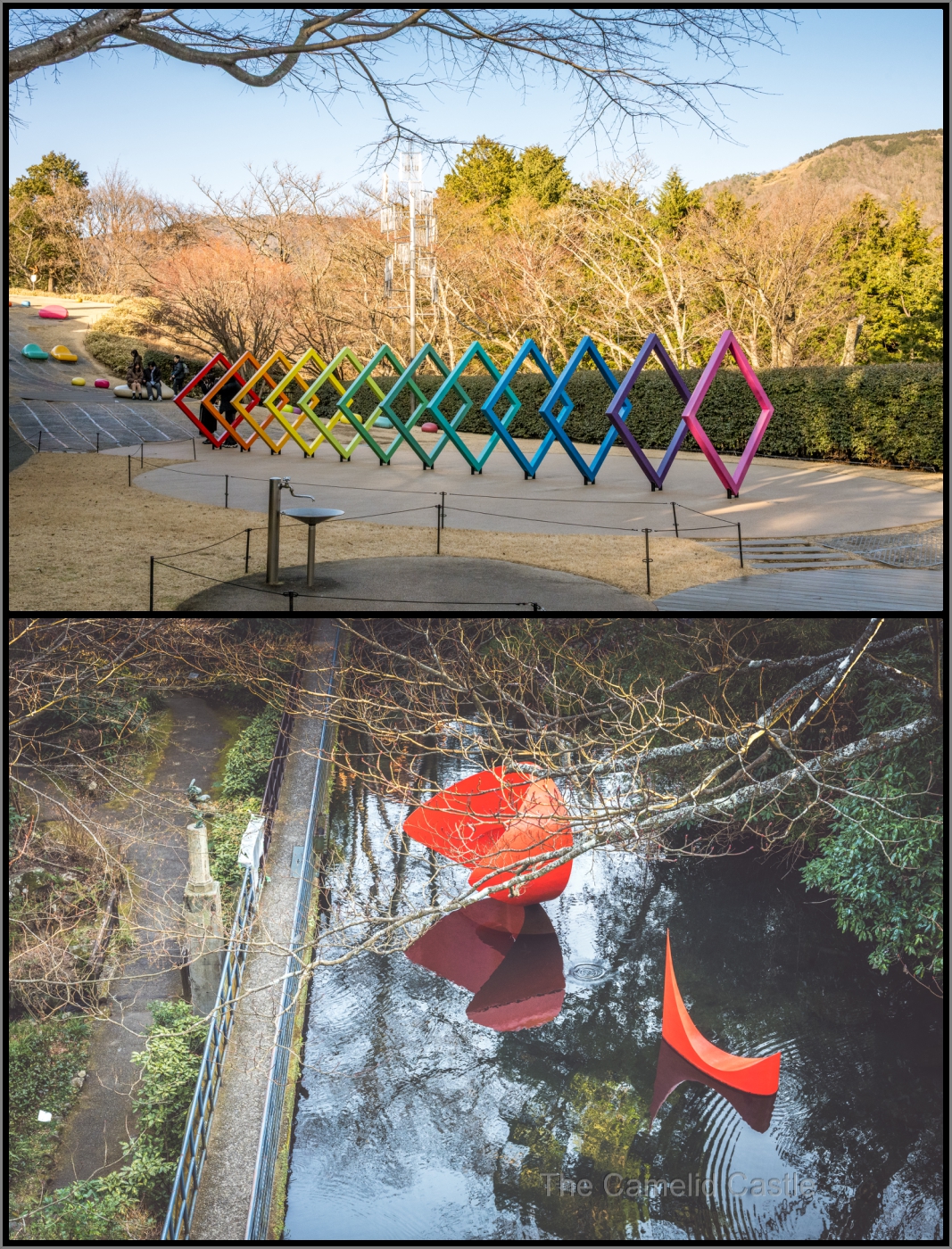
The museum houses over 1,000 sculptures although approximately 120 pieces are on permanent display. They are spread throughout the very scenic grounds, which are surrounded by the beautiful mountain backdrop.
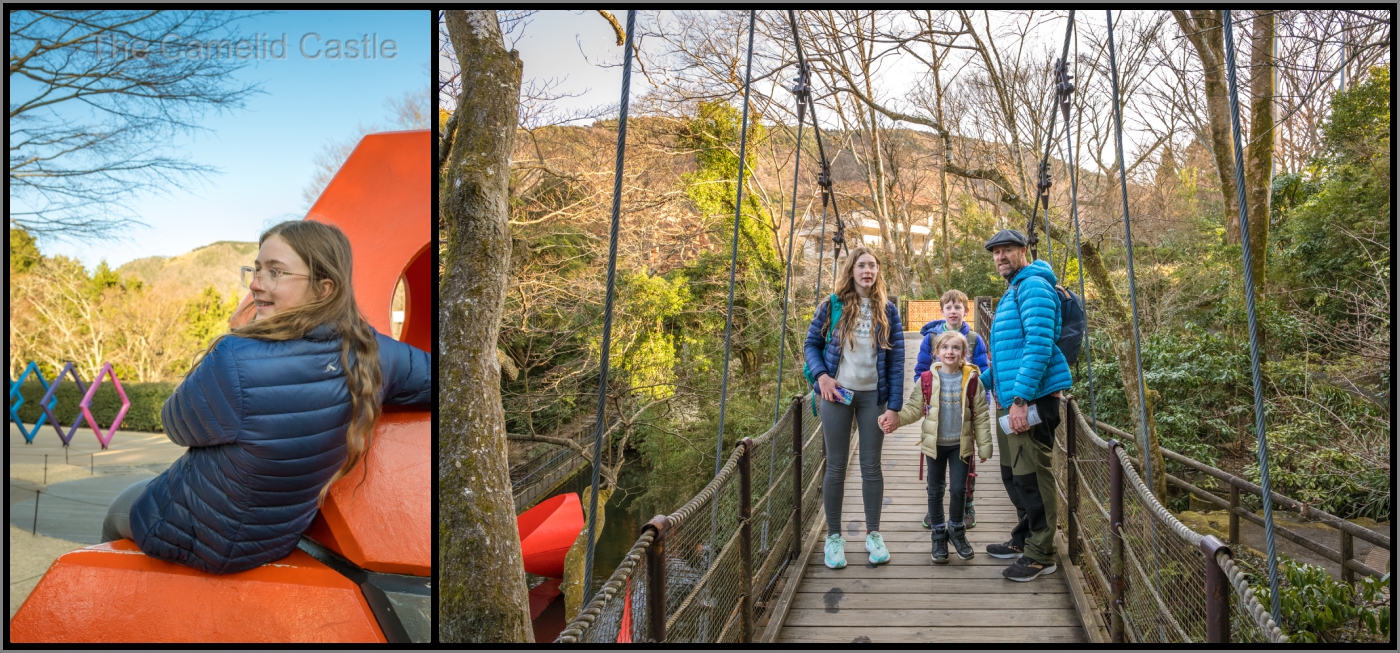
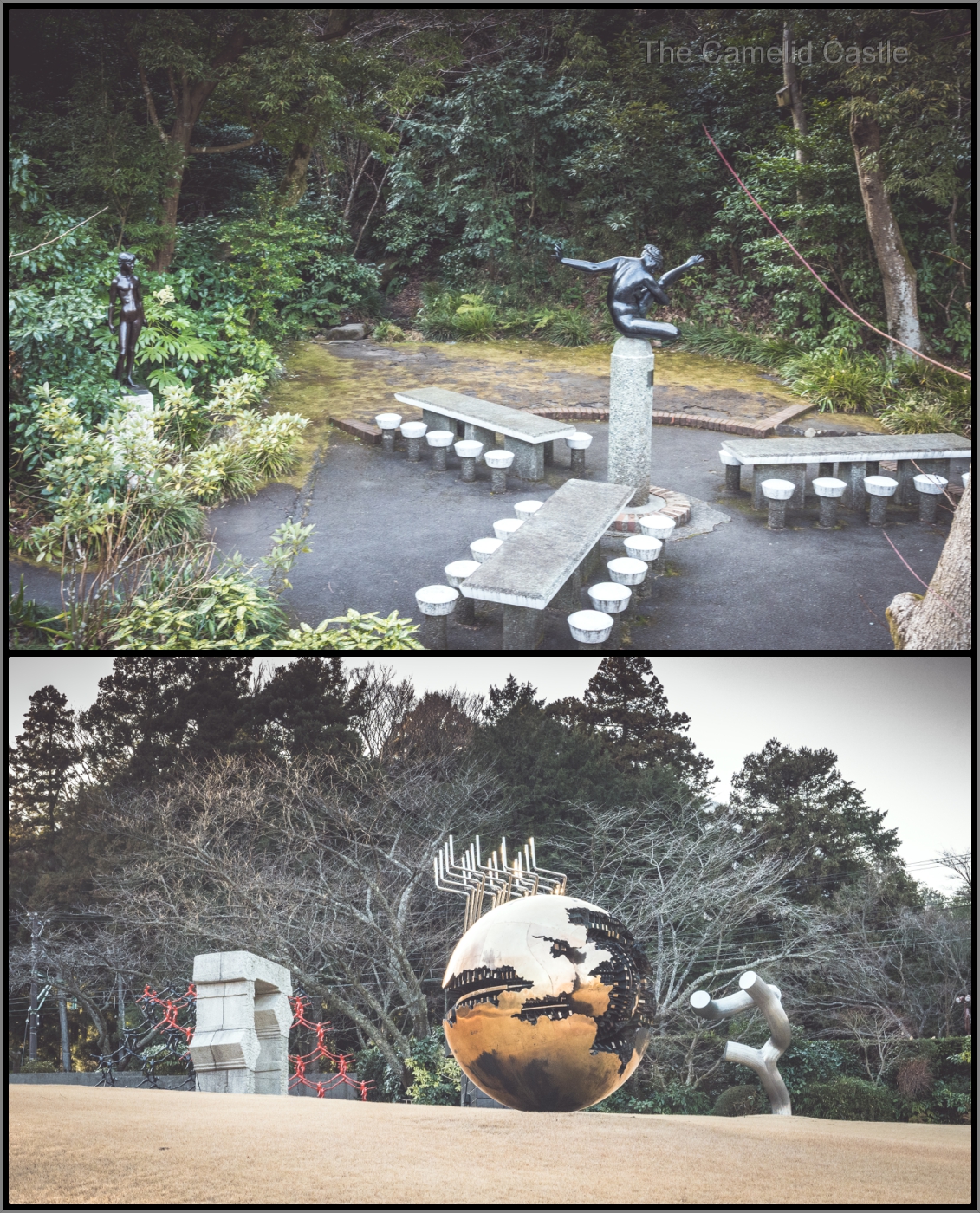
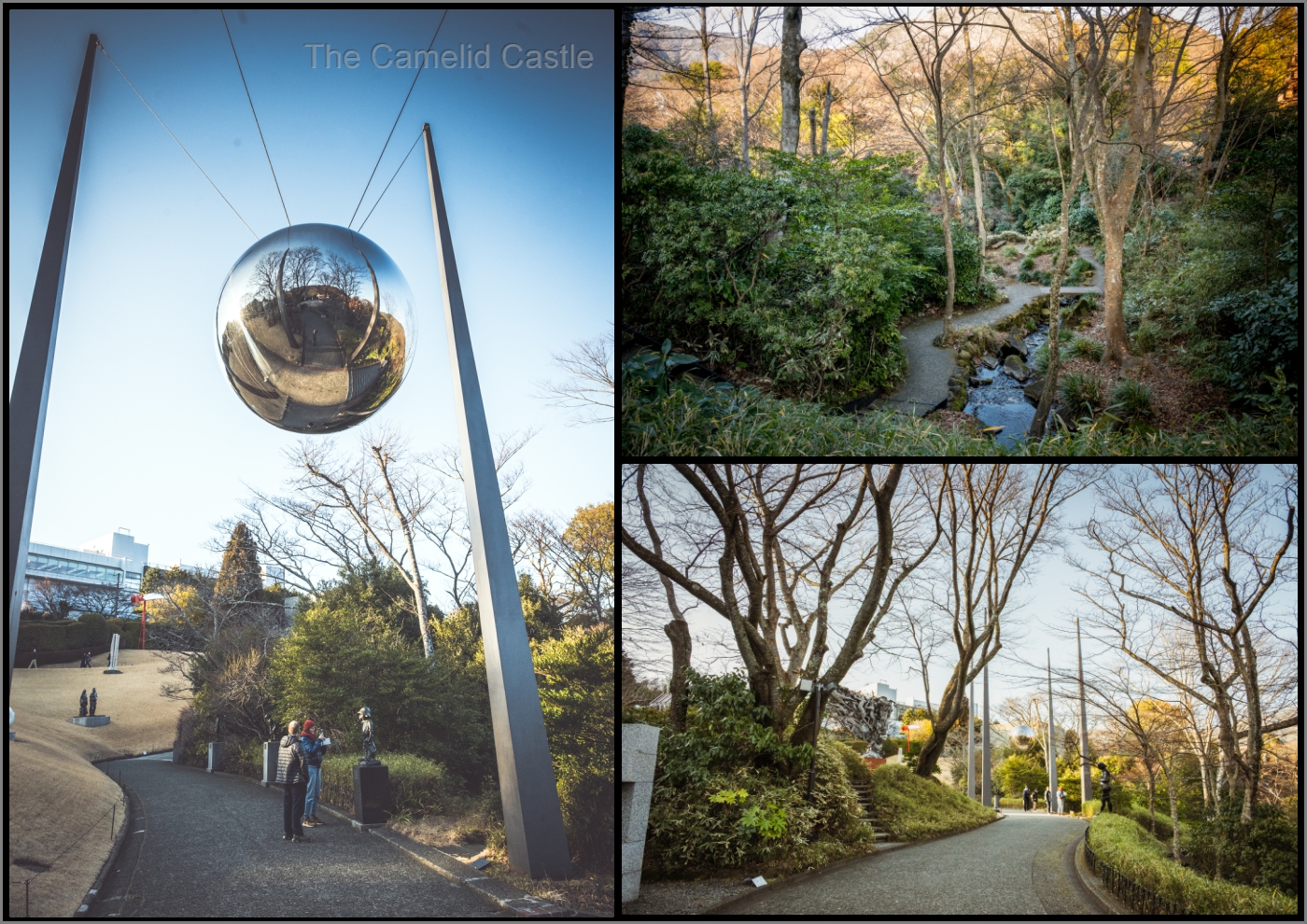
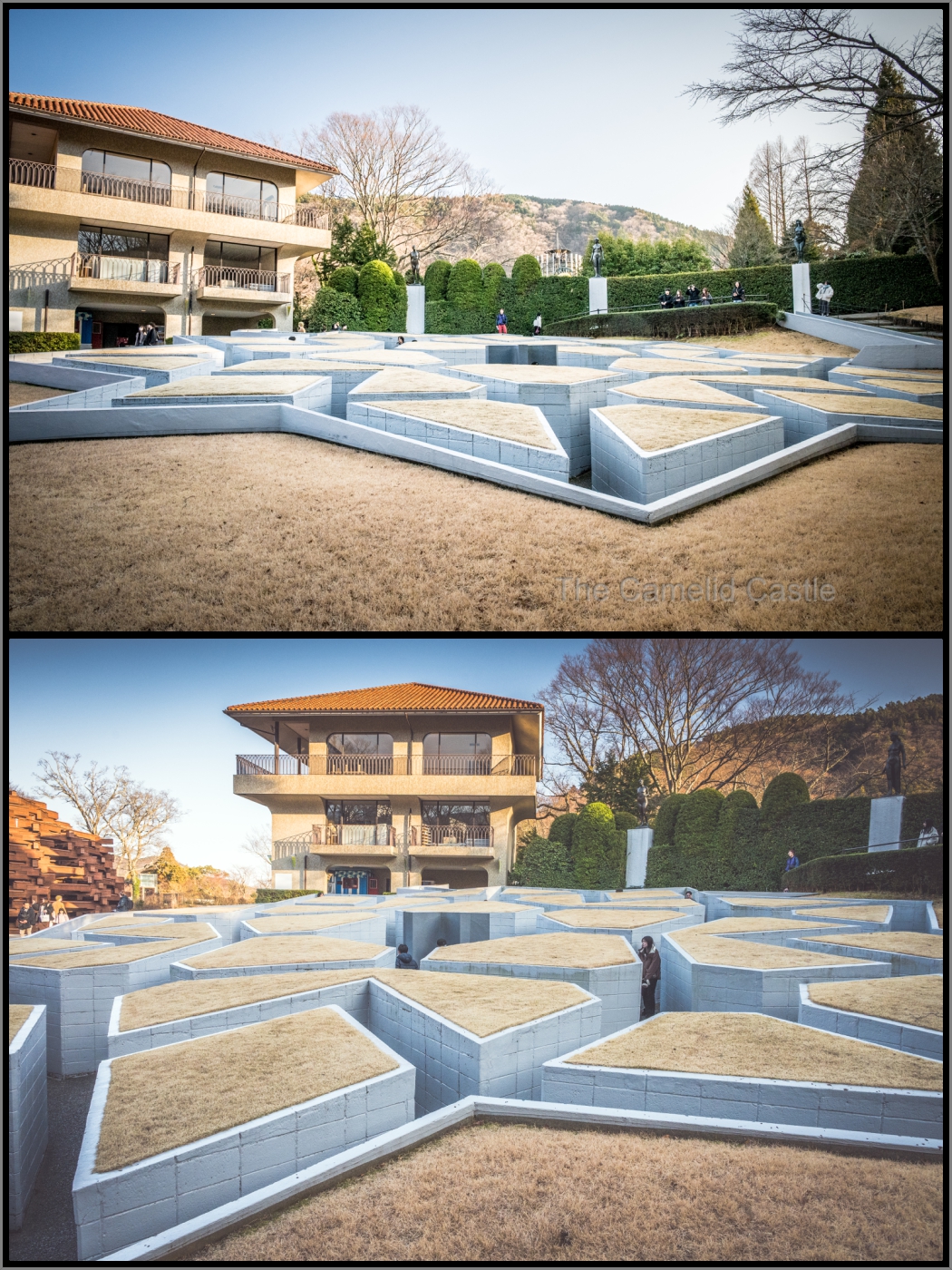
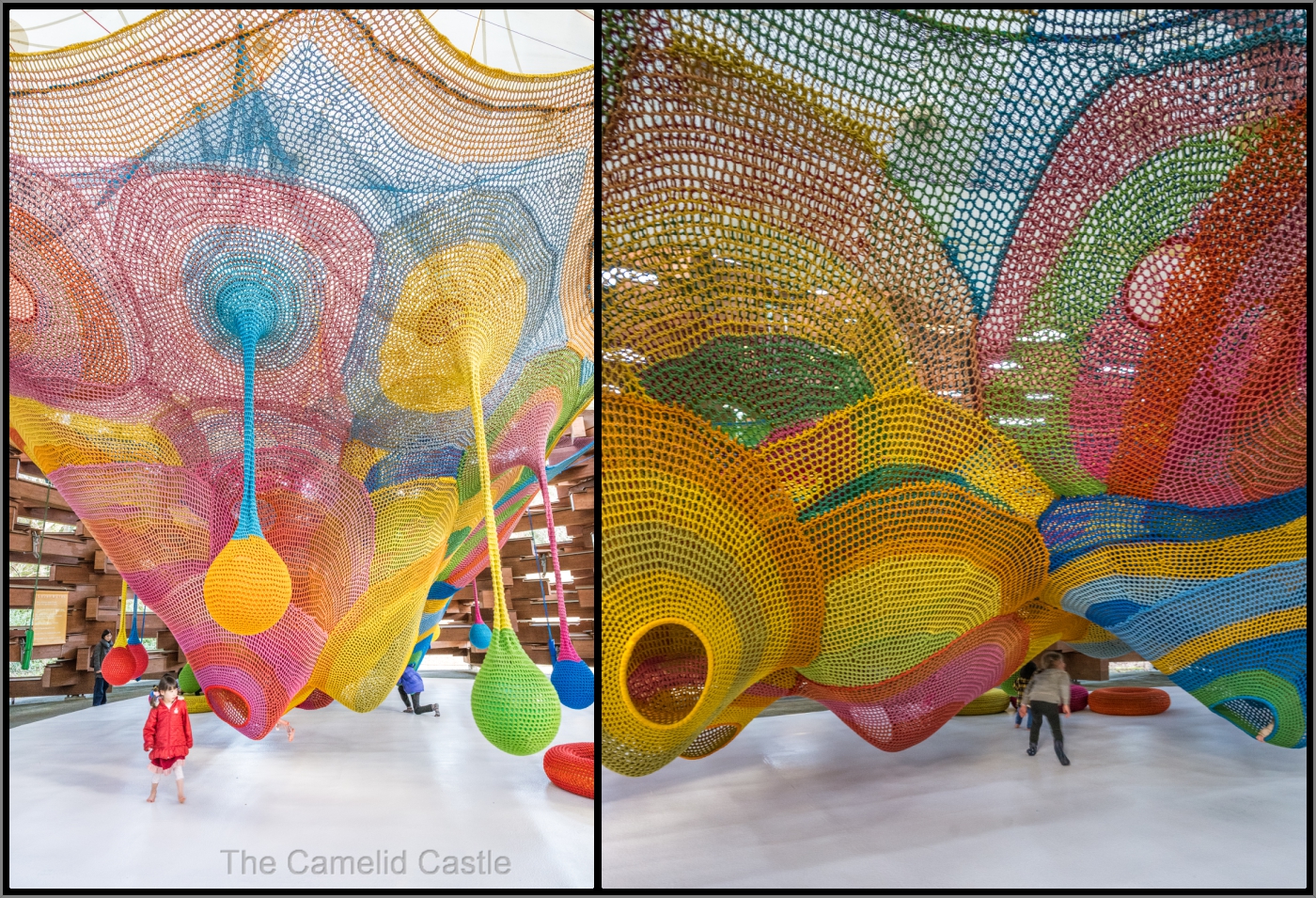
Even if you have no interest in art there were plenty of fun things to explore, so the kids had a wonderful time. There was an underground maze as well as a giant bouncy net.
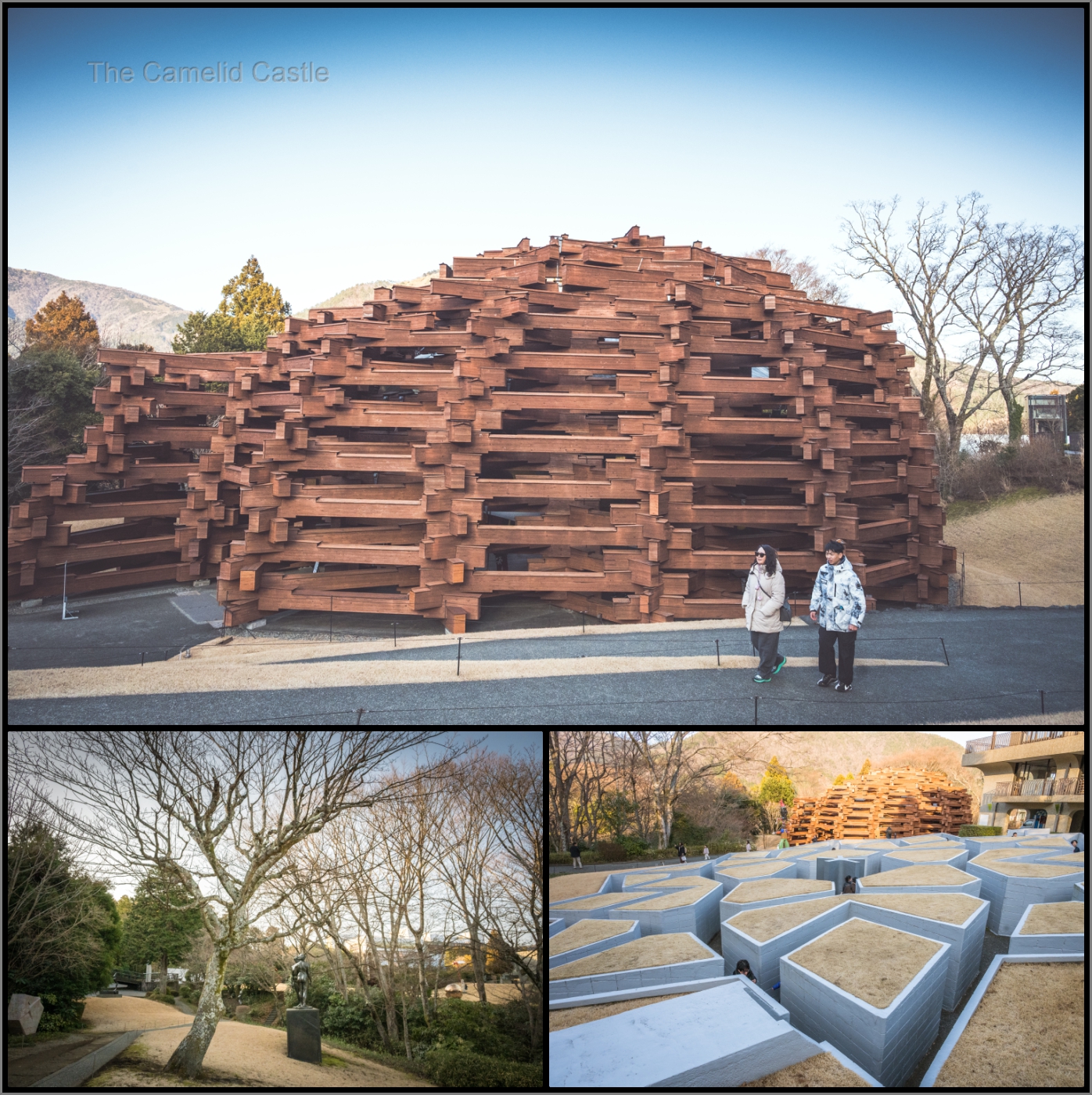
This climbing net exhibit had a maximum age of 12 so Astrid wasn’t allowed in, much to her disgust and Zinnia and Soren’s delight!
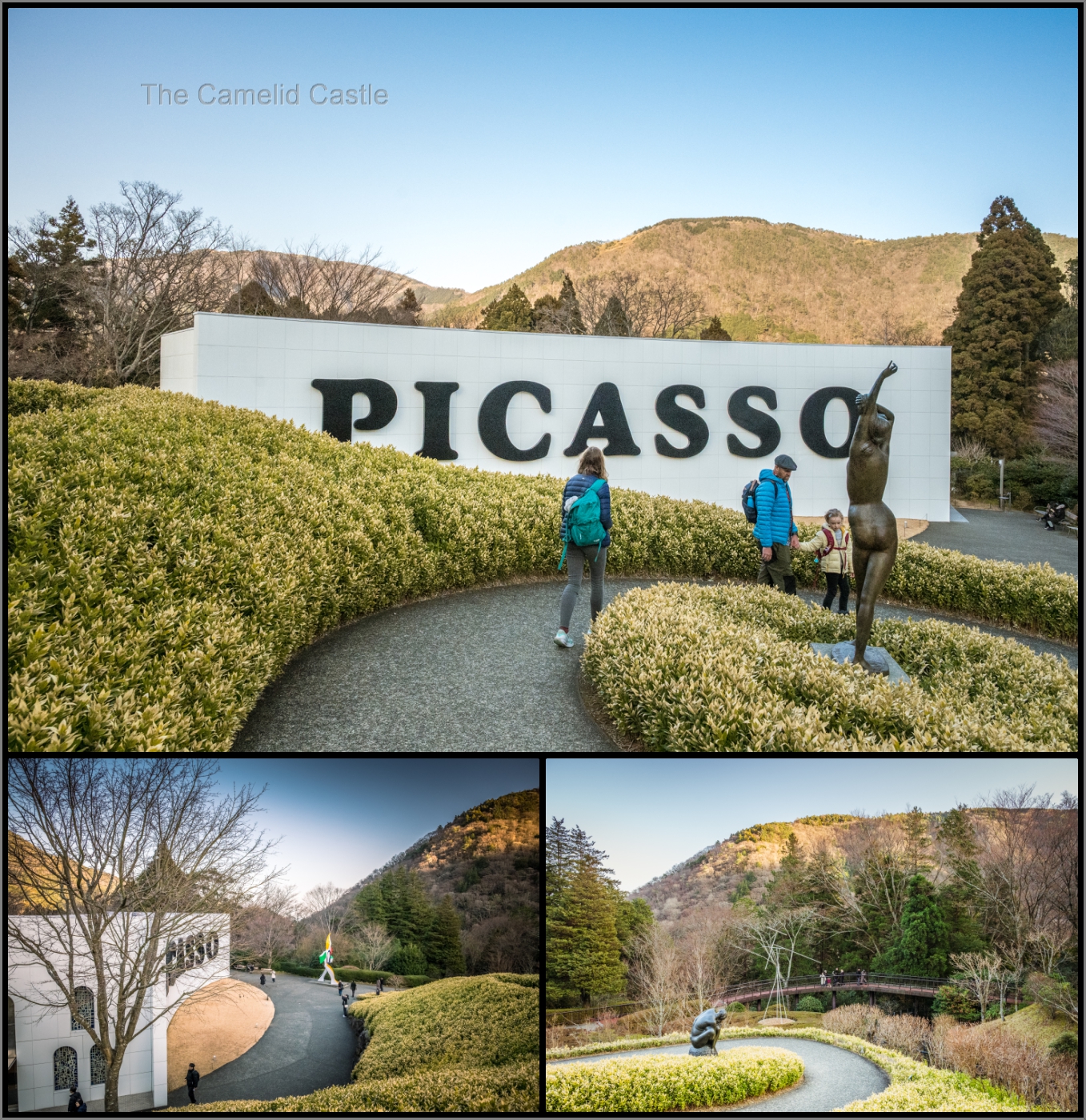
The museum is rather quirky and we had a great time checking out the exhibits. There was also a Picasso indoor exhibit which seemed rather random for a small town in Japan. The Hakone Open-Air Museum features a dedicated Picasso Pavilion as it houses one of the world’s most extensive private collections of his work, totaling over 319 pieces. We enjoyed the Picasso pavilion initially as it offered some respite from the afternoon chill but as we wandered we found some very interesting exhibits and history of Picasso. There were no photos allowed inside but it was an interesting place to stop past.
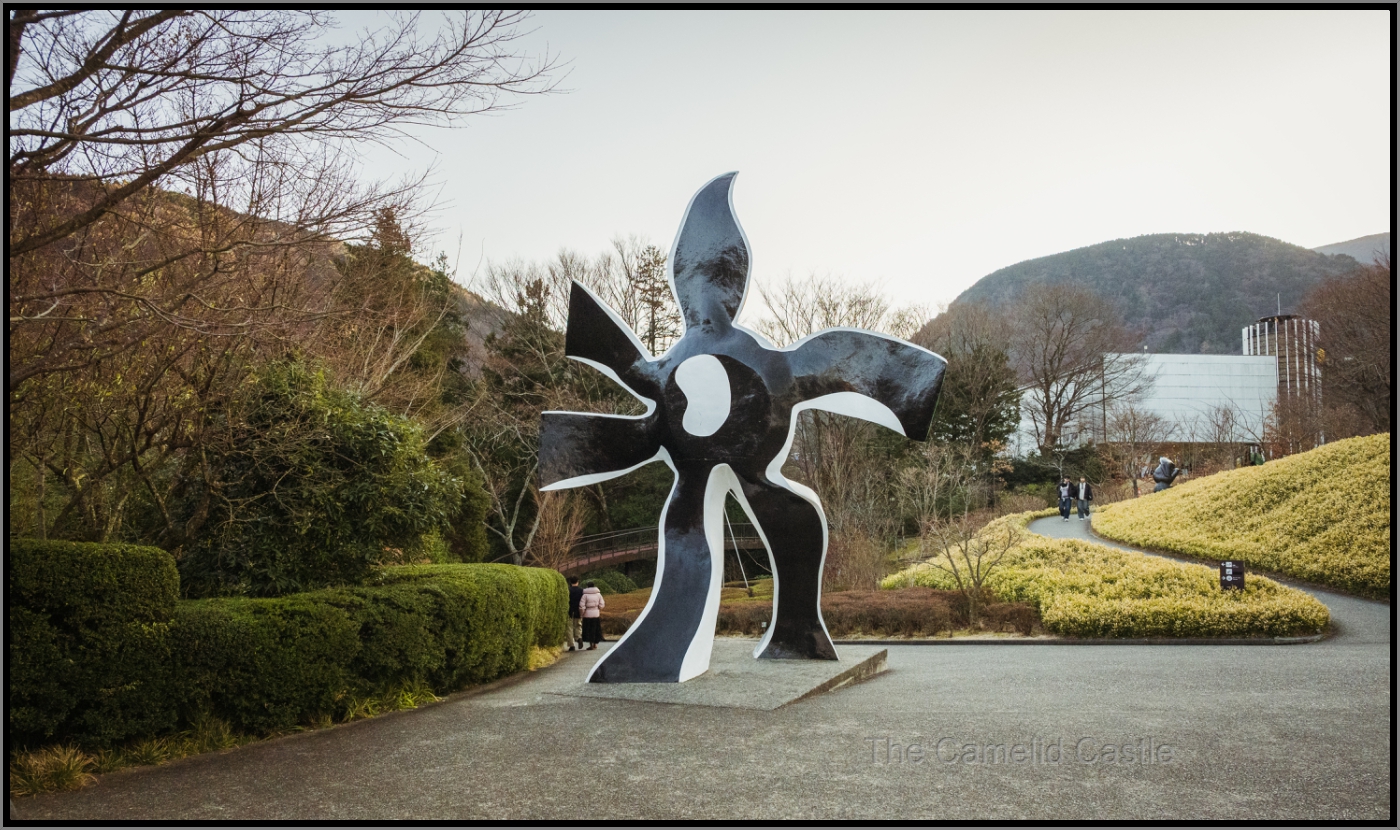
Not far from the Picasso Pavilion is the Symphonic Sculpture, a tower entirely covered in stained glass. It is designed to catch the light from inside and outside and is meant to reflect a child’s dream world like a kaleidoscope.
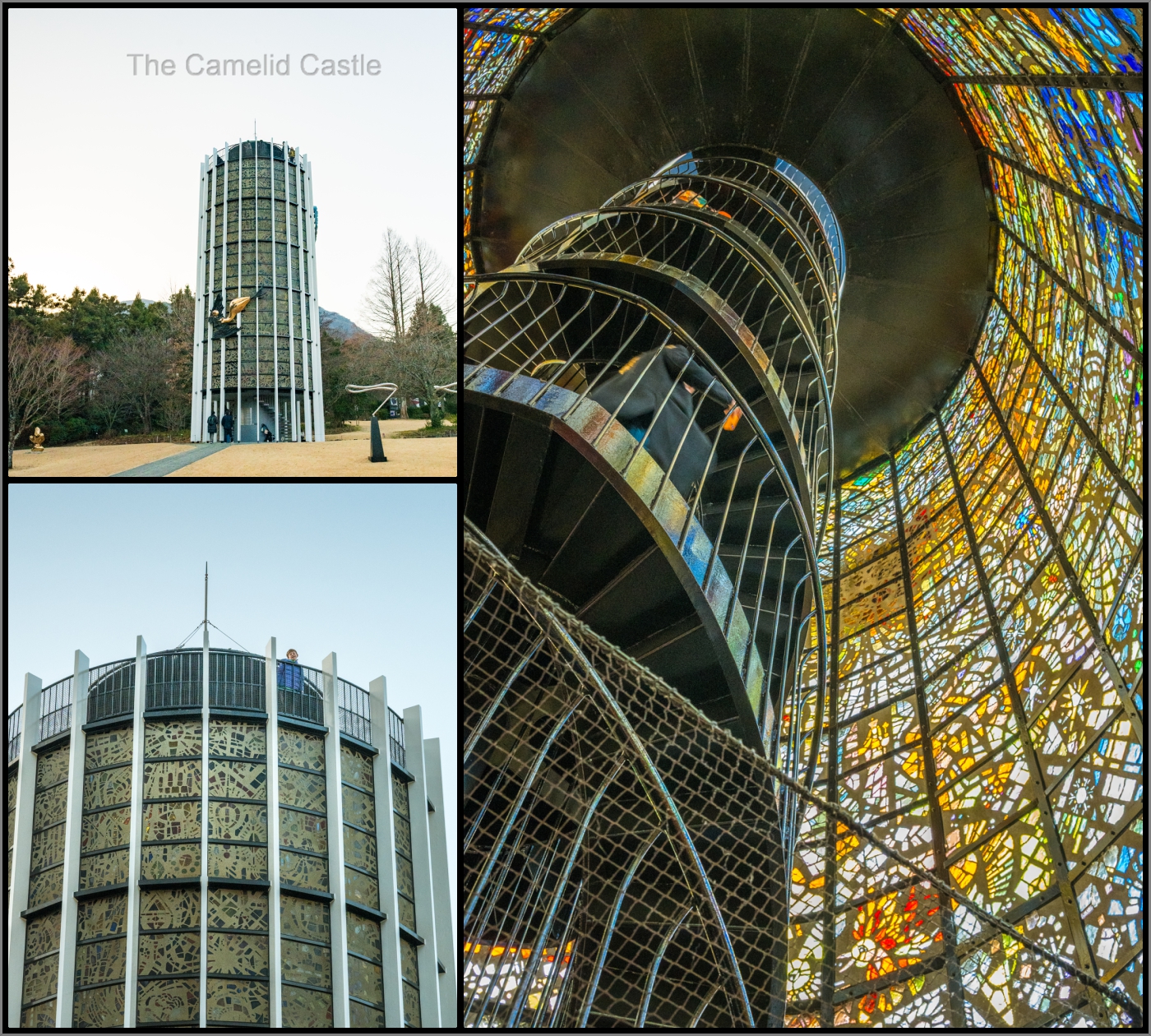
We went up the spiral staircase inside, which was indeed magical. There were great views from the bottom looking up and the top looking down. In the above photo Soren is up at the top, waving to us.
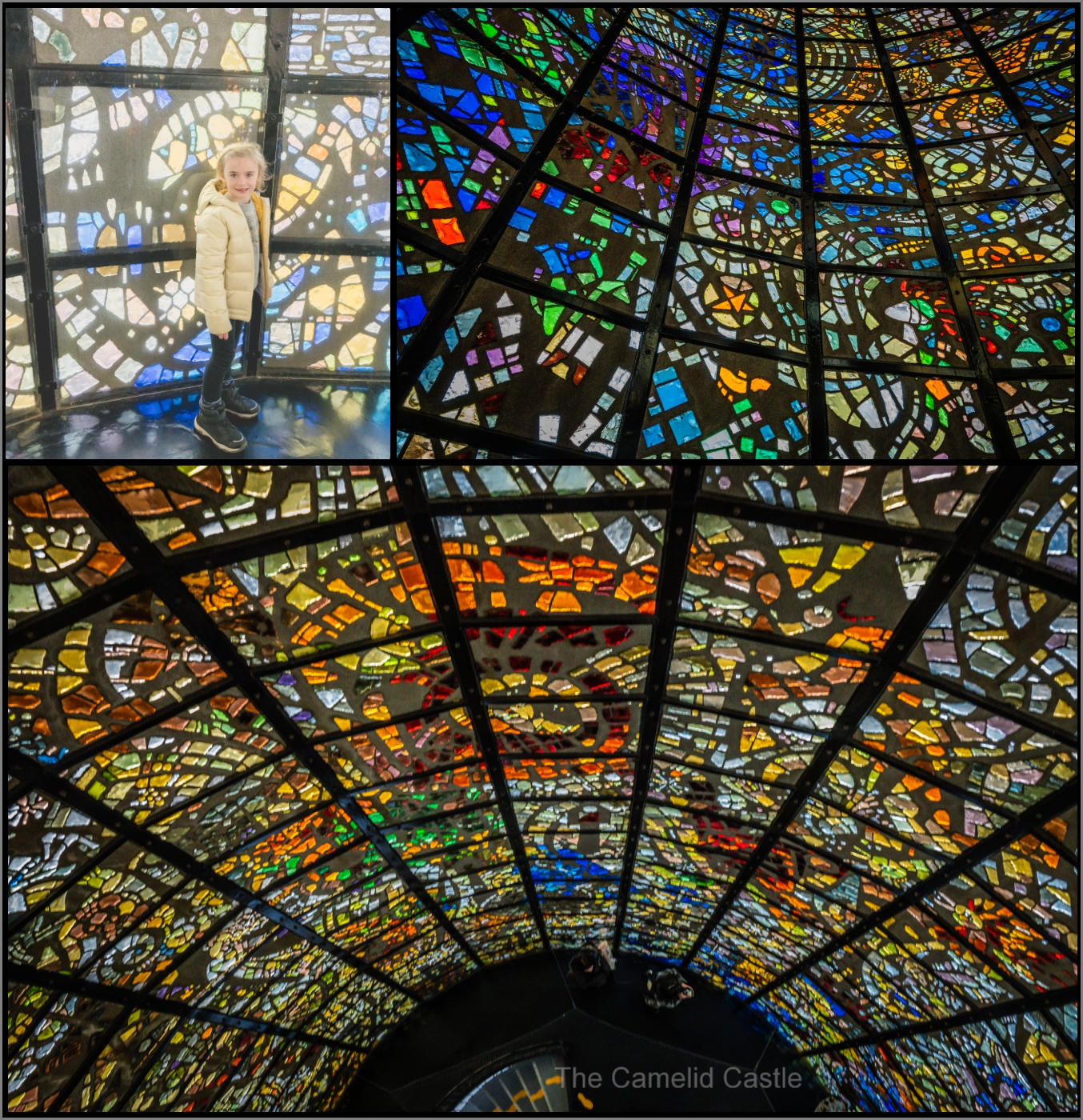
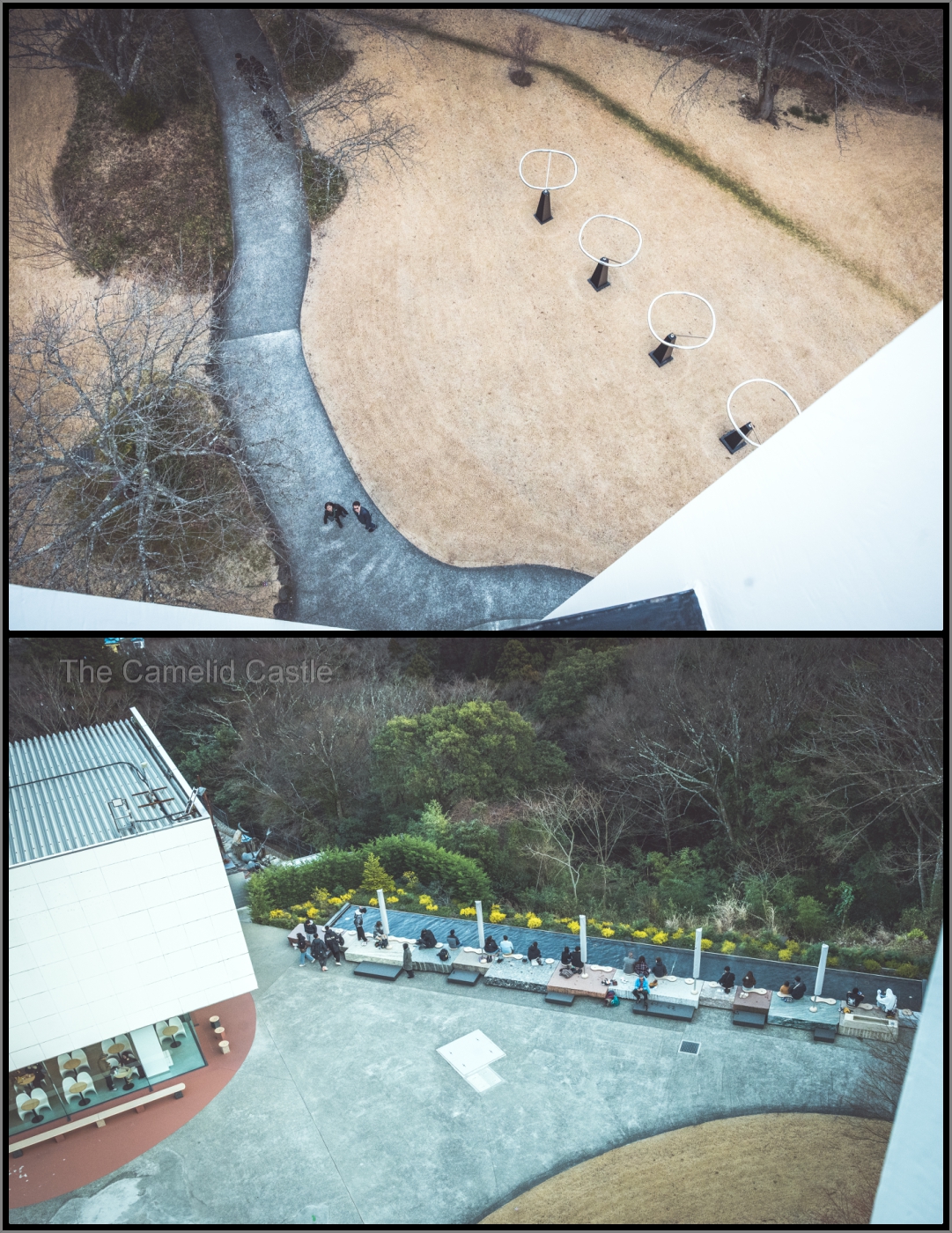
Once Zinnia and I were at the top we had fabulous views across the museum, including of Anto and Astrid hanging out in the warm foot bath, fed by the hotsprings.
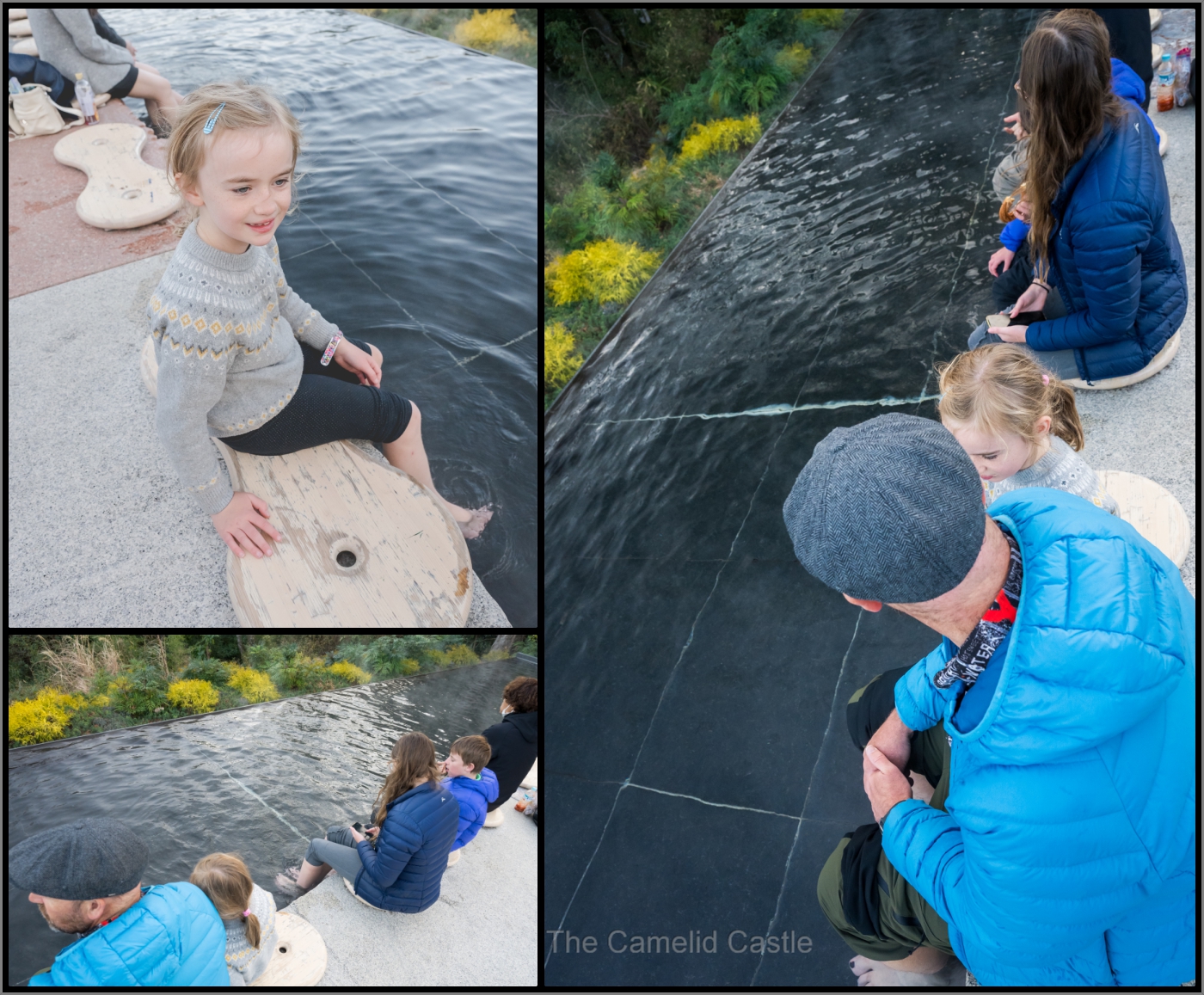
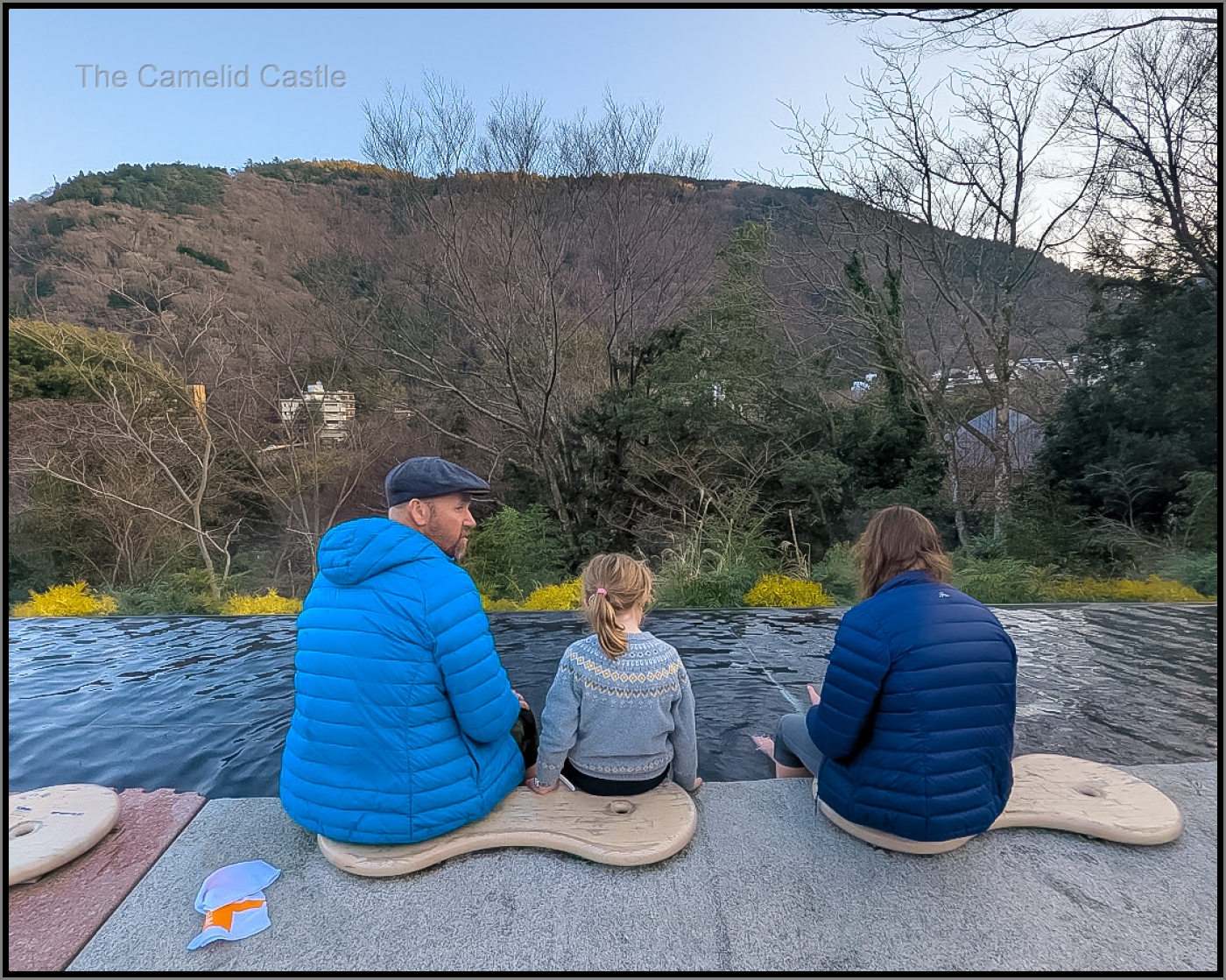
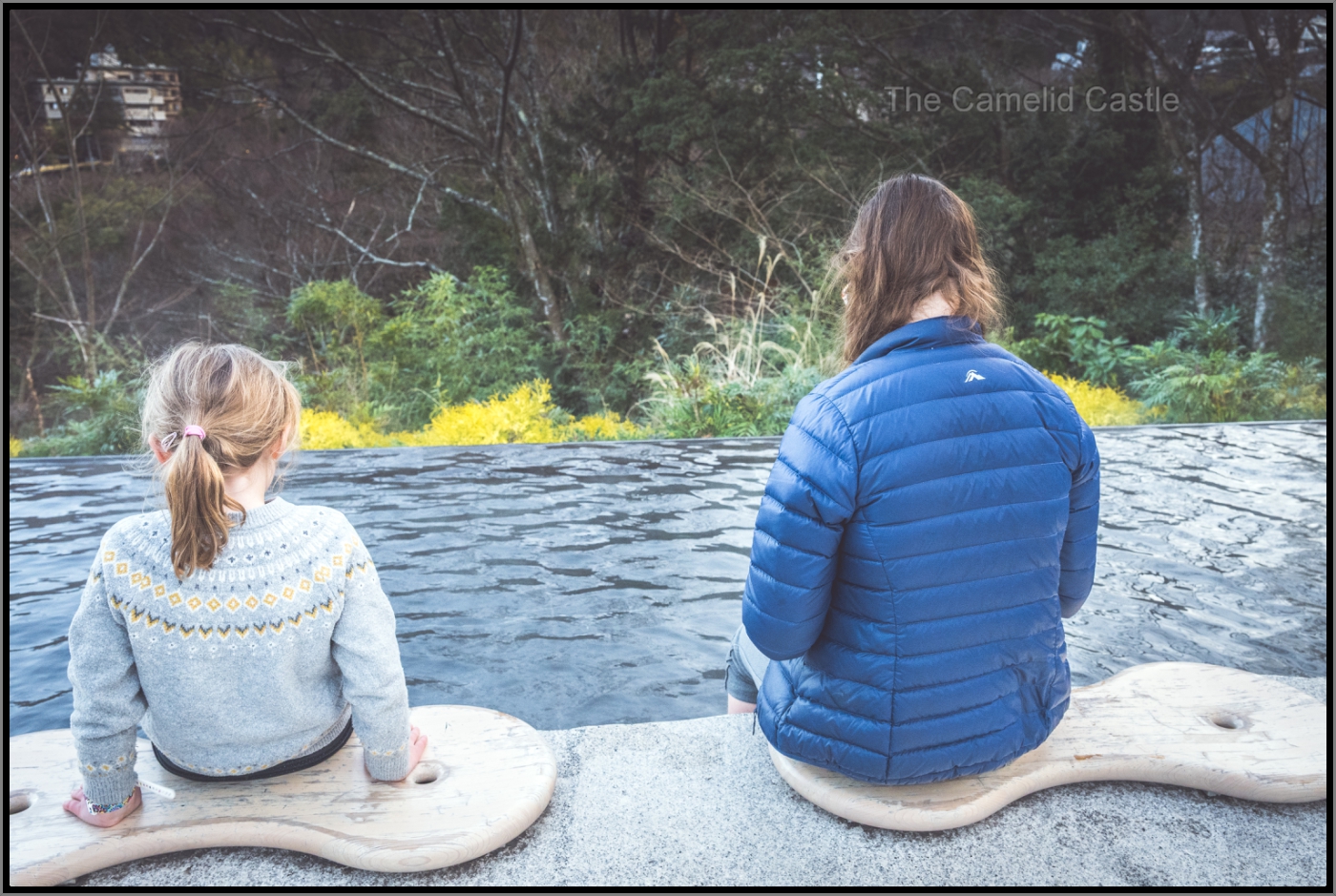
The kids and Anto also enjoyed the soak. By now it was rather cold and our feet were sore from lots of walking over the previous few weeks, so this was fun and had rather pretty views.
There were also amazing views of the valley and mountains. The majestic mountain backdrops add to the grandeur of many of the sculptures.
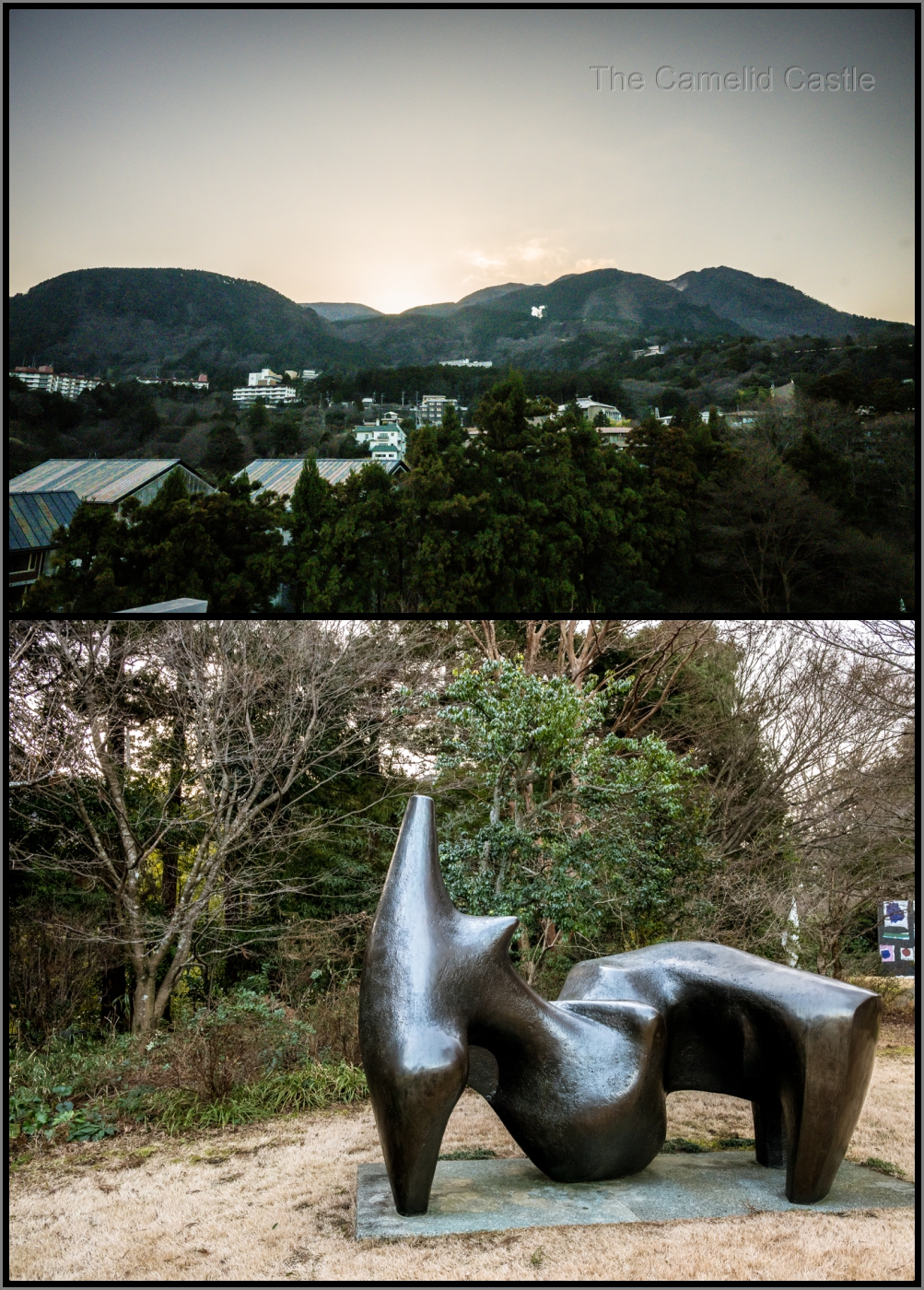
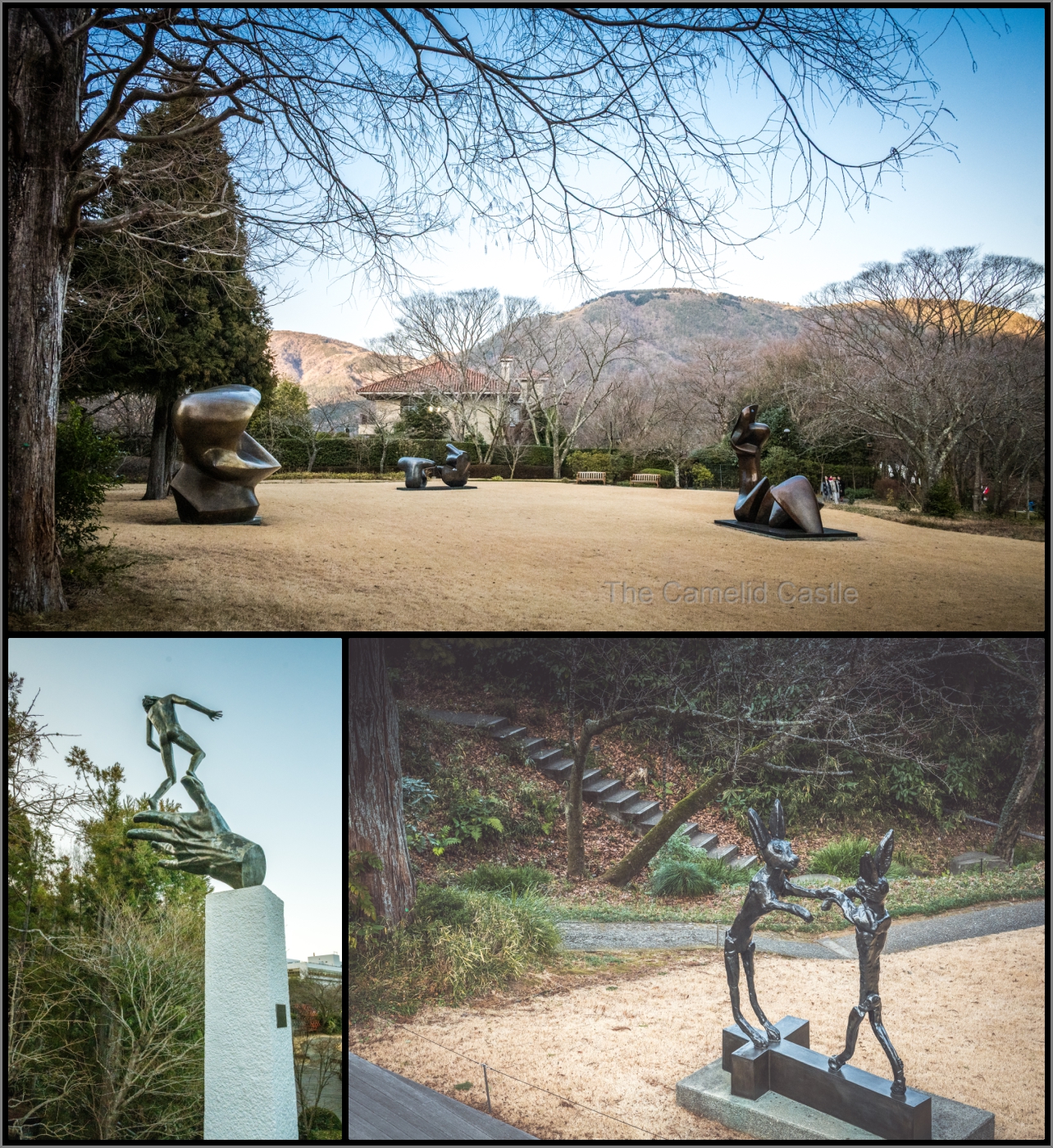
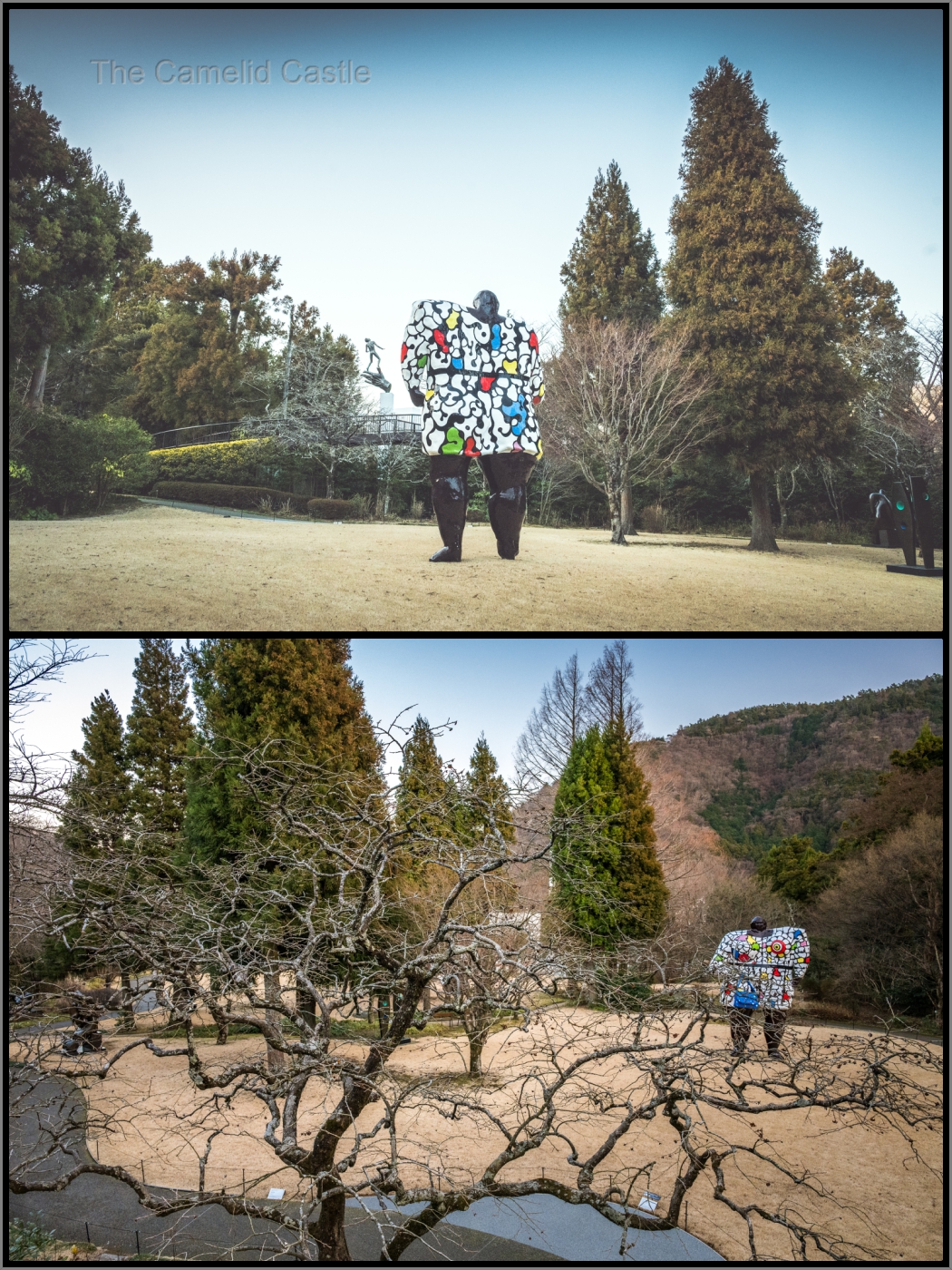
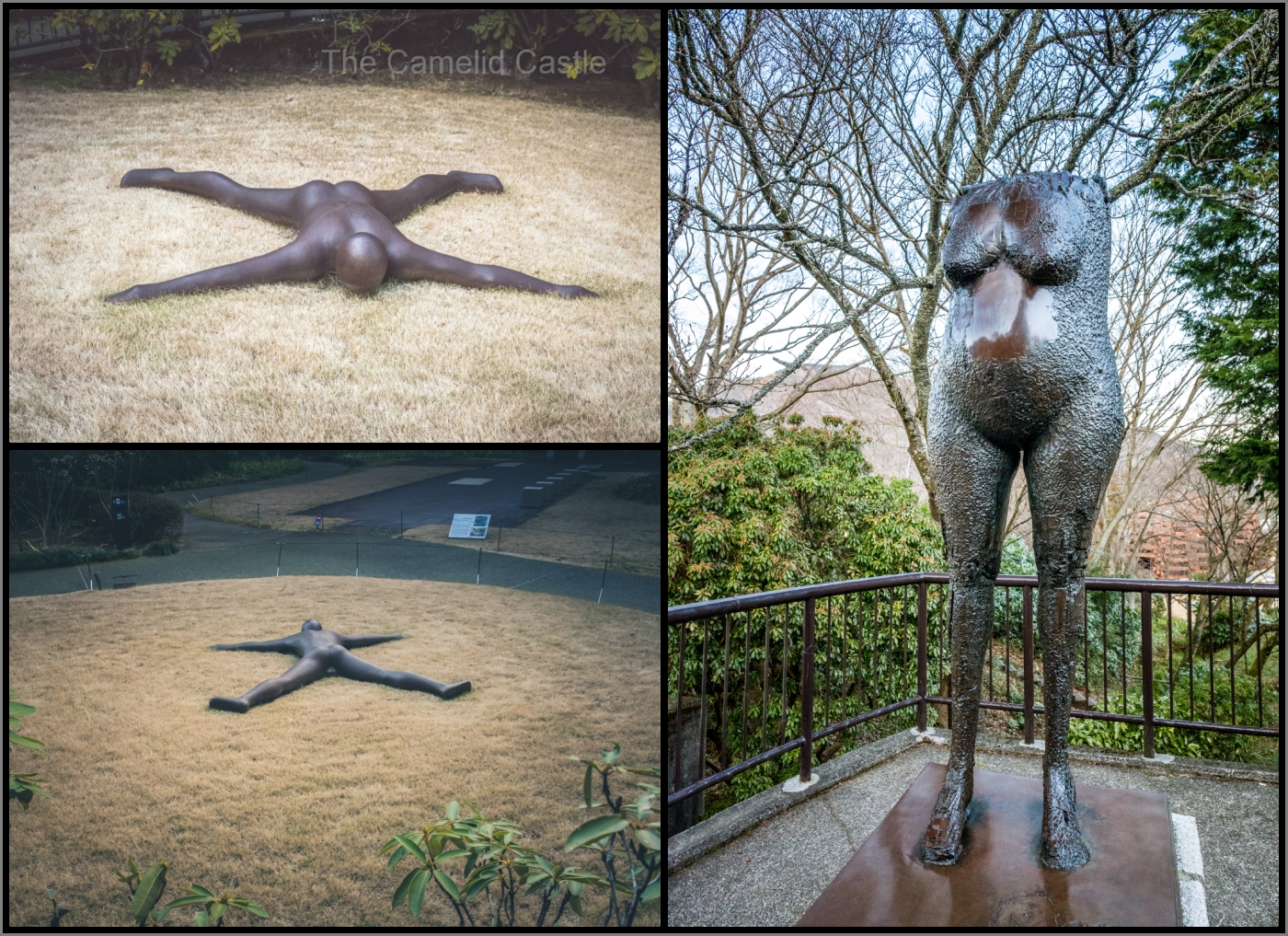
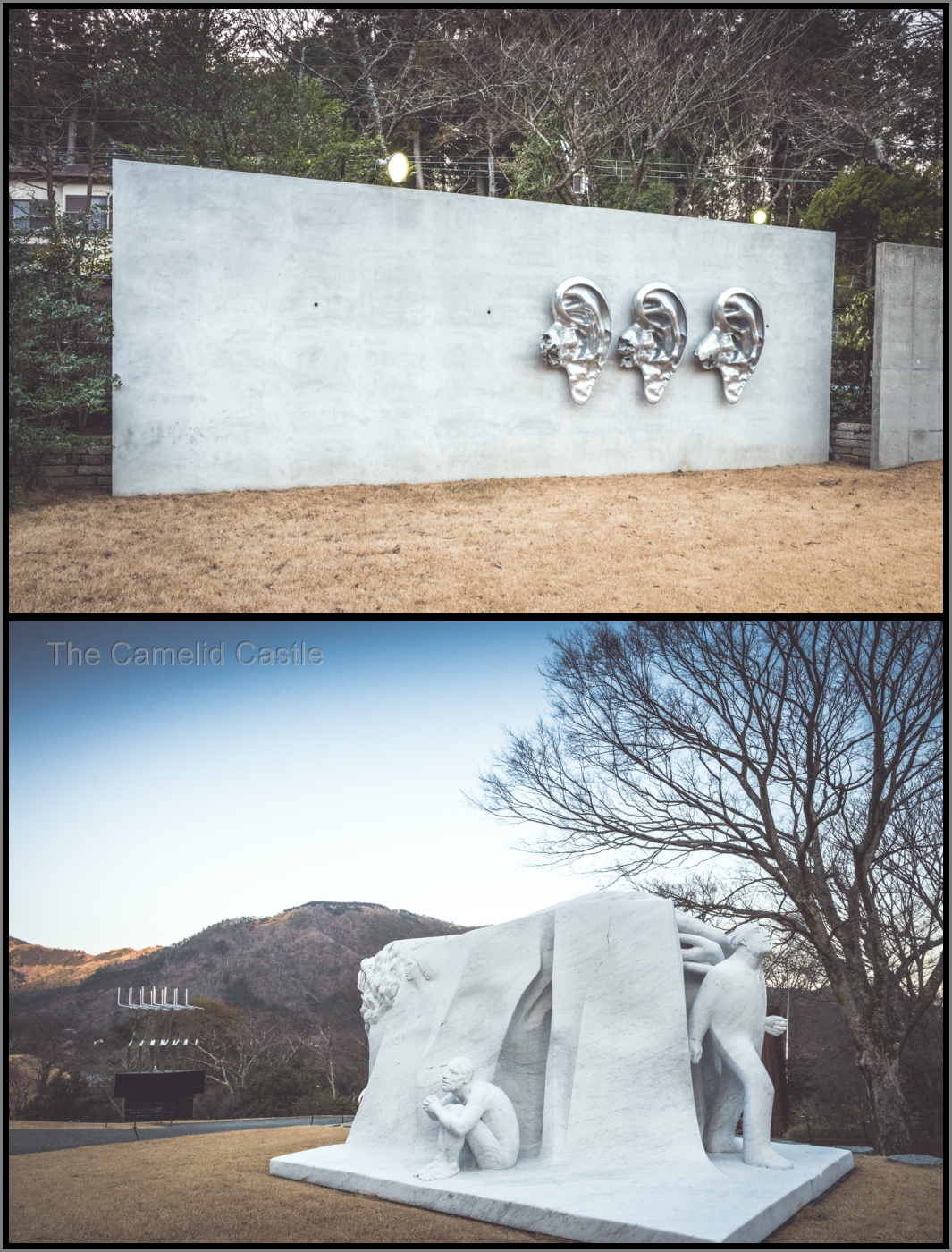
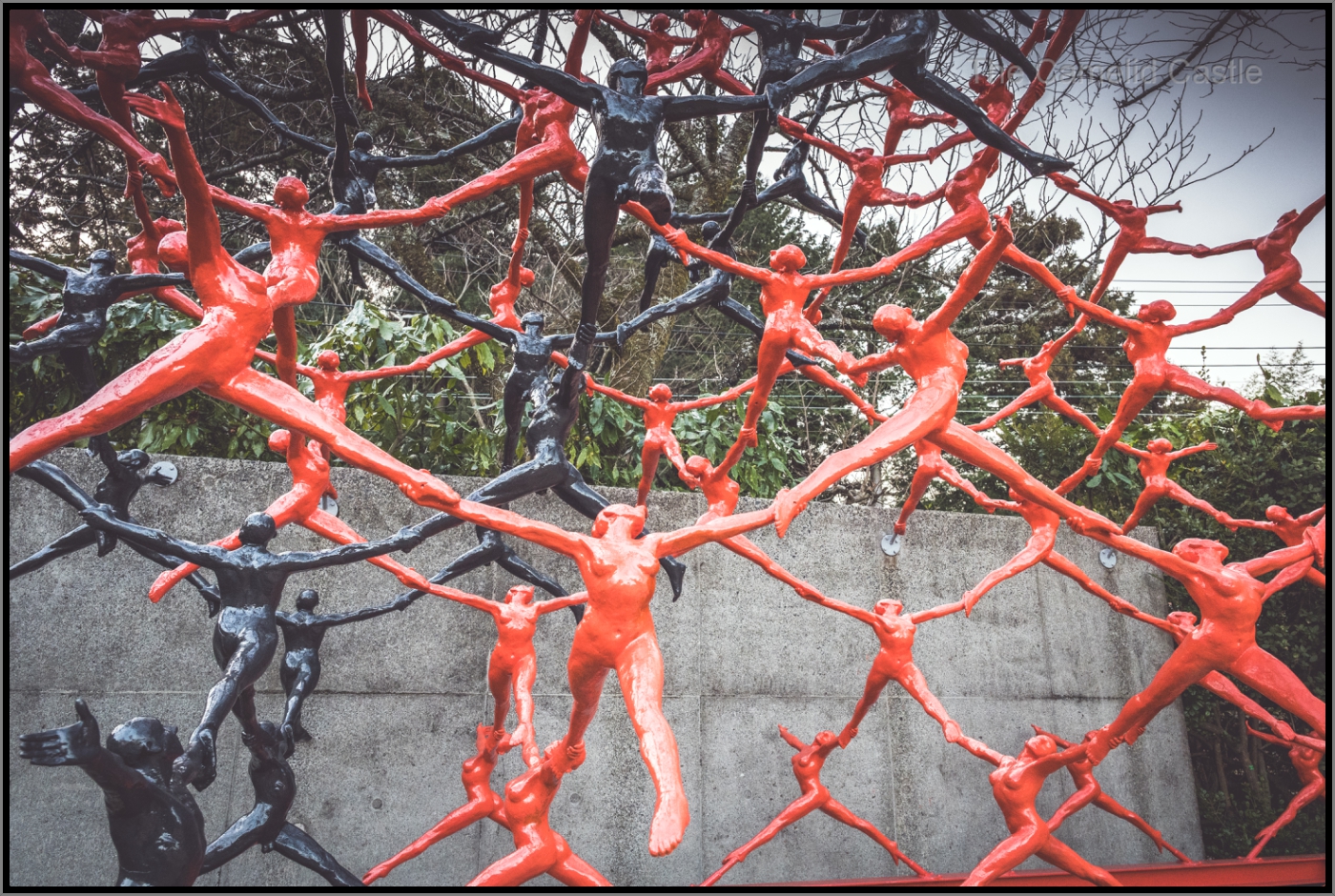
There were explanations of the pieces and some included history of the artists. There were many fascinating stories behind many of the artworks.
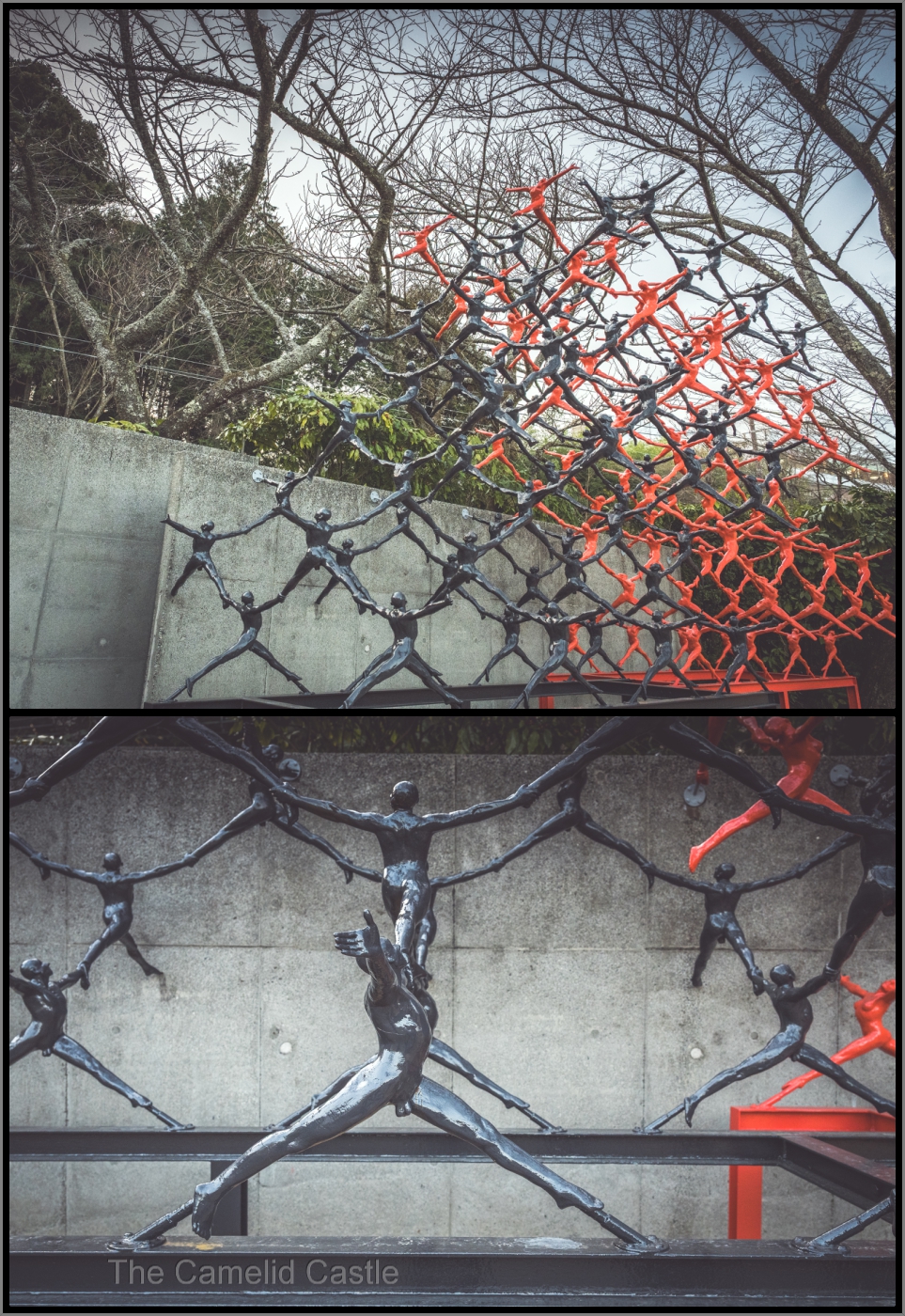
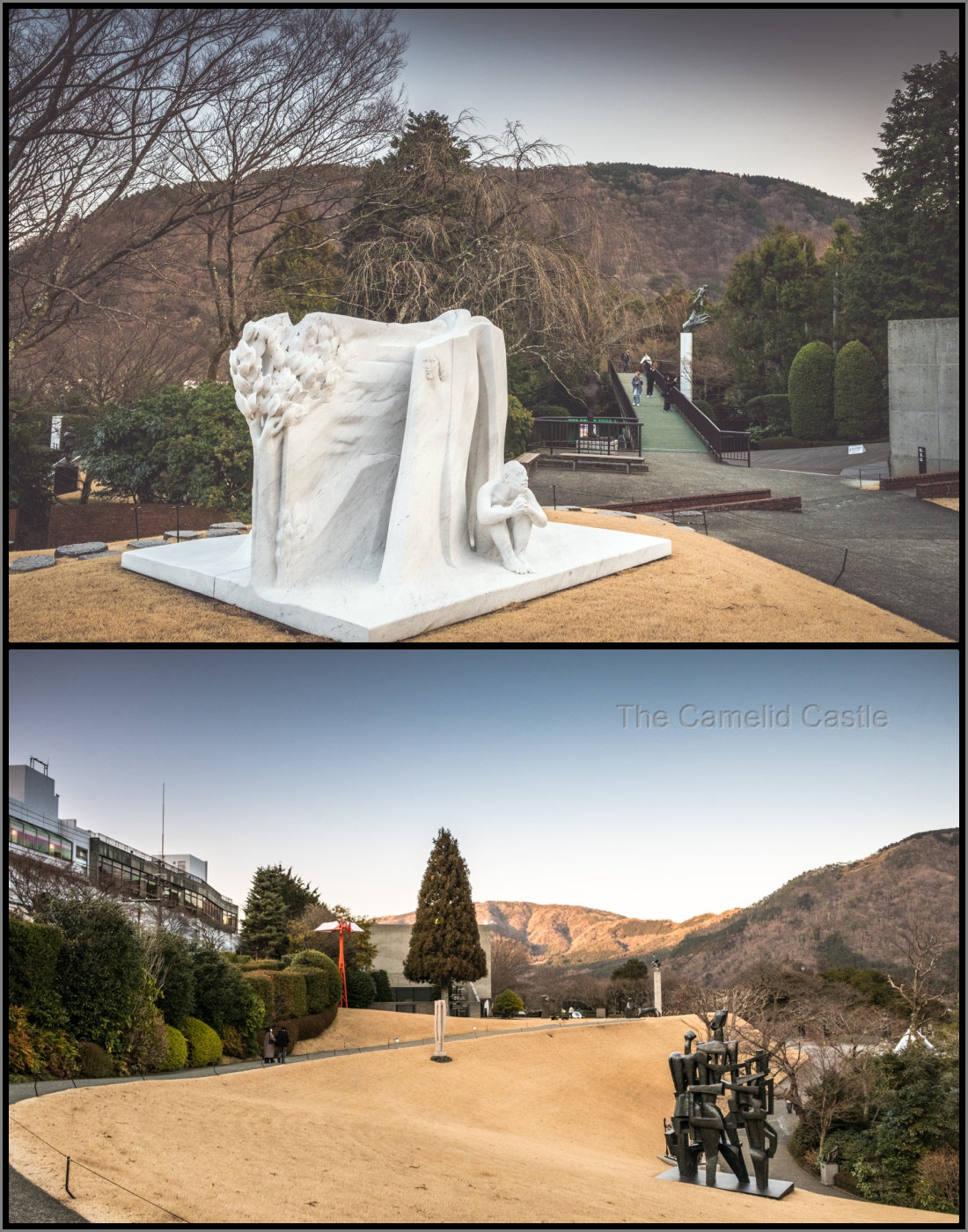
We left the museum just after 4.30pm (it was closing at 5) and it was getting rather cold and dark. Most of the recommendations indicated most people spent 60-90 minutes at the museum. We were there over 90 minutes and saw most of it but could easily have spent longer. Again we were glad we did the Hakone loop in the order we did. If we had of visited the museum towards the start of the day we would have had to rush through far more.
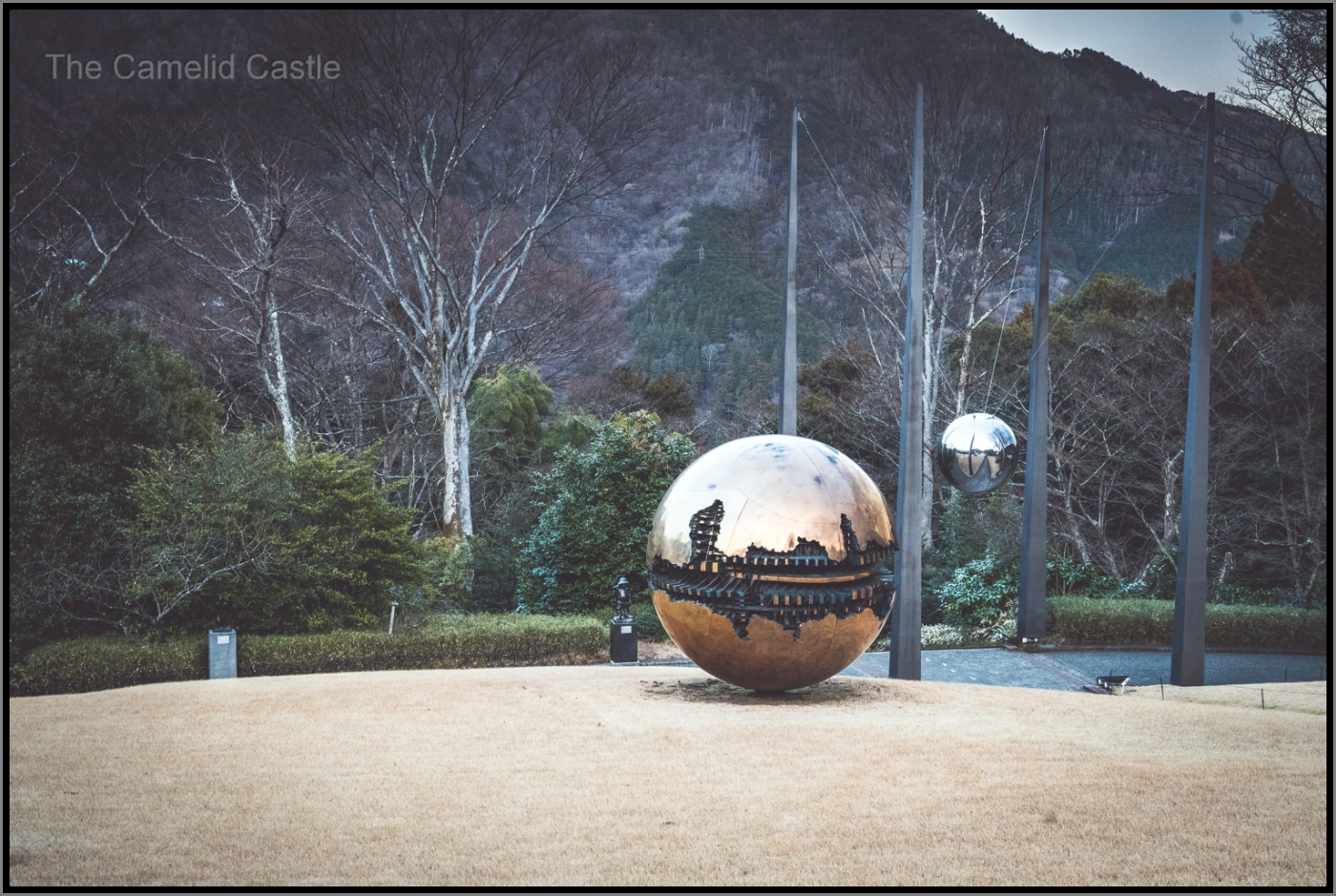
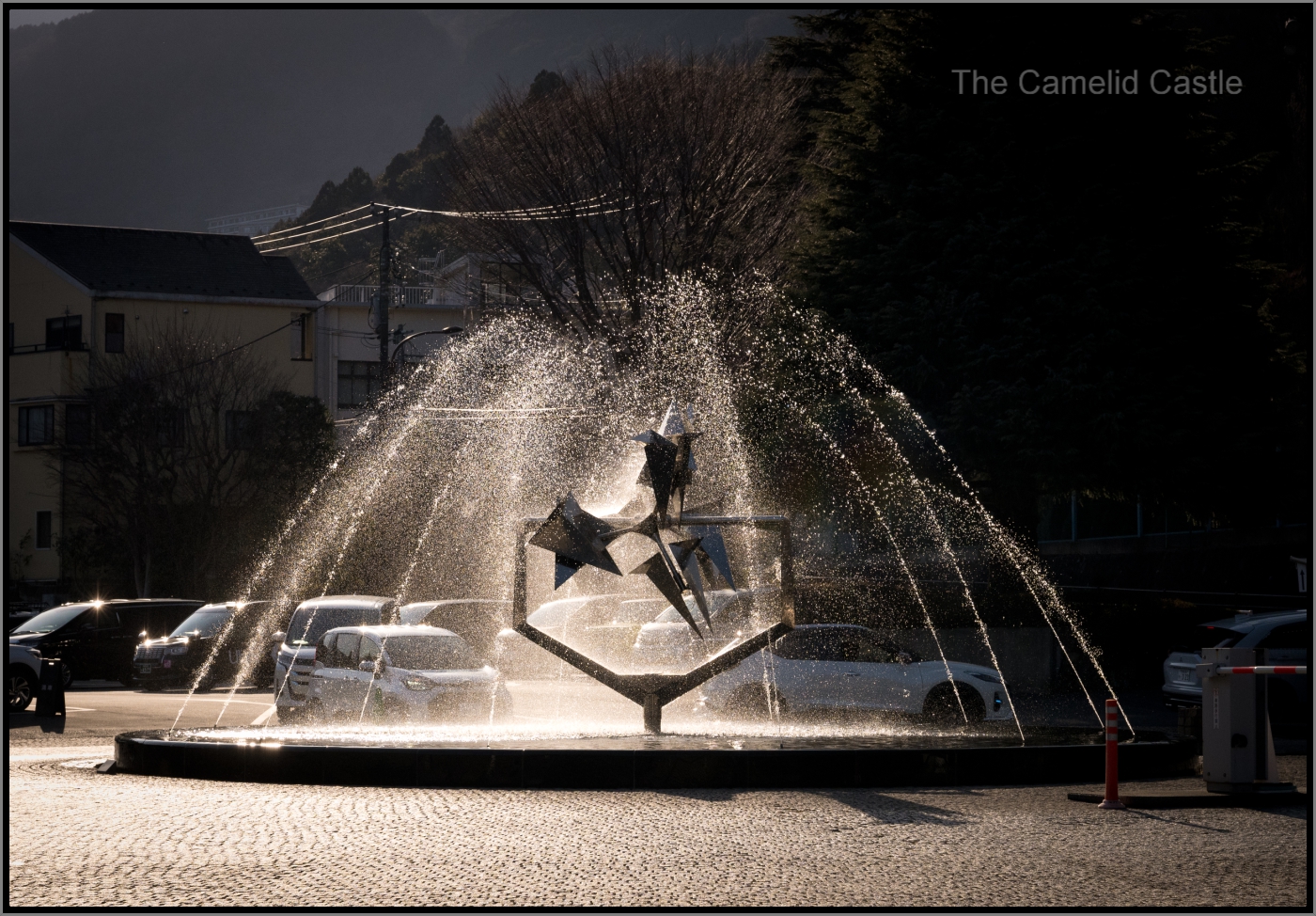
Once we left the museum it was a short walk back to the station where we caught the train back one stop to see if we could find Zinnia’s missing water bottle. They of course insisted on reviewing the video footage in a helpful manner to see if the water bottle could be located. We were just assuming someone would check lost property. There was no luck and there were Zinnia tears 🙁
The journey back…. via a tasty local dinner!
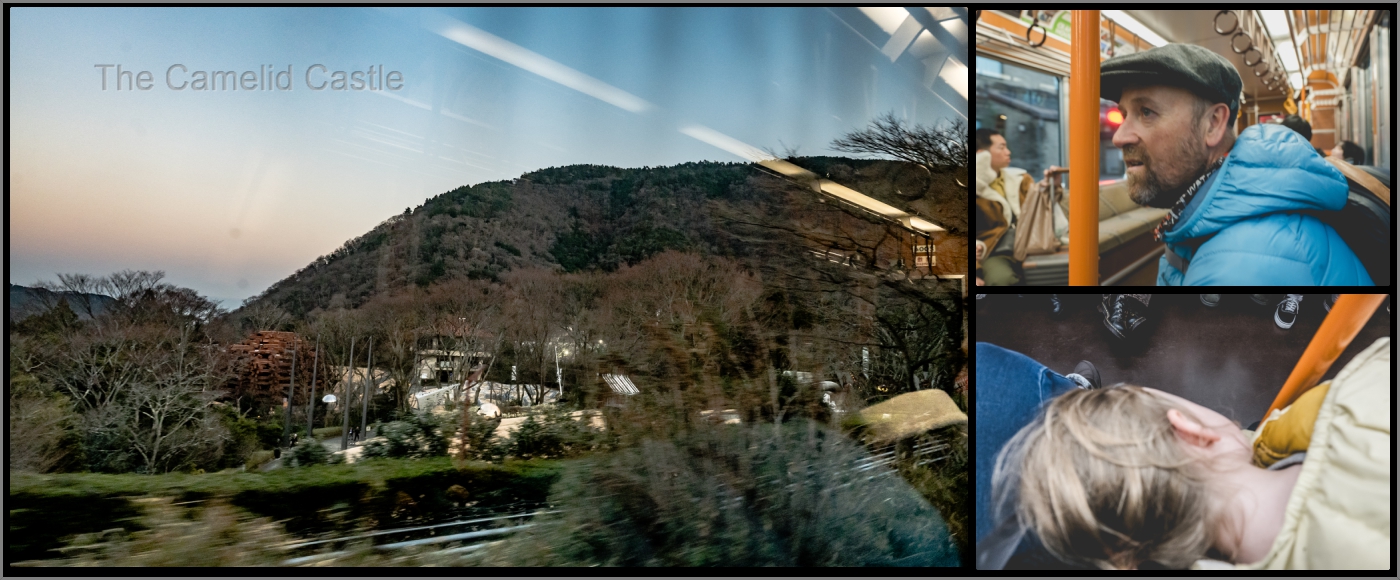
We then caught the Hakone Tozan train to Hakone-Yumoto. This loops us back to where we started the morning with the bus ride up the mountain. The train is very steep and uses switchbacks to get down the mountain. It’s meant to be a very scenic ride and the bits we saw were indeed quite pretty, although it was rather dark by the time we arrived. This section definitely would have been more scenic if we had of done the trip in the reverse order (and been less tired). This was the only regret of the direction we chose! It also wouldn’t have been a problem at another time of the year when there was more sunlight.
It was a long trip back to Tokyo so we all voted to get some dinner in Hakone-Yamoto rather than eat on the train. With some online sleuthing, Anto had found a restaurant that claimed to have some vegetarian options. It was about a 5 minute walk from the station and it was a tiny place, with only the chef/owner. We were the only people there so we probably made his night! He welcomed us in and got to work preparing us some food.
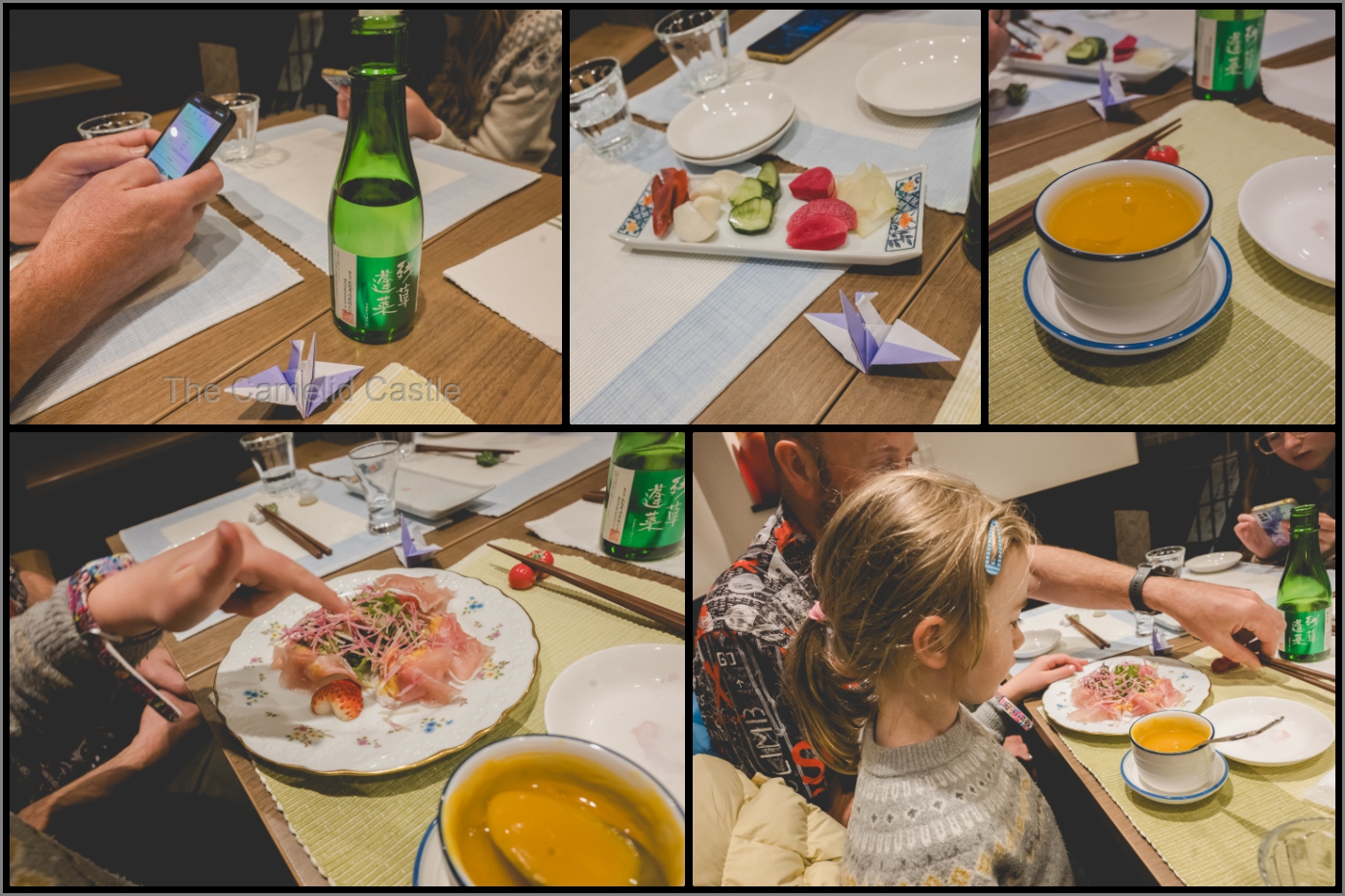
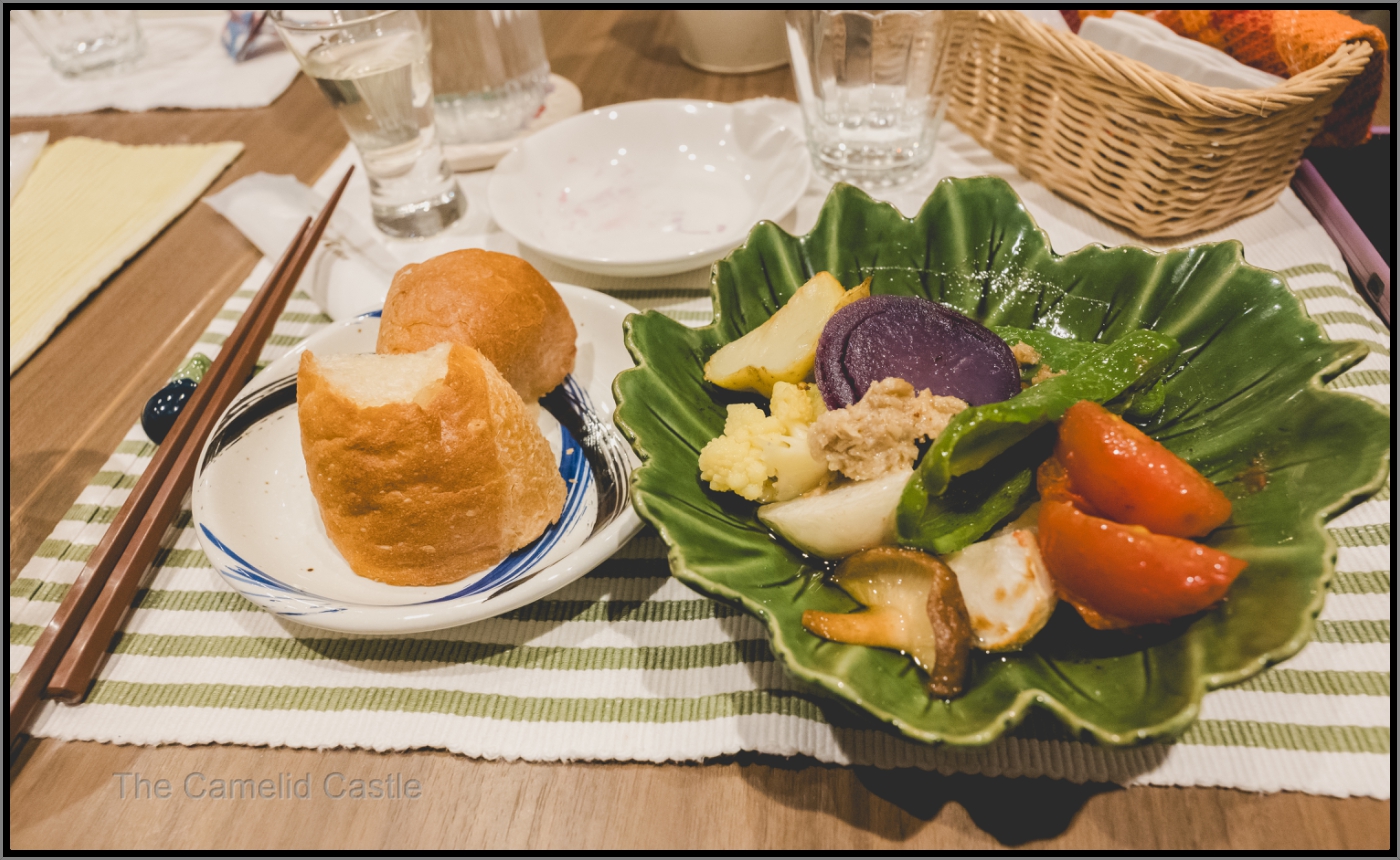
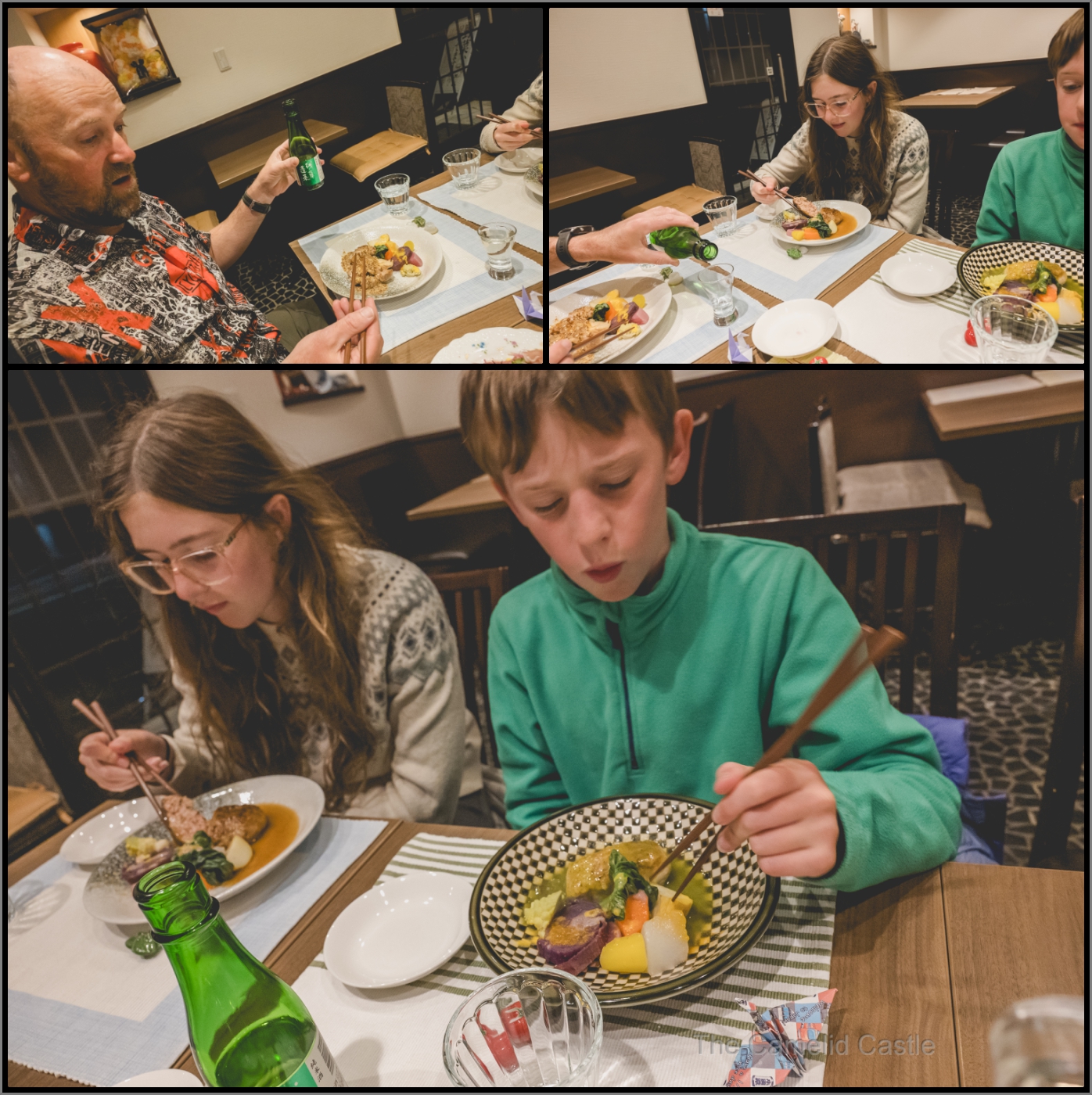
We all enjoyed some actual vegetables and I did indeed get something I could eat. We also enjoyed some local sake along with our meal. Everyone felt better for having an actual meal, not consumed in a convenience store nor on a train!
We had decided to go back to Tokyo on the regular trains rather than the Romancecar, which was slightly longer but was covered entirely on the Hakone freepass (you pay a supplement for the Romancecar) as it was well and truly dark there were no views now anyway. Unlike the some of the trains back to Hakone, we managed to get seats on the train through to Shinjuku. Despite it being a long day everyone used the time to catch up on reading, Duolingo or researching which rides they wanted to go on at DisneySea the next day!
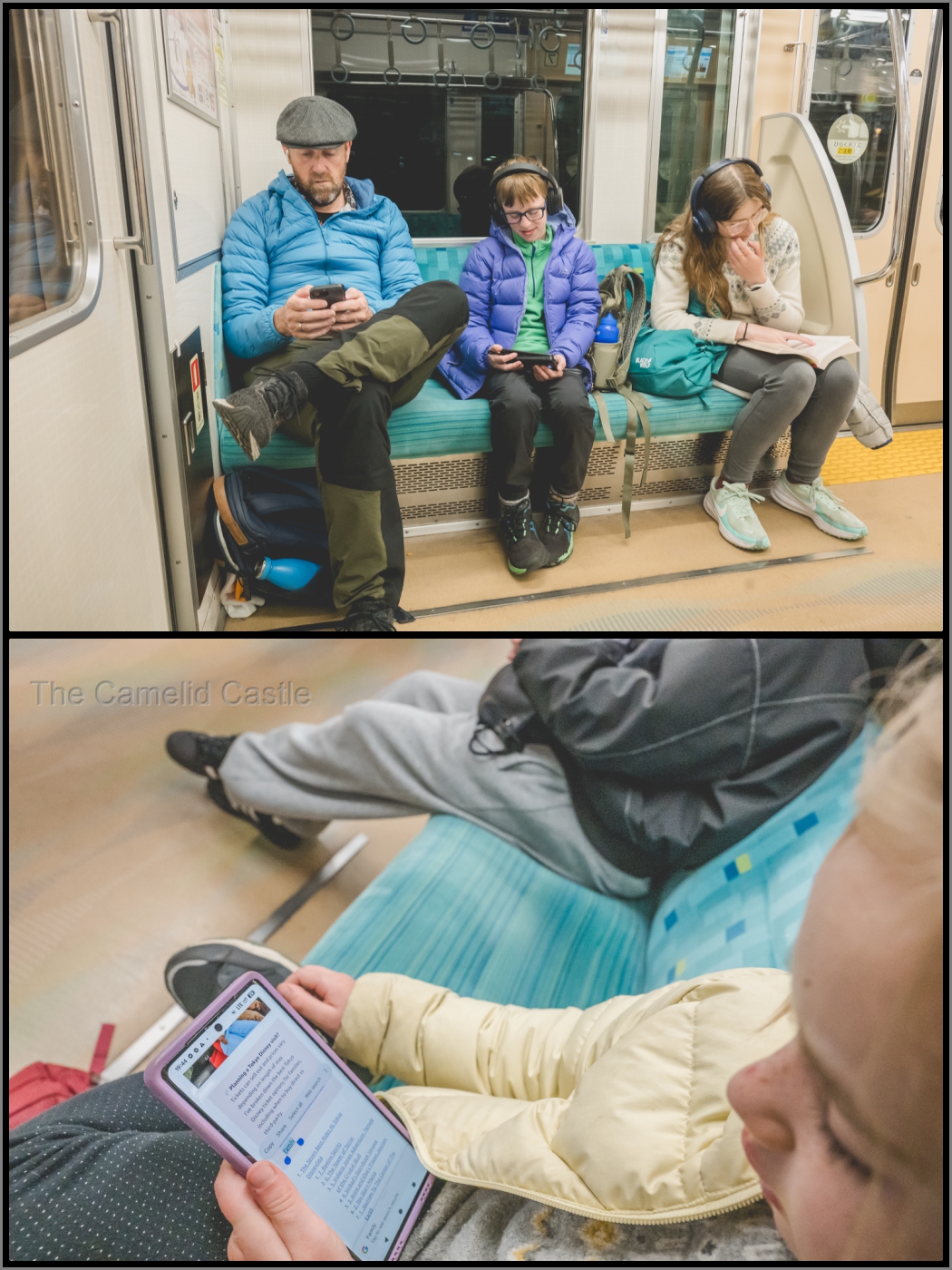
It was already after 7pm by the time we’d left Hakone and with the trip back to Shinjuku station, and the subsequent metros back to Taito City (which were crazy busy for a Sunday night) we didn’t arrive back at our apartment until after 9.45pm. A long day but definitely fun! There might have been random train napping by kids and adults at various points, but plenty of plans were afoot for the next day.
The Hakone Freepass actually covers activities in Hakone for 2 full days. If we had time in our itinerary to spend 2 days there then it would have been even better value as there was plenty to do and see. This also gives time to relax in the onsens. The Hakone loop was on the rather touristy side but highly enjoyable and we lucked out with awesome weather and fabulous views.
Up next…
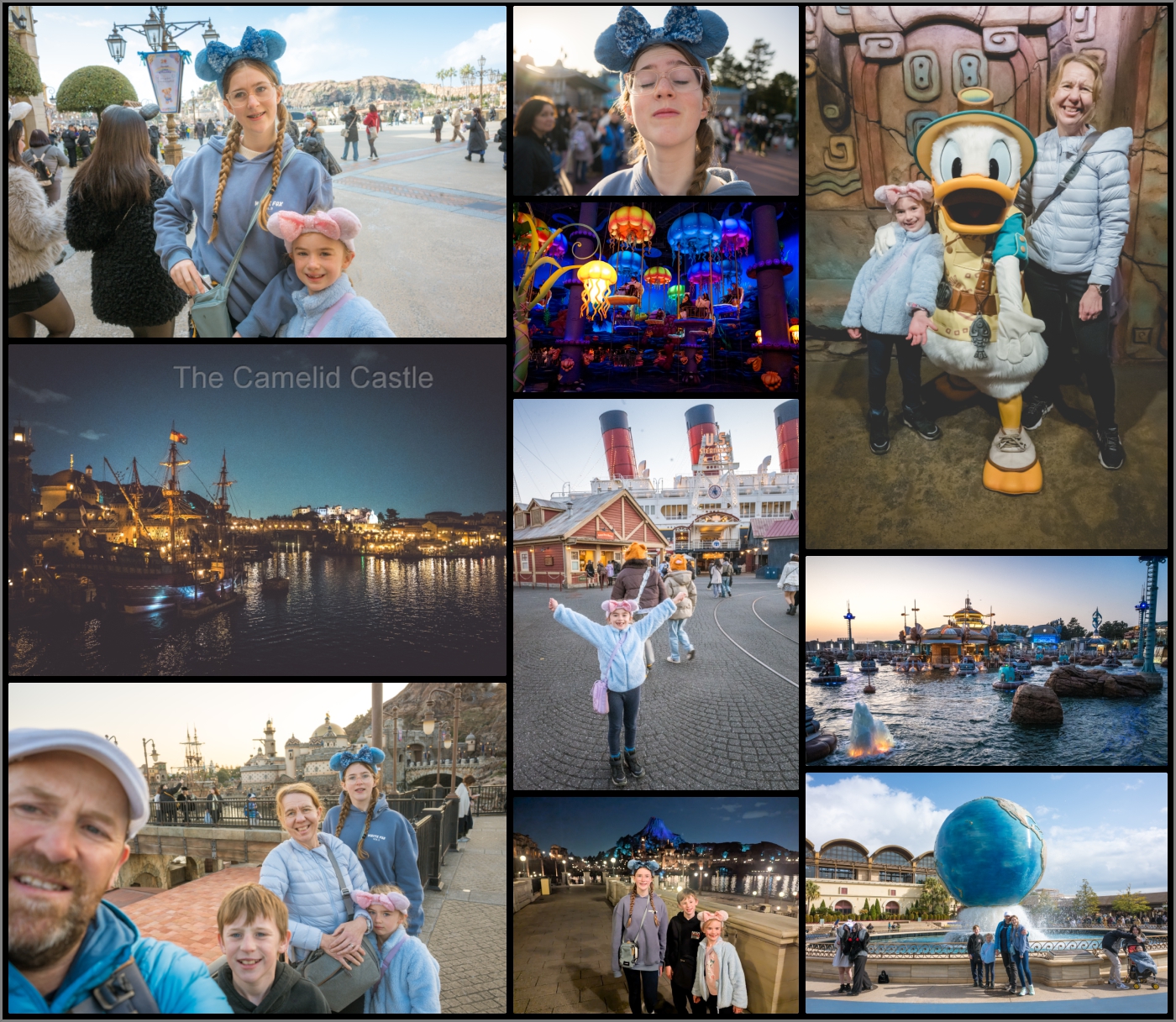
It was off the Tokyo DisneySea for a day of fun, rides, and of course mouse ears!